

DECODING: Who speaks for Europe? Zelensky's red line
On June 21, 2026, in an interview given to TSN, the Ukrainian news channel, President Volodymyr Zelensky spoke words that irritated some of his European partners: "They [the Europeans] will decide on the format, and ultimately Ukraine will determine who represents Europe in the negotiations. They will propose several options." This formulation — Ukraine has a say in who represe
- On June 21, 2026, in an interview given to TSN, the Ukrainian news channel, President Volodymyr Zelensky spoke words that irritated some of his European partners: "They [the Europeans] will decide on the format, and ultimately Ukraine will determine who represents Europe in the negotiations. They will propose several options." This formulation — Ukraine has a say in who represe
- DECODING: Who speaks for Europe?
- Introduction: The uncomfortable question
Facts, quotes, and cited links remain in the body. Interpretations are framed as analysis or opinion according to the format.
DECODING: Who speaks for Europe? Zelensky's red line
Introduction: The uncomfortable question
Zelensky issues an awkward demand
On June 21, 2026, in an interview given to TSN, the Ukrainian news channel, President Volodymyr Zelensky spoke words that irritated some of his European partners: "They [the Europeans] will decide on the format, and ultimately Ukraine will determine who represents Europe in the negotiations. They will propose several options." This formulation — Ukraine has a say in who represents it at the negotiating table — was perceived in certain capitals as a form of impertinence.
It is not impertinence. It is survival. A country that has been fighting for its existence for more than four years has the fundamental and inalienable right to demand that its interests be represented with integrity at any negotiating table where its fate will be discussed. If Ukraine cannot trust a unilaterally designated European representative, the credibility of the entire process collapses. Zelensky is not demanding to control European policy — he is demanding that someone who understands his position speak on his behalf.
The context: peace negotiations are drawing closer
This discussion about European representation is not abstract — it anticipates an increasingly likely diplomatic process. In June 2026, the major European powers — Germany, France, the United Kingdom — are jointly developing a plan to bring Putin to the negotiating table. Italian Prime Minister Giorgia Meloni supported the idea of a single EU representative for these discussions. The question is no longer whether negotiations will take place, but who, how, and under what conditions.
European divisions: the challenge of coherence
France, Italy and the temptation of pragmatism
The European Union presents a unified face in public on support for Ukraine — but behind the scenes, the divisions are real and deep. France and Italy opposed in June 2026 a measure to ban former Russian soldiers who had fought in Ukraine from entering the EU, according to United24 Media. This position — less hostile toward former Russian combatants — reflects a desire to maintain channels of dialogue with Moscow that other countries, notably the Baltic states and Poland, consider premature and dangerous.
This divide between "pragmatists" (France, Italy, sometimes Germany) and "hawks" (Poland, Baltic states) on the Russian question has run through the EU for years. It has sharpened since the start of the large-scale invasion. The "pragmatists" fear uncontrollable escalation and want to keep channels open with Moscow. The "hawks" believe that any dialogue without good-faith preconditions encourages the aggressor to continue.
The E3 format: a coherence under construction
On June 7, 2026, at a meeting in London, Great Britain, France, and Germany jointly produced five conditions for peace in Ukraine — the first time the three major European powers have agreed in writing on the terms of a possible resolution to the conflict. This E3 format document ("Europe 3") represents a step toward the diplomatic coherence that Zelensky has long demanded.
However, this informal three-country format does not represent all 27 EU members. Poland, whose Prime Minister Tusk is one of the firmest voices on the Ukrainian question, is not in this format. Neither are the Baltic states. A single EU representative emerging from discussions dominated by the E3 format might not reflect the firmest line on Ukrainian rights — hence Kyiv's legitimate concern.
Zelensky and diplomatic sovereignty
The refusal of a second Minsk
Zelensky's position on European representation is largely explained by the memory of the Minsk agreements. In 2014–2015, the Minsk I and Minsk II agreements had been negotiated primarily by France and Germany, within the framework of the "Normandy Format," without Ukraine being able to impose its own terms. These agreements did freeze one phase of the conflict, but they created a gray zone in eastern Ukraine that Russia exploited for seven years to maintain destabilizing pressure on Kyiv — until the large-scale invasion of 2022.
Zelensky has repeatedly declared there will be no second Minsk. His concern is clear: if Europe chooses a representative perceived as too accommodating with Moscow, negotiations could produce an agreement resembling Minsk — a partial resolution that freezes the conflict without resolving it, leaves Russia with territorial gains, and fails to provide Ukraine with the security guarantees needed to prevent new aggression.
More analysis

ANALYSIS: Marcos Talks Drilling With Beijing While His Fishermen…
That is what moves through the South China Sea every year.…

ANALYSIS : Taiwan Puts NT$1,122.5 Billion Into Defence, Over…
Hold that number for a moment, because it marks the crossing…

ANALYSIS: 313 Votes, a 20th Extension — Ukraine Keeps…
313 votes to approve the presidential decree extending martial law by…
The claim for NATO membership: the real guarantee
The ultimate security guarantee Ukraine seeks is membership in NATO. Article 5 of the North Atlantic Treaty — under which an attack on one member is an attack on all — is the only credible guarantee that would make new Russian aggression prohibitively costly. Bilateral security guarantee agreements, however solid, do not carry the same credibility — the history of Ukrainian security agreements since the Budapest Memorandum of 1994 (which obtained guarantees from Russia, the United States, and the United Kingdom in exchange for Ukraine's renunciation of the inherited Soviet nuclear arsenal) demonstrates this tragically.
The representativeness question: who is legitimate?
The President of the European Council, Rutte and NATO
Several names have circulated as possible European representatives in any eventual negotiations. Mark Rutte, Secretary General of NATO, represents the military alliance but not the EU. The President of the European Council represents member states but holds no foreign policy mandate. The EU High Representative for Foreign Affairs has a more relevant mandate. Italian Prime Minister Meloni herself suggested the appointment of a single representative — without specifying who, which reveals the difficulty of reaching a consensus.
Finnish President Alexander Stubb, often mentioned as a potential mediator, has publicly stated he does not see himself in that role. The institutional complexity of the EU makes the designation of a "single representative" difficult — such a position does not formally exist, and creating it would require consensus among 27 member states with sometimes divergent positions.
The American position under Trump: absent or present?
The question of European representation is complicated by the ambivalent stance of the Trump administration. Defense Secretary Hegseth announced a six-month review of U.S. military presence in Europe. The 4,000 American soldiers cancelled from Poland in May 2026 created uncertainty. And yet, Trump had supported the idea of a bilateral Zelensky-Putin meeting in June 2026.
The question arises: if the United States partially disengages, must Europe step in alone? And if so, with what coherence? The exclusion of American representatives from certain discussions — a demand Russia has sometimes advanced at Istanbul — is unacceptable to Kyiv. Ukraine knows that without the United States at the table, the balance of power tilts dangerously toward Moscow.
The debate inside Europe: contradictory voices
Sikorski, Tusk, the hawks of the East
Polish Foreign Minister Radosław Sikorski and Prime Minister Donald Tusk represent the firmest line on Ukraine support within the EU. For them, any negotiation must start from the principles of international law — territorial integrity, Russian withdrawal, solid security guarantees — and must not be rushed by a Western desire to exit the conflict quickly. This line is also that of the Baltic states, the Czech Republic, and Romania.
On the same topic

COLUMN : Europe Moved 8.5 Billion Euros in a…
That is what the European Commission says it has disbursed for…

INVESTIGATION: 36 States Sign in Chișinău — and the…
Thirty-four members of the Council of Europe, plus Australia, plus Costa…
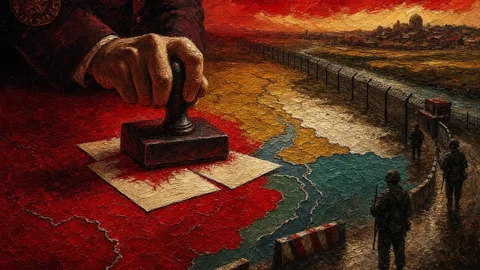
INVESTIGATION : Russia's FSB Erases 4 Ukrainian Regions' Border…
Not an assault, not an ultimatum, not a televised proclamation from…
Facing them, leaders such as French President Emmanuel Macron — who has several times emphasized the importance of not "humiliating" Russia — or Italian Prime Minister Meloni, who maintains economic ties with Moscow, represent a more nuanced approach. This nuance is legitimate in principle — all diplomacy requires understanding the other party's perspective. But it becomes problematic when it leads to preliminary concessions that weaken Ukraine's position before negotiations have even begun.
The risk of representation through weakness
If the designated European representative is perceived by Moscow as representing the most moderate line in the EU — rather than its firmest line — Russia will have every interest in exploiting that moderation to push for concessions. This is precisely what Zelensky seeks to avoid. A representative who yields on "realities on the ground" or on security guarantees, even with good intentions, would be catastrophic for Ukrainian interests.
The Ukrainian claim: legitimate and practically complex
The moral right and the institutional challenge
Morally, Zelensky's claim is indisputable. Practically, its implementation is complex. If Ukraine holds a veto over the European representative, who can impose their view if that representative is rejected? The 27 EU member states can hardly accept that a third country — even a friendly one — has formal oversight over their institutional representation processes.
The solution, it seems, is political rather than legal. The EU should designate a representative who maintains a relationship of trust with Kyiv — someone whose public positions demonstrate a deep understanding of the Ukrainian stakes, and who has shown they would not sacrifice Ukraine on the altar of a quick deal. This de facto excludes candidates perceived as too accommodating toward Moscow. And it narrows the field of plausible candidates.
Consultation, coordination, trust
The real answer to the question "who speaks for Europe?" is not a single name — it is a mechanism of continuous consultation between the European representative and Kyiv. Whether negotiations are conducted by an E3 representative, by the EU High Representative, or by an ad hoc designated figure, the sine qua non condition is that Ukraine is kept informed in real time, that its positions are faithfully reflected, and that the representative takes no decisions binding Ukraine without its explicit agreement.
The memory of Minsk: why Ukraine says no to a second failed agreement
The history of agreements that did not work
To understand why Zelensky demands oversight of European representation, one must return to the history of the Minsk agreements. Minsk I (September 2014) and Minsk II (February 2015) were negotiated within the so-called Normandy Format — France, Germany, Ukraine, and Russia. Ukraine was at the table, but its military weakness in 2015 had forced it to accept clauses — notably on the autonomy of certain eastern regions — that the Kremlin interpreted expansively and never respected in good faith.
These agreements created a gray zone in the oblasts of Donetsk and Luhansk that Russia exploited for seven years to maintain permanent destabilizing pressure on Kyiv — weapons deliveries to separatists, daily ceasefire violations, blocking of the political clauses' implementation. Ultimately, it was this security vacuum created by the Minsk agreements that facilitated the large-scale invasion of 2022. Zelensky drew the lesson: an agreement negotiated without credible enforcement guarantees, by mediators who do not fully share Ukrainian security concerns, is worse than no agreement at all.
The E3 format: progress but insufficient
The joint declaration of the E3 format (Great Britain, France, Germany) on June 7, 2026 in London represents progress compared to past divisions. For the first time, the three major European powers agreed in writing on five conditions for peace in Ukraine — including Russian withdrawal, Ukrainian sovereignty, and security guarantees. But this informal document does not bind all 27 EU members, and some of Ukraine's most ardent supporters — Poland, the Baltic states — are absent from the format.
The problem with the E3 format is precisely what Zelensky points to: it is dominated by powers that have historically sought to maintain channels with Moscow — notably France under Macron, who several times emphasized the importance of not "humiliating" Russia. A representative emerging from this format might not defend Ukrainian positions with the same firmness on the most sensitive points. Hence Kyiv's claim to oversight — not a formal veto, but a mandatory consultation and pre-established trust.
What "speaking for Europe" means in practice
The required qualities of a credible representative
If Europe is to speak with one voice in any eventual negotiations on Ukraine, several qualities are required of its representative. The first is credibility with Kyiv: the representative must have demonstrated a deep understanding of the Ukrainian stakes, not merely rhetorical support. The second is institutional legitimacy: they must hold a clear mandate from all EU members, not just the major E3 powers. The third is firmness before Moscow: they must be capable of resisting Russian pressure tactics without seeking to preserve economic or political relations with Moscow.
These restrictive criteria de facto exclude several natural candidates. French President Macron — perceived in Kyiv as too conciliatory after his multiple telephone calls to Putin in 2022–2023 — would have difficulty earning Ukrainian trust. A representative from the Baltic states or Poland would have the credibility and firmness, but weaker institutional legitimacy within the E3 format that will dominate discussions. EU High Representative Kaja Kallas — former Estonian Prime Minister — combines strong anti-Russian credibility with an institutional mandate. She remains one of the most plausible candidates according to several European diplomatic analysts.
The process as guarantee
Beyond the personality of the representative, it is the consultation process that can resolve the tension between European sovereignty and Ukrainian demands. If the EU establishes a formal mechanism by which the representative must consult Kyiv before and after each negotiating session, inform Ukraine of any compromise under consideration, and not commit Ukrainian positions without explicit agreement — the question of "who" becomes less critical. This is not a precedent without precedent: in EU trade negotiations, member states have strict consultation mechanisms that allow the Commission to negotiate while preserving national sovereignty.
The European Council of June 2026 held what Zelensky described as "the longest discussion on Ukraine in all these years." This renewed seriousness is encouraging. But discussion alone is not enough — it must lead to a clear institutional mechanism, transparent to Ukraine, and binding on the European representative. That is the condition for Europe to be not only present at the negotiating table, but genuinely useful in building a just peace.
Conclusion: Europe must speak with a strong and unified voice
The lesson of recent history
Discover
ANALYSIS: Marcos Talks Drilling With Beijing While His Fishermen…
That is what moves through the South China Sea every year.…
ANALYSIS : Taiwan Puts NT$1,122.5 Billion Into Defence, Over…
Hold that number for a moment, because it marks the crossing…
ANALYSIS: 313 Votes, a 20th Extension — Ukraine Keeps…
313 votes to approve the presidential decree extending martial law by…
The European Council of June 2026 held "the longest discussion on Ukraine in all these years" according to Zelensky himself — two hours of open discussion on European strategy in the face of the war. That is a sign of seriousness. It remains to convert that seriousness into a coherent and credible diplomatic position. Europe can play a decisive role in resolving this conflict — but only if it is capable of speaking with one voice, and if that voice reflects its most fundamental principles rather than its most immediate interests.
Zelensky asked the right question
By raising the question of the European representative, Zelensky is not seeking to control the EU. He is seeking to ensure that the greatest European security crisis since the Second World War will be managed with the rigor and integrity it deserves. That is a legitimate demand. Europe should see it not as a provocation, but as an invitation to live up to its own ambitions. The diplomatic window is open until winter 2026, according to Zelensky himself. The time to decide "who speaks for Europe" is now.
By Maxime Marquette, columnist
Columnist's transparency note
Editorial positioning
This article defends a clear position: Ukraine has the right to demand that its interests be represented with integrity in diplomatic negotiations. This bias is declared and stems from my conviction that Russian aggression against Ukraine is unjust and that peace can only be built on a foundation of respect for international law. I make no claim to neutrality on this subject.
What I do not know
I do not have access to closed-door diplomatic discussions between Ukraine and its European partners. Negotiations on European representation are taking place partly in non-public spaces that open sources cannot fully cover. My understanding of the actual positions of each European government is therefore partial — I acknowledge that.
Sources
Primary sources
Secondary sources
Get the geopolitics analyses
Conflicts, powers, alliances: the MadMax thread without the noise.
Cite this article
Maxime Marquette (2026). DECODING: Who speaks for Europe? Zelensky's red line. MadMax. https://mad-max.co/en/article/decryptage-qui-parle-pour-l-europe-la-ligne-rouge-de-zelensky
Read next
ANALYSIS: Marcos Talks Drilling With Beijing While His Fishermen…
That is what moves through the South China Sea every year.…
ANALYSIS : Taiwan Puts NT$1,122.5 Billion Into Defence, Over…
Hold that number for a moment, because it marks the crossing…
ANALYSIS: 313 Votes, a 20th Extension — Ukraine Keeps…
313 votes to approve the presidential decree extending martial law by…
Enjoyed this piece? Get the next one.
One chronicle a week, straight to your inbox. No noise.
This article was generated with AI assistance, under human supervision.
Comments
Be the first to weigh in.