

ESSAY: When Putin Talks Pause, Ukraine Strikes — Diplomacy in the Age of Drones
On June 29, 2026, Vladimir Putin declared that Ukraine had proposed a pause in mutual deep strikes. The statement had barely landed when Volodymyr Zelensky — three days earlier — had announced a 40-day operation targeting precisely Russian energy infrastructure. Two contradictory messages, issued within days of each other. Two parallel realities that diplomats and analysts have
- On June 29, 2026, Vladimir Putin declared that Ukraine had proposed a pause in mutual deep strikes. The statement had barely landed when Volodymyr Zelensky — three days earlier — had announced a 40-day operation targeting precisely Russian energy infrastructure. Two contradictory messages, issued within days of each other. Two parallel realities that diplomats and analysts have
- ESSAY: When Putin Talks Pause, Ukraine Strikes — Diplomacy in the Age of Drones
- Introduction: The Paradox of War and Words
Facts, quotes, and cited links remain in the body. Interpretations are framed as analysis or opinion according to the format.
ESSAY: When Putin Talks Pause, Ukraine Strikes — Diplomacy in the Age of Drones
Introduction: The Paradox of War and Words
A declaration that defies logic
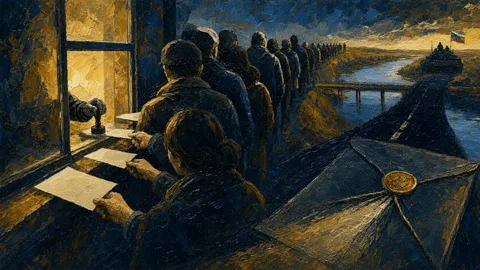
On June 29, 2026, Vladimir Putin declared that Ukraine had proposed a pause in mutual deep strikes. The statement had barely landed when Volodymyr Zelensky — three days earlier — had announced a 40-day operation targeting precisely Russian energy infrastructure. Two contradictory messages, issued within days of each other. Two parallel realities that diplomats and analysts have since struggled to reconcile — with limited success.
This is the full complexity of this war: diplomacy and military force do not take turns, they coexist, sometimes in outright contradiction. Kyiv strikes and negotiates simultaneously. Moscow waits and interprets. And the West — complicit spectator — tries to read in these contradictory signals the outline of an exit from a crisis it has been hoping for since 2022. This essay attempts to untangle those threads.
Putin's June 29 Statement: Decoding an Ambiguous Message
What he said, word for word
Putin's statement on June 29, 2026 was precise in its formulation: Ukraine had "proposed" a pause in mutual deep strikes. Not accepted, not signed, not formalized — proposed. This lexical nuance is crucial. By attributing the proposal to Kyiv, Putin puts pressure on Zelensky: either the Ukrainian president confirms it and appears to want the truce, or he denies it and appears to be rejecting peace. It is a classic rhetorical trap.
The Kremlin's official position complicates the reading further: Moscow maintains that a comprehensive agreement is necessary, not a simple partial truce. In other words, even if Kyiv had actually proposed a pause on deep strikes, Russia would refuse it as it stands — because it demands a complete settlement requiring Ukraine's withdrawal from the Donbas and permanent neutrality. These conditions are unacceptable to Kyiv and to its Western allies.
The G7 summit context and Trump-Putin exchanges
To understand the June 29 declaration, it must be placed within the diplomatic sequence of the preceding weeks. On June 14, 2026, Trump and Zelensky held a phone call that the Ukrainian side described as "very substantive." That same day, Putin called Trump to discuss peace negotiations. On June 16, at the G7 summit in Évian, Trump declared that Russia should make a deal. This sequence suggests growing American pressure — even under Trump — toward de-escalation.
Putin's June 29 statement could therefore be an indirect response to that American pressure: projecting an apparent diplomatic openness without conceding anything of substance. It is facade diplomacy, designed for Washington's ears rather than Kyiv's. Trump, who above all wants a deal, might see exactly what he wants to see. The risk is real.
The 40-Day Operation: Military Response or Diplomatic Signal
An announcement that contradicts the truce
On June 26, 2026, three days before Putin's declaration, Zelensky announced a 40-day operation targeting Russian energy infrastructure. If Ukraine had simultaneously proposed a pause in deep strikes, this operation would either be a glaring contradiction or a deliberate double-message strategy. The logic of hybrid warfare and coercive diplomacy suggests both can coexist.
In the doctrine of coercion through force, the best negotiating position belongs to the belligerent who demonstrates a growing capacity to inflict damage. By announcing an intensification of strikes while letting filter — or allowing Putin to claim — a diplomatic opening, Kyiv may be seeking to create maximum leverage. Hurt the adversary enough to make a truce attractive to them, but never explicitly commit to stopping.
The 40 days: timeline and objectives
The announcement of an operation with a precise duration of 40 days carries symbolic and strategic meaning. Forty days from June 26 brings us to the start of September 2026. This is the summer period, when energy demand is lower in Russia. Striking Russian energy infrastructure in summer means preparing a hard winter for the Russian population — a form of economic warfare with long temporal reach.
The stated objectives — maximum pressure to force an end to the war — fit within Ukraine's broader strategy: drive up the cost of war for Moscow until peace becomes preferable to continuing the conflict. This is a classic strategic coercion strategy, but the question remains open: can Putin be coerced by economic pain, or is his calculus structurally immune to these costs?
Zelensky's Position: Neither Stalemate nor Ceasefire
The refusal of a frozen status quo
Zelensky's advisers have clearly articulated the Ukrainian position: "neither stalemate nor ceasefire." This formula says everything. Ukraine refuses to freeze the conflict along current lines, which would leave Russia in possession of Ukrainian territories. Such a freeze would be a reward for aggression, an encouragement to the next invasion, and a betrayal of the sacrifices of the Ukrainian population since 2022.
But Zelensky is not reckless either: he does not announce a blanket refusal of all negotiations. He conditions any agreement on non-negotiable prerequisites: Russian withdrawal from occupied territories, reparations, binding security guarantees. These conditions define the framework of a just and lasting peace — not a capitulation dressed as compromise. This is Kyiv's red line, and it deserves to be defended.
Ukraine's peace formula versus Russian proposals
The ten-point peace formula presented by Zelensky in 2022 — and maintained since — constitutes Ukraine's reference framework for any negotiation. It includes the restoration of territorial integrity, withdrawal of Russian troops, release of prisoners, nuclear safety, global food security, and a tribunal for war crimes. These points are not rhetoric — they define what real peace, rather than an armed truce, must mean.
Against this, Russian proposals as expressed by Putin — Ukrainian withdrawal from the Donbas, permanent neutrality for Ukraine, lifting of sanctions — are fundamentally incompatible. There is no zone of compromise between these two positions. The gulf is ideological as much as territorial: it is a question of whether Ukraine has the right to exist as a sovereign state, integrated into the West. Putin says no. The West must say yes — without hesitation.
Trump's Role in the Mediation: Asset or Risk
A mediator who does not hide his preferences
American mediation under Trump is a geopolitical reality that Kyiv must navigate. Trump met Putin in Anchorage and has since maintained a calculated ambiguity about his intentions — sometimes pressing Moscow to negotiate, sometimes threatening to reduce aid to Kyiv. The Trump-Zelensky phone call on June 14 and the simultaneous Trump-Putin call illustrate this complex triangular diplomacy.
Trump declared that Russia should make a deal at the G7. That is a positive signal, in that it indicates Washington is not prepared to let Moscow dictate its conditions without pressure. But Trump is inherently unpredictable. His statements shift depending on the audience and the moment's interests. Zelensky cannot plan his diplomatic strategy around Trump's morning declarations.
The risk of a Trumpian deal at Ukraine's expense
The scenario most feared in Kyiv — and in European capitals — is that of a "grand deal" negotiated directly between Trump and Putin, which would impose on Ukraine territorial or neutrality concessions in exchange for an end to hostilities. This scenario exists. It is not inevitable, but the signals from American diplomacy in 2026 do not allow it to be ruled out.
The best protection against this scenario is twofold: first, that Ukraine maintains its military capacity to inflict growing costs on Russia, making a deal too favorable to Moscow politically difficult to sell to the American public; second, that European allies remain sufficiently united to provide a counterweight to Washington's isolationist impulses. Neither is guaranteed. Both are necessary.
The Doctrine of Strategic Coercion: What History Teaches
When force creates the conditions for peace
The history of modern conflicts offers instructive precedents on strategic coercion — the use of military force to create conditions for a favorable diplomatic settlement. The Kosovo war in 1999 is often cited as an example: NATO bombing compelled Milošević to accept conditions he had refused weeks earlier. The combination of force and diplomacy worked because the military and political costs of refusal exceeded the costs of capitulation.
The question is whether this model applies to Putin's Russia. The differences are significant: Putin leads a nuclear state, his internal legitimacy is tied to the narrative of Russian greatness, and the accountability mechanisms that weigh on a democratic leader do not function under an autocratic regime. Coercion can work — but the pain thresholds required are likely far higher than in the Serbian case.
The specificity of the Ukrainian war: a long-haul conflict
The war in Ukraine defies the usual categories of modern conflicts. It is not a lightning war — Russia failed in its attempt at rapid conquest in 2022. It is not a pure war of position either — permanent technological innovations, notably drones, maintain a dynamic of mutual adaptation. It is an attrition war with elements of strategic coercion, where time paradoxically works against both belligerents.
For Ukraine, time means additional human losses, increasingly degraded civilian infrastructure, and an economy on international life support. For Russia, time means a grinding war economy, an extreme militarization of society, and growing international isolation. The question is: who will break first? The answer depends largely on the solidity and constancy of Western support for Ukraine.
The Kremlin Facing the Contradiction: Comprehensive Agreement or Truce
The official Russian position and its internal contradictions
The Kremlin's official position draws a firm distinction between a comprehensive agreement — which it claims to want — and a simple truce it rejects. This distinction has a logic: a truce would allow Ukraine to reconstitute itself, receive more Western weapons, and return to the offensive in better conditions. A comprehensive agreement, as Moscow defines it, would imply permanent concessions from Kyiv on territory and neutrality.
But this position contains its own contradictions. If Russia wants a comprehensive agreement, it must negotiate its terms — which it refuses to do on the essential points. If it wants a Ukrainian capitulation, it does not have the military capacity to impose one. Moscow is in a maximalist rhetorical posture that does not correspond to its military reality on the ground. The June 29 statement about a truce proposed by Kyiv is an attempt to escape that contradiction by creating the illusion of a favorable diplomatic dynamic.
Fractures within the Russian elite
Analysts who closely follow Russian domestic politics note signals — discreet but real — of tensions within the ruling elite over the strategy to adopt. Certain Russian economic circles bear the cost of sanctions directly and would have no objection to an agreement that allowed some relief. Others, within the security apparatus, are ideologically committed to the initial war objectives and would resist any compromise.
I will be honest: I do not have access to internal Kremlin deliberations. These tensions are inferences drawn from indirect signals and expert analyses. What I can assert is that the idea of a monolithic and infinitely resilient Russia is as false as the idea of an imminent collapse. The truth lies somewhere between the two — and it evolves under the cumulative effect of military, economic, and diplomatic pressures.
Ukraine Between Diplomacy and War: A Productive Tension
Diplomacy as the continuation of war by other means
Clausewitz's formula — war is the continuation of politics by other means — also applies in reverse. Ukrainian diplomacy in 2026 is the continuation of war by non-military means. Every meeting of the Coalition of the Willing, every sanctions package, every security commitment extracted from a Western partner is a diplomatic victory that translates into military capacity on the ground.
Zelensky has understood this better than anyone. He is simultaneously commander-in-chief, head of state, international lobbyist, and global spokesperson for Ukrainian resistance. This multiplicity of roles has allowed him to maintain constant diplomatic pressure on partners who would naturally tend toward fatigue. It is an exceptional political performance — and it counts in the strategic equation of this war.
The limits of the dual posture
There are risks in the strategy of the dual posture — striking militarily while keeping the diplomatic door open. The principal one is confusion among allies and international public opinion about Kyiv's actual intentions. If contradictory messages multiply, some allies might interpret the situation as closer to negotiations than it actually is, and reduce their pressure on Moscow prematurely.
Transparency toward allies is therefore crucial. Zelensky must ensure that his Western partners understand his strategy in all its complexity — including the coexistence of military pressure and diplomatic openings. A poorly informed ally is an ineffective ally. And Ukraine cannot afford ineffective allies in the decisive months ahead.
Possible Scenarios for the Coming Months
Scenario 1: controlled escalation that forces the table
The first scenario is the one Zelensky appears to be targeting: the 40-day operation inflicts enough damage on Russian energy infrastructure to force Moscow to consider de-escalation. Combined with diplomatic pressure from the G7 and NATO ahead of the Ankara summit, this scenario could create conditions for a genuine diplomatic opening — with substantial security guarantees for Ukraine.
This scenario is possible but not guaranteed. It assumes that Putin responds rationally to economic and military pain. The history of this conflict does not confirm that hypothesis. Putin has shown a capacity to absorb costs far exceeding what most analysts anticipated. Hoping for a rapid collapse would be naive. But hoping for a gradual shift in calculation — less dramatic but more realistic — is a reasonable strategic basis.
Discover

INVESTIGATION: Beijing cuts Africa to 2.1 billion in loans…
2.1 billion — the lowest figure in almost twenty years, according…

SPECIAL REPORT: Beijing Promises Stimulus as Its Households Give…
That is the growth rate of Chinese industrial output in July,…

INVESTIGATION: Two Chinese Ex-Soldiers Arrested in Seoul as 18,000…
For five years, a man ran a military-supply shop at the…
Scenario 2: the truce imposed by the United States
The second scenario, less favorable, is that of a negotiated truce under American pressure, which would freeze the conflict along current lines. This scenario is fueled by Trump's rhetoric and his search for a personal deal. It would be disastrous for Ukraine: it would leave Moscow in a position of strength, with occupied territories and the capacity to relaunch the offensive whenever conditions favored it.
Resistance to this scenario requires the continuous demonstration that Ukraine can obtain more on the ground — making a truce politically costly for whoever imposed it. It also requires maintaining European cohesion, which can exert counterpressure on Washington. It is a race between Ukrainian military momentum and American diplomatic impulses. It is not settled.
The Stakes for the International Order: Far Beyond Ukraine
A global precedent for future wars
The outcome of the war in Ukraine will not concern only the 44 million Ukrainians. It will establish a precedent for the global order of the 21st century. If Russia secures permanent territorial gains through force, the message will be clear to all revisionist powers: aggression pays. China will draw its conclusions about Taiwan. Iran will draw its conclusions about its neighbors. North Korea will continue its nuclear blackmail with a reinforced sense of impunity.
Conversely, if Ukraine manages to recover its territories or secure binding security guarantees that make a new aggression prohibitively costly, the inverse message will be sent: aggression has permanent and painful consequences. This would be the most effective defense of the rules-based international order — not through declarations, but through concrete results on the ground.
Europe tested by its own coherence
Europe is being tested as it has not been since the Cold War. Its response to Russian aggression since 2022 has been globally remarkable — well beyond what one might have hoped from a continent accustomed to the peace dividend. But maintaining this coherence over time, as economic pressures mount and populist politics seek to capitalize on fatigue, is a permanent challenge.
The diplomatic and military decisions of the coming months — at the Ankara summit, at the Coalition of the Willing meeting in Paris in July, during deliberations on the 21st sanctions package — will be tests of the solidity of this European coherence. They will show whether Europe has genuinely shifted its strategic paradigm, or whether it is slipping back into the reflexes of accommodation that fed Putin's ambitions.
Technology as Arbiter: Drones, AI, and the War of the Future
Ukrainian innovation changes the parameters
An underestimated factor in diplomatic analysis is the impact of Ukrainian technological innovations on the balance of power. Long-range drones, autonomous weapons systems, the integration of AI in military operations — all of this has significantly altered the parameters of the conflict since 2022. Ukraine has not simply resisted Russian military force; it has developed asymmetric capabilities that have neutralized part of Russia's conventional superiority.
This technological evolution has direct diplomatic implications: it strengthens Kyiv's negotiating position. A Ukraine capable of striking refineries 1,000 kilometers from its border, coordinating drone swarms with growing precision, maintaining pressure on deep Russian supply lines — this Ukraine is a very different interlocutor from the one seen in February 2022.
The limits of technology without doctrine
But technology alone does not win wars. It must fit within a coherent strategic doctrine, supported by a reliable logistics chain and a durable political will. This is where Western support is indispensable: not just for the weapons themselves, but for the technological components, training, intelligence, and guarantees that allow Ukraine to fully exploit its innovations. Without this support, Ukraine's technological edge erodes progressively against the sheer mass of Russian production.
Putin's June 29 statement about a possible truce must be read in this context: if there is any truth in his words, it may be that Ukrainian technological pressure is beginning to bite hard enough to make a military pause attractive to Moscow — not to negotiate peace, but to breathe and rearm. This is the most pessimistic reading. And the one that Ukraine's allies must keep in mind.
International Opinion Facing the Contradictions of the Dossier
The narrative confusion: who is telling the truth
One of the most effective weapons in Russian hybrid warfare is narrative confusion. By casting doubt on the facts — who proposed what, who struck where, who violated which agreement — Russian propaganda paralyzes the judgment capacity of international public opinions. The June 29 statement about a truce proposed by Kyiv fits this strategy: it creates an alternative story that certain media outlets relay without sufficient verification.
Confronted with these contradictions, the informed Western observer must apply some simple principles: first, cross-check every Russian statement with independent Ukrainian and Western sources; next, contextualize every statement within the conflict's historical sequence; finally, be structurally wary of any Russian statement that serves the Kremlin's narrative interests without external corroboration. This is not bias — it is journalistic rigor.
Real-time fact-checking: the challenge of war coverage
Covering this conflict in real time imposes considerable methodological challenges. Declarations accumulate at a pace that outstrips verification capacity, sources are often conflicted, and the political stakes of each piece of information are immense. In this essay I have chosen to focus on solidly established facts — dates, official statements, documented positions — and to explicitly flag the zones of uncertainty, which are numerous.
What I do not know: whether Zelensky actually proposed a truce on deep strikes before Putin's statement. What I know: Putin said he proposed it, without providing documentation. What Ukraine has officially said: nothing that confirms this claim. In the absence of Ukrainian confirmation, the burden of proof rests with the Kremlin. And the Kremlin never proves anything.
Conclusion: Navigating the Fog of War and Diplomacy
What this essay cannot conclude
This essay cannot tell you whether the war in Ukraine will end in 2026 or in five years. It cannot tell you whether Putin was sincere in his June 29 declaration or whether Zelensky actually proposed a truce. These questions find no certain answer in the available public data. What I have tried to do is untangle the threads of the apparent contradiction and show that diplomacy and war are not opposed in this conflict — they are two faces of the same coercion strategy.
What I can assert: Ukraine has the right to exist, the right to fight, the right to receive all the assistance it needs to defend itself. This right is absolute. It does not depend on the tactical contradictions of a moment or the diplomatic ambiguities of a week. It rests on something more fundamental: the sovereignty of a free people, attacked without provocation by an imperialist neighbor. That reality is clear, and it must guide all our analyses.
What the West must do
The practical response to the confusion of June 29, 2026 is simple: do not allow diplomatic ambiguities to reduce military support for Ukraine. Military pressure is the best guarantee that diplomatic openings, if they come, will be genuine. A Putin who is suffering cannot dictate his conditions. A Putin who is relieved sees no reason to negotiate. Support for Ukraine is therefore not an obstacle to peace — it is the only path toward a peace worthy of the name.
On the same topic

COLUMN : Europe Moved 8.5 Billion Euros in a…
That is what the European Commission says it has disbursed for…

ANALYSIS: 313 Votes, a 20th Extension — Ukraine Keeps…
313 votes to approve the presidential decree extending martial law by…
DOSSIER: 60,000 Russian passports in Transnistria — the annexation…
More than sixty thousand applications for Russian citizenship in three months,…
The Ankara summit, the Coalition of the Willing meeting in Paris, the discussions at the G7 — all these July 2026 events must translate into concrete commitments, not rhetoric. Zelensky has done his part — he fights, he strikes, he negotiates. The question is whether the West will do its part with the same constancy and determination. This essay hopes to have helped frame that choice with clarity.
Memory as a Stake in War: Moscow's Rewriting of History
Historical propaganda in service of war
An often underestimated aspect of Russian strategy is the rewriting of history as a tool of war legitimization. Putin has built his justification for the invasion on historical reinterpretations that most serious historians refute: the claim that Ukraine is not a real nation, that Ukrainians and Russians are one people, that NATO provoked Russia by enlarging. These narratives are not politics — they are instruments of violence.
Against this rewriting, Ukraine has opposed a resolute affirmation of its national identity, its culture, its distinct history. The 536 cultural sites struck by Russian attacks since 2022 — museums, libraries, religious monuments — are targeted precisely because they embody this identity. Destroying Ukrainian culture is an attempt to erase the proof that Ukraine has always existed as an entity distinct from Russia.
Memorial diplomacy: an overlooked battlefield
Ukrainian resistance to the rewriting of history is also a form of memorial diplomacy. By documenting, preserving, and internationalizing its cultural and historical archives, Ukraine builds an irrefutable record of its national existence against the Kremlin's denialists. Initiatives like TrophyLab — which shares technical data on captured Russian weapons — participate in the same logic of systematic documentation.
This memorial dimension of the war is crucial for the post-conflict phase. Whatever the military outcome, Ukraine will have to rebuild not only its infrastructure but also its collective memory and its place in the global historical narrative. By documenting the reality of Russian aggression, Kyiv is preparing the dossier that will serve international justice and the memory of future generations. This is a war within the war — and it will be won over the very long term.
Final Conclusion: The Essay as an Act of Intellectual Resistance
Thinking clearly through the fog
This essay has crossed many territories — diplomacy, economics, technology, history, memory. That is the nature of this conflict: it cannot be reduced to a single dimension. Putin's June 29 statement is an entry point that opens onto the full complexity of this war. The real question is not whether Kyiv proposed a truce on deep strikes — it is what architecture of peace can end this war without preparing the next one.
The answer to that question engages the West in its entirety: its values, its coherence, its willingness to defend an international order founded on law rather than force. The essay, as a form, is a tool of clarity — in an environment deliberately rendered opaque by propaganda, disinformation, and divergent interests. That is why I write. And that is why critical, rigorous, and honest thinking is itself a form of resistance.
Ukraine will win because it deserves to
I will end with what I believe deeply: Ukraine will win this war. Not because force is on its side — though it increasingly is. Not because the West is infallible in its support — though it is holding better than anyone hoped. But because peoples who fight for their freedom have a quality of resistance that no invading army has ever managed to break permanently. The history of Ukraine — from resistance to the Tsarist empire, to Soviet occupation, to Putin's invasion — is a history of stubborn survival against forces that were objectively superior.
This conviction is not an act of blind faith. It is grounded in four years of documented resistance to an invasion that no one predicted could hold for more than a few days. It is grounded in the documented courage of Ukrainian soldiers, the ingenuity of their engineers, the dignity of their civilians. It is grounded in Zelensky himself — a man who could have fled and chose to stay. That reality, however complex the diplomatic analysis may be, must never be lost from view.
By Maxime Marquette, columnist
Columnist's transparency note
My positions, my limits, my methods
I am Maxime Marquette, a columnist specializing in geopolitics. This essay reflects my convictions: I am pro-Ukrainian, pro-Western, and critical of Putin and his regime. These positions inevitably shape my analytical framework — I own them rather than claiming an impossible neutrality. What does not change, whatever my position, is my commitment to report only verifiable facts and to clearly flag my hypotheses and uncertainties.
For this essay, I relied on official statements publicly available, reports from reference media, and analyses from recognized research institutes. I invented no facts, no testimony, no quotations. Where I express an opinion or a hypothesis, I signal it explicitly. The zones of uncertainty — notably regarding the exact context of Putin's June 29 statement — are identified as such.
What I cannot know
I do not have access to confidential diplomatic communications between Kyiv and Moscow, nor to the internal deliberations of the Kremlin or the White House. I do not know whether a Ukrainian proposal for a truce on deep strikes was actually formulated before Putin's statement. I cannot predict with certainty the outcome of the 40-day operation or the results of the Ankara summit. These blind spots are inherent to covering an active conflict, and accepting them is a mark of intellectual honesty.
My method: read primary sources, cross-reference with independent secondary sources, contextualize within the broader historical narrative, and write with the conviction that intellectual clarity is itself a form of public service in a context of information warfare.
Sources
Primary sources
Secondary sources
Get the geopolitics analyses
Conflicts, powers, alliances: the MadMax thread without the noise.
Cite this article
Maxime Marquette (2026). ESSAY: When Putin Talks Pause, Ukraine Strikes — Diplomacy in the Age of Drones. MadMax. https://mad-max.co/en/article/essai-quand-poutine-parle-de-pause-l-ukraine-frappe-la-diplomatie-a-l-ere-des-dr
Read next
INVESTIGATION: Beijing cuts Africa to 2.1 billion in loans…
2.1 billion — the lowest figure in almost twenty years, according…
SPECIAL REPORT: Beijing Promises Stimulus as Its Households Give…
That is the growth rate of Chinese industrial output in July,…
INVESTIGATION: Two Chinese Ex-Soldiers Arrested in Seoul as 18,000…
For five years, a man ran a military-supply shop at the…
Enjoyed this piece? Get the next one.
One chronicle a week, straight to your inbox. No noise.
This article was generated with AI assistance, under human supervision.
Comments
Be the first to weigh in.