

DECODING: Ukraine Strikes Saint Petersburg at Putin's Forum — Message Received
On the night of June 6–7, 2026, Ukraine launched hundreds of drones against Russian territory, targeting several regions — most notably Saint Petersburg, Vladimir Putin's home city. The timing was surgical: it was the last day of the Saint Petersburg International Economic Forum, the Russian regime's annual showcase where oligarchs, ministers, and remaining foreign investors ga
- On the night of June 6–7, 2026, Ukraine launched hundreds of drones against Russian territory, targeting several regions — most notably Saint Petersburg, Vladimir Putin's home city. The timing was surgical: it was the last day of the Saint Petersburg International Economic Forum, the Russian regime's annual showcase where oligarchs, ministers, and remaining foreign investors ga
- DECODING: Ukraine Strikes Saint Petersburg at Putin's Forum — Message Received
- Introduction: A Night of Drones Chosen with Care
Facts, quotes, and cited links remain in the body. Interpretations are framed as analysis or opinion according to the format.
DECODING: Ukraine Strikes Saint Petersburg at Putin's Forum — Message Received
Introduction: A Night of Drones Chosen with Care
The symbolism of June 7, 2026
On the night of June 6–7, 2026, Ukraine launched hundreds of drones against Russian territory, targeting several regions — most notably Saint Petersburg, Vladimir Putin's home city. The timing was surgical: it was the last day of the Saint Petersburg International Economic Forum, the Russian regime's annual showcase where oligarchs, ministers, and remaining foreign investors gather to celebrate the Russian economy.
One person was reported dead. An oil depot caught fire. And Putin, in the middle of an economic courtship session before his commercial partners, had to watch the flames rise over his own city. Let me decode this moment without softening the edges: it is one of Ukraine's most audacious military-political decisions since the start of the conflict.
Why this forum, why this night
The Saint Petersburg International Economic Forum is no minor event. It is the annual showcase of Russia's purported economic normality — an attempt to show the world that sanctions don't bite, that the Russian economy holds, that business can continue. Striking it while foreign delegations are present means stating: nowhere in Russia is safe.
This strike follows Putin's explicit refusal to meet Zelensky for peace talks, despite the Ukrainian proposal of June 4. The message is political as much as military: if the Kremlin refuses diplomacy, Kyiv will remind it of the consequences of that stance on its own soil.
The Burning Oil Depot: Target Chosen, Message Sent
The symbolic blaze of Russian infrastructure
The fire at an oil depot in Saint Petersburg during this strike is not an accidental side effect — it is a strategic target. Oil depots fuel military operations, logistical transport, and hydrocarbon exports that fund the Russian war effort. Destroying them simultaneously strikes Russian operational capabilities and the revenues that allow Moscow to keep financing the aggression.
Ukraine has conducted throughout spring and summer 2026 a systematic campaign against Russian petroleum infrastructure — refineries, depots, pipelines. These strikes have had a measured but real impact on Russian logistical capacity. The Saint Petersburg depot fits that logic, with the added value of maximum psychological and media impact.
The failing Russian air defense response
The fact that Ukrainian drones were able to reach Saint Petersburg — more than 700 km from the Ukrainian border — and start a visible fire there represents in itself a resounding failure of Russian air defense. Moscow claims to have an invulnerable anti-aircraft shield. Images of a burning oil depot in Russia's second city spectacularly refute that claim.
The ISW noted in its assessment of June 7, 2026 that these strikes demonstrated persistent gaps in Russian deep air defense. Russia has concentrated its defense systems around Moscow and the war front, leaving other parts of its territory relatively exposed — exposure that Ukrainian drones systematically exploit.
Zelensky, Putin and the Refusal to Negotiate: The Logic Behind the Strike
The rejected proposal of June 4
To understand the June 7 strike, one must go back to June 4, 2026. That day, Ukrainian President Volodymyr Zelensky sent an open letter to Vladimir Putin, proposing direct talks in neutral venues — Switzerland, Turkey, or Arab countries. On June 7, the United Kingdom, France, and Germany supported this proposal in a joint statement in London.
Putin's response? Silence first, then refusal: he saw "no reason" for such a meeting. This rejection is no surprise — Moscow has refused all serious mediation offers since the start of the conflict. But this time, the strike on Saint Petersburg on the same night that European allies issued declarations supporting diplomacy gave this refusal a particularly bitter resonance.
The 40-day influence campaign approved on June 25
The strike on Saint Petersburg fits within a broader strategic framework. On June 25, 2026, President Zelensky approved a 40-day influence campaign specifically targeting Russian territory — psychologically, economically, and militarily. This campaign aims to create sufficient pressure on the Russian population and elites for them to question the Kremlin's war policy.
Strikes on symbolic infrastructure inside Russia are integral to this strategy. They serve a dual purpose: destroying militarily useful installations, and reminding Russians that their government is exposing them to real consequences by continuing this war. It is a bold gamble — and one documented by official Ukrainian sources.
Ukraine's Allies: Between Support and Concern
E3 support for the peace proposal
More analysis

ANALYSIS: Marcos Talks Drilling With Beijing While His Fishermen…
That is what moves through the South China Sea every year.…

ANALYSIS : Taiwan Puts NT$1,122.5 Billion Into Defence, Over…
Hold that number for a moment, because it marks the crossing…

ANALYSIS: 313 Votes, a 20th Extension — Ukraine Keeps…
313 votes to approve the presidential decree extending martial law by…
The joint statement by the United Kingdom, France, and Germany on June 7, 2026 supporting the talks proposed by Zelensky represents an important political signal. These three major European powers — the E3 — collectively told Russia: the conditions set by Ukraine are reasonable and we support them. It is a strong political signal that isolates Moscow diplomatically.
This collective support matters for several reasons. It means Ukraine is not seeking indefinite escalation — it is proposing a diplomatic exit, with the backing of its key partners. If Russia refuses, the responsibility for continuing the war rests entirely with Moscow. That is a politically strong position that Ukraine's allies are deploying effectively in international forums.
Al Jazeera and the debate on Ukrainian strikes
Al Jazeera's coverage on June 8, 2026 illustrates the international debate over the legitimacy of Ukrainian deep strikes on Russian territory. Some allies question the strategic wisdom of provoking escalation while talks are on the table. Others — notably the Baltic states and Poland — support without reservation Ukraine's right to strike on Russian soil.
This internal debate within the West is healthy and necessary. But it must not obscure the fundamental reality: it is Russia that refuses peace, it is Russia that bombs Ukrainian cities, and it is Russia that must stop its attacks first. Conditioning support for Ukraine on its strategic restraint would mean rewarding the aggressor by punishing the victim.
June 2026 Record Strikes on Russian Defense Industry
June 2026, a record month for strikes
The Saint Petersburg strike on June 7 is just one episode of a far larger campaign. According to data published by United 24 Media, the month of June 2026 set a record for Ukrainian deep strikes on Russian defense industry. Weapons factories, ammunition depots, and military maintenance centers were hit across multiple regions of Russia.
This record is not coincidental — it reflects the spectacular increase in Ukraine's long-range strike capabilities. New Ukrainian drones, extended-range cruise missiles, and next-generation kamikaze drones now allow Kyiv to strike regularly at thousands of kilometers from its borders.
The impact on Russia's war industry
The cumulative effect of these strikes on Russian military production capacity is difficult to quantify precisely — available information is partial. But several data points confirm a real impact: documented delays in the production of certain weapons systems, damage to logistical infrastructure, and a requirement for Russia to redeploy considerable defensive resources to its own territory.
On the same topic

COLUMN : Europe Moved 8.5 Billion Euros in a…
That is what the European Commission says it has disbursed for…

INVESTIGATION: 36 States Sign in Chișinău — and the…
Thirty-four members of the Council of Europe, plus Australia, plus Costa…
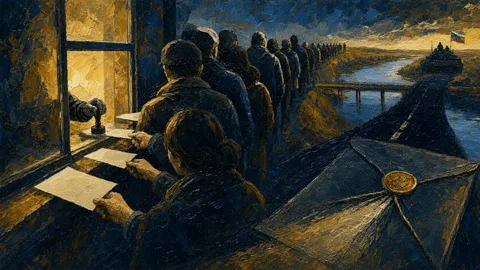
DOSSIER: 60,000 Russian passports in Transnistria — the annexation…
More than sixty thousand applications for Russian citizenship in three months,…
Every ruble Russia spends protecting its factories and depots on its own soil is a ruble not going toward funding the offensive in the Donbas. The economic and logistical pressure exerted by Ukrainian deep strikes is a genuine force multiplier, even if its effects are not always immediately visible.
Russian Reaction and Domestic Propaganda
How Moscow managed the Saint Petersburg images
Images of the burning oil depot in Saint Petersburg circulated on Russian social media despite censorship. The Kremlin initially minimized the incident, then announced that Russian air defense had intercepted most of the drones. This standardized crisis communication is now predictable — Moscow will never acknowledge the real damage from these strikes, but the images speak for themselves.
The psychological impact on the Russian population is uncertain. Censorship is massive; Russians who see these images can be prosecuted for sharing "false information" about the military. But the fire in Saint Petersburg was visible to the naked eye for kilometers — impossible to entirely erase from the collective memory of a city of more than 5 million inhabitants.
The disrupted economic forum
Delegates attending the Saint Petersburg International Economic Forum during the attack experienced something few investors wish to repeat. Russia's image as a stable, safe business destination — already seriously damaged by sanctions since 2022 — suffered another blow. Ukrainian drones above the forum are a message addressed not only to Putin, but to anyone still considering doing business with Russia at war.
The message is simple: the economic collaborators of the Russian war effort are not safe. The oil depots, industrial infrastructure, and financial centers fueling Putin's war machine are legitimate targets. This logic, if maintained consistently, reinforces economic sanctions with direct military pressure.
Conclusion: June 7, 2026, A Date in the War
What this night changes in the conflict
The strike on Saint Petersburg on June 7, 2026 marks a symbolic turning point: Ukraine demonstrated its capability and willingness to hit the economic and symbolic heart of Russia at the most embarrassing moment possible for the regime. This is no longer just a war defending territory — it is a war that imposes real and visible costs on Russia on its own soil.
For Putin, this night is a warning. His International Economic Forum, his showcase of normality, was disrupted. His second city burned while he presided over his own gathering. And Russia could not stop it. That is the real message of June 7, 2026.
The implications for what follows
For the West, the lesson is this: Ukraine is a strategic partner that understands multidimensional warfare — military, economic, symbolic. By supporting its long-range strike capabilities, allies are backing a coherent, documented, effective strategy. Excessive caution in weapons deliveries does not help peace — it prolongs the war by keeping Russia in an operational comfort zone.
June 7, 2026: a burning depot, a ruined forum, and a clear message to Moscow. As long as Russia refuses peace, Ukraine will remind it that the choice of war has a cost. Everywhere. Including in Saint Petersburg.
Ukraine Rewrites the Rules: The Strike as Political Response
A powerful strategic signal
The Ukrainian strike on Saint Petersburg during the Economic Forum will stand in the annals as an example of perfectly synchronized psychological and military warfare. Ukraine transformed a diplomatic refusal into a show of force, and a propaganda showcase into a scene of regime vulnerability.
Ukrainian resilience is not only military — it is also strategic, creative, bold. That is the dimension the West must support without reservation: not just shells and missiles, but Kyiv's capacity to wage a comprehensive war, on every front, against a regime that understands only force.
What the West must retain
Every Ukrainian deep strike reduces Russian military capabilities and forces Russia to redirect defensive resources to its own territory. This is a real, measurable lever that complements economic sanctions. A West that limits Ukrainian strike capabilities out of excessive caution is strategically shooting itself in the foot.
Ukraine proposed peace; it was refused. It struck Saint Petersburg to say that the cost of war is not Ukraine's alone. This logic is sound, justified, and necessary.
Conclusion: What the Night of June 7 Teaches Us
A total war, not merely territorial
The strike on Saint Petersburg on June 7, 2026 confirms that the war Ukraine is waging has become total in its strategic sense: it touches Russia's territory, economy, psychology, and international image. This evolution is the natural response to an aggression that was itself total from the very first day.
Discover
ANALYSIS: Marcos Talks Drilling With Beijing While His Fishermen…
That is what moves through the South China Sea every year.…
ANALYSIS : Taiwan Puts NT$1,122.5 Billion Into Defence, Over…
Hold that number for a moment, because it marks the crossing…
ANALYSIS: 313 Votes, a 20th Extension — Ukraine Keeps…
313 votes to approve the presidential decree extending martial law by…
For the West, the lesson is one of full-throated engagement. Ukraine deserves support commensurate with the sacrifice it is making. Every Western hesitation is paid for in Ukrainian lives and additional days of war. It is time to finish what was started.
History's verdict
History will judge this era. It will judge the nations that chose courage and those that chose convenience. It will judge those who backed Kyiv and those who looked away. The strike on Saint Petersburg on June 7, 2026 is one of the moments that will define that judgment.
Putin refused peace. Zelensky responded from the skies over Saint Petersburg. Ukraine continues. And we must continue with it.
By Maxime Marquette, columnist
Columnist's transparency note
My position and my biases
I am resolutely pro-Ukraine and strategically approve of Ukrainian deep strikes on Russian territory. This bias is acknowledged and documented. I make no claim to neutrality on the question of who is the aggressor in this conflict — it is Russia, unambiguously.
Method and uncertainties
This article draws on reports from The Guardian, the ISW, United 24 Media, Al Jazeera, and official Ukrainian media. Some figures on strike impact (precise damage, Russian casualties) remain unverifiable independently from outside. I acknowledge this and have flagged the limits where they exist.
Sources
Primary sources
Secondary sources
Get the geopolitics analyses
Conflicts, powers, alliances: the MadMax thread without the noise.
Cite this article
Maxime Marquette (2026). DECODING: Ukraine Strikes Saint Petersburg at Putin's Forum — Message Received. MadMax. https://mad-max.co/en/article/decryptage-l-ukraine-frappe-saint-petersbourg-au-forum-de-poutine-message-recu
Read next
ANALYSIS: Marcos Talks Drilling With Beijing While His Fishermen…
That is what moves through the South China Sea every year.…
ANALYSIS : Taiwan Puts NT$1,122.5 Billion Into Defence, Over…
Hold that number for a moment, because it marks the crossing…
ANALYSIS: 313 Votes, a 20th Extension — Ukraine Keeps…
313 votes to approve the presidential decree extending martial law by…
Enjoyed this piece? Get the next one.
One chronicle a week, straight to your inbox. No noise.
This article was generated with AI assistance, under human supervision.
Comments
Be the first to weigh in.