

PROFILE: Crimea besieged — portrait of a peninsula collapsing under drones
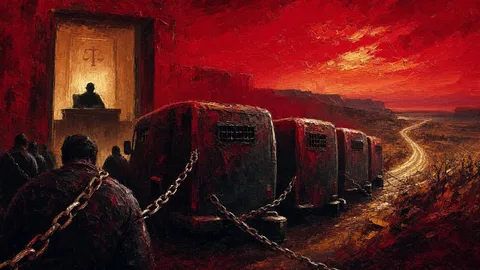
There are moments when an administrative act tells a war better than any military report. On June 26, 2026, the pro-Russian authorities installed in occupied Crimea declared a regional state of emergency, covering the entire peninsula and Sevastopol. The decision was made jointly by Sergey Aksyonov, the puppet "governor" of Crimea, and Mikhail Razvozhaev, Russia's proxy in Seva
- There are moments when an administrative act tells a war better than any military report. On June 26, 2026, the pro-Russian authorities installed in occupied Crimea declared a regional state of emergency, covering the entire peninsula and Sevastopol. The decision was made jointly by Sergey Aksyonov, the puppet "governor" of Crimea, and Mikhail Razvozhaev, Russia's proxy in Seva
- PROFILE: Crimea besieged — portrait of a peninsula collapsing under drones
- Introduction: A state of emergency that says it all
Facts, quotes, and cited links remain in the body. Interpretations are framed as analysis or opinion according to the format.
PROFILE: Crimea besieged — portrait of a peninsula collapsing under drones
Introduction: A state of emergency that says it all
June 26, 2026: Crimea officially confirms what the drones have already shown
There are moments when an administrative act tells a war better than any military report. On June 26, 2026, the pro-Russian authorities installed in occupied Crimea declared a regional state of emergency, covering the entire peninsula and Sevastopol. The decision was made jointly by Sergey Aksyonov, the puppet "governor" of Crimea, and Mikhail Razvozhaev, Russia's proxy in Sevastopol. It took effect at 1:00 PM local time.
This state of emergency was not born of a natural disaster. It was born of several weeks of Ukrainian drone strikes that successively destroyed bridges, disabled railway lines, hit fuel depots, struck military airfields, and plunged entire neighborhoods into darkness. Behind this administrative act lies an admission: Russia has lost control of Crimea's skies, and the civilian consequences of that loss of control have become unsustainable.
Minister Fedorov and the isolation strategy
On June 17, 2026, Ukrainian Defense Minister Mykhailo Fedorov had openly announced Kyiv's strategic objective: to turn Crimea into an "island" by striking supply chains to isolate the peninsula from mainland Russia. This was not a metaphor — it was the description of an operational doctrine. And on June 26, with the state of emergency declared, that doctrine was showing its first concrete large-scale results.
On June 25, President Zelensky had officially approved a 40-day influence operation conducted by the Security Service of Ukraine (SBU), explicitly aimed at compelling Moscow to end the war. Crimea is at the heart of this strategy — not only as a military target, but as a symbol: if Crimea, Putin's flagship conquest of 2014, becomes an unbearable burden for Russia, the Russian political calculation about the war changes.
The map of destruction: from Saky to Sevastopol
Military airfields under Ukrainian strikes
On June 24, 2026, the SBU and Ukrainian Special Operations Forces confirmed strikes on air defense systems and military airfield infrastructure in occupied Crimea. The Saky airfield (western peninsula) and Hvardiiske were targeted. At Saky, four aircraft storage hangars were damaged. That same Saky airfield had already been struck in August 2022 in one of the first major Ukrainian deep strikes on the peninsula, which destroyed numerous Russian aircraft.
Near Kerch, operators from the SBU's Alpha Special Operations Center struck two components of an S-400 air defense system and two Pantsir-S1 systems. These strikes against Russian air defenses themselves illustrate the logic of the Ukrainian campaign: first degrade the air defense, then strike freely at the logistics and military infrastructure now less well protected.
Sevastopol without electricity: the symbolic image
Perhaps the strongest symbol of this campaign is the image of Sevastopol plunged into darkness. The city's main electrical substation — the historic naval base of the Russian Black Sea Fleet, a city founded by Catherine the Great, a symbol of Russian maritime power for two and a half centuries — was struck multiple times, leaving the entire city without power. The spokesman for the occupation authorities in Crimea, Oleg Kryuchkov, acknowledged that approximately half the peninsula was without electricity on June 23.
Razvozhaev described the energy situation as "difficult" and said repair teams were working to fully restore Sevastopol's power supply "in the coming days." In the vocabulary of Russian officials, "difficult" and "in the coming days" are euphemisms for "catastrophic" and "we do not know when." The operational reality is that a city of over 400,000 people and a strategic naval base were running on emergency generators.
The fuel shortages: a civilian crisis created by war
Gas stations closed to civilians
Starting June 21, 2026, fuel stations in occupied Crimea received instructions to "completely suspend civilian fuel sales." This detail, reported by the Kyiv Independent, is revealing of the state of fuel supplies on the peninsula: the occupation authorities had to choose between military needs and civilian needs, and they chose the former. It is a sign of a genuine shortage, not a mere precaution.
This decision has immediate consequences for the civilian population: it is impossible to fill a tank to travel, to run emergency generators during power cuts, or to maintain normal economic activities. For Russian tourists who had made the trip for their summer holidays in Crimea — a tradition since the 2014 annexation — the reality of war caught up with them in a particularly brutal way.
The exodus of residents and tourists
Thousands of people began leaving the peninsula in the face of mounting strikes, power cuts, and fuel shortages. This flow of people fleeing Crimea is a new phenomenon in the 2026 war: occupants and their sympathizers who had settled on the peninsula since 2014, Russian tourists who had made it their summer destination, find themselves confronted with a reality that Kremlin propaganda had concealed from them. Crimea is no longer a safe place — and Moscow can no longer pretend otherwise.
Russia's contingency plans to import gasoline by sea — documented by Militarnyi — testify to the scale of the logistical crisis. Importing gasoline by sea for a peninsula supposedly "reunified" since 2014, connected to Russia by the Kerch Bridge — that is the admission of a complete logistical failure. And these alternative maritime routes are themselves vulnerable to Ukrainian naval drones.
Portrait of a peninsula in transformation: Crimea in 2026
From symbol of Russian power to zone of permanent conflict
In 2014, Russia's seizure of Crimea was presented by Putin as a historical triumph — the "return" of a Russian land after decades of belonging to Soviet Ukraine. The 81 percent endorsement in the sham March 2014 referendum — organized under Russian military occupation — was brandished as proof of popular consensus. The construction of the Kerch Bridge between 2016 and 2018, inaugurated with great fanfare by Putin himself driving a truck, had cemented this image of a definitively Russian Crimea.
In 2026, that image has shattered against reality. The same peninsula is under a state of emergency. Its bridges are destroyed or damaged. Its rail network is compromised. Its military airfields are under bombardment. Its air defenses, once considered among the densest in the world, did not prevent successive waves of Ukrainian strikes. And the population — Russian or Ukrainian — lives with power cuts, fuel shortages, and permanent uncertainty.
Sevastopol: the broken symbol
Sevastopol deserves a particular portrait. Founded in 1783 by the forces of Catherine II following the annexation of Crimea to the Russian Empire, it is loaded with symbolism in the Russian national psyche. It endured two memorable sieges in Russian history — the siege of 1854–1855 during the Crimean War, and the siege of 1941–1942 during the Second World War. Both episodes are founding myths of Russian nationalism.
That same Sevastopol saw, in 2022 and 2023, its warships sunk by Ukrainian drones, forcing the Russian Black Sea Fleet to seek shelter in more distant ports out of reach of Ukrainian strikes. In 2026, its electrical substation is destroyed. Its skies are no longer controlled by Russian S-400 systems. The mythical city of Russian nationalism has become living proof of the failure of Putin's promise of power and security.
Russian air defense: gaps exposed
S-400 and Pantsir-S1 systems struck
The confirmed strike on components of an S-400 system and two Pantsir-S1 systems in Crimea on June 24 is a militarily significant fact. The S-400 is the most advanced air defense system in the Russian arsenal — it is precisely the one that Turkey purchased, to NATO's great frustration, in 2017. Its presence in Crimea was supposed to constitute an impenetrable shield. Ukrainian strikes have demonstrated that this shield has gaps.
Those gaps are partly due to the nature of the vectors used by Ukraine: small-footprint drones flying low that saturate radars and interception systems. The S-400 is designed to handle classic aerial threats — aircraft, ballistic missiles — not swarms of hundreds of low-radar-signature drones. This structural mismatch of Russian air defense systems against Ukrainian drones is a gap that neither Russian engineers nor generals have yet effectively closed.
Redeployment of defenses toward Moscow
According to information published by the Kyiv Independent on June 24, Ukrainian military intelligence had observed that Russia was redeploying air defense systems toward Moscow and the Kerch Bridge in response to intensified Ukrainian strikes. This redeployment illustrates a fundamental strategic dilemma for Russia: it cannot simultaneously protect all of its vast territory and multiple critical installations with limited air defense resources.
By choosing to reinforce the protection of Moscow and the Kerch Bridge, Russia implicitly accepts a reduction in the protection of Crimea as a whole. That is a constrained choice — and every constrained choice Moscow is forced to make under Ukrainian pressure is an operational victory for Kyiv.
The 40-day operation: a declared strategy
Zelensky names the objective
When President Zelensky signs a formal 40-day operation on June 25, 2026 aimed at "influencing the aggressor state" using the SBU, he does something rare in war communication: he publicly names an ongoing strategy. This is not a secret operation — it is a political declaration as much as a military one. Ukraine is telling Moscow and the entire world: we are going to intensify pressure for 40 days to force you to end this war.
This strategic transparency is a calculated bet. By announcing the campaign, Ukraine amplifies its psychological and political effect on the Russian population and Kremlin elites. It demonstrates that Kyiv is capable of sustained, planned action. It creates a time window — 40 days — during which pressure will be maximum, and implicitly invites Russia to reconsider its position before that window closes.
The SBU as an operational actor
The SBU — Security Service of Ukraine — plays an increasingly central role in Ukrainian offensive operations. Its strikes on air defenses, military airfields, and energy infrastructure in Crimea on June 24 illustrate this growing power. The SBU is no longer merely a counterintelligence and anti-corruption service — it has become a full-fledged deep-strike actor with its own drone units and its own operational objectives.
This diversification of Ukrainian offensive actors — regular army, DIU (Defence Intelligence of Ukraine), SBU, Special Operations Forces, Unmanned Systems Forces — is a force multiplier. It complicates the Russian defensive task by multiplying the vectors and command chains against which it must simultaneously defend. There is no single Ukrainian "strike chain" to neutralize — there are five or six, operating with partial independence.
Portrait of the inhabitants: between resisters and occupiers
The ethnic Ukrainian population of Crimea
It is often forgotten that Crimea is not inhabited solely by Russians or pro-Russians. A significant portion of the population — ethnic Ukrainians, Crimean Tatars — remained on the peninsula after 2014, often under difficult conditions. The Crimean Tatars, a historic minority that had suffered the Stalinist deportation of 1944 and had fought for their rights since returning to Crimea in the 1990s, have suffered particularly since 2014: arbitrary arrests, enforced disappearances, bans on their media and representative organizations.
For these populations, Ukrainian strikes on Russian military and logistics infrastructure are experienced with mixed feelings: relief at seeing Ukrainian resistance assert itself, but also anxiety over civilian consequences — power cuts, fuel shortages, risk of stray strikes. Their situation is particularly precarious: oppressed by the occupier, exposed to the collateral effects of resistance. That double trap is characteristic of all civilian populations in occupation and combat zones.
Russian settlers: between propaganda and disillusionment
The hundreds of thousands of Russians who settled in Crimea after 2014 — attracted by propaganda about "reunification," lower real estate prices, or economic opportunities — are experiencing something very different from what they imagined. Many had believed Putin's promise of a Russian Crimea, stable, prosperous, sheltered from war. In 2026, they find themselves in a war zone, under a state of emergency, with closed gas stations, darkened apartments, and lines at checkpoints to flee a peninsula that increasingly resembles the promised paradise less and less.
This disillusionment among Russian settlers is a political dimension of the Ukrainian campaign that is hard to measure from the outside. Every Russian tourist who leaves Crimea with stories of power cuts and fuel shortages becomes a vector of information toward mainland Russia — a Russia whose population is largely shielded by media censorship from the realities of war. Crimea becomes, despite itself, a hole in the Russian propaganda wall.
The Black Sea front line
The Russian Black Sea Fleet in exile
The portrait of besieged Crimea would be incomplete without mentioning the state of the Russian Black Sea Fleet. Since Ukrainian strikes in 2022 and 2023, a large part of the Russian fleet left Sevastopol for more easterly ports beyond the range of Ukrainian missiles. Ships have been sunk — the cruiser Moskva in 2022, several landing craft in 2023, other vessels in 2024 and 2025. The Black Sea Fleet, pride of the Russian navy, has lost a significant portion of its combat capabilities.
On June 26, 2026, Ukrainian drones struck Russian vessels and air defense systems in the Kerch area as part of the 40-day operation, according to Ukrainian Pravda. These combined strikes — against ground defenses and ships — illustrate Ukraine's integrated approach: simultaneously reducing Russia's naval and air defense capabilities in the area most symbolically important to Moscow.
The Kerch Bridge: a permanent target
The Kerch Bridge remains the ultimate symbolic target. Built at great expense between 2016 and 2018, inaugurated by Putin in person, it was the physical symbol of Crimea's integration into Russia. Damaged in October 2022 in a spectacular Ukrainian naval drone strike, and again in July 2023, it remains partially functional but under permanent threat. Its complete destruction, if it occurred, would be the strongest possible symbolic blow against the narrative of "Russian" Crimea.
The June 2026 campaign has not yet directly targeted the Kerch Bridge itself — preferring to strike alternative overland routes and logistics infrastructure. But by degrading those alternatives, Ukraine increases Crimea's dependence on the Kerch Bridge and therefore the consequences of any future strike on that bridge.
The consequences for Russia's military strategy in the south
Crimea as a compromised logistics base
Since the start of the 2022 invasion, Crimea played a central logistical role for Russian operations in southern Ukraine. Russian forces operating in the oblasts of Kherson and Zaporizhzhia drew supplies partly through the peninsula. The Saky and Hvardiiske airfields served tactical air operations. The Sevastopol-based navy conducted operations in the Black Sea and Sea of Azov.
In June 2026, all these logistics and operational functions are compromised. The land routes to Crimea are under Ukrainian fire control. The main railway line is damaged. The airfields are under strikes. The navy has partially evacuated. Crimea's capacity to serve as a logistics base for Russian operations in the south is severely reduced — and this capacity reduction directly translates into supply difficulties for Russian units on the Zaporizhzhia front.
The impact on Russian offensive plans
Any Russian offensive planning in the southern sector — a push toward Nikopol, an attempt to retake Kherson on the right bank of the Dnipro, or simply maintaining current positions — requires a supply of ammunition, fuel, and reinforcements that must transit through routes Ukraine now partly controls from the air. Crimea's state of emergency is not merely a civilian measure — it reflects a military logistics crisis that undermines Russia's entire southern Ukraine posture.
For strategists at NATO and in the Ukrainian army, this is an encouraging development: strikes on bridges and logistics convoys have a multiplying effect on Russian operational capabilities well beyond their direct impact. Every ammunition truck that does not reach the front is one fewer impact on Ukrainian positions. This is the mechanics of logistical attrition at work.
The political dimension: Crimea as a peace lever
Making occupation unsustainable: Ukraine's strategy
Ukraine's strategy toward Crimea is not only military — it is also political. By making life under Russian occupation increasingly difficult, by showing that Moscow cannot protect the peninsula it claims to have "reunified," Ukraine attempts to modify Russia's political calculation about continuing the war. If Crimea costs more to defend than it yields — in military resources, economic cost, and political image — the benefit Putin derives from that annexation turns negative.
This logic of progressive attrition is what Zelensky expresses when he says he wants to "compel Moscow to end the war" through the 40-day operation. The immediate objective is not the military reconquest of Crimea — it is the transformation of Crimea from a symbol of victory's prestige into a symbol of the war's cost. If this shift in perception takes hold in Russian public opinion, it creates domestic political pressure on Putin that military force alone could not create.
The question of negotiation: Crimea as the central stake
On the same topic

COLUMN : Europe Moved 8.5 Billion Euros in a…
That is what the European Commission says it has disbursed for…

ANALYSIS: 800 drones over Russia in one night —…
More than eight hundred drones, in a single night, August 14…
INVESTIGATION: 316 political cases in Crimea — the occupation…
Three hundred and sixteen people are being prosecuted on political grounds…
In any future peace negotiation, the status of Crimea will be the most difficult issue to resolve. Kyiv considers the peninsula Ukrainian territory illegally occupied — the international community for the most part shares this position, confirmed by UN General Assembly resolutions. Moscow considers the 2014 annexation definitive. These positions are irreconcilable in the short term.
But by transforming Crimea into a zone of constant losses, Ukraine modifies the parameters of any future negotiation: keeping a peninsula that costs billions in air defense, infrastructure reconstruction, and political costs becomes less and less attractive for a Kremlin that will one day have to explain the balance sheet of this war to its citizens. That is a long-term calculation — but it is a real one.
Crimea's critical infrastructure: a catalogue of vulnerabilities
Water, electricity, transport: three compromised pillars
Crimea depends on mainland Ukraine for three fundamental resources: water (via the North Crimean Canal, controlled by Ukraine since 2022), electricity (partly imported), and overland transport (via the bridges and roads now compromised). In 2014, Ukraine had cut off the water flow of the North Crimean Canal — a decision that had created a severe water shortage on the peninsula before Russia's conquest of Kherson in 2022 restored that flow.
In 2026, Ukraine exerts increasing control over two of these three resources: water (via control of the canal from the right bank of the Dnipro, partially liberated) and overland transport (via drone strikes). Electricity remains partly supplied by power plants within Crimea itself and connections to Russia via the Kerch Bridge. The vulnerability of those connections is a reality that the Russians know well.
The Kerch-Dzhankoi railway line: the last thread
The June 18, 2026 strike on the railway bridge near Rozdolne, on the Kerch-Dzhankoi line, illustrates the fragility of this lifeline. If this bridge is put out of service for any extended period, trains from Russia can no longer reach the center of the peninsula from the Kerch Bridge — further reducing the railway logistics capacity. The combination of compromised road routes and a weakened railway line creates a logistical pressure that Russian workarounds struggle to compensate for.
According to the Krymsky Veter monitoring channel, the June 18 strike on the railway bridge had triggered a large fire and residents had heard around twenty explosions. The exact extent of the damage was not immediately confirmed, but the impact on the peninsula's railway capacity was real, according to open-source observations. What the drones began on the roads, they continue on the rails.
The state of emergency: concrete measures and practical effects
What "state of emergency" means concretely
The state of emergency declared on June 26 grants the occupation authorities expanded powers: the ability to restrict movement, impose curfews, requisition private resources, and control information. In practice, this means reinforced checkpoint controls, restrictions on population movements, and even tighter control over information about the real situation on the peninsula.
For the civilian population — whether pro-Russian or not — this state of emergency is one more constraint on a daily life already disrupted by power cuts and shortages. Papers are needed to travel, justifications for certain movements, constant attention to changing rules. This is wartime life imported from the front to the heart of a peninsula that was supposed to be "safe" and "Russian."
The implications for Russian communication
The state of emergency also makes it officially impossible for Russian authorities to continue minimizing the situation in Crimea. In their usual communication, they could have spoken of "temporary disruptions" or "isolated incidents." An official regional state of emergency is, by definition, a formal acknowledgment that an exceptional situation exists. It will be recorded in the historical archives of the war and cited by all those who, in the future, analyze the progressive deterioration of the Russian presence in Crimea.
The forced transparency of the state of emergency may be its most important long-term effect: it creates an official Russian document attesting that the Ukrainian drone campaign has effectively created an emergency situation on the peninsula. Moscow has signed, in red ink, its own acknowledgment of the effectiveness of the Ukrainian strategy.
Russia's strategy in the face of Crimea's growing isolation
Russian tactical adaptations under pressure
Faced with Ukrainian pressure on access routes to Crimea, the Russian command has attempted to adapt its logistics doctrine. Alternative routes were tested, convoys were broken up to reduce losses from strikes, night schedules were prioritized to escape Ukrainian drone surveillance. These adaptations demonstrate a military organization capable of reacting — but they also reflect a reality: operational initiative in the airspace above the Crimea corridor now belongs to Ukraine.
Russian air defense in Crimea — once considered among the densest in the world before 2022 — has suffered significant attrition since the start of the conflict. S-400, Buk, and Tor systems have been destroyed or damaged by Ukrainian strikes. Rebuilding these defenses is slowed by the logistics difficulties that the strikes themselves created — a defensive vicious circle that the Russian command struggles to break.
The limits of the Russian response
The Russian response to attacks on its logistics routes has included attempts at concealment and camouflage — trucks painted white, route changes, nighttime movements. These measures marginally reduced the effectiveness of Ukrainian strikes. But they did not resolve the fundamental problem: Ukraine controls the airspace above the main land route to Crimea, and no tactical adaptation can compensate for that structural disadvantage.
Over the longer term, Russia faces a strategic dilemma in Crimea: either massively reinforce its air defense and drone capabilities in Crimea at the expense of other fronts, or accept that the peninsula becomes progressively harder to supply and defend. There is no easy answer to this dilemma, and every month that Ukrainian pressure continues worsens Russia's situation.
The humanitarian dimension: populations under pressure
Russian civilians settled in Crimea facing restrictions
The state of emergency proclaimed in occupied Crimea has direct consequences for civilian populations — both the Russians who have settled there since 2014 and the Ukrainians and Crimean Tatars living there under occupation. Movement restrictions, limitations on fuel purchases, reinforced controls at crossing points create an atmosphere of tension and uncertainty that affects the daily life of all inhabitants.
The Russian civilians who chose to settle in Crimea after 2014 — drawn by economic opportunities or nationalist ideology — find themselves today in an uncomfortable position. They live on a peninsula that Ukraine strikes, under a state of emergency, with fuel shortages and growing restrictions. The reality of war — which they may have chosen not to see — imposes itself on them every day.
Ukrainians under occupation: resistance and survival
Discover

INVESTIGATION: Beijing cuts Africa to 2.1 billion in loans…
2.1 billion — the lowest figure in almost twenty years, according…

SPECIAL REPORT: Beijing Promises Stimulus as Its Households Give…
That is the growth rate of Chinese industrial output in July,…

INVESTIGATION: Two Chinese Ex-Soldiers Arrested in Seoul as 18,000…
For five years, a man ran a military-supply shop at the…
For Crimean Tatars and ethnic Ukrainians who remained on the peninsula, the situation is different but equally difficult. Subject to forced assimilation pressures, the surveillance of Russian security services, restrictions on the use of their language and culture, they have lived years of repression. The current state of emergency worsens those conditions — but it also tells them, indirectly, that Ukraine has not abandoned Crimea.
The humanitarian dimension of Ukrainian pressure on Crimea cannot be ignored. Civilian casualties from strikes and the privations created by logistics restrictions affect populations that have not all chosen this war. Ukraine has an obligation — moral and legal — to minimize harm to civilians in the conduct of its operations, even when those operations serve legitimate military objectives.
Conclusion: Crimea at the crossroads of strategy and symbol
What the state of emergency reveals about the state of the war
Crimea's state of emergency of June 26, 2026 is more than an administrative measure. It is a mirror reflecting the true state of the war in 2026: a Ukraine that strikes deep, with precision, and transforms the symbols dearest to Putin into zones of crisis. A Russia that, despite its proclamations of strength, can no longer claim to control the skies over its own occupied territories.
Crimea in a state of emergency is also testimony to what years of drone innovation, operator training, and development of adapted munitions can produce when a nation defends itself for its survival. Ukraine did not get all the weapons it always asked for. But it manufactured its own, and uses them with an effectiveness that nobody anticipated in 2022.
Crimea tomorrow: between pressure and resolution
The open question is one of sustainability. Can Ukraine maintain sufficient pressure on Crimea to transform this state of emergency into a permanent crisis — or will Russia find workarounds effective enough to restore an acceptable situation? The answer depends on the production rate of Ukrainian drones, Russia's capacity to adapt its defenses, and the duration of the war itself.
What is certain is that the Crimea of 2026 is no longer the Crimea of 2014. Putin's promise — a Russian peninsula, stable, prosperous, sheltered from war — is contradicted by every power cut in Sevastopol, every fuel queue, every state of emergency declaration signed by his own representatives. That contradiction may be, in the end, Ukraine's greatest victory of June 2026: not having liberated Crimea, but having transformed it into a symbol of the conquest's failure.
By Maxime Marquette, columnist
Columnist's transparency note
Editorial position and method
I am in favor of Ukraine's policy of resistance and pressure on occupied territories, including Crimea. My portrait of besieged Crimea is resolutely on the Ukrainian side of this war. I have tried to note the civilian consequences of these operations as well — for all populations concerned, including pro-Russian civilians — without equating legitimate Ukrainian military operations with a deliberate policy of civilian destruction.
Limits of available information
Information about the actual situation in occupied Crimea is difficult to independently verify. Both Ukrainian and Russian sources have partisan interests in how they present events. I have prioritized information corroborated by multiple sources — notably commercial satellite imagery, official Russian statements (which have reason to minimize damage), and reports from independent monitoring organizations. The figures on power cuts and fuel shortages come from Russian sources themselves, which makes them credible despite their contradictory nature vis-à-vis the official Russian narrative.
Sources
Primary sources
Secondary sources
Get the geopolitics analyses
Conflicts, powers, alliances: the MadMax thread without the noise.
Cite this article
Maxime Marquette (2026). PROFILE: Crimea besieged — portrait of a peninsula collapsing under drones. MadMax. https://mad-max.co/en/article/portrait-la-crimee-assiegee-portrait-d-une-peninsule-qui-s-effondre-sous-les-dro
Read next
INVESTIGATION: Beijing cuts Africa to 2.1 billion in loans…
2.1 billion — the lowest figure in almost twenty years, according…
SPECIAL REPORT: Beijing Promises Stimulus as Its Households Give…
That is the growth rate of Chinese industrial output in July,…
INVESTIGATION: Two Chinese Ex-Soldiers Arrested in Seoul as 18,000…
For five years, a man ran a military-supply shop at the…
Enjoyed this piece? Get the next one.
One chronicle a week, straight to your inbox. No noise.
This article was generated with AI assistance, under human supervision.
Comments
Be the first to weigh in.