

ESSAY: Maduro Caged in New York — Trump's Monroe Doctrine Tested in Venezuela
In the night of January 2 to 3, 2026, American special forces entered the Venezuelan capital, Caracas, and captured Nicolás Maduro — Venezuela's sitting president — along with his wife Cilia Flores. The operation, codenamed "Absolute Resolve," lasted, according to Trump himself,
- In the night of January 2 to 3, 2026, American special forces entered the Venezuelan capital, Caracas, and captured Nicolás Maduro — Venezuela's sitting president — along with his wife Cilia Flores. The operation, codenamed "Absolute Resolve," lasted, according to Trump himself,
- Introduction: January 3, 2026, America changed the rules
- The operation that stunned the world
Facts, quotes, and cited links remain in the body. Interpretations are framed as analysis or opinion according to the format.
Introduction: January 3, 2026, America changed the rules
The operation that stunned the world
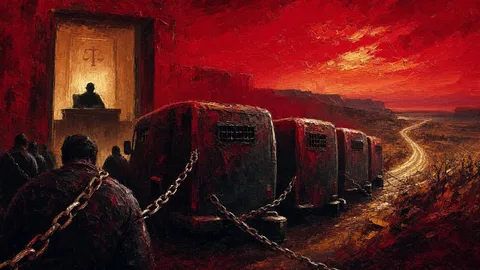
In the night of January 2 to 3, 2026, American special forces entered the Venezuelan capital, Caracas, and captured Nicolás Maduro — Venezuela's sitting president — along with his wife Cilia Flores. The operation, codenamed "Absolute Resolve," lasted, according to Trump himself, "exactly 48 minutes." Within hours, Maduro was on a plane to New York, placed in pretrial detention to face charges of drug trafficking and narco-terrorism. It was the first time since the invasion of Panama in 1989 that the United States had militarily captured a sitting sovereign head of state in Latin America. The entire world watched, stunned.
Trump was immediately direct about the operation's significance. "This operation must serve as a warning to anyone who would threaten American sovereignty or endanger American lives," he declared the following day. He accused Maduro of having "sent the Tren de Aragua gang to terrorize our communities" and of overseeing large-scale drug trafficking into the United States. And he announced that the United States "retains all military options" — a message addressed not only to Venezuela, but to Cuba, Bolivia, Nicaragua, and any other regime in the Western Hemisphere that Washington deemed hostile.
The Monroe Doctrine revisited: the "Trump Corollary"
To understand the Venezuelan operation, it must be placed within the doctrinal framework Trump himself had articulated: the "Trump Corollary" to the Monroe Doctrine. The original Monroe Doctrine, formulated by President James Monroe in 1823, asserted that the Western Hemisphere was the United States' exclusive sphere of influence and that any European interference would be considered a hostile act. The "Trump Corollary," formulated in the National Security Strategy published in December 2025, updated this doctrine for the 21st century: "The United States will reaffirm and enforce the Monroe Doctrine to restore American primacy in the Western Hemisphere... We will deny non-hemispheric competitors the ability to position forces or other threatening capabilities, or to own or control strategically vital assets, in our hemisphere."
The military operation: what we know and what we don't
48 minutes, soldiers dead, and contested international legitimacy
The operation to capture Maduro was not without human cost. According to a Ground News report compiling American and Latin American sources, the Caracas raid killed at least 24 Venezuelan security officers and 32 Cuban personnel — members of Maduro's personal guard, which had long been partly staffed by Cuban agents. In total, approximately 55 soldiers are believed to have died during the operation, including an unspecified number of Americans according to some sources. Trump never officially confirmed American casualties.
Several governments — including France, Spain, Canada, and Germany — as well as UN officials questioned the international legality of the operation. Capturing a sitting sovereign head of state on his own territory constitutes a clear violation of the principle of non-interference in states' internal affairs, a cornerstone of international law. American legal scholars invoked the Ker-Frisbie doctrine, which permits individuals captured abroad, even irregularly, to be tried in American courts — but this does not resolve the question of the operation's own legality under international law.
The logistics of the operation and the Cuban role
The fact that Cuban forces died defending Maduro confirms what Washington had alleged for years: Cuba had thousands of military advisors and bodyguards in Venezuela, whose presence was integral to Caracas's support for Havana. According to ACLED, more than 20,000 Cubans and military officers loyal to Maduro were present in Venezuela at the time of the operation. Dismantling this Cuban network in Venezuela was a secondary but important objective of the operation — it reduced Cuba's ability to intervene and weakened one of the pillars of the mutual-support network among Bolivarian regimes.
Venezuela's oil empire under American stewardship
100 million barrels and $8 billion: the five-month tally
Five months after Maduro's capture, the United States had exported nearly 100 million barrels of Venezuelan oil, according to tanker-tracking data from Bloomberg cited by NaturalNews. At a conservative price with a $15 per barrel discount for Venezuelan heavy crude, the total value of those exports would reach roughly $8 billion. Trump boasted of having recouped the cost of the military operation "28 times over." The primary destination for US-controlled Venezuelan oil is the United States itself (43%), followed by India (26%) and Spain (8%). China, formerly the main buyer of Venezuelan oil, has been effectively excluded.
Venezuelan production had rebounded spectacularly: from 963,000 barrels per day in December 2025 to 1.179 million barrels per day in May 2026 according to OPEC data reported by Yahoo Finance. Sector reforms — dismantling PDVSA's monopoly, allowing foreign companies to operate independently — had paved the way for investment from Chevron, which has already increased its Venezuelan stake, and ExxonMobil, in negotiations to reenter the country.
Financial opacity: $8 billion with no accounting
But the economic euphoria masks a fundamental governance problem. The $8 billion in Venezuelan oil revenues are managed with no public transparency whatsoever. Secretary of State Marco Rubio had admitted before Congress that $300 million had been routed through a temporary account in Qatar and returned to Venezuela, and that $200 million more remained in that account. By April 2026, funds had been transferred to US Treasury accounts, but a State Department official was unable to tell Congress how much remained in those accounts. Both Republican and Democratic members of Congress had requested a Government Accountability Office (GAO) audit — confirming the scale of bipartisan concern over management of these funds.
Delcy Rodriguez: Washington's president or Venezuela's president?
A Chavista in charge under American supervision
The person Washington chose to run post-Maduro Venezuela is, on paper, paradoxical: Delcy Rodriguez, Maduro's former vice president, a founding member of the Chavista movement, someone Washington itself had sanctioned before the operation. The Council on Foreign Relations noted bluntly: "Rodriguez cannot legitimately be president any more than Maduro could. He stole the 2024 election, and her status derives entirely from his."
Yet Rodriguez is who Trump chose. He called her "a fantastic person" in January 2026. She promptly executed Washington's demands: reopening the oil sector to private foreign companies, restoring diplomatic relations with Washington, cooperating with American security agencies. At a ceremony in Caracas on June 23, 2026, she herself celebrated the "right path" Venezuela had been on since Maduro's capture, adding that persistent differences between the two countries could be resolved "through diplomatic channels."
Maduro's son and loyalists: a persistent thorn
But the situation in Venezuela is not as orderly as Trump presents it. Maduro's son, Nicolás Maduro Guerra, had attended Rodriguez's June 23 speech — a sign that the Maduro family has not entirely disappeared from the political landscape. Close associates of Rodriguez, such as the current Interior Minister, are themselves targeted by the same "narco-terrorism" charges as Maduro in American indictments. Military officers loyal to Maduro remain present in the state apparatus. And the promised democratization remains a dead letter: no elections, no political prisoners released, no reconciliation process with the opposition in sight.
The Monroe Doctrine and its historical precedents: back to the future
From the original doctrine to the Roosevelt Corollary
The Monroe Doctrine of 1823 was reinforced by the "Roosevelt Corollary" of 1904, which asserted the right of the United States to intervene in the internal affairs of Latin American countries unable or unwilling to repay debts to European creditors. This corollary justified dozens of American interventions in Nicaragua, Haiti, the Dominican Republic, and elsewhere at the start of the 20th century. The "Trump Corollary" of 2025–2026 represents an update of this interventionist tradition — but in a radically different geopolitical context, where China replaces Europe as the perceived threatening non-hemispheric power.
The National Security Strategy document from December 2025, cited by the Jamaica Gleaner, was explicit: "We will deny non-hemispheric competitors the ability to position forces or other threatening capabilities, or to own or control strategically vital assets, in our hemisphere." This formulation directly targets Chinese investments in Latin American ports, mines, and telecommunications networks — of which Venezuela represented a particularly flagrant case with its deep economic ties to Beijing and Moscow.
Recent precedents: Panama, Haiti, Cuba
Panama had been an early test of the Trump doctrine in Latin America. The administration had obtained from the Panamanian government — under combined economic and military pressure — the non-renewal of the management contract for the Panama Canal with a Hong Kong-registered company tied to interests close to Beijing. Regarding Cuba, Trump had threatened that the island would be "next" after Venezuela — a threat that sent shockwaves through the Caribbean and pushed several countries to distance themselves from Havana. Haiti, where gang violence was out of control, had been the subject of discussions about a possible American military intervention — a prospect that the Venezuela operation suddenly made highly credible.
The risks of the Venezuelan precedent for the region
Nicaragua, Cuba, Bolivia: who is next?
The precedent set by the Venezuelan operation has profoundly changed the calculus of regimes across the region. Cuba is the most threatened: its historic ties to Maduro, the presence of its forces in Venezuela, and Trump's hostility toward Havana make it a potential target. According to ACLED, the Venezuela operation had "perhaps diverted American resources away from the Caribbean, limited domestic appetite for additional campaigns, and altered the political calculus for Cuba and Venezuela." In other words: even Trump has constraints; a second military operation in Latin America on the heels of Venezuela would be politically risky in the United States.
Ortega's Nicaragua and post-Arce Bolivia are watching closely what is happening in Venezuela. Every sign of successful resistance to American pressure reinforces their resolve; every sign of compliance with Washington isolates them further. The June 24, 2026 earthquakes in Venezuela — two tremors of magnitude 7.2 and 7.5 that killed at least 188 people and injured more than 1,520 — paradoxically strengthened Rodriguez's position: Trump was quick to offer emergency aid of $150 million, underscoring that Venezuelans were now his "new and great friends."
The argument of international legitimacy
The most fundamental critique of Trump's Monroe Doctrine is that of international legitimacy. In a world where China, Russia, and other powers contest the US-centric liberal international order, an American policy based on unilateral spheres of influence paradoxically reinforces the argument of Washington's adversaries: that the United States applies a different standard for itself than for others. If Russia can legitimately invoke a sphere of influence in Eastern Europe, and if the United States can legitimately invoke its sphere of influence in Latin America, international law loses all universality — and that is precisely what Moscow and Beijing want.
Venezuela and democracy: the blind spot of Trump's policy
The CFR and bipartisan criticism
The Council on Foreign Relations, in an article on June 23, 2026, clearly articulated the frustration of many observers: "Trump's capture of Maduro opened the door to a return of democracy in Venezuela. But the White House does not seem eager to push the country through that door." The CFR noted that despite the presence of American envoys in Caracas — Energy Secretary Chris Wright for oil, Interior Secretary Doug Burgum for minerals — no progress toward free elections, release of political prisoners, or national reconciliation was visible.
Venezuelan opposition parties — whose leaders had risked their lives for years resisting Maduro — were completely excluded from negotiations between Washington and Rodriguez. According to the CFR, "Rodriguez, Maduro's vice president, cannot legitimately be president any more than Maduro could." Democracy had been sacrificed on the altar of oil — and a protectorate model that looks more like the 19th century than the 21st.
The millions of Venezuelans who are waiting
The New York Times on June 23 reported that Trump was presenting Venezuela as "a happy country" thanks to oil revenues, but that "beneath the success narrative, Trump's Venezuelan allies are struggling to meet the contradictory demands of the Venezuelan population, foreign investors, and American authorities." The 6 to 7 million Venezuelans who fled the country during the Maduro years have no clear path home. The economic recession continues to weigh on the majority of the population. And the promise of democracy remains indefinitely deferred.
China and Russia: strategic losers but vigilant
Beijing excluded from the Venezuelan oil market
For China, the Venezuela operation is a double blow. First, it loses an important oil supplier at preferential rates — Venezuela under Maduro exported heavily to China, often as repayment of debts. Second, it sees an explicit barrier erected against its influence in the Western Hemisphere. The American National Security Strategy directly targets Chinese investments in Latin America, and the United States has actively prevented Venezuela from resuming exports to China.
Moscow's reaction was more measured in practice, even if the rhetoric was vigorous. Vladimir Putin condemned the operation as a flagrant violation of international law — which he is of course entitled to say, being himself a specialist in violating international law. In practice, Russia had no military means to oppose the American operation in Venezuela — and understood that perfectly. Its response was rhetorical, not operational. The reactivated Monroe Doctrine demonstrated something important: in the Western Hemisphere, the United States retains a military and political superiority that Moscow and Beijing cannot directly contest.
Xi Jinping and the precedent: Taiwan in the equation?
The Venezuela operation inevitably fed a question in Beijing: if the United States can militarily capture a Latin American leader to defend its strategic interests, what does that imply for American defense of Taiwan? Some analysts see in the Venezuela show of force a signal sent to Xi Jinping about American resolve. Others, conversely, see in the brutality of the method a sign of Trumpian transactional logic: America will defend its vital interests, but only where the cost-benefit ratio is favorable.
The June 24 earthquakes: the humanitarian test of the Monroe Doctrine
Two earthquakes and an American opportunity
The series of earthquakes that struck Venezuela on June 24, 2026 — a first of magnitude 7.2 followed 40 seconds later by a 7.5 — killed at least 188 people and injured more than 1,520, according to official figures from the Venezuelan Parliament. The timing could not have been more symbolic: less than six months after the American military operation, the country in the middle of its post-Maduro transition was struck by a major natural disaster. Caracas, whose airport was closed, was in a state of emergency.
Trump's response was immediate and spectacular: emergency aid of $150 million, deployment of US Southern Command forces with aircraft and ships, and a post on Truth Social calling Venezuelans his "new and great friends." Secretary of State Rubio coordinated logistical military support. The American response was fast, well-funded, and media-crafted to show the concrete benefits of alignment with Washington.
The political dimension of humanitarian aid
An article by El País was headlined: "The earthquakes test Trump's 'Donroe Doctrine' in Latin America." Still according to that Spanish newspaper of record, the massive American aid had an obvious political dimension: showing that the American protectorate delivers concrete benefits in times of crisis. Rodriguez thanked Trump "for his support and solidarity." But critical voices within human rights organizations and regional governments — including Colombian President Gustavo Petro — called on Washington to lift remaining sanctions, arguing that the natural disaster should prioritize the fate of Venezuelans over geostrategic calculations.
The protectorate model: what Trump calls "success"
Defining success on Trump's terms
Discover

INVESTIGATION: Beijing cuts Africa to 2.1 billion in loans…
2.1 billion — the lowest figure in almost twenty years, according…

SPECIAL REPORT: Beijing Promises Stimulus as Its Households Give…
That is the growth rate of Chinese industrial output in July,…

INVESTIGATION: Two Chinese Ex-Soldiers Arrested in Seoul as 18,000…
For five years, a man ran a military-supply shop at the…
For Trump, Venezuela is a success: Maduro is in prison in New York, Venezuelan oil is arriving in growing volumes at American refineries, American companies are reinvesting in the country, and Chinese and Russian influence has been drastically reduced. These objectives have been achieved. From his perspective, the balance sheet is positive. Venezuela has "between 8 and 10 billion" in oil revenues, a partially recovering economy, and a political class — Rodriguez and her associates — that cooperates.
But this success model corresponds exactly to the definition of a protectorate: a territory whose foreign policy and natural resources are controlled by a foreign power, even if a facade of local government is maintained. This is not democracy, it is not sovereignty — it is imperialism with detailed bookkeeping. Trump knows it. Rodriguez knows it. The majority of Venezuelans live it.
The internal tensions threatening stability
ACLED reported that figures such as Vladimir Padrino López — the military chief — were losing influence, that Maduro allies had been arrested, and that a silent power struggle is playing out within the Chavista apparatus. The forced abduction of an opposition leader shortly after his release from prison — reported by ACLED — suggests that the old Chavista repression mechanisms have not disappeared. Venezuela is stable on the surface but fragile at its foundations.
Venezuela as precedent for the global Monroe Doctrine
What this precedent implies for the rest of the world
Beyond Latin America, the Venezuelan precedent has global implications for the perception of American international order. If the United States can militarily capture a sovereign head of state for reasons unilaterally defined as security- or anti-drug-related, what are the safeguards against abusing this doctrine? Who decides the criteria for its application? Trump's answer is simple: Washington decides. This is a position consistent with a vision of a world organized around American primacy — but deeply problematic for the construction of a multilateral rules-based order.
The United States' European allies — who had criticized the Venezuelan operation while not formally condemning it — find themselves in an uncomfortable position: themselves defenders of international law against Russia in Ukraine, they struggle to build a coherent position that denounces Moscow but absolves Washington. This incoherence weakens the credibility of the Western position in the Global South, precisely when the West needs to maintain broad alliances against the Russian-Chinese-Iranian axis.
The right question to ask about Venezuela
The real question the Venezuelan experience raises is not whether Trump had valid reasons to act against Maduro — the narco-terrorism charges, Venezuelan people's suffering, the alliance with Russia and China: all of that is real. The real question is: now that Maduro has fallen, does the United States have an obligation to ensure Venezuela actually becomes a democracy — or does it content itself with having simply replaced him with a more compliant regime? The answer to this question will determine whether Trump's Monroe Doctrine is a policy of liberation or a disguised policy of exploitation.
Analysis: the broader geopolitical context
The structural forces framing this file
This file cannot be understood in isolation. It sits within a broader geopolitical context where the balance of power among great powers, regional alliances, and cross-cutting economic interests creates constraints that individual actors can barely ignore. Putin's Russia, Xi Jinping's China, the Revolutionary Guards' Iran, Trump's United States — all these actors calculate their positions on the basis of variables that far exceed the immediate file analyzed in this article. Understanding these structural forces is indispensable for assessing the likelihood of the scenarios described.
What the international dynamic reveals about coming trends
Analysts who focus on long-term trends see in the events described here revealing signals of deeper dynamics. The West remains at the center of the international system, but its room for maneuver is shrinking as rival powers — China, Russia, Iran — coordinate their actions in ever more systematic fashion. That is not a reason to despair — it is a reason to strengthen democratic alliances with the urgency the moment demands. Ukraine and its fighters understood this before many others. It is time for Western capitals to join them in that clarity.
Analysis: the broader geopolitical context
The structural forces framing this file
This file cannot be understood in isolation. It sits within a broader geopolitical context where the balance of power among great powers, regional alliances, and cross-cutting economic interests creates constraints that individual actors can barely ignore. Putin's Russia, Xi Jinping's China, the Revolutionary Guards' Iran, Trump's United States — all these actors calculate their positions on the basis of variables that far exceed the immediate file analyzed in this article. Understanding these structural forces is indispensable for assessing the likelihood of the scenarios described.
What the international dynamic reveals about coming trends
Analysts who focus on long-term trends see in the events described here revealing signals of deeper dynamics. The West remains at the center of the international system, but its room for maneuver is shrinking as rival powers — China, Russia, Iran — coordinate their actions in ever more systematic fashion. That is not a reason to despair — it is a reason to strengthen democratic alliances with the urgency the moment demands. Ukraine and its fighters understood this before many others. It is time for Western capitals to join them in that clarity.
Analysis: the broader geopolitical context
The structural forces framing this file
This file cannot be understood in isolation. It sits within a broader geopolitical context where the balance of power among great powers, regional alliances, and cross-cutting economic interests creates constraints that individual actors can barely ignore. Putin's Russia, Xi Jinping's China, the Revolutionary Guards' Iran, Trump's United States — all these actors calculate their positions on the basis of variables that far exceed the immediate file analyzed in this article. Understanding these structural forces is indispensable for assessing the likelihood of the scenarios described.
What the international dynamic reveals about coming trends
Analysts who focus on long-term trends see in the events described here revealing signals of deeper dynamics. The West remains at the center of the international system, but its room for maneuver is shrinking as rival powers — China, Russia, Iran — coordinate their actions in ever more systematic fashion. That is not a reason to despair — it is a reason to strengthen democratic alliances with the urgency the moment demands. Ukraine and its fighters understood this before many others. It is time for Western capitals to join them in that clarity.
Conclusion: Venezuela — test passed and questions unanswered
What Trump proved and what he avoided
On the same topic
INVESTIGATION: 316 political cases in Crimea — the occupation…
Three hundred and sixteen people are being prosecuted on political grounds…
INVESTIGATION: Beijing cuts Africa to 2.1 billion in loans…
2.1 billion — the lowest figure in almost twenty years, according…
SPECIAL REPORT: Beijing Promises Stimulus as Its Households Give…
That is the growth rate of Chinese industrial output in July,…
Venezuela proved several things at once: that the United States is willing to use direct military force in Latin America to enforce its strategic interests and eliminate hostile regimes; that this show of force can actually change regional behavior (several countries in the region have recalibrated their relations with Washington); and that Russia and China, despite their rhetoric, do not have the means to directly oppose an American military action in the Western Hemisphere. These are important lessons.
The unanswered questions
But several fundamental questions remain unanswered. When will the Venezuelan people have access to the democracy they deserve? Who actually controls the $8 billion in oil revenues — and in whose interest are they being used? What will Washington do if Rodriguez fails to stabilize the country? And if Cuba, Nicaragua, or Bolivia refuse to comply with the logic of the Monroe Doctrine, how will Trump respond? These questions, posed in June 2026, could define American policy in Latin America for the decade ahead.
Signed Maxime Marquette, columnist
Columnist's transparency box
Acknowledged position and biases
I am deeply ambivalent about the Venezuela operation — which is unusual for me in contexts where my convictions are generally sharper. I believe in democracy and national sovereignty. I also believe Maduro was a dictator who oppressed his people and worked against Western interests. This tension between two legitimate values structures this entire essay. I have no simple answer — and I am wary of analyses that claim to have one.
Sources and method
This essay draws on information published between June 23 and June 26, 2026, from BSS/AFP, Al Jazeera, New York Times, CNBC, El País, Council on Foreign Relations, NaturalNews, ACLED, Ground News, Jamaica Gleaner, and S&P Global Energy. Events from the January 2026 military operation are reconstructed on the basis of reports published at the time and reviews published in June.
Sources
Primary sources
Secondary sources
Get the geopolitics analyses
Conflicts, powers, alliances: the MadMax thread without the noise.
Cite this article
Maxime Marquette (2026). ESSAY: Maduro Caged in New York — Trump's Monroe Doctrine Tested in Venezuela. MadMax. https://mad-max.co/en/article/maduro-en-cage-a-new-york-la-doctrine-monroe-de-trump-a-l-epreuve-du-venezuela
Read next
INVESTIGATION: Beijing cuts Africa to 2.1 billion in loans…
2.1 billion — the lowest figure in almost twenty years, according…
SPECIAL REPORT: Beijing Promises Stimulus as Its Households Give…
That is the growth rate of Chinese industrial output in July,…
INVESTIGATION: Two Chinese Ex-Soldiers Arrested in Seoul as 18,000…
For five years, a man ran a military-supply shop at the…
Enjoyed this piece? Get the next one.
One chronicle a week, straight to your inbox. No noise.
This article was generated with AI assistance, under human supervision.
Comments
Be the first to weigh in.