

The longest strike in history lasted more than 15 years
Among the great labor movements documented throughout modern history, certain worker conflicts stand out for their exceptional duration, spanning several years or
- Among the great labor movements documented throughout modern history, certain worker conflicts stand out for their exceptional duration, spanning several years or
- Introduction: when a labor dispute stretches across decades
- A social record little known to the general public
Facts, quotes, and cited links remain in the body. Interpretations are framed as analysis or opinion according to the format.
Introduction: when a labor dispute stretches across decades
A social record little known to the general public
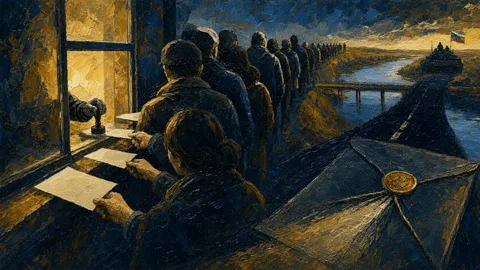
Among the great labor movements documented throughout modern history, certain worker conflicts stand out for their exceptional duration, spanning several years or even several decades of interrupted negotiations, partial returns to work, and persistent tension between company management and labor unions. The strike by salt miners in Copiapó, Chile, is among the cases most often cited by labor historians when discussing the longest social conflicts ever recorded in the industrial world. It remains a striking reference point precisely because so few disputes anywhere have ever tested the endurance of an entire community for so many consecutive years.
According to other historical accounts, certain prolonged labor disputes of the twentieth century, carried out in very different industrial contexts, also claim a place among the longest social movements in contemporary history, illustrating just how long certain structural deadlocks between parties can persist over a remarkably extended period.
Why do some conflicts last so long?
The extraordinary longevity of these labor disputes is generally explained by a combination of deep structural factors: intransigence on both sides, the absence of effective mediation, considerable economic stakes for the company involved, or a political and institutional context that makes any swift resolution of the dispute particularly difficult. There is something dizzying about imagining workers and entire families living under the pressure of a labor dispute that drags on for more than a decade without a lasting resolution.
The emblematic case of the Chilean salt miners
A conflict rooted in a strategic industry
The salt industry, long essential to the regional economy of Copiapó, was the stage for a prolonged labor dispute pitting miners against their employers over questions of wages, working conditions, and union recognition — demands typical of the major industrial conflicts of that era across Latin America. This type of conflict illustrates the structural tensions characteristic of economies heavily dependent on a single natural resource, extracted by a large workforce that holds little bargaining power against mine owners. Such imbalances tend to recur wherever a region's entire livelihood is tied to one extractive industry controlled by a small number of owners.
The difficulty of precisely documenting the entirety of these historical conflicts across several decades also illustrates the limits of the archives available to contemporary researchers, who must often cross-reference several partial and sometimes contradictory sources in order to reconstruct a reliable timeline of the events that occurred.
Intermittent stoppages rather than one continuous shutdown
Contrary to the image of a total, uninterrupted work stoppage lasting the entire duration of the conflict, these prolonged strikes are generally characterized by an alternation of complete stoppage periods, temporarily negotiated partial resumptions, and new phases of tension leading to further work interruptions over the years. This complex back-and-forth between confrontation and calm makes it especially difficult to draw simple comparisons between different historical labor disputes, each claiming a duration record of its own.
The structural mechanisms behind prolonged labor disputes
The absence of effective mediation as an aggravating factor
In many historical cases of exceptionally long labor disputes, the absence of effective mediation, whether governmental or international, significantly contributes to prolonging the impasse between the parties, each entrenched in its own position without a sufficiently robust institutional mechanism to facilitate a lasting compromise. Organizations such as the International Labour Organization now play a growing role in promoting mechanisms for resolving labor disputes, although their influence still varies depending on national context and era.
The disproportion in economic bargaining power between large companies and local labor unions is also a factor frequently cited by researchers to explain why some labor disputes struggle so much to reach a negotiated outcome within a reasonable timeframe for all parties involved.
The role of governments in resolving disputes
Intervention by government authorities, when it occurs, can sometimes accelerate the resolution of a prolonged labor dispute, particularly when regional or national economic stakes become significant enough to justify direct political mediation between the parties involved. This intervention is not, however, systematic — some governments have historically preferred to let the parties negotiate on their own, even at the cost of considerably prolonging the duration of the dispute in question. That hands-off posture often reflects a broader political calculation about which side stands to lose more from a swift, imposed settlement.
In certain historical cases, the involvement of international mediators or non-governmental organizations specializing in social dialogue has helped unblock situations that had nonetheless been stuck for many years, illustrating the crucial importance of neutral outside expertise in helping parties break free of a confrontational logic that has become counterproductive for everyone involved in the conflict.
More analysis

ANALYSIS: Marcos Talks Drilling With Beijing While His Fishermen…
That is what moves through the South China Sea every year.…

ANALYSIS : Taiwan Puts NT$1,122.5 Billion Into Defence, Over…
Hold that number for a moment, because it marks the crossing…

ANALYSIS: 313 Votes, a 20th Extension — Ukraine Keeps…
313 votes to approve the presidential decree extending martial law by…
The human impact of long-running labor disputes
Entire families affected across several generations
Beyond the economic and institutional stakes, these prolonged labor disputes deeply affect the daily lives of the workers involved and their families, sometimes across several successive generations when a dispute extends over a particularly long period. Labor historians regularly point out how much these prolonged situations generate lasting social tensions within the very working-class communities involved, between those wanting to continue the movement and those pushing for a quick compromise.
These conflicts often leave deep traces in collective memory in the regions concerned, with some communities continuing to commemorate these social movements decades after their resolution, in recognition of the sacrifice made by generations of workers who took part in these long collective struggles for better working conditions.
Union solidarity tested to its limits
On the same topic
DOSSIER: 60,000 Russian passports in Transnistria — the annexation…
More than sixty thousand applications for Russian citizenship in three months,…

INVESTIGATION: Beijing cuts Africa to 2.1 billion in loans…
2.1 billion — the lowest figure in almost twenty years, according…

INVESTIGATION: Two Chinese Ex-Soldiers Arrested in Seoul as 18,000…
For five years, a man ran a military-supply shop at the…
Union solidarity, essential to sustaining a social movement over such a long period, is frequently tested to its limits by the financial and moral exhaustion of striking workers, forced to find alternative sources of income to support their families during prolonged work stoppages. This collective endurance, rarely highlighted in mainstream historical accounts, nonetheless deserves particular attention, as it reveals a remarkable form of social resilience in the face of prolonged economic hardship.
Strike funds and community mutual-aid networks often form spontaneously around these prolonged social movements, allowing workers' families to hold out financially for periods sometimes considerably longer than the original organizers of the movement had ever anticipated at the time the conflict began. This material solidarity, often organized locally, is a determining factor in a social movement's ability to sustain itself over time against employers willing to wait out the financial exhaustion of strikers. Without that grassroots backbone, many of the longest disputes on record would almost certainly have collapsed within a matter of months.
The difficulty of comparing historical strike records
Counting criteria that vary from one source to another
A rigorous comparison between different historical labor disputes claiming a duration record runs into significant methodological difficulties, as researchers do not always agree on the precise criteria for counting the total length of a dispute — including phases of interruption, partial resumption, or prolonged negotiation without an actual work stoppage. This diversity of methodologies explains why several different labor disputes are sometimes presented, depending on the source consulted, as holding the record for the longest strike in modern history.
Some researchers thus prefer to speak of a family of records rather than a single, undisputed record, acknowledging that several distinct historical conflicts, occurring in very different regions and eras, share an exceptional duration that justifies studying them together rather than trying at all costs to name a single, definitive winner of a ranking that is particularly difficult to establish with absolute certainty.
International organizations specializing in labor studies also recognize this methodological difficulty, often preferring to speak of emblematic cases rather than establishing a strict, definitive ranking of the longest social conflicts in contemporary world history.
A belated recognition of these movements
Many prolonged labor disputes that occurred in peripheral regions or in industries that are now in decline have long benefited from only limited historical documentation, a situation that is gradually changing thanks to the efforts of researchers specializing in social history who seek to more faithfully reconstruct these landmark episodes in the history of labor worldwide.
University departments devoted to the history of labor and social movements play an essential role in this rediscovery, digitizing long-forgotten local archives and collecting testimony from the last direct descendants of the workers who took part in these exceptionally long disputes, before this precious oral memory disappears completely with the passage of time.
What these disputes reveal about economic power dynamics
An illustration of the structural tensions of the industrial world
These major prolonged labor disputes each illustrate, in their own way, the deep structural tensions that have run through the industrial world since the industrial revolution, regularly pitting the economic interests of company owners against the legitimate demands of workers regarding their working conditions and pay. It is striking to see how these dynamics of social confrontation, observed in very different geographic and historical contexts, so often display remarkably similar mechanisms from one case to another.
The comparative study of these disputes thus offers contemporary researchers valuable material for understanding the historical evolution of relations between capital and labor, a dynamic still relevant today in many contemporary economic sectors around the world, despite the considerable evolution of the legal and institutional frameworks now governing labor relations.
Lessons still relevant to today's negotiations
Discover
ANALYSIS: Marcos Talks Drilling With Beijing While His Fishermen…
That is what moves through the South China Sea every year.…
ANALYSIS : Taiwan Puts NT$1,122.5 Billion Into Defence, Over…
Hold that number for a moment, because it marks the crossing…
ANALYSIS: 313 Votes, a 20th Extension — Ukraine Keeps…
313 votes to approve the presidential decree extending martial law by…
Labor relations specialists continue to closely study these prolonged historical disputes in order to draw lessons applicable to contemporary social negotiations, particularly regarding the importance of early, effective mediation to prevent legitimate disputes from dragging on for such long periods, to the detriment of everyone involved in the conflict.
Several major contemporary companies have in fact incorporated these historical lessons into their internal labor relations policies, setting up mechanisms for regular dialogue with union representatives in order to prevent latent tensions from escalating into open conflicts liable to drag on for years, as has been observed in some of the most emblematic historical cases studied by specialized researchers.
Conclusion: a social memory worth preserving
Records that are difficult to establish with absolute certainty
While the precise identification of the absolute record for the longest strike in history remains a matter of debate among specialized historians, the very existence of these exceptionally prolonged labor disputes testifies to the depth of tension that can exist between workers and employers when the usual resolution mechanisms fail to produce a satisfactory compromise for everyone involved.
These extreme cases, whether the Copiapó salt miners or other prolonged industrial disputes of the twentieth century, continue to fuel academic reflection on the structural mechanisms explaining why certain social disputes persist for such remarkably long periods. Each new generation of labor historians tends to revisit these episodes with fresh questions, reminding us that the story is rarely as settled as it first appears.
A resonance that remains relevant to today's world of work
At a time when many social movements continue to mobilize workers around the world to defend their fundamental rights, these great historical disputes remind us of the crucial importance of constructive social dialogue and robust mediation mechanisms, capable of preventing legitimate disputes from escalating into prolonged confrontations with considerable human and economic costs for society as a whole.
By Maxime Marquette, columnist
Sources
Primary sources
International Labour Organization — accessed 2026
United States Department of Labor — accessed 2026
Encyclopaedia Britannica — Strike (labor) — accessed 2026
Secondary sources
BBC News — Business section — accessed 2026
Smithsonian Magazine — History section — accessed 2026
The Guardian — Business section — accessed 2026
Get the tech columns
AI, platforms, digital power: the next analyses straight to your inbox.
Cite this article
Maxime Marquette (2026). The longest strike in history lasted more than 15 years. MadMax. https://mad-max.co/en/article/la-greve-la-plus-longue-de-l-histoire-a-dure-plus-de-15-ans
Read next
ANALYSIS: Marcos Talks Drilling With Beijing While His Fishermen…
That is what moves through the South China Sea every year.…
ANALYSIS : Taiwan Puts NT$1,122.5 Billion Into Defence, Over…
Hold that number for a moment, because it marks the crossing…
ANALYSIS: 313 Votes, a 20th Extension — Ukraine Keeps…
313 votes to approve the presidential decree extending martial law by…
Enjoyed this piece? Get the next one.
One chronicle a week, straight to your inbox. No noise.
This article was generated with AI assistance, under human supervision.
Comments
Be the first to weigh in.