

DECODING: Tanks in Taipei: the five-day exercise preparing for the unthinkable
Military tanks patrolling the streets of Taipei. To an uninformed observer, the image might evoke a coup d'état or an occupation. In reality, it is exactly the opposite: a democracy of 23 million people rehearsing its defense procedures against a genuine external threat. The Washington Post of June 22, 2026 reported that Taiwan conducted a five-day "immediate combat readiness"
- Military tanks patrolling the streets of Taipei. To an uninformed observer, the image might evoke a coup d'état or an occupation. In reality, it is exactly the opposite: a democracy of 23 million people rehearsing its defense procedures against a genuine external threat. The Washington Post of June 22, 2026 reported that Taiwan conducted a five-day "immediate combat readiness"
- DECODING: Tanks in Taipei: the five-day exercise preparing for the unthinkable
- Introduction: When tanks patrol the streets, the unthinkable becomes concrete
Facts, quotes, and cited links remain in the body. Interpretations are framed as analysis or opinion according to the format.
DECODING: Tanks in Taipei: the five-day exercise preparing for the unthinkable
Introduction: When tanks patrol the streets, the unthinkable becomes concrete
Tanks in the streets of Taipei: a striking image
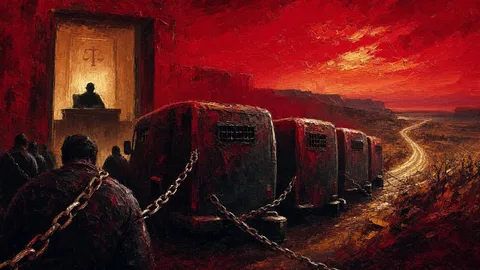
Military tanks patrolling the streets of Taipei. To an uninformed observer, the image might evoke a coup d'état or an occupation. In reality, it is exactly the opposite: a democracy of 23 million people rehearsing its defense procedures against a genuine external threat. The Washington Post of June 22, 2026 reported that Taiwan conducted a five-day "immediate combat readiness" military exercise, a direct response to what Taiwanese forces describe as a PLA "toward real war" drill by the People's Liberation Army.
These five days of exercises are not an isolated incident. They are part of a dynamic of military intensification in the Taiwan Strait that is increasingly alarming strategists across the region and worldwide. The week of June 21–27, 2026 was particularly charged: the Taiwanese exercise, the launch of RIMPAC 2026 with 40 ships and 31 nations, a tabletop exercise simulating a maritime quarantine by China, and a rare warning by European powers about the Chinese threat to Taiwan.
The PLA's "toward real war" exercise: what did it signal?
The phrase "toward real war" used by the PLA to describe its own exercises is itself a rhetorical signal. This is not a routine exercise — it is an exercise explicitly presented as a simulation of real combat scenarios. The PLA seeks to demonstrate, simultaneously to its own troops, to the Taiwanese population, and to international observers, that its military capabilities are ready for a real operation.
Faced with this deliberate provocation, the Taiwanese response was immediate and visible. Tanks in the streets of Taipei. Urban defense exercises. Simulations of coordination between the armed forces and civilian authorities. This is not posturing. It is serious preparation that sends a message in return: Taiwan is ready, and any potential invader will face organized resistance.
Anatomy of a five-day exercise: what we know
The components of the Taiwanese exercise
A five-day "immediate combat readiness" exercise like the one described by the Washington Post of June 22, 2026 generally encompasses several dimensions. The purely military dimension: deployment of armored units, live-fire exercises, coordination between different military branches. The civil-military dimension: evacuation procedures, activation of civilian shelters, crisis communications between military and civilian authorities. And the psychological dimension: acclimatizing the population to military presence in an urban environment, reducing potential panic in the event of a real crisis.
The presence of tanks in the streets of Taipei responds specifically to an urban defense scenario — the situation in which enemy forces would have succeeded in establishing a foothold in Taiwanese urban areas. This scenario, considered unlikely in the first phase of a conflict, is nevertheless integrated into Taiwanese defense planning since the strategic overhauls that followed Ukraine. Ukrainian urban resistance in Kharkiv, Kherson, and other cities demonstrated its effectiveness.
Ukrainian lessons applied to Taiwan
Ukraine's resistance since 2022 has provided a defense manual that armies worldwide are studying. Taiwan has drawn several specific lessons. First lesson: territorial defense at fine granularity — every neighborhood, every street is defensible. Second lesson: short-range anti-armor capability changes the dynamics of urban combat. Third lesson: civilian resilience — maintaining essential services, information, communication — is a military component in its own right.
These lessons have directly influenced Taiwanese exercises. The integration of civilian militias, the reinforcement of reserve formations, the distribution of light defensive equipment to territorial units — all initiatives directly inspired by what Ukraine did, often at the last minute, and that would have been far more effective if prepared in advance. Taiwan does not want to make the same mistake.
RIMPAC 2026: the multilateral response in the Pacific
The world's largest naval exercise
RIMPAC 2026 — "Rim of the Pacific Exercise" — began on June 24, 2026, running through July 31, according to ThinkChina of June 25, 2026. Approximately 40 ships, 25,000 personnel, 31 participating nations — this is the world's largest multinational naval exercise. Its geography and composition send an unambiguous message to Beijing: American naval power is not alone — it is accompanied by an extensive network of alliances and partnerships.
The participation of 31 nations is itself revealing. These countries are not all formal allies of the United States — some participate simply to maintain interoperability with the American navy and its allies. But their presence at RIMPAC means that in the event of a conflict in the Pacific, they have the capacity to operate alongside American forces. This is precisely the kind of network that China cannot replicate — it has no allies worthy of the name capable of deploying significant naval forces at its side.
More analysis

ANALYSIS: Marcos Talks Drilling With Beijing While His Fishermen…
That is what moves through the South China Sea every year.…

ANALYSIS : Taiwan Puts NT$1,122.5 Billion Into Defence, Over…
Hold that number for a moment, because it marks the crossing…

ANALYSIS: 313 Votes, a 20th Extension — Ukraine Keeps…
313 votes to approve the presidential decree extending martial law by…
Valiant Shield 2026: the airborne component
The Valiant Shield 2026 exercise, which took place on June 22 according to the same source, represents the air-naval component of American presence in the region. It typically involves aircraft carriers and long-range aircraft, testing the capability for air power projection in the Western Pacific. This capability — striking targets at long range from distant launch points — constitutes one of the most significant American military advantages vis-à-vis China.
The simultaneity of RIMPAC and Valiant Shield with Chinese exercises and the Taiwanese readiness exercise is probably not coincidental. It creates a density of military activity in the region that compels all actors to maintain a high state of readiness and sends an unmistakable presence signal to Chinese observers.
The European warning on Taiwan: a historic turning point
Why the European warning is historically significant
The warning issued by "European powers" about the Chinese threat to Taiwan, reported by Yahoo News of June 24, 2026, deserves particular attention. Five years ago, such a warning would have been politically unimaginable from European governments that cultivated the concept of "economic relations with China" as separate from security questions. That paradigm is collapsing.
Several factors have contributed to this evolution. First, Chinese support for Russia in the war in Ukraine made it impossible to maintain the fiction of neutrality. Then, growing Chinese military provocations in the Taiwan Strait and the South China Sea made the threat concrete even for European public opinion. Finally, the post-COVID revision of supply chains reduced European economic dependence on China.
The risk of signal escalation: a spiral no one wants
There is, however, a real risk in the multiplication of these signals. Each European warning, each American exercise, each designation on the 1260H list is interpreted in Beijing as an element of a "containment" and encirclement strategy. The national-populist propaganda of the CCP uses these elements to reinforce the sense of a China besieged by hostile powers — which, paradoxically, strengthens the regime's internal cohesion and creates pressures toward a show of force.
Managing this spiral is one of the most complex diplomatic challenges of the moment. Deterrence must be maintained at a sufficient level to keep the cost-benefit calculus of aggression against Taiwan unfavorable for Beijing, while not fueling an encirclement rhetoric that would push toward action. This is a delicate balance whose outcome remains uncertain.
The maritime quarantine simulation: the scenario Taiwan most fears
Quarantine as a tool of graduated pressure
The tabletop exercise reported by Bloomberg of June 25, 2026, simulating a maritime quarantine imposed by Chinese forces, targets the scenario considered most likely for Chinese action in the near to medium term. A maritime quarantine — distinct from a full blockade or an invasion — would allow China to demonstrate its capacity to control maritime access to Taiwan without formally triggering an act of war.
Concretely, a maritime quarantine would mean PLA vessels intercepting and inspecting merchant ships destined for Taiwan, delaying or blocking imports deemed "strategic" by Beijing. China could present this as a "control" measure rather than an act of aggression, testing the American and international response before going further if resistance is weak.
On the same topic

INVESTIGATION: Two Chinese Ex-Soldiers Arrested in Seoul as 18,000…
For five years, a man ran a military-supply shop at the…
INVESTIGATION: 316 political cases in Crimea — the occupation…
Three hundred and sixteen people are being prosecuted on political grounds…

SPECIAL REPORT: Beijing buys 40 cargoes of sanctioned Russian…
On August 28, 2025, a tanker named Arctic Mulan moored at…
How can Taiwan resist it?
Resistance to a maritime quarantine passes through several axes. First, strategic reserves: Taiwan is seeking to increase its stocks of energy, food, and critical materials to withstand a period of reduced maritime access. Then, alternative routes: developing air links and access points less vulnerable to maritime interdiction. Finally, international response: ensuring that the United States and their allies have prepared plans to break a quarantine, which makes this scenario more costly for China.
The tabletop exercise serves precisely to test these responses, identify gaps, and develop protocols. This is intelligent preparation. And the fact that Bloomberg reported its existence is itself a signal to Beijing: we are simulating your preferred scenario, and we are preparing our response.
The Russia-China axis: the partnership threatening the world order
What China does for Russia and what that foreshadows
The Chinese threat to Taiwan cannot be analyzed without noting the growing interweaving of Russian and Chinese strategies. China is actively supporting the Russian war economy — by purchasing Russian oil and gas at preferential prices, by supplying dual-use components, and by offering alternative markets to entities sanctioned by the West. This support is not altruistic: it is a strategic investment in the destabilization of the West by proxy.
The longer Russia holds out in Ukraine, the more the West is distracted, exhausted, and resource-constrained. The more China has time to prepare its options for Taiwan and evaluate Western reactions. Strategic coordination between Moscow and Beijing is not a formal alliance — their interests diverge on many points. But on this precise point — weakening the West — their interests converge perfectly.
North Korea as the third actor
North Korea completes this picture by mobilizing its forces alongside Russia in Ukraine — according to confirmed information on the presence of North Korean soldiers in the conflict. Pyongyang marked in June 2026 the second anniversary of the mutual defense treaty with Russia by pledging "deeper ties," according to Ground News of June 22, 2026.
The convergence of Russia, China, and North Korea around a common strategy of destabilizing the West is one of the most dangerous geopolitical developments of the current period. They are not perfectly coordinated allies — their interests diverge on many points. But their convergence on the objective of destabilizing the liberal international order is coherent enough to represent a systemic threat.
Taiwan in the global economy: a stake that goes beyond politics
Global supply chains and Taiwanese vulnerability
Defending Taiwan is not solely a political or military stake — it is also a first-order global economic issue. The island produces the vast majority of the advanced semiconductors on which all modern economies depend. A disruption to Taiwanese production, whether by military action or a maritime quarantine, would trigger a global chip shortage with catastrophic economic consequences for all developed economies.
This economic factor creates a solidarity of interest around Taiwan that extends far beyond foreign policy circles. Industries as diverse as automotive, consumer electronics, medicine, defense, and aerospace — all depend on semiconductors produced in Taiwan. This interdependence is an additional deterrent factor: a Chinese military operation against Taiwan would inflict global economic damage that would also affect China itself.
The five-day exercise as a message to markets and investors
Taiwan's military exercises also carry an economic dimension that is often ignored. By demonstrating its defense capacity and preparedness, the island sends a message to international financial markets and investors: Taiwan is not an easy target. This confidence in Taiwan's resistance capability helps sustain the island's economic credibility and prevents the capital flight that geopolitical tensions could provoke.
Companies like TSMC, MediaTek, and other Taiwanese technology giants have maintained investment and growth trajectories despite Chinese military pressure. This economic resilience is itself a form of resistance — by showing that normal economic life continues despite the threats, Taiwan refuses to be psychologically paralyzed by Beijing's pressure.
North Korea and Taiwan: two crises linked by the same logic
How the North Korea and Taiwan crises feed each other
North Korea and Taiwan represent two distinct crises in the Indo-Pacific region, but their interconnection is real and growing. North Korea has sent soldiers to fight alongside Russian forces in Ukraine, consolidating its alignment with the Russia-China axis. It is simultaneously developing its ballistic and nuclear capabilities, maintaining constant pressure on South Korea and Japan — which are also Taiwan's closest allies in the region.
Discover
ANALYSIS: Marcos Talks Drilling With Beijing While His Fishermen…
That is what moves through the South China Sea every year.…
ANALYSIS : Taiwan Puts NT$1,122.5 Billion Into Defence, Over…
Hold that number for a moment, because it marks the crossing…
ANALYSIS: 313 Votes, a 20th Extension — Ukraine Keeps…
313 votes to approve the presidential decree extending martial law by…
A crisis involving North Korea — a ballistic escalation, a major military provocation — could divert American military capabilities at precisely the moment China decided to act on Taiwan. This potential coordination between the two crises is a nightmare for American military planners. Maintaining sufficient presence on both fronts simultaneously is a genuine capability challenge.
Kim Jong-un and the rapprochement with Putin: what it means for Taiwan
The second anniversary of the Russia-North Korea mutual defense treaty was marked in June 2026 by declarations from Kim Jong-un pledging "deeper ties" with Russia. This consolidation of the Moscow-Pyongyang axis has direct implications for Taiwan's security. It means that any conflict over Taiwan could activate coordinated responses from multiple actors within the authoritarian axis.
For Taiwan's defenders, this reality strengthens the argument for extended deterrence. The coalition supporting Taiwan — the United States, Japan, Australia, European powers — must be sufficiently broad and prepared to respond to simultaneous crises on multiple fronts. RIMPAC 2026 with 31 nations is a partial response to this need for multi-front preparedness. It must be complemented by operational planning that explicitly integrates simultaneous crisis scenarios.
Conclusion: Five days of exercises, one unambiguous message
The strategic significance of the Taiwanese exercise
Taiwan's five-day exercise, with its tanks in the streets of Taipei, is not provocation. It is deterrence. It is a message to Beijing: we are preparing ourselves, we have drawn the lessons of Ukraine, and any attempt to subjugate us by force will encounter serious resistance. This message, combined with the presence of RIMPAC and the European warnings, forms a picture of credible deterrence.
Is it enough? No one can state this with certainty. Deterrence works until it does not. But not conducting these exercises — not preparing, not sending signals — would certainly be worse. Taiwan has chosen active preparation. It is the right choice.
What the West must take from this week in the Pacific
The week of June 21–27, 2026 in the Pacific must be read as a snapshot of the Sino-American competition at its current stage. An active economic competition via designation lists and export controls. A military competition via crossed exercises and presence demonstrations. A diplomatic competition via European warnings and alliance signals.
The West is engaged in this competition, whether it wants to be or not. The question is whether it is engaged with sufficient coherence, resources, and will. The Taiwanese tanks in the streets of Taipei are a partial answer to that question. The rest depends on us.
By Maxime Marquette, columnist
Columnist's transparency note
My position on Taiwan and China
I support the defense of Taiwan as a democracy and as a strategic priority for the West. I consider China under Xi Jinping to be the principal long-term threat to the liberal international order. These positions shape my analysis. I rely on sources dated from the week of June 21–27, 2026: the Washington Post, Bloomberg, ThinkChina, Yahoo News, ISW, and Ground News.
This positioning leads me to treat Taiwanese defense preparations as inherently legitimate and Chinese military pressure as inherently threatening. I believe the facts support this reading.
What I cannot know
I do not have access to classified assessments of Taiwanese military readiness or American operational plans for the defense of Taiwan. My analyses of the effectiveness of deterrence and of Beijing's calculations are interpretations based on open sources. Significant uncertainty remains on these questions.
The precise military protocols tested in the Taiwanese exercises and the full scope of American operational planning for Taiwan's defense are classified and unavailable to me.
Sources
Primary sources
Secondary sources
Get the geopolitics analyses
Conflicts, powers, alliances: the MadMax thread without the noise.
Cite this article
Maxime Marquette (2026). DECODING: Tanks in Taipei: the five-day exercise preparing for the unthinkable. MadMax. https://mad-max.co/en/article/decryptage-chars-dans-taipei-l-exercice-de-cinq-jours-qui-prepare-l-impensable
Read next
ANALYSIS: Marcos Talks Drilling With Beijing While His Fishermen…
That is what moves through the South China Sea every year.…
ANALYSIS : Taiwan Puts NT$1,122.5 Billion Into Defence, Over…
Hold that number for a moment, because it marks the crossing…
ANALYSIS: 313 Votes, a 20th Extension — Ukraine Keeps…
313 votes to approve the presidential decree extending martial law by…
Enjoyed this piece? Get the next one.
One chronicle a week, straight to your inbox. No noise.
This article was generated with AI assistance, under human supervision.
Comments
Be the first to weigh in.