

COMMENTARY: Russia imports its gasoline by ship: the logistical humiliation of an empire at its limit
Some images capture an era better than any speech ever could. Mine, for this June 2026, is a tanker heading toward Russia, loaded with gasoline. Not crude oil for export — refined gasoline for import. For Russia. The country sitting atop the planet's largest hydrocarbon reserves. The country whose economic and geopolitical identity was built over decades on its oil power. The c
- Some images capture an era better than any speech ever could. Mine, for this June 2026, is a tanker heading toward Russia, loaded with gasoline. Not crude oil for export — refined gasoline for import. For Russia. The country sitting atop the planet's largest hydrocarbon reserves. The country whose economic and geopolitical identity was built over decades on its oil power. The c
- COMMENTARY: Russia imports its gasoline by ship: the logistical humiliation of an empire at its limit
- Introduction: The paradox that defines a war
Facts, quotes, and cited links remain in the body. Interpretations are framed as analysis or opinion according to the format.
COMMENTARY: Russia imports its gasoline by ship: the logistical humiliation of an empire at its limit
Introduction: The paradox that defines a war
The world's largest hydrocarbon producer has to import gasoline
Some images capture an era better than any speech ever could. Mine, for this June 2026, is a tanker heading toward Russia, loaded with gasoline. Not crude oil for export — refined gasoline for import. For Russia. The country sitting atop the planet's largest hydrocarbon reserves. The country whose economic and geopolitical identity was built over decades on its oil power. The country that financed its wars, its corruption, its informal empire with the petrodollars pumped from its own ground.
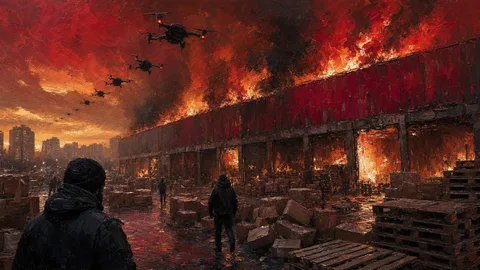
This is not fiction. It is a documented fact reported by Reuters, confirmed by industry sources, and covered by Militarnyi on June 24, 2026: facing the inability of its drone-devastated refineries to meet the Moscow region's fuel needs, Russia is planning to import gasoline by sea. The Kapotnya refinery, which supplied roughly 40 percent of the Russian capital's fuel needs, will not resume operations before 2027. And the Ufa refinery, struck on June 25, has joined the list of offline installations.
Why this logistical detail is a strategic revolution
I keep coming back to that image of the tanker because it is not merely anecdotal. It reveals a fundamental shift in the dynamics of this war. Russia entered this conflict convinced that its economic power — built largely on energy exports — would give it a lasting advantage. It believed that Western sanctions would break Europe before they broke Russia. It believed its crude would flow forever, its refineries would run uninterrupted, and Russian oil would fund the war indefinitely.
Kyiv has changed that calculation. By systematically striking Russian refineries — the Kapotnya refinery in Moscow twice in June 2026, the Bashneft installations in Ufa on June 25 — Ukraine has introduced a variable the Kremlin had never built into its war model: the vulnerability of its own industrial rear. And now, Moscow is buying gasoline abroad. That is a logistical humiliation measured in barrels, rubles, and lost credibility.
The geography of humiliation: who sells gasoline to Russia?
Alternative sea routes and their constraints
To import gasoline by sea, Russia must first find sellers, then find routes. The Baltic Sea is largely off-limits under the pressure of sanctions and the naval presence of NATO member states. The Black Sea is an active war theater where the Russian fleet has been severely weakened by Ukrainian drones. That leaves routes through the Caspian Sea, through the port of Novorossiysk, and above all the eastern corridors toward China and India.
These routes exist, but they are costly, slow, and reveal an embarrassing dependency. Russia, which presented itself as a self-sufficient and sovereign power, is now negotiating emergency fuel supplies with commercial partners who know exactly what position it is in. China and India, which buy Russian crude at heavily discounted prices, have no reason to sell their refined products on generous terms. Russia finds itself in the position of a weakened contractor facing clients who understand its vulnerability intimately.
The financial cost of importation: a drain on an already deficit-ridden budget
Importing gasoline by sea costs significantly more than producing it domestically. Maritime freight charges, intermediary margins, and the additional costs of detour routes designed to circumvent sanctions — all of it adds up. For a federal budget already running a deficit of over 80 billion dollars according to United24 Media on June 23, 2026, with more than 40 percent of its spending consumed by defense, this additional burden is significant.
It is all the more significant for being ongoing rather than one-time. The Kapotnya refinery will not resume operations before 2027, according to Reuters estimates. The Ufa installations are offline for an indeterminate period. Throughout that entire stretch, Moscow will have to source refined fuel elsewhere, at market prices, with logistical surcharges. This is a recurring, predictable, and growing expense — exactly the kind of sustained economic pressure Ukraine's strategy is designed to impose.
The Kapotnya refinery: an installation Moscow thought was protected
Eleven million tons a year — an energy backbone
The Kapotnya refinery processed 11 million tons of crude oil per year. It produced gasoline in three standard Russian grades — AI-80EK, AI-92EK, AI-95EK — as well as diesel, aviation kerosene, road bitumen, industrial sulfur, and polymers. It is one of the ten largest refineries in all of Russia. It supplied roughly 40 percent of the Moscow region's fuel needs — one of the most densely populated and economically active regions in the country.
Taking this installation offline for at least six months — until 2027 at minimum — creates a substantial energy gap. The Moscow region will have to source fuel from other Russian refineries — more distant, and therefore more expensive to transport — or from the tankers now making their way toward Russian ports. This logistical redistribution carries real costs and adds strain to a supply chain already under pressure from four years of intensive war.
The strikes of June 16 and 18: surgical precision
Two separate strikes on Kapotnya within forty-eight hours. The first, on June 16, 2026, triggered a spectacular fire visible from several kilometers away. The second, on June 18, targeted the ELOU-AVT-6 unit — the primary crude distillation apparatus, without which nothing else in the refinery can function. Images filmed by residents of the district showed multiple ignition points, with vectors identified as Ukrainian FP-1, Lyutyi, and Shahed-type drones.
That precise targeting of a specific unit rather than a saturation bombardment reveals a sophisticated level of intelligence and planning. To hit the ELOU-AVT-6 at Kapotnya, Ukrainian planners had to know exactly where it sat within the complex, understand its central role in the refining chain, and configure their drones to reach it with sufficient accuracy. This is not improvisation — this is industrial precision warfare.
The great humiliation: an oil power without gasoline
Russian identity and oil: a fundamental political equation
To understand just how politically humiliating gasoline imports are for the Putin regime, you need to understand the role of oil in Russian political identity. Since the 1970s — and particularly since the price surge of the 2000s — oil and gas have become the twin pillars of Russia's economic identity and geopolitical power. Putin's rise to power coincided with that hydrocarbon windfall. He used energy revenues to build domestic popularity, fund his rearmament program, and purchase Russia's external influence.
An oil country that imports gasoline is, symbolically, a country that has lost control of its own economic identity. This is a signal sent to the Russian population — which the government is frantically trying to suppress, hence the official communiqués minimizing the damage — and to Russia's commercial partners that something has changed fundamentally in the country's industrial capacity. Putin can silence journalists, censor the internet — he cannot silence the tankers arriving in Russian ports.
The impossible counter-narrative: the smoke tells the truth
The governor of Bashkiria, Radiy Khabirov, attempted the standard counter-narrative after the June 25 strike on the Ufa refineries: defenses repelled the attack, the plants are operating normally, everything is fine. But the black smoke visible for kilometers, the OSINT analyses from the Astra Telegram channel confirming damage to two refineries, and the mobile internet restrictions imposed during the alert rendered that narrative untenable within hours.
This is the fundamental dilemma of Russian propaganda in 2026: lying is easier than ever technically, but harder than ever strategically. Everyone has a phone. Commercial satellites photograph everything. Some Russian Telegram channels — some of them — report the realities that official propaganda erases. Mobile internet restrictions, supposedly designed to prevent images from spreading, have themselves become signals that confirm a strike succeeded. The Putin regime is trapped inside its own logic of deception.
The arithmetic of shortage: what a one-third drop in production means
One-third of Russia's refining capacity offline
NATO Secretary General Mark Rutte provided a striking figure during his Atlantic Council conversation on June 25, 2026: Russian refining output has fallen by one third since the start of Ukraine's campaign against oil infrastructure. One third. That represents tens of millions of tons of refined products not produced every year. Missing diesel for military trucks. Missing aviation kerosene for bombers. Missing gasoline for the light vehicles of the armed forces.
This reduction will not halt the Russian war machine tomorrow morning — Russia has stockpiles, still-operating refineries, and compensation resources. But it creates growing pressure on a logistics system already strained by four years of intensive warfare. And every month that Kapotnya and the Ufa plants remain offline, that pressure builds a little further. The degradation is gradual, but it is real and hard to reverse.
The cascading effects on Russia's civilian economy
The reduction in refining output does not affect only military operations. It also hits the Russian civilian economy: drivers queuing at gas stations, truckers facing higher fuel costs, industries that depend on diesel or kerosene for their operations. These civilian effects generate domestic political pressures that the Kremlin must manage with its familiar tools: subsidies, price controls, war-nationalism.
But these tools have limits. Russian regions are drowning in debt according to data published in June 2026. The fiscal pressure of financing the war — which absorbs more than 70 percent of federal tax revenues according to Rutte — leaves little room for additional civilian energy subsidies. Russia faces a dilemma between supporting its civilian economy and fueling its war effort, and that dilemma grows more acute with every refinery that goes dark.
The oil sanction the EU still hasn't dared to impose
The Baltic states and Poland on the front lines of pressure
While Ukraine strikes Russian refineries with its drones, the Baltic states and Poland are running their own campaign to push the European Union to impose a full oil embargo on Russia. According to the Kyiv Post on June 27, 2026, the Baltics are pressing Brussels to accelerate the process, arguing that current sanctions still leave too much oil revenue accessible to Moscow. The EU did extend its sanctions by an additional year at the June 19, 2026 renewal — an unusually long extension that signals reinforced resolve — but the full oil embargo remains a line that several member states still hesitate to cross.
These hesitations have real foundations. Some EU member states remain dependent on Russian oil and gas, or maintain complex economic ties with Moscow. Severing those ties entirely carries domestic economic costs that the governments involved are not prepared to absorb without compensation guarantees. But those domestic economic costs must be weighed against the human costs of prolonging the war in Ukraine — a balance that some governments still refuse to put on the table publicly.
The 21st sanctions package: an opportunity to seize
The EU is preparing its 21st sanctions package against Russia, according to information available as of June 27, 2026. If ambitious, this package should include reinforced measures targeting refining technologies — preventing Russia from quickly rebuilding damaged installations using European equipment imported through intermediaries — and more aggressive secondary sanctions against companies circumventing existing restrictions.
Ukraine deserves an international community that aligns its sanctions policies with the battlefield realities its drone strikes have created. Hitting refineries is not enough — Western economic firepower must also cut off the reconstruction pathways. Sanctions on refining technologies plus a blockade of Russian oil exports plus Ukrainian strikes on existing installations: that is the complete equation that could genuinely shift the economic balance of power.
The two Russias: the Kremlin's and the people of Bashkiria's
What Ufa residents see from their windows
Bashkiria is a Republic of the Russian Federation with a complex history. Its population — Bashkirs, Tatars, and ethnic Russians — has been disproportionately represented among the soldiers sent to Ukraine, a reality that local rights-defense organizations have documented with precision. Its industries — petrochemicals, refining, automotive manufacturing — have seen operations disrupted by sanctions and now by direct strikes on their facilities.
On June 25, 2026, residents of northern Ufa watched black smoke rise from the industrial zone where their parents and neighbors work. The internet was cut during the alert. The governor lied about the damage. And behind their VPNs, some of them read the analyses confirming what the smoke was already showing: two refineries hit, real damage, a government hiding the truth from them. That experience — repeated across many Russian regions — is slowly opening a crack between the official narrative and the lived reality.
Military mobilization and losses: Bashkiria in mourning
Bashkiria has suffered particularly heavy military losses since 2022. Forced recruitment has struck the non-Russian regions of the federation disproportionately, and Bashkiria has been no exception. Mothers and wives waiting for news of their sons, repeated funerals, a local economy disrupted by mobilizations — this is the portrait of a region paying a steep price for a war decided in Moscow for imperial ambitions that are not its own.
In that context, the strike on the Ufa refineries will not be interpreted identically by every resident of Bashkiria. For some, it is an act of aggression against their region, their jobs, their daily lives. For others — particularly those who have lost loved ones in Ukraine, or who inwardly resist this war — it may be confirmation that something is fundamentally wrong with the promise of a "victorious" and consequence-free war that Putin had sold them.
Russia's economic actors: Rosneft facing the drone reality
Rosneft and the war's cost for the state oil industry
Rosneft, which controls the Ufa refineries through its subsidiary Bashneft, is one of the world's largest oil companies and the economic centerpiece of the Putin regime. Its chairman, Igor Sechin, is one of the president's closest associates, a pillar of the system for decades. When Rosneft refineries burn, a part of the regime's financial patrimony goes up in smoke.
For Rosneft, the Ukrainian strikes generate several categories of loss. Direct losses: interrupted production, lost revenues, considerable repair costs. Indirect losses: rising insurance costs for remaining installations, the need to invest in additional defenses, share price impact — to the extent that this information reaches investors under a censorship regime. And strategic losses: the image of a company unable to protect its most valuable assets.
Investment in air defenses: a cost added to everything else
To protect its installations against further strikes, Rosneft and other Russian oil companies will have to invest in air defense systems around their refineries. These systems — Pantsir, Tor, electronic jamming systems — are expensive to acquire, deploy, and operate. And the demand is enormous: this is not about protecting a handful of installations, but dozens of refineries spread across a vast territory.
This demand for protective air defenses around industrial installations creates a direct resource conflict with the needs of the Ukrainian front. Pantsir and Tor systems deployed around refineries are systems unavailable to protect troops in Ukraine. Ukraine has managed to create an internal competition for Russian air defense resources — protect the rear or protect the front? — and in that competition, industrial installations do not always win.
Russia's maritime logistics: a new and costly dependency
On the same topic

ANALYSIS : Taiwan Puts NT$1,122.5 Billion Into Defence, Over…
Hold that number for a moment, because it marks the crossing…
ANALYSIS: 800 drones over Russia in one night —…
More than eight hundred drones, in a single night, August 14…

REPORT: One Year Past the August 18 Ultimatum, Ukraine's…
At midnight on August 18, 2025, the deadline expired that the…
Russian ports and absorption capacity
To import gasoline by sea, Russia must mobilize ports capable of receiving and redistributing significant volumes of refined petroleum products. Novorossiysk on the Black Sea, some ports on the Baltic Sea despite restrictions, and Caspian ports for the eastern routes. These infrastructures have their own capacity limits — maximum volumes, acceptable vessel types, available transfer equipment.
Receiving volumes of imported gasoline represents not only a cost in port fees and storage, but also a complete logistical reorganization of distribution circuits. Russia is accustomed to exporting petroleum products through its ports — not importing them. The infrastructure, storage systems, and domestic distribution networks are all configured for outbound flow. Adapting them to handle inbound flow takes time and money — resources Russia possesses in diminishing supply.
Dependence on foreign suppliers: a strategic risk
By becoming a gasoline importer, Russia has created a new dependency on foreign suppliers. That dependency is strategically dangerous for a state that has made economic self-sufficiency an ideological pillar of its regime. What happens if the supplying countries decide — under Western diplomatic pressure or for their own reasons — to reduce or cut their gasoline deliveries to Russia? Dependency creates vulnerability.
This is a dimension that Ukrainian and Western strategists could exploit diplomatically. Pressing the countries considering selling gasoline to Russia — China, India, certain Gulf states — to refuse that lifeline to Moscow is a form of diplomatic economic warfare that would complement the direct strikes. The question is whether Western governments have the political will to pursue this discreet but effective form of pressure.
Global oil markets and Russian disruptions
The effect on global refined product supply
The reduction of one-third in Russian refining output — a figure cited by the NATO Secretary General on June 25, 2026 — has ripple effects on global refined petroleum product markets. Russia was a significant exporter of diesel, particularly to Europe and Asia. This supply reduction creates pressures on diesel markets in regions that depended on those exports.
These market disruptions propagate effects beyond the Ukrainian-Russian conflict. Countries that imported Russian diesel must find alternative sources — often more expensive ones. Refineries in other countries increase output to compensate. Global diesel prices fluctuate. This is an example of how a localized war generates global economic effects — effects that may, over time, create political pressures in countries not directly involved in the conflict.
Russia as an increasingly unreliable supplier
Beyond the immediate market effects, Ukraine's repeated strikes on Russian refineries send a lasting signal to every buyer of Russian petroleum products: Russia is an increasingly unreliable supplier. Its installations are vulnerable, its production capacity is at risk, its repair timelines are long. For a buyer seeking stable and predictable supplies, this instability is a serious commercial argument for diversifying sources.
If this diversification away from Russian sources accelerates, it is a long-term structural victory for Ukraine's strategy. It reduces Russia's petroleum revenues beyond mere production capacity — it erodes global market share in ways that are hard to recapture once commercial trust is lost. This is a long-term effect that drone strikes produce without even explicitly targeting commercial markets.
What Putin really wants: the reality behind the propaganda
Russia's peace conditions: capitulation dressed up as negotiation
Vladimir Putin, asked about his peace conditions in late June 2026, reiterated his readiness to negotiate "on the basis of the 2022 Istanbul agreements." This formulation, analyzed by the Institute for the Study of War in its assessment of June 23, 2026, represents a restatement of Russia's 2022 maximum war objectives: abandonment of Russian-occupied territories, permanent Ukrainian neutrality, limits on its armed forces, and de facto regime change. In plain language: Ukraine's total capitulation dressed up as "negotiation."
In this context, the drone operation against refineries takes on an additional dimension. It tells Putin and potential mediators — including the United Arab Emirates, active in prisoner exchanges — that Ukraine has no intention of negotiating from a position of weakness. As long as Russia maintains its maximum demands, Ukraine will maintain its pressure on Russian infrastructure. This is a logic of reciprocity: you want peace? Offer reasonable terms.
The diplomatic deadlock and economic warfare as a substitute
The current diplomatic deadlock — Putin demanding capitulation, Zelensky rightly refusing — means the war continues. In that continuation, Ukraine's strategy of striking Russian infrastructure is the most effective form of pressure available. It does not resolve the diplomatic deadlock on its own. But it makes the deadlock more costly for Russia, accelerates the economic degradation that may eventually force a revision of Russian positions, and maintains continuous pressure that prevents Ukraine from negotiating from weakness.
Zelensky's advisors have stated clearly that "Russia's economy has reached a dead end." That diagnosis, shared by the Kiel Institute, which speaks of "structural exhaustion," suggests that Russia's economic trajectory is unsustainable in the medium term. Ukraine's strategy bets on that unsustainability — and every refinery taken offline is another chip placed on the table.
Summer 2026 and beyond: the cycle of strikes and reconstruction
Even repaired, Kapotnya will be struck again
The Kapotnya refinery will eventually be repaired. In a year, perhaps two, Russian construction crews — using equipment imported from China or produced domestically — will reassemble the destroyed units, replace the burned piping, install new control systems. Production will resume. But nothing guarantees it will not be struck again. Ukraine has demonstrated it can hit Kapotnya with surgical precision. Nothing prevents it from doing so again if conditions warrant.
This reality — that every repaired installation can be restruck — imposes on Russia a permanent expenditure on air defenses and a structural uncertainty about the availability of its industrial installations. Investments in reconstructing Kapotnya therefore carry a risk that no normal industrial investment anticipates: the risk of being destroyed before the investment is amortized. This risk externality is something Russian planners must now factor into every industrial calculation.
The war of attrition and its time horizons
Discover

INVESTIGATION: Beijing cuts Africa to 2.1 billion in loans…
2.1 billion — the lowest figure in almost twenty years, according…

SPECIAL REPORT: Beijing Promises Stimulus as Its Households Give…
That is the growth rate of Chinese industrial output in July,…

INVESTIGATION: Two Chinese Ex-Soldiers Arrested in Seoul as 18,000…
For five years, a man ran a military-supply shop at the…
The war in Ukraine is, fundamentally, a war of attrition. Both sides are trying to impose costs on the other until one decides that the costs exceed the expected benefits. For Russia, the costs are accumulating: colossal human losses, an economy under maximum pressure, refineries in flames, growing international isolation. For Ukraine, the costs are equally terrible: massive destruction, human losses, population displacement.
In that equation, strikes on Russian refineries add weight to the cost side of the Russian ledger. Not in a decisive and immediate way — no one is claiming that. But cumulatively, persistently, and in ways that are increasingly difficult to absorb for an economic system already operating beyond its normal limits. Ukraine strikes, Russia holds on, but holding on costs more and more. And that, ultimately, is what a war of attrition measures.
Ukraine's deep-strike strategy: doctrine, reach, and limits
A doctrine built in the furnace of necessity
Striking Russian refineries at 1,300 kilometers of depth did not happen by chance. It is the result of a Ukrainian military doctrine that has sharpened over more than four years of war. Ukraine understood, from the opening weeks of the conflict, that it could not prevail in a frontal war against an adversary with overwhelming superiority in tanks, artillery, and missiles. So it developed an asymmetric strategy: targeting the economic vulnerability points of Russia, in the places where drones can reach what artillery cannot touch.
The strikes on refineries fit that logic with remarkable coherence. Since the start of Ukraine's major drone campaigns against Russian infrastructure — first military fuel depots, then regional refineries, then major complexes like Kapotnya and Bashneft — there has been a steady progression in range, precision, and economic impact. This is not Ukraine improvising. This is Ukraine planning.
The limits of what drones can accomplish
As impressive as this campaign is, it has real limits that would be irresponsible to ignore. Ukrainian drones can degrade Russian refineries, but they cannot destroy Russia's capacity to extract crude oil. The degradation of refining is a severe logistical constraint, not a collapse of primary production. Russia has strategic reserves, import capacity, and an economy that has spent years restructuring itself to resist sanctions.
The true effectiveness of the deep-strike strategy must therefore be measured over the medium term: a cumulative degradation that adds to sanctions, human losses, and growing budgetary costs. This is an attrition strategy, not an elimination strategy. And attrition, by definition, demands time, perseverance, and sustained allied support that does not lose heart before the effects fully materialize.
Western support in 2026: what has changed, what must still change
Weapons deliveries that made a difference
Western support for Ukraine has evolved considerably since 2022. American HIMARS, Abrams and Leopard tanks, Storm Shadow and SCALP missiles, Patriot air defense systems — each new category of weapons supplied triggered internal debates within the Alliance, months of hesitation, before finally being granted. And every time, Ukraine proved it used those weapons with judgment and effectiveness.
The drones striking Kapotnya and Ufa are not Western-supplied weapons — they are Ukrainian-made creations. But they are partly powered by electronic components, navigation technologies, and technical expertise that exchanges with allied industries have made possible. Western support is not only military — it is industrial, technological, financial. And this multidimensional support is one of the reasons Ukraine can still strike at 1,300 km of depth in June 2026.
What the Ankara summit must deliver
The NATO summit in Ankara on July 7-8, 2026 is an opportunity to turn intentions into concrete commitments. Secretary General Mark Rutte is pushing for a target of 5 percent of GDP in defense spending by 2035, "tens of billions" in new contracts, and a "transatlantic industrial revolution" in defense. These ambitions are necessary — but they are worth nothing if they remain formulas in a summit communiqué.
What Ukraine concretely expects from Ankara: a lifting of restrictions on the use of Western weapons against Russian territory, an acceleration of deliveries, and reinforced support for the oil embargo that the Baltic states are demanding. These requests are reasonable. They are backed by the results of Zelensky's 40-day operation, which proves that invested support produces real effects. Ankara must be the moment the West decides to be equal to the challenge.
Conclusion: From symbol to strategy — the Russian gasoline that Ukrainian drones replaced
The tanker heading toward Russia, a war's summary
I come back to my opening image: the tanker heading toward Russia, loaded with gasoline. This image concentrates everything this war has transformed. It says that Russian oil power is being successfully attacked by a Ukraine far smaller and less wealthy. It says that geographic depth no longer protects anything — not Moscow, not the Urals, not the refineries of Bashkiria. It says that Ukrainian drones have rewritten the rules of modern economic warfare.
And it says one more thing that Russian leaders need to hear: this war carries costs that propaganda cannot erase. The lines at gas stations, the internet restrictions, the tankers in Russian ports — these are concrete realities that the people of Russia are experiencing or will eventually experience. The war Putin sold them as clean, distant, and victorious is becoming an economic war hitting their daily lives. And that shift in reality follows a political logic that cannot be ignored indefinitely.
The lesson for the West: supporting Ukraine means supporting reality
For the West gathering in Ankara on July 7-8, 2026, the smoke from Russian refineries is an argument. It says that support for Ukraine produces concrete results. It says that Ukraine uses effectively the resources and operational freedoms it is given. It also says that the stronger that support is, the shorter the war will be. The 5 percent of GDP in defense spending, the tens of billions in contracts, unrestricted support for Ukraine — that is what the smoke above Kapotnya and Ufa is asking for. A West equal to this fight.
Russia imports its gasoline by ship. This is not the end of the war. But it is one of the first tangible proofs that Ukraine's economic pressure strategy is working. That drones are worth more than a thousand speeches. And that resistance can be paired with an economic offensive that slowly but surely reshapes the balance of power in this conflict.
By Maxime Marquette, columnist
Columnist's transparency note
Declared editorial stance
This commentary is explicitly pro-Ukrainian and critical of Putin's policies. I make no claim to a neutrality I do not have and would not have the honesty to assert in this context. My analyses are guided by my conviction that Russian aggression against Ukraine is unjust, that Ukrainian resistance is legitimate, and that the West has a moral and geopolitical responsibility to support that resistance fully.
This stance does not excuse factual inaccuracy. Every figure and fact cited in this article comes from identified and dated sources, consulted within the window of June 21 to 27, 2026. If any of these facts are contradicted by subsequent information, I will revise my analyses accordingly.
Uncertainties and limits
I do not have access to precise information about the volumes of gasoline Russia is considering importing, nor about the potential supplying countries or exact maritime routes. Economic estimates about the impact of the strikes rest on institutional open sources (NATO, Reuters, United24 Media) and may be revised. The actual duration of unavailability for the struck refineries is an estimate dependent on factors — access to parts, reconstruction capacity — that I cannot evaluate precisely from my available sources.
I also acknowledge my difficulty in predicting the internal political reactions in Russia to the economic consequences of this war. Russian society has shown surprising resilience in the face of the shocks of the past four years, and I do not underestimate that resilience even as I describe the mounting pressures.
Sources
Primary sources
Secondary sources
Kyiv Post — Baltic states press EU for oil embargo; EU extends sanctions by one year — June 27, 2026
Get the geopolitics analyses
Conflicts, powers, alliances: the MadMax thread without the noise.
Cite this article
Maxime Marquette (2026). COMMENTARY: Russia imports its gasoline by ship: the logistical humiliation of an empire at its limit. MadMax. https://mad-max.co/en/article/commentaire-la-russie-importe-son-essence-par-bateau-l-humiliation-logistique-d
Read next
INVESTIGATION: Beijing cuts Africa to 2.1 billion in loans…
2.1 billion — the lowest figure in almost twenty years, according…
SPECIAL REPORT: Beijing Promises Stimulus as Its Households Give…
That is the growth rate of Chinese industrial output in July,…
INVESTIGATION: Two Chinese Ex-Soldiers Arrested in Seoul as 18,000…
For five years, a man ran a military-supply shop at the…
Enjoyed this piece? Get the next one.
One chronicle a week, straight to your inbox. No noise.
This article was generated with AI assistance, under human supervision.
Comments
Be the first to weigh in.