

BRIEF : Hegseth Scorns Europe, Trump Shrugs — and Putin Smiles
On June 18, 2026, in Brussels, U.S. Secretary of War Pete Hegseth called NATO allies "free riders" and announced a six-month troop review. Trump called the Ukraine war a non-issue. No missile needed — the West did the work for Moscow.
- On June 18, 2026, in Brussels, U.S. Secretary of War Pete Hegseth called NATO allies "free riders" and announced a six-month troop review. Trump called the Ukraine war a non-issue. No missile needed — the West did the work for Moscow.
- Introduction: The Day America Looked Down on Europe
- There are days that look like warnings.
Facts, quotes, and cited links remain in the body. Interpretations are framed as analysis or opinion according to the format.
Introduction: The Day America Looked Down on Europe
A Scene That Will Last
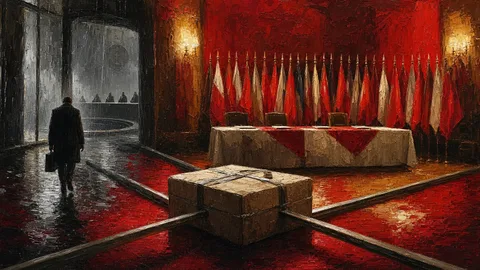
There are days that look like warnings. On June 18, 2026, in Brussels, before assembled NATO defense ministers, U.S. Secretary of War Pete Hegseth announced a "six-month review" of American military presence in Europe. The tone was not that of an ally. It was that of an irate accountant come to collect overdue rent.
According to Reuters, Hegseth threatened to cut American contributions to NATO if "free riding" allies — those who ride for free, like fare-dodgers on the subway — failed to meet their defense spending commitments. The phrase landed hard. And with it, seventy-seven years of transatlantic alliance wobbled one more notch.
The Stage of a Planned Humiliation
Let us be clear about what this scene means. While Ukrainian soldiers die by the hundreds every day on the Pokrovsk front, while Russia builds bases to threaten Finland and the Baltic states, the number-one U.S. defense official chooses this precise moment to lecture his own allies. The timing is a slap. And the slap was calculated.
I write this brief with rage in my gut. Not against America — I love America, and I believe it remains indispensable to the survival of the West. But against this way of treating democratic allies as burdens, at the very moment when the common enemy is closing ranks. There are strategic errors. And there are moral failures. Here, we have both.
"Free Riding": The Word That Wounds
The Insult Disguised as Analysis
Let us stop on that word: "free riding." The freeloader. The sponger. The one who boards the train without buying a ticket. That is how Hegseth, according to Reuters, effectively characterizes a portion of the European allies. The word is not neutral. It is designed to humiliate, to reduce sovereign partners to the status of parasites.
The worst of it is that the word contains a grain of truth, which makes it all the more venomous. Yes, some European countries have long under-invested in their defense, sheltering under the American umbrella. But turning a legitimate budget debate into a public insult is to sabotage the very alliance one claims to reform. You don't heal a patient by slapping him in front of the hospital.
The Iran Grievance
Hegseth went further. According to CNN, he criticized allies for their "limited engagement in the conflict in Iran". Some countries, Reuters reports, denied the United States access to their bases and airspace for military operations. The upcoming review, Hegseth promised, will henceforth guarantee American "access rights."
Translation: "You didn't follow us into our Iranian adventure, so we're revisiting what we do for you." That is brutal quid pro quo, barely veiled coercion. America is reproaching democracies for exercising their sovereignty by refusing to participate in an operation they judged reckless. And threatening to punish them for it.
"NATO 3.0": The Marketing Slogan for a Withdrawal
When You Rebrand to Better Abandon
Hegseth has a slogan: "NATO 3.0." According to the official transcript from the Department of War, he hammered it home in Brussels: NATO must "return to being a robust military alliance" with Europe "in the lead" of its own defense. The formula sounds modern, dynamic, almost seductive. Like a software update.
But behind the marketing lies a blunt reality: American withdrawal. Rebranding a disengagement as "version 3.0" is the old trick of the salesman repainting a defective product. The European citizen hearing "NATO 3.0" must understand what it concretely means: fewer American planes, fewer ships, fewer shields overhead.
The Numbers That Don't Lie
And the numbers are staggering. According to Reuters, the number of F-15 and F-15E fighters available to NATO is set to fall by a third, to 99. MQ-9 Reaper drones would be halved, to 12. The New York Times, relayed by Newsmax, reports the withdrawal of the eight refueling aircraft assigned to Europe, the reassignment of a missile submarine, an aircraft carrier, and several warships.
According to CNN, approximately 5,000 troops will be withdrawn from Germany over the coming year, and two planned military deployments were abruptly cancelled, including one for a battalion specializing in long-range missiles. These are not cosmetic adjustments. This is a methodical dismantling of American presence at the most dangerous moment since 1945.
Trump, the Master Who Shrugs
"It Has No Impact on Us"
While his Secretary of War lectures Europe, President Donald Trump philosophizes. At the G7 summit in Évian-les-Bains on June 16, he let slip, according to Newsmax, a phrase that summarizes his entire doctrine: the Russia-Ukraine war "doesn't affect us, except for our weapons sales." He added: "We have nothing to do with it."
Let that resonate. The largest war in Europe since 1945, hundreds of thousands dead, a world order fracturing — and the president of the world's foremost power shrugs: "We're thousands of miles away." As if the Atlantic were a firewall. As if History had not already proven, twice in the last century, that European wars always end up crossing the ocean.
The Merchant Rather Than the Leader
Trump even clarified, still according to Newsmax: "We sell them weapons. We don't even give them away. The European Union pays full price." There is the heart of his vision: Ukraine is not a cause, it is a customer. The war is not a moral tragedy, it is a line in an accounting ledger. The ally is not a brother-in-arms, it is a buyer who pays "full price."
This carpet-merchant logic applied to geopolitics has something chilling about it. Because if everything reduces to commerce, then the day Russia offers a better deal, why not? The day China proposes a more lucrative market, why not? An alliance founded solely on profit is not an alliance. It is a transaction that can be cancelled at any moment.
Putin's Smile, in the Background
The Unexpected Gift
Imagine for a moment the scene as seen from the Kremlin. Vladimir Putin watches the news. He sees the American Secretary of War calling European allies freeloaders. He sees the American president declaring that the war "has no impact" on the United States. He sees NATO fracturing live, without having had to fire a single extra missile. What finer gift?
Since the beginning of this war, Putin's number-one objective has never been military. It has been political: to divide the West. To separate America from Europe. To break the transatlantic unity that, since 1949, has held Russia in check. And on June 18, without lifting a finger, he watched his enemy do the work for him.
The Pack Closes Ranks, the West Loosens Theirs
The contrast is obscene. On one side, the authoritarian pack — Russia, China, Iran, North Korea — bonds together, exchanges soldiers, drones, components, intelligence, without ever a public crack. On the other, the alliance of democracies tears itself apart in public over dues and "free riding." Who thinks long-term? Who thinks in transactions? The answer is chilling.
Because this is exactly the fault line I have described in my previous analyses: the pack is counting on our divisions. It bets on our fatigue, our selfishness, our inability to stay united. And every time a Hegseth scorns an ally, every time a Trump shrugs, that bet pays off a little more. We hand the enemy the one thing it cannot procure for itself: our disunity.
The Half-Truth That Must Be Heard
Yes, Europe Has Slept Too Long
Let's be honest, because a brief that tells only half the truth is worth nothing. Hegseth and Trump have, on substance, a valid argument: Europe has too long under-invested in its own defense. For decades, it sheltered under the American umbrella to fund its welfare states without bearing the cost of its own security. That is a fact. And it is a European failure.
The awakening is real. According to the Boston Globe, NATO Secretary General Mark Rutte noted that European allies and Canada spent 90 billion dollars more on defense last year, a rise of 20 percent over 2024. Europe is finally moving. But it moves under threat, not out of conviction — and that is the entire problem.
The Right Cause, the Wrong Method
Here is my point: one can be right on the diagnosis and wrong on the remedy. Demanding that Europe pay its share? Legitimate. Doing so by publicly humiliating it, at the worst possible moment, while undermining the alliance one claims to strengthen? Disastrous. It's like a doctor who is right about the disease but kills the patient with his treatment.
And that is the entire tragedy of the Trump-Hegseth era: sometimes sound instincts, squandered by a brutality that destroys more than it builds. Europe needed a shock. Instead it receives a jolt that risks stopping its heart. The difference between stimulating and killing is dosage. And these men know only one dose: maximum.
Europeans Respond: Between Panic and Resolve
The German Warning
Faced with American brutality, Europeans did not stay silent. German Defense Minister Boris Pistorius issued a clear-eyed warning, according to Reuters: it is becoming "difficult and dangerous" for European security for NATO capabilities to be withdrawn "too quickly without a clear replacement plan." He emphasized the difficulty of replacing deep-strike capabilities.
The phrasing is diplomatic but the message is plain: you leave us with a gaping hole in our defenses and ask us to fill it overnight. Pistorius demands "interim solutions or more time." It is the reasonable appeal of a man who sees the danger approaching while the principal ally packs its bags.
The Belgian Resolve
Others choose action over complaint. Belgian Defense Minister Theo Francken announced, according to Reuters, that Belgium would strengthen its contribution to NATO's crisis forces, providing additional F-16s and SkyGuardian drones to offset some of the lost American capabilities. "There will be intense discussions on who does what, but I confirm that Belgium is stepping up," he declared.
That is the right answer. Not lamentation, not submission, but action. If America withdraws, Europe must fill the gap. Painfully, expensively — but it must. Because at bottom, Hegseth is right about one thing I keep repeating: Europe cannot forever outsource its own survival. The brutality of the wake-up call is unbearable. But the awakening itself is necessary.
The Nuclear Shield, the Last Certainty
What America Is Not Withdrawing
Amid this dismantlement, one certainty remains. According to the Boston Globe, the United States does not intend to withdraw its nuclear weapons from Europe, which remain the key to NATO deterrence. To underscore this, the Alliance's Nuclear Planning Group published its first statement in nineteen years following Thursday's meeting.
That statement recalls that "the Alliance's strategic nuclear forces remain the supreme guarantee of Allied security." In other words: we are withdrawing aircraft and ships, but the nuclear umbrella remains open. That is the red line even Trump does not dare cross, because he knows it would spell the pure and simple end of NATO.
Is That Guarantee Enough?
But let us be clear-eyed: nuclear deterrence does not protect against everything. It deters a massive invasion, not hybrid nibbling, Belarusian drones, sabotage, daily pressure. A Europe without American fighter jets but with the nuclear umbrella is a house without locks but with a fire alarm. It reassures against the worst. It does not protect against the everyday.
And that is precisely where the Hegseth-Trump strategy becomes dangerous. By withdrawing conventional capabilities while keeping the nuclear one, America creates a gray zone where Russia can harass without triggering the apocalypse. The threshold for conventional war drops; the threshold for nuclear war remains high. Result: a vast opening for below-threshold aggression. The pack loves gray zones. We have just offered it another.
The Indo-Pacific, the Alibi That Says It All
"Two Simultaneous Conflicts"
Why this withdrawal? The Trump administration advances an argument, reported by the Boston Globe: it must be able to plan for two simultaneous conflicts and wants more military resources available in the event of a confrontation with China in the Indo-Pacific. U.S. General Alexus Grynkewich, NATO's Supreme Allied Commander, speaks of eliminating an "unhealthy codependence" on American forces.
On paper, the argument holds. China is, I have always insisted, the greatest threat to the West. Preparing for a confrontation in the Pacific is legitimate. But pitting Europe against Asia, as if one had to choose between defending Kyiv and defending Taiwan, is falling into exactly the trap Beijing is setting for us.
The False Dilemma
China and Russia are not two separate problems. They are the two heads of the same monster. Weakening NATO in Europe to reinforce the Indo-Pacific is to offer Putin a front while hoping to hold the other against Xi. But the two dictators coordinate. They know that by forcing us to choose, they weaken us everywhere.
The real answer is not to strip Europe to dress Asia. It is to demand that Europe dress itself, so that America can reinforce Asia without denuding Europe. The distinction is vital. Hegseth articulates it badly, brutally — but it exists. The problem is that by humiliating Europe instead of making it responsible, he risks paralyzing it instead of mobilizing it.
The Historical Precedent That Should Chill Us
Discover

INVESTIGATION: Beijing cuts Africa to 2.1 billion in loans…
2.1 billion — the lowest figure in almost twenty years, according…

SPECIAL REPORT: Beijing Promises Stimulus as Its Households Give…
That is the growth rate of Chinese industrial output in July,…

INVESTIGATION: Two Chinese Ex-Soldiers Arrested in Seoul as 18,000…
For five years, a man ran a military-supply shop at the…
Isolationism, That Old American Demon
What Trump is saying — "we're thousands of miles away," "we have nothing to do with it" — is not new. It is the return of an old American demon: isolationism. In the 1930s, a large part of America thought exactly the same thing about a Europe sinking into fascism. "Not our business. Too far away."
We know what followed. Pearl Harbor. World war. Hundreds of thousands of American dead that earlier engagement might have prevented. History brutally demonstrated that no ocean protects against anything when barbarity is left to grow. And yet here we are, replaying the same score with the same arguments, as if nothing had been learned.
Munich Always Lurks
I have invoked Munich 1938 in my previous pieces, and I invoke it again without shame, because the parallel is too strong. Munich was the idea that peace could be bought by sacrificing an ally, by ceding ground, by shrugging. Munich was the illusion that the predator would be satisfied with one bite. It has never wanted only one.
When Trump says the Ukraine war "has no impact," he replays the spirit of Munich. When Hegseth dismantles NATO, he weakens the bulwark that, precisely since 1949, has prevented Munich from recurring. History does not repeat itself identically. But it rhymes. And the rhyme I am hearing right now terrifies me.
What June 18 Will Mean in History
A Pivotal Date
I believe June 18, 2026 will be remembered as a pivotal date. Not because of a battle, a missile, a breakthrough. But because of words. The words of Hegseth scorning his allies. The words of Trump shrugging. Words that, more surely than any Russian weapon, have fractured the transatlantic edifice.
Because alliances do not die in a single blow. They die of erosion, of words, of accumulated contempt, of repeated slaps. And that day, the erosion accelerated. The NATO summit planned for July 7–8 in Ankara will show whether this fracture closes or widens. But the damage is already done. You cannot un-scorn someone.
Hope Nevertheless
And yet, I refuse despair. Because in that same day I saw Belgium stepping up, Germany warning with clear eyes, Europe spending 90 billion more. Humiliation can kill an alliance. It can also awaken a continent. Everything will depend on Europe's response in the weeks to come.
If Europe chooses dignity over complaint, strength over dependence, then Hegseth's contempt will have paradoxically served a purpose. It will have been the kick that forced Europe to finally stand on its own feet. That is the optimist's wager. The only one I am prepared to make. Because the alternative — a Europe that collapses under contempt — is too dark to accept without fighting.
Congress: the Last Guardrail Against Abandonment
The Floor Trump Cannot Cross Alone
There is, in this story, an actor too easily forgotten: the U.S. Congress. Because the president and his Secretary of War do not decide everything alone. The six-month review announced by Hegseth, according to Reuters, will require consultations with Congress, which legally mandates a minimum number of American troops stationed in Europe.
This technical detail is in fact crucial. It means that even a Trump tempted by total withdrawal runs into an institutional guardrail. Senators and representatives — including Republicans — know that abruptly abandoning Europe would be a gift to Moscow and a strategic disaster. The legal floor is not a mere formality: it is the last rampart against a full-scale rout.
American Democracy Against Its Own Excesses
On the same topic

COLUMN : Europe Moved 8.5 Billion Euros in a…
That is what the European Commission says it has disbursed for…

ANALYSIS: 313 Votes, a 20th Extension — Ukraine Keeps…
313 votes to approve the presidential decree extending martial law by…
INVESTIGATION: 36 States Sign in Chișinău — and the…
Thirty-four members of the Council of Europe, plus Australia, plus Costa…
And there lies a paradoxical glimmer of hope. The American system of checks and balances, so often maligned, may well save the alliance despite the executive. Hegseth can threaten, Trump can shrug, but neither can erase with a stroke of the pen the commitments voted by Congress. The institutional machinery slows the isolationist impulse.
That is why the battle is not lost. As long as Congress holds firm, as long as voices rise in Washington to recall that Europe is not a burden but a bulwark, NATO survives. Hegseth's contempt is real. But it collides, fortunately, with institutions wiser than the men who lead them at this moment.
What Rutte Is Trying to Save in the Storm
The Brussels Tightrope Walker
Amid this din, one man walks a tightrope: Mark Rutte, NATO Secretary General. His position is untenable. On one side, he must manage an American ally that threatens, scorns, and withdraws. On the other, he must reassure anxious Europeans and maintain the unity of a cracking alliance. According to the Boston Globe, he has chosen diplomacy: insisting that the United States remains "dedicated" through its nuclear umbrella.
Rutte plays the firefighter. He minimizes, smooths, reframes. He recalls that the American drawdown was already underway, that Europeans are stepping up, that the nuclear commitment holds. It is the thankless role of the caretaker of a house whose co-owner is slamming doors in public.
Diplomacy as the Last Dike
Should he be blamed for tempering? I don't think so. Because if Rutte amplified the fracture, he would hand Putin the spectacular rupture the Kremlin dreams of. His job is to transform a slap into a mere couple's misunderstanding, to buy time until the Ankara summit, to maintain the fiction of unity until it becomes reality again.
But there is a limit to diplomacy. You cannot indefinitely reglue what others are bent on smashing. Rutte can absorb the shock of June 18. He cannot erase the fact that the American Secretary of War publicly called allied nations freeloaders. Words, once uttered, cannot be taken back. And the tightrope walker knows it: beneath his feet, the void deepens.
Conclusion: Today's Contempt, Tomorrow's Awakening
A Bitter but Useful Lesson
June 18 will stand as the day America looked down on Europe, the day Hegseth spoke of "free riding" and Trump said it all "had no impact." A day of contempt, brutality, and historical blindness. A day that made Putin smile without his having to lift a finger.
But it may also be, in retrospect, the day Europe understood it could no longer outsource its own survival. The day the American slap forced it to grow up. The entire question rests there: transforming humiliation into resolve, contempt into strength, dependence into autonomy. It is painful. It is necessary. It is, perhaps, salutary.
The West Must Remain the West
In the end, my conviction remains intact: the West must remain the center of the world, the guardian of freedoms, the bulwark against the authoritarian pack. But to do so, it must stop tearing itself apart. America must stop scorning. Europe must stop begging. And together, they must remember what unites them against what threatens them.
Hegseth is right on one point, despite all his contempt: Europe must take its own defense in hand. But it must do so not against America, nor in submission to it, but alongside it, as an equal. That is the only viable future. The rest — the contempt, the isolationism, the shrugging — is merely a path to the precipice. And at the bottom of the precipice, one victor waits: Putin, and the pack that follows him.
Primary Sources
Secondary Sources
Get the geopolitics analyses
Conflicts, powers, alliances: the MadMax thread without the noise.
Cite this article
Maxime Marquette (2026). BRIEF : Hegseth Scorns Europe, Trump Shrugs — and Putin Smiles. MadMax. https://mad-max.co/en/article/billet-hegseth-meprise-leurope-trump-hausse-les-epaules-et-poutine-sourit
Read next
INVESTIGATION: Beijing cuts Africa to 2.1 billion in loans…
2.1 billion — the lowest figure in almost twenty years, according…
SPECIAL REPORT: Beijing Promises Stimulus as Its Households Give…
That is the growth rate of Chinese industrial output in July,…
INVESTIGATION: Two Chinese Ex-Soldiers Arrested in Seoul as 18,000…
For five years, a man ran a military-supply shop at the…
Enjoyed this piece? Get the next one.
One chronicle a week, straight to your inbox. No noise.
This article was generated with AI assistance, under human supervision.
Comments
Be the first to weigh in.