

PROFILE: Wayne Eyre fears the berating from the south less than the day it stops
Retired general Wayne Eyre presented his memoir on The West Block on September 27, 2026, and in its first chapter there is a radio.
- Retired general Wayne Eyre presented his memoir on The West Block on September 27, 2026, and in its first chapter there is a radio.
- September 27, on television
- Retired general Wayne Eyre presented his memoir on The West Block on September 27, 2026 , and in its first chapter there is a radio.
Facts, quotes, and cited links remain in the body. Interpretations are framed as analysis or opinion according to the format.
A radio in Wadena
September 27, on television
Retired general Wayne Eyre presented his memoir on The West Block on September 27, 2026, and in its first chapter there is a radio.
An old shortwave receiver. A homemade antenna. A farm boy near Wadena, Saskatchewan.
The book is called Into the Breach: A Soldier’s Journey. Simon & Schuster puts it in bookstores on October 6, 2026.
The publisher has released the first chapter. That is where you find the radio.
Two voices on the air
The boy picked up Radio Moscow. He picked up the Voice of America. Two Cold War voices, answering each other through the static.
What he had only read about, he writes, became more real.
Seven of his eight great-grandparents had come from the United Kingdom and Sweden between 1901 and 1912. They broke land northeast of the Quill Lakes.
The eldest of three brothers. Hockey sticks cut down into rifles. Forts dug into snowbanks.
Prairie winter bites the fingers. You listen to the world through a stretched wire.
The receiver does not say who is right. It says who is talking. And who is talking loudest.
A Prairie boy was already listening to two capitals.
A soldier’s childhood
War games with his brothers
The chapter opens on a calling. From his earliest years, he writes, he wanted to be a soldier. Without knowing it yet.
There were the war games with his brothers and cousins. Two teams. Rules. His brother John leading the other side.
There were the rafts built from forty-five-gallon drums, on a nearby slough.
There was the gunpowder made with a chemistry set. The local pharmacist, worried about his saltpetre purchases, warned his mother.
The cadets
At twelve, he was hunting alone with an old single-shot 20-gauge.
He devoured science fiction. Asimov. Heinlein. Clarke.
Then the Royal Canadian Army Cadets settled his calling, he writes.
None of this is heroic. It is a farm childhood. You learn risk there. And how to count on yourself.
A farm childhood, a barracks calling.
The accidental chief
February 2021
The book’s prologue is titled The Accidental CDS, for chief of the defence staff, according to CBC News.
In February 2021, Admiral Art MacDonald steps aside because of allegations of inappropriate behaviour. Those allegations never led to charges, CBC notes.
Eyre is commanding the Canadian Army at the time. He rises to the top. Without having planned it.
He becomes both commander of the Armed Forces and military adviser to the prime minister and cabinet, the publisher recalls.
He inherits a sexual misconduct crisis that reaches several senior officers. He describes the experience as “soul crushing.”
Doubt in the first months
He writes that in the first months, he often doubted he was up to the task.
A general who puts that doubt in writing is rare.
Global News says as much: “a rare public effort for a Canadian general.”
A chief who doubts is not a weak chief. He is a chief who does the math.
An accidental chief, and a chief all the same.
The berating from the south
What he said on September 27
To host Jeff Semple, Eyre said he was encouraged by Mark Carney’s promise to invest heavily in the Armed Forces, Global News reports.
Then he named the real danger. The critical vulnerability.
In the remarks Global quotes, he names no one in Washington. He says south of the border.
If the berating from the south changes, and the very real threats remain, the government will lose, he says, its “social licence to continue.”
Hence his advice. Keep educating Canadians about the threats to their sovereignty, their security and their way of life.
The military’s readiness has suffered for a long time, he adds. From the end of the Cold War through Afghanistan. It will not be fixed overnight.
The world is moving too fast, he says. The geopolitical reordering. Technology. Climate.
He stayed in the job
I read this man by his actions. Not by his reputation.
One act dominates his book. In June 2021, he had his resignation on the tip of his tongue, on the phone with the prime minister.
He almost left. He stayed.
The rest of the profile fits inside those two sentences. And inside the one from September 27.
The real danger, he says, is the south going quiet.
Forty years in uniform
From platoon to army
The publisher sums up a forty-year career. Eyre commanded at every level, from platoon to the Canadian Army, between deployments.
There is Cyprus, Croatia and Bosnia, where he led peacekeeping missions.
There is the Canadian evacuation after the fall of Afghanistan.
There is the support for Ukraine against Russian aggression.
There is Chinese intimidation in the Pacific.
There are the suspected spy balloons over North America.
Floods and fires
And there is the country itself. The floods. The wildfires. The worst of COVID-19.
And the battle, in the corridors of power, for defence resources, according to the publisher.
That last line matters here. It runs through the whole book.
Forty years, and every breach in the country.
Ideology and reality
February 2022
When the Kremlin launched its full-scale invasion of Ukraine in February 2022, the Trudeau government was criticized for its reluctance to approve lethal aid, CBC recalls.
Eyre calls it “a collision of ideology with reality.”
The ideology, he says, was the idea that Canada does not send weapons into a conflict zone.
The reality was a friend under attack. And a way to help.
The speed of war
His book piles up examples. The mission to train Ukrainian troops. The transfer of M777 howitzers.
CBC sums up his frustration in a phrase: an “inability to make decisions at the speed of war.”
And yet he acknowledges that Canada sometimes moved ahead of its allies. The Leopard tanks went out fast.
A soldier who accuses and concedes in the same chapter. That is not a pamphlet. It is an account.
A war does not wait for a cabinet meeting to end.
Discover

SPECIAL REPORT: Brussels sanctions a camp called Peace and…
Romashka, Sputnik, Raduga, Mir, Leto, Vita: the Official Journal of the…

COLUMN: At 54 Volodymyrska Street, Moscow burns the address…
A Russian jet-powered drone struck the presidium building of the National…

OPEN LETTER: Leo XIV, you quote Benedict XV, so…
Holy Father, on September 28 in Metz, you asked Europe to…
Smoke and mirrors
June 2022, NORAD
In June 2022, Ottawa was preparing its NORAD modernization commitment.
No one, Eyre writes, seemed to know where the C$38 billion would come from. Or where it would go.
He calls it a “smoke and mirrors” funding approach. Billions already set aside for other equipment, taken back and reallocated. Most of the investment pushed years into the future.
One sentence to a reporter
A few days later, the confusion persisted.
Eyre then told a journalist frankly that the source of the funds “wasn’t clear to me.”
That sentence, he writes, drew the government’s ire.
Remember that detail. The man publishing today did not always wait for retirement to speak.
He spoke once. He paid once.
Without a known source, a chief can promise no date. Not for an aircraft. Not for a radar.
Billions announced, and a source nowhere to be found.
Toronto, September 2023
Fiery speeches
In September 2023, Volodymyr Zelensky visited Canada. In Toronto, the speeches came one after another.
The prime minister and the deputy prime minister spoke with passion about strength and support for Ukraine, Eyre writes.
In the room, a handful of senior Armed Forces officers were listening.
Did they say it out loud, that day?
A billion dollars less
Eyre admits he had a hard time reconciling those speeches with the billion-dollar budget cut that had just been imposed on the military.
And with “their lethargy to approve a new defence policy.”
Applause at the microphone. A budget just cut. The two moves sit side by side.
I attribute no intention to anyone. I note two moves. And how close together they fall.
This is not a backroom anecdote. It is a budget. It is measured in training hours and spare parts.
Applauding Ukraine with one hand, cutting the military with the other.
The phone call of June 2021
Under the bus
Back to the moment that decides everything.
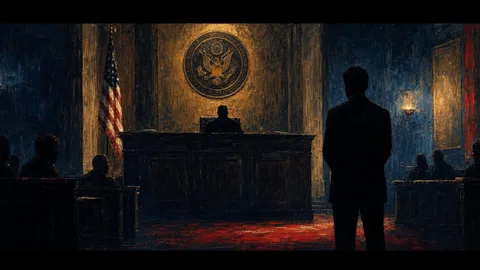
In June 2021, Justin Trudeau and Chrystia Freeland publicly questioned a decision by Eyre.
He had left the commander of the navy, Vice-Admiral Craig Baines, in his post. Baines had played golf with former chief Jonathan Vance, then under military police investigation.
On the same topic
EXPLAINER: Judge Ali frees more than $200 million in…
On September 28, federal judge Amir Ali struck down a 20%…

QUICK TAKE: Hegseth vows a no-fail mission for the…
Pete Hegseth called the protection of American elections a “no-fail mission”…
SPECIAL REPORT: Brussels sanctions a camp called Peace and…
Romashka, Sputnik, Raduga, Mir, Leto, Vita: the Official Journal of the…
Eyre felt thrown “under the bus” by the deputy prime minister.
If there is no trust between the military chief and the elected chief, he told CBC, one of the two has to go. And it is not the elected one.
On the line with Trudeau
He is on the phone with the prime minister. He is about to resign.
Trudeau stops him. He tells him he still has confidence in him.
The crisis is defused. The tension remains, CBC writes.
He stays.
He will serve three more years. He will think about leaving, he says, “several times.”
Resigning is a political act, he explains. You can fall on your sword, but “you can only do it once.”
He chose the institution. A resignation, he says, would have set off a new crisis in an already wounded house.
I do not know what I would have done at the end of that line. I know the opposite choice had its price too.
You only fall on your sword once.
The blind spots
The 2022 convoy
An honest profile also shows what Eyre’s version leaves in the shadows.
During the convoy’s occupation of Ottawa in early 2022, he opposed any role for the military.
He tells CBC the military did not plan. It explored scenarios. In a very small circle. Mostly around military tow trucks.
And yet former deputy minister Bill Matthews testified that the military had prepared operational plans, as a precaution. They were set aside, for fear of an escalation that would recall the 1990 Oka crisis in Quebec.
Plan or scenario
Plan or scenario. The word changes everything. Eyre is the one who picks it.
Where does one end, and the other begin?
A member of his staff told him, he writes, that keeping the military out of that mess would be a singular achievement.
The achievement is real. The line between planning and imagining remains his own definition.
A memoir is not an inquiry. It is an honest plea. It is still a plea.
His version has its blind spots too.
Two percent
March 26, 2026
On March 26, 2026, National Defence announced that Canada had met NATO’s 2% of GDP benchmark for fiscal 2025–2026.
More than C$63 billion on defence, according to the department.
The Spring Economic Update calls it a first since the fall of the Berlin Wall.
The department itself warns that improvements in readiness will take time.
It lists what the money is already buying. C$2 billion for military pay. Housing: 7,500 units on 25 bases. C$1.4 billion to produce munitions at home.
On the right path
CBC asked Eyre whether the country is ready for what may be coming.
He said no. “But we’re on the right path,” he added.
On July 18, 2024, at his change of command, he was already saying urgency was required. He also said “evil walks this earth,” and urged Canada to keep supporting Ukraine’s defence, according to CBC. On September 27, 2026, he repeats the word urgency.
Two years. The same word.
Two percent is a floor, not an army.
A bill with no trajectory
Five percent by 2035
The government is now aiming for NATO’s commitment of 5% of GDP by 2035.
The Parliamentary Budget Officer costed a scenario on February 5, 2026. C$159 billion in core defence spending in 2035–2036. About C$33.5 billion more per year, on average, over ten years.
The deficit would grow by C$63 billion in 2035–2036 under that scenario.
Asked in July 2025, the Department of National Defence did not provide a year-by-year trajectory, the budget officer writes.
It pointed instead to orders of magnitude. About C$150 billion for core defence in 2035. Subject to change.
The missing plan
Nobody has published the trajectory. The budget officer puts it in black and white.
Nobody has published the financing. The C.D. Howe Institute concluded on April 2, 2026, that no clear path exists without a change in policy.
Nobody has published the 2026 budget. Minister François-Philippe Champagne asked in January for people to wait for it, Global News reports.
Global estimates it would take $163 billion a year to meet a 4% target in 2030.
The institute expects defence could rival transfers to the provinces within ten years. It proposes a modest increase in the GST, the federal sales tax, and restraint on other spending.
Without a published plan, the licence wears thin.
The social licence
What the warning demands
This is where Eyre’s warning carries its full weight.
He is right about the threat. He names it. He dates it. He managed it from Afghanistan to Ukraine.
He is right about speed. Readiness, he says, is “our ability to respond fast enough with enough forces long enough.”
He is right about the licence. An effort fed by a neighbour’s anger collapses when the neighbour falls silent.
The military, he adds, is “the nation’s ultimate insurance policy.”
Several European leaders and intelligence services warn that the West could face a major conflict with Russia, and possibly China, by the end of the decade, CBC notes.
What the warning leaves out
And yet his sentence covers only half the contract.
You do not win a country’s consent with the threat alone. You win it with the threat and the bill. Side by side.
The bill, here, has no published trajectory yet.
Educate people about the danger without showing the cost…
Here is my judgment of his actions. He stayed when leaving would have wounded the institution. He speaks when speaking can still help. He names half of what needs naming.
Naming the threat is not enough. Show the bill.
A cross-country tour
From Ottawa to Regina
Eyre is not settling for a television studio. He is going on tour, according to the publisher.
October 14, at the University of Ottawa bookstore.
October 16, at Queen’s University in Kingston, for a conversation on defending Canada.
October 26, at the Ottawa International Writers Festival, at Library and Archives Canada.
November 12 in Vancouver. November 14 in Victoria. November 27 in Regina, at a Royal Canadian Legion branch.
In Victoria, he will talk it over with retired major-general Michel-Henri St. Louis.
Doing what he asks of Ottawa
He asks the government to educate Canadians. He starts by doing it himself. Room by room.
It is a consistent move. A retired general has no budget to defend. He has a book. And a voice.
He educates before he demands it of anyone.
The right frequency
The Wadena receiver
The boy from Wadena picked up two voices, Moscow and Washington, on the same dial.
The retired general is asking us for a different setting. Tell the noise from the danger.
The noise, today, comes from the south. It is loud. It is daily.
The danger speaks lower. It does not lecture. It waits.
On October 6, the book will reach the stores. The dial is already open.
What we will pay for
Will we pay for our defence because of the threat that remains, or only because of the neighbour who shouts?
The radio will not answer for us.
It is still crackling.
He stayed. The berating will stop. The threat will not.
Sources:
Primary Sources:
- Simon & Schuster — Into the Breach, book page and first chapter, on sale October 6, 2026
- National Defence — Canada reaches 2% of GDP on defence, March 26, 2026
- Parliamentary Budget Officer — cost of meeting NATO’s 5% target, February 5, 2026
Secondary Sources:
Get the geopolitics analyses
Conflicts, powers, alliances: the MadMax thread without the noise.
Cite this article
Maxime Marquette (2026). PROFILE: Wayne Eyre fears the berating from the south less than the day it stops. MadMax. https://mad-max.co/en/article/wayne-eyre-fears-the-berating-from-the-south-less-than-the-day-it-stops
Read next
SPECIAL REPORT: Brussels sanctions a camp called Peace and…
Romashka, Sputnik, Raduga, Mir, Leto, Vita: the Official Journal of the…
COLUMN: At 54 Volodymyrska Street, Moscow burns the address…
A Russian jet-powered drone struck the presidium building of the National…
OPEN LETTER: Leo XIV, you quote Benedict XV, so…
Holy Father, on September 28 in Metz, you asked Europe to…
Enjoyed this piece? Get the next one.
One chronicle a week, straight to your inbox. No noise.
This article was generated with AI assistance, under human supervision.
Comments
Be the first to weigh in.