

OPEN LETTER: To the people of Maine, Trump’s tariff costs you too, so say so before November 9
A logging business in Maine has shut its doors because parts had become too expensive, The Guardian reported on September 26, 2026. I am writing to you because of that closure.
- A logging business in Maine has shut its doors because parts had become too expensive, The Guardian reported on September 26, 2026. I am writing to you because of that closure.
- A sign in Boothbay Harbor
- A logging business in Maine has shut its doors because parts had become too expensive, The Guardian reported on September 26, 2026.
Facts, quotes, and cited links remain in the body. Interpretations are framed as analysis or opinion according to the format.
A sign in Boothbay Harbor
Welcome, Canadians
A logging business in Maine has shut its doors because parts had become too expensive, The Guardian reported on September 26, 2026. I am writing to you because of that closure.
People of Maine, I am Canadian. I am writing from a country that turned its back on you this summer, and that is starting to come back.
I owe you some numbers. And a request.
The same report shows a sign in Boothbay Harbor. In substance, it welcomes Canadians.
I don’t know whether it is still there. We, for our part, went there a lot less.
August 22
Since August 22, according to The Guardian, duties of 50% have hit Canadian goods. They cover about $20 billion worth of products, including forest products, furniture and hockey equipment, economist Kent Jones writes.
Donald Trump imposed them under Section 338 of a 1930 tariff law, a provision never used before.
People say these duties hit Canada. They also hit your machinery parts.
Thirty to fifty percent on your parts.
The sign says welcome. The bill says something else.
The machines of Penobscot
Parts nowhere to be found
The summer was ideal for cutting wood in Penobscot County, The Guardian reports. Hot. Dry. The timber had reached the right size.
In the 19th century, Penobscot called itself the lumber capital of the world. Log trucks still take up half the road there, and the smell of spruce and fir gets through a closed car window, the paper writes.
And yet Molly London’s machines sat idle.
She and her husband, Alex, started a logging business nearly ten years ago. For weeks, they waited for replacement parts. The parts were no longer in stock in the region, because tariffs had made them too expensive, the paper reports.
WW London, closed in August
Back in 2017, when they started, loggers from families with generations in the trade had warned them. She has a master’s degree in forestry. He had experience in transport and trucking. They liked the idea of going to work in the woods, she recalled.
In August, the couple decided to close WW London Woodlot Management Company.
They had been losing money for a long time, and it was only getting worse, she told The Guardian.
Nearly ten years of work. One decision in August.
The health of forestry is a barometer for the whole state economy, the paper writes.
I don’t know Molly London. I have never met her. I know only what the paper published, and that is enough.
A stopped machine makes no noise. That is what makes it easy to forget.
A forest ready, the machines silent.
Thirty to fifty percent
What Dana Doran says
Dana Doran heads the Professional Logging Contractors of the Northeast. What he told The Guardian fits in one line.
Many of the parts and much of the equipment your loggers buy from Canada and elsewhere are hit by tariffs. Prices for equipment, parts and trucks have climbed 30 to 50% since Trump’s first tariffs were announced.
Those prices have not come back down, he added.
I will say it plainly. I am on your side, against the Section 338 duties that took effect on August 22. Because it is your parts that pay for them.
Not Ottawa. You.
A tariff, a buyer
A tariff is a tax paid by the buyer, notes Kent Jones, professor emeritus of economics at Babson College. American consumers and businesses will pay 50% more for the targeted goods.
Many of those Canadian imports are concentrated in border states. Maine is the first one he names.
The tariff does not cross the border. It stops at your door.
At the logger’s. At the parts buyer’s. At the end customer’s.
The tariff aims at Ottawa. It lands in Penobscot.
Forty percent heads north
Two billion a year
Maine sends about 40% of its exports to Canada, according to the Maine International Trade Center, cited by The Guardian.
It takes in a great deal as well. Maine imports about $2 billion a year of non-petroleum Canadian goods, your senator Susan Collins wrote on August 22.
Two billion. Every year.
She added that most businesses would have no choice but to pass the tariffs on to their customers.
She said she had heard from businesses, farmers and lobstermen. All worried about the cost, about the lack of local supply chains, and about likely Canadian retaliation.
A shared destiny
Patrick Woodcock heads the state Chamber of Commerce. He tells The Guardian about ties that span generations.
He speaks of a business relationship, but a family one too. Your longest border is with us. Many of you trace your history through Canada, he says. He speaks of something like a shared destiny.
I recognize that phrase. People say it on our side too.
The cousin across the line. The aunt we visit for the holidays. The bridge we cross for a wedding. Every border family has its names on the other side.
Forty percent of your sales look north.
What Washington would tell you
The decline before the tariff
I owe you the strongest counterargument. Here it is, as the administration would make it.
Maine forestry has been sagging for years, well before the trade war. The Guardian says so itself.
Costs are rising everywhere. The workforce is shrinking. Many owners are telling their children not to take over the family business, according to Dana Doran.
Diesel is at record highs and the Federal Reserve has just raised rates, the paper notes. Commercial construction costs in Maine have more than doubled in ten years, according to developer Jonathan Culley.
Canadian lumber, slowed by a court
There is more. The duties that slow Canadian processed lumber were imposed by the United States Court of International Trade, not by Trump, Doran points out.
And demand for wood has dropped because home building has been slowing for a few years.
A Fort Clyde fisherman, Justin Allen Liddy, now fills his boat only halfway, the paper reports. Fuel tops $5 in parts of the state. A Portland chef, David Turin, says he has never faced headwinds this harsh.
So, the administration would say, why blame the tariff?
All of that is true.
It is a real counterargument. It deserves a real answer.
Suffering before does not excuse making it worse after.
This year, impossible
The last straw
The answer is in Molly London’s own words, as The Guardian reports them.
After the pandemic, everything went up. Tires. Fuel. Payroll. Every week got harder.
This year, she said, the tariffs made it impossible.
Impossible. Not hard. Impossible.
A single signature
Diesel depends on the world. Rates depend on the Federal Reserve. Housing depends on a thousand decisions.
The Section 338 tariff depends on one signature. It was proclaimed by one man. It can be lifted by the same man.
And yet it is the only one that could be withdrawn tomorrow morning.
That is why I name it. The other costs are storms. This one is a decision.
One signature. One name.
The other costs are weather. This one carries a signature.
What we did to you
No Canadian plates
I also owe you a confession. It costs me.
Discover

OPEN LETTER: Leo XIV, you quote Benedict XV, so…
Holy Father, on September 28 in Metz, you asked Europe to…

SPECIAL REPORT: Brussels sanctions a camp called Peace and…
Romashka, Sputnik, Raduga, Mir, Leto, Vita: the Official Journal of the…

COLUMN: At 54 Volodymyrska Street, Moscow burns the address…
A Russian jet-powered drone struck the presidium building of the National…
We stopped coming. In 2025, 25% fewer Canadians visited the United States, according to a Canadian report cited by the Boston Globe. Seven million fewer visitors.
We stopped spending: $3.3 billion less in the United States in 2025, according to the same report.
We stopped strolling through your towns. Cellphone data analyzed by the University of Toronto shows a 49% drop in Canadian visits to Portland, according to the same paper.
Your representative, Chellie Pingree, summed it up for the Boston Globe. Some towns saw more Canadian visitors this summer. Others saw not a single Canadian licence plate.
The last round of tariff attacks set off a panic, she says. What if it happened again?
Lobster, taken off the list
It gets worse. Our own retaliation was aimed at you.
Canada’s retaliation list initially targeted Maine seafood, Kent Jones recalls. In his view, Carney had picked products likely to anger voters in key states.
Ottawa then took American fish and seafood off its list. Collins welcomed the move, which would otherwise have done significant harm to your lobstermen, according to The Maine Wire.
We took lobster off. We did not give you back the tourists.
True, we have our share. And that does not change who signed Section 338.
We snubbed your beaches. You paid for our anger.
Friday night, the pizzeria
The insurance they gave up
Back to the Londons. The Guardian offers a detail I cannot shake.
Many loggers voted for Trump, the paper notes. I do not hold that against you. I am talking about a decision, not a vote.
There was the health insurance. In 2025, they gave up their own family’s coverage so they could keep offering it to their employees.
Read that sentence twice. The boss goes without. The crew stays covered.
School meals
There was a Friday night ritual: dinner at the local pizzeria. It disappeared years ago, the paper writes. They eat at home.
There were the groceries. They cost too much.
This summer, for the first time, their children took part in their schools’ free meal programs.
A business that closes does not reopen with a snap of the fingers. When it closes, the machines get sold, the crews scatter, the know-how leaves with them.
This is not a statistic. It is a family that made all the right choices and lost anyway.
I would like to write that things will get better. No source lets me.
They kept their crew insured. They lost their business.
Frenchville and road salt
An exemption won
What has moved must be said too. A good act remains a good act, even when it comes from those I criticize.
Washington exempted Canadian road salt and cement from its tariffs. Collins had pressed on both products with Trade Representative Jamieson Greer and Commerce Secretary Howard Lutnick, The Maine Wire reported on September 9.
Frenchville, a small border town, would have paid about $10,000 more for its road salt, according to the senator. A ready-mix concrete maker told her the cement tariff would have cost it $150,000 a month.
It was not her first request. She had sought an exemption for fire trucks already on order, whose price was climbing by $80,000 to $90,000 each. Then relief for the Canadian equipment of wild blueberry growers, her office recalls.
Wood, still taxed
The exemption proves one thing. A signature can be corrected.
But significant tariffs, including those on forest products, remain in force, Collins warned. They will drive up costs for Maine families.
Salt, yes. Parts, no.
Frenchville’s salt was saved. Penobscot’s parts were not.
Winter on the roads got fixed. Summer in the forests did not.
If salt can be exempted, so can a part.
We are crossing again
July, up 10.1%
Now, the part I can offer you. It is small, but it is real.
In July, Canadians returned from 2.8 million trips to the United States. That is 10.1% more than in July 2025, according to Statistics Canada. A fourth straight monthly increase.
By car, the increase reaches 12.6%. Six in ten returns are same-day trips.
A quarter below 2024
And yet our trips south remain 25.6% below their July 2024 level.
On the same topic
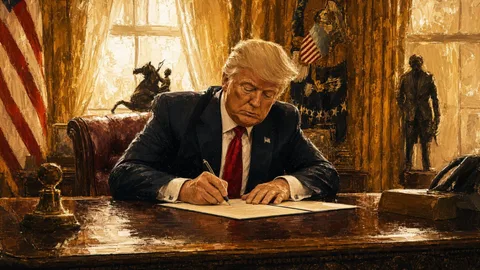
COMMENTARY: Trump’s Iowa steel mill is good news due…
On September 28, in the Oval Office, Donald Trump announced a…

ANALYSIS: Trump says he offered Iran nothing. His own…
On September 28, Axios reported, citing American officials, that Donald Trump…

SPECIAL REPORT: Trump’s 100% tariff on patented drugs spares…
Since 12:01 a.m. this Tuesday, September 29, a 100% duty has…
The August count, published by the agency on September 11, still shows an 8.8% increase over a year earlier.
We are coming back by the short road. The suitcase in the trunk, the radio crackling as we clear customs, the passport handed through the window.
Slowly. But we are coming back.
I cannot make promises on behalf of a country. I can tell you what the numbers show. The bridge is filling up again, slowly.
Step by step, we are coming back. Keep the sign up.
Sawmills on the other side
A country that no longer saws enough
There is another truth in that report. It goes beyond your state.
The United States depends to an exceptional degree on Canadian sawmills to process the wood that goes into housing, Dana Doran tells The Guardian.
He wonders whether the country will have enough mills on the day rates fall and construction picks back up. His answer: no.
Developer Jonathan Culley says the same thing, more bluntly. The United States lacks the manufacturing capacity to keep up with housing demand, in his view.
Maine needs at least 80,000 more homes, the paper notes. Its population is the oldest in the country. Quincy Hentzel, of the Portland chamber of commerce, says young workers have to be drawn in.
Doran’s questions
Doran faults the administration for not asking the right questions. He asks them himself.
Nobody asks what incentives it would take to revive American manufacturing. Nobody asks what to do about electricity costs. Nobody asks what to do about health care. Or whether there will be enough workers for those plants. Or whether anyone can speed up fast enough.
A whole conversation that is not happening, he says.
And yet the tariff did happen.
Washington taxes the mill next door before building its own.
Docket MISC-053
5:15 p.m., November 9
Here is my request. It is precise, and it has a date.
On September 9, the United States International Trade Commission published a request for comments on Section 338 in the Federal Register. The docket number is MISC-053.
Anyone with an interest can write. Comments must be received by November 9, 2026, at 5:15 p.m., through the Commission’s electronic filing system or by email to its secretary.
The Commission says it has no established practice for identifying such discrimination. It asks how to do it. It also asks what discourages the public from talking to it.
What the Commission does not know
It asks what makes foreign conduct unreasonable or discriminatory. It does not ask what a tariff costs a Penobscot logger.
Tell it anyway. Question 5 invites any additional information.
One warning: all comments will be posted as submitted on its website, personal information included, the notice specifies.
Write with your numbers. Tell it the price of the part before. Tell it the price of the part after. And the number of weeks you waited.
A signed number weighs more than anonymous anger. If a thousand loggers write down the price of their parts…
The docket is open, the pen is ready. Fill it.
Your bill has a signature
What is my business
I will not talk to you about your Senate race, which The Guardian calls close; that is not my business, it is yours.
What is my business is the border. Forty percent of your exports, and a sign in Boothbay Harbor.
The missing part
What will you tell the Commission, by November 9, about what these duties cost you?
The part missing in Penobscot is no longer in stock in the region. It sits on a desk in Washington.
We are coming back. Slowly. By the short road.
Thirty to fifty percent on your parts: write it down before November.
Sources:
Primary Sources:
- Federal Register — International Trade Commission request for comments on Section 338, September 9, 2026
- Senator Susan Collins — statement on the breakdown of talks with Canada, August 22, 2026
- Statistics Canada — travel between Canada and other countries, July 2026, September 22, 2026
Secondary Sources:
Get the geopolitics analyses
Conflicts, powers, alliances: the MadMax thread without the noise.
Cite this article
Maxime Marquette (2026). OPEN LETTER: To the people of Maine, Trump’s tariff costs you too, so say so before November 9. MadMax. https://mad-max.co/en/article/to-the-people-of-maine-trumps-tariff-costs-you-too-so-say-so-before-november-9
Read next
OPEN LETTER: Leo XIV, you quote Benedict XV, so…
Holy Father, on September 28 in Metz, you asked Europe to…
SPECIAL REPORT: Brussels sanctions a camp called Peace and…
Romashka, Sputnik, Raduga, Mir, Leto, Vita: the Official Journal of the…
COLUMN: At 54 Volodymyrska Street, Moscow burns the address…
A Russian jet-powered drone struck the presidium building of the National…
Enjoyed this piece? Get the next one.
One chronicle a week, straight to your inbox. No noise.
This article was generated with AI assistance, under human supervision.
Comments
Be the first to weigh in.