

TESTIMONY: The Strait of Hormuz Goes "Toll-Free" — Trump's Grand Promise Meets Reality
Trump declared the Strait of Hormuz open and gas prices dipped below $4 a gallon. But behind the fanfare lies a 60-day deal with Iran that both sides are already interpreting differently — and a strait that still needs to be swept for mines.
- Trump declared the Strait of Hormuz open and gas prices dipped below $4 a gallon. But behind the fanfare lies a 60-day deal with Iran that both sides are already interpreting differently — and a strait that still needs to be swept for mines.
- Introduction: "Let the Oil Flow!" — Between Fanfare and Reality
- The declaration that moved markets
Facts, quotes, and cited links remain in the body. Interpretations are framed as analysis or opinion according to the format.
Introduction: "Let the Oil Flow!" — Between Fanfare and Reality
The declaration that moved markets
On June 15, 2026, Donald Trump posted one of his most striking declarations since returning to the White House: "I hereby authorize the toll-free opening of the Strait of Hormuz." He added, in his signature telegraphic style: "Let the oil flow!" Within hours, the average price of gasoline at American pumps dropped below the symbolic threshold of $4 per gallon for the first time since March 2026 — landing at exactly $3.999, according to available data. In California, the price held at $5.64. In South Carolina, $3.58. The markets had heard the message.
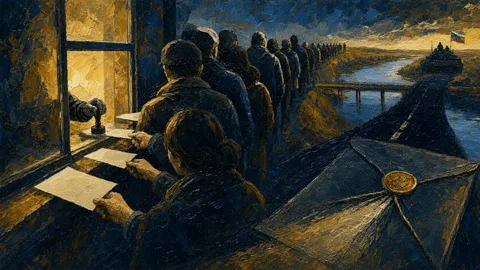
But the reality on the ground is, as always, more complex than Trump's declarations. Iran announced that the strait would be "toll-free" for 60 days — but under "Iranian arrangements." Ships will be required to file a transit application with the Persian Gulf Strait Authority, an Iranian government agency created in May 2026 to regulate passage through the strait. In other words: free, yes — but free on Tehran's terms, not Washington's.
The context of a conflict that reshaped the energy world
To grasp the full significance of this announcement, one must recall what happened in the strait since spring 2026. Iran, under pressure from American-Israeli strikes on its nuclear facilities in June 2025 and during subsequent phases of the conflict, had imposed tolls on vessels transiting the Strait of Hormuz — an unprecedented act in the history of this critical waterway. Under this de facto blockade, Iranian oil exports had nearly ceased. Global energy markets absorbed the shock.
Now, with the agreement signed Wednesday — that memorandum of understanding between Washington and Tehran that American envoy Steve Witkoff presented to Congress — hostilities are ending and the strait is regaining something like normalcy. Vice President JD Vance declared that more than 12.5 million barrels had transited the Strait of Hormuz on the very evening of the signing. Oil markets exhaled. But for how long?
The Strait of Hormuz: Why This Chokepoint Keeps the World on Edge
The throat of the global economy
The Strait of Hormuz is the most critical energy chokepoint in the world. At its narrowest point, it is only 34 kilometers wide — two 3-kilometer shipping lanes in a space shared by Iran and Oman. Yet through this bottleneck passes roughly 20% of the world's oil consumption, the bulk of Persian Gulf exports — Saudi Arabia, Iraq, the United Arab Emirates, Kuwait, Qatar. Add Qatar's LNG, on which vast swaths of the European and Asian economies depend.
Iran, which shares the strait's northern shore with Oman, has always wielded the threat of closing or disrupting this passage as a geopolitical lever of last resort. After the conflict with the United States and Israel began, that threat materialized in the form of imposed tolls. The Persian Gulf Strait Authority, created in May 2026, was the institutional arm of this policy: ships wanting to pass had to pay, or not pass at all. Iran's own exports had "practically ceased," according to available data — China, their only major buyer under the sanctions era, cutting imports in the face of uncertainty.
The historical precedent that rattles markets
The closure of the Strait of Hormuz — even partial, even temporary — has always been considered by military and economic strategists as one of the catastrophic scenarios capable of triggering a global recession. In 2019, as tensions between Washington and Tehran escalated, maritime insurance premiums for vessels transiting the strait exploded. In 2026, those fears partially materialized: the Iranian blockade was not total, but its mere existence proved sufficient to disrupt global energy markets and push energy prices to levels unbearable for American and European consumers.
Trump promised during his 2024 campaign that his return to the White House would mean the end of energy inflation, an America that would "drill, baby, drill," and pump prices under control. The Iranian crisis put that promise in jeopardy. The reopening of the strait is therefore as much a strategic necessity for Trump as it is an economic emergency for American households.
The MOU: Terms That Leave Experts Puzzled
What the memorandum of understanding actually contains
The memorandum of understanding signed between Washington and Tehran took effect "immediately" after signing. Its main public terms include: a permanent ceasefire in hostilities; the lifting of American sanctions on Iran; immediate permission for Tehran to sell its oil freely; Iran's commitment to dilute its stockpile of highly enriched uranium under IAEA supervision; and a 60-day countdown to negotiate a final agreement on the nuclear program.
What is not in the agreement is just as revealing as what is. Steve Witkoff explained to Congress during a classified briefing that the memorandum contained no secret side deals. But a side letter was drawn up between Tehran and the IAEA — a separate letter, distinctly kept secret until Witkoff revealed it. This letter invites the IAEA to inspect Iranian nuclear sites, and allows Director General Rafael Mariano Grossi to bring American nuclear inspectors to Tehran. Vance's formulation captures Washington's state of mind: "We do not trust words. We trust acts and conduct."
The gaps that worry the hawks
Republican critics of the deal — including MAGA senators who publicly called it a "capitulation" — point to several shortcomings. First, the transparency question: the exact terms of the memorandum are not fully public. Then there are the $300 billion in frozen Iranian assets that will be progressively released as "progress" is made in nuclear negotiations — a vague definition that leaves Tehran considerable room for maneuver. Senator Lindsey Graham, ordinarily a Trump loyalist, expressed concerns about "discrepancies between the Iranian interpretation of the deal and the claims of the American negotiating team."
These interpretive discrepancies are not trivial. Iran published, via the Mehr news agency, a version of the memorandum stipulating that the reopening of the Strait of Hormuz would occur within 30 days — not immediately — and under "Iranian arrangements." The American version suggests faster reopening. This ambiguity on something as fundamental as access conditions to the world's most strategic waterway is troubling.
The Persian Gulf Strait Authority: Who Really Controls the Strait?
The institution created to regulate access
The creation of the Persian Gulf Strait Authority in May 2026 is one of the least-discussed yet most significant aspects of the Strait of Hormuz crisis. This Iranian government agency was set up to administer transit procedures — in theory a maritime traffic management mechanism, in practice a potential tool for control and discrimination over which passages are authorized.
On the same topic

EDITORIAL: Trump approves H200 chips for Beijing and takes…
On December 8, 2025, two announcements landed in Washington, the same…

REPORT: One Year Past the August 18 Ultimatum, Ukraine's…
At midnight on August 18, 2025, the deadline expired that the…
DOSSIER: 60,000 Russian passports in Transnistria — the annexation…
More than sixty thousand applications for Russian citizenship in three months,…
The Persian Gulf Strait Authority will announce "soon" the operational modalities and technical details for transit through the Strait of Hormuz. Ships will be required to register and file transit applications. This mechanism, even within the 60-day "toll-free" period, maintains a centralized registry of vessels transiting the strait — a surveillance and control capability that Tehran did not formally possess before the crisis. This is not simply free passage. It is free passage under Iranian surveillance.
The mines: a concrete and dangerous problem
The agreement also stipulates that Iran will "work to clear mines" from the strait, per the memorandum's terms. This clause reveals something important and alarming: mines were laid in or near the strait during the conflict. Naval mines are among the most dangerous threats to commercial shipping — they make no distinction between military vessels and civilian tankers, and clearing them is a lengthy, costly, and hazardous process.
The fact that demining is mentioned in the agreement suggests that freedom of navigation in the Strait of Hormuz has not yet been fully restored, even physically. Shipping companies and maritime insurers will demand mine-clearance certifications before sending their tankers back into these waters. Trump's "let the oil flow" promise does not materialize instantaneously — it depends on a technical process of maritime security clearance that will take weeks, if not months.
The Drop at the Pump: Real Relief or Passing Illusion?
The actual numbers behind the price decline
The drop in energy prices following the deal's signing is real and documented. The average American price of a gallon of regular gasoline fell to $3.999 — a significant psychological threshold, below $4 for the first time since March 2026. In some states, like South Carolina, the price fell to $3.58. These declines represented genuine relief for American households hit hard by energy inflation in recent months.
The economic logic is straightforward: reopening the Strait of Hormuz and lifting sanctions on Iran allow Tehran to sell its oil freely on global markets. Iran had earned an estimated $45 billion in oil revenues the previous year — sold almost exclusively to China, its only major buyer under the sanctions era. With sanctions lifted, Iran can find new buyers and sell at better prices. An increase in global oil supply drives prices down — basic economics.
Factors limiting the long-term decline
But energy market analysts are more measured about the sustainability of this decline. Several factors constrain a significant fall in oil prices. First, Iranian production capacity: Iran's refining and export infrastructure was partially damaged by last year's American-Israeli strikes. Ramping production back up will take time — at least several months. Then there is OPEC+, dominated by Saudi Arabia, which could cut its production to offset increased Iranian supply and maintain prices at a level comfortable for its members. Finally, global oil demand remains robust, particularly from China and India.
In California, where state gas taxes and environmental standards keep prices structurally higher, a gallon was still $5.64 — far from the Trumpian promise of universal affordability. The geographic pricing patchwork of the United States means the effects of falling global crude prices ripple through very differently depending on the state.
Global Market Reactions: Euphoria, Then Questions
The initial euphoria
The initial reaction of financial and energy markets to the announcement of the deal and the strait's reopening was predictably euphoric. Global stock exchanges rallied, crude oil futures fell — a signal that traders were pricing in an increase in global supply — and airlines, whose fuel costs represent 20 to 30 percent of operating expenses, saw their shares advance. Shipping companies posted similar gains.
Iran, for its part, sees in this agreement an immediate economic opportunity. With its exports nearly halted for months, access to global oil markets is a lifeline for the Iranian economy, severely battered by sanctions and by damage to its industrial infrastructure during the conflict. Lifting sanctions will allow Tehran to find buyers in Europe, Asia, and elsewhere — beyond the single Chinese patron that had kept it on economic life support.
The questions that linger
But the initial euphoria quickly gave way to unease. Oil traders know that the 60 days granted by the agreement to negotiate a definitive nuclear deal represent a period of high uncertainty. If those negotiations fail — if Iran refuses to sufficiently dilute its enriched uranium stocks, or if the United States demands conditions Tehran cannot accept — the strait could close again. The risk has not been eliminated. It has merely been suspended.
This uncertainty is reflected in the behavior of maritime insurers. Some have begun reducing premiums for vessels transiting the strait, but most maintain restrictive conditions pending confirmed completion of demining and political stabilization. Commercial prudence always catches up with political jubilation.
The MAGA Backlash: Did Trump Give Too Much to Iran?
The Republican insurgency within the ranks
The deal with Iran triggered significant pushback from within the Republican camp itself. Senators and representatives from the hardest MAGA fringe — those who had demanded the total destruction of Iran's nuclear program and refused any negotiated agreement — called the deal a capitulation. For these voices, any agreement that leaves Iran with residual nuclear capability, however reduced, is a betrayal of American and Israeli interests.
Senator Lindsey Graham expressed his position carefully: he was "satisfied with the MOU" overall, but held specific concerns about interpretive divergences between the two parties. Other Republican senators, closer to the hard MAGA line, were less diplomatic. The central political question is this: Trump built his political identity on toughness toward Iran. If he signs a deal that resembles, even remotely, the 2015 JCPOA he himself tore up, he risks a deep credibility crisis within his electoral base.
Vance's defense: a carefully constructed argument
Vice President JD Vance defended the agreement with a well-constructed architecture. His logic runs as follows: the 2015 JCPOA was a mistake because it rested on trusting Iranian promises. The 2026 deal is different because it "structures its trust in acts, not words." The dilution of enriched uranium under IAEA supervision, with American inspectors present, is a concrete and verifiable measure — unlike the trust-based clauses of the JCPOA.
It is a defensible argument. But it does not satisfy those who consider any residual Iranian enrichment unacceptable. And it rests entirely on the IAEA's actual ability to inspect Iranian sites — some of which were damaged during the 2025 American-Israeli strikes and have been operating without international verification for nearly a year. The agreement's credibility depends on the credibility of verification. And verification is far from guaranteed.
The Cheap Gas Promise: Myth and Reality in Energy Policy
Trump and energy: between rhetoric and the global market
Trump has long embodied the promise of cheap energy for America. His slogans — "energy dominance," "drill, baby, drill," and now "let the oil flow" — have seduced millions of Americans who see energy prices as the most direct thermometer of their purchasing power. But global oil prices do not respond to presidential decrees. They respond to supply, demand, OPEC+ decisions, geopolitical crises, and financial market speculation.
The truth that every president's economic advisers know but few say publicly is this: an American president has very little direct control over short-term energy prices. He can release strategic reserves, promote domestic production, negotiate geopolitical agreements that shift global flows — but he cannot decree the price of gasoline. The reopening of the Strait of Hormuz produced a real and rapid price decline. But that decline is fragile, contingent on the durability of a diplomatic agreement whose foundations remain uncertain.
The weight of hydrocarbon dependence in foreign policy
The Strait of Hormuz crisis illustrates in stark terms how deeply American — and global — foreign policy remains entangled in the logic of hydrocarbons. The United States has concluded a deal with a regime it acknowledges to be the region's primary destabilizing force, which supports Hezbollah, Hamas, and other terrorist proxies, and is complicit in Russia's aggression against Ukraine — largely because that regime controls access to the waterway through which 20% of the world's oil passes.
This reality is uncomfortable but fundamental. The transition to renewable energy is slow, costly, and politically complex. Until it is complete, the Strait of Hormuz will remain a potential hostage to Iranian strategists, and American presidents will be forced to navigate between their proclaimed values and the energy imperatives of their economy. Trump is no different from his predecessors in this regard — even if his way of expressing it is infinitely louder.
The Gulf Families: What the Energy War Conceals Behind the Numbers
The human faces behind the barrels
It is easy to discuss the Strait of Hormuz in terms of millions of barrels per day, basis points on futures markets, percentages of global GDP. But behind these abstractions are families — in Kuwait, Bahrain, the UAE, Oman — whose prosperity, security, and futures depend directly on decisions made by Washington and Tehran in backrooms they have no access to. The small Gulf states are caught between an Iranian regional superpower that ideologically despises them and an American security guarantee whose reliability, under Trump, has been publicly questioned.
Discover

INVESTIGATION: Beijing cuts Africa to 2.1 billion in loans…
2.1 billion — the lowest figure in almost twenty years, according…

SPECIAL REPORT: Beijing Promises Stimulus as Its Households Give…
That is the growth rate of Chinese industrial output in July,…

INVESTIGATION: Two Chinese Ex-Soldiers Arrested in Seoul as 18,000…
For five years, a man ran a military-supply shop at the…
Bahrain, which hosts the U.S. Fifth Fleet, is the most vulnerable. The country sits just 24 kilometers from the Saudi coast, linked by a causeway across the Gulf. Its population is majority Shia in a Sunni-governed state. Iran sees it as easy prey, a pressure lever on Riyadh. The Strait of Hormuz deal gives Tehran sixty days of good behavior in exchange for nuclear negotiations — but it gives no structural guarantees to the small states living in the permanent shadow of a revisionist regional power. This silence in the deal's terms is a strategic oversight that should alarm Washington.
Migrant workers: the forgotten victims of energy volatility
Some 20 million migrant workers — from India, Pakistan, Bangladesh, the Philippines, Sri Lanka, Nepal — build the skyscrapers, staff the hotels, drive the trucks, and operate the refineries of Gulf countries. These men and women send home remittances that sustain entire economies. When the Strait of Hormuz closes, their jobs are the first to disappear, their contracts the first to evaporate, their money the first to stop crossing the Indian Ocean toward villages in Punjab or Mindanao. Petropolitics has a human face that futures markets never see.
The Trump-Iran deal on sixty days of free passage is presented as a triumph of practical diplomacy. For Gulf migrant workers and their families in South Asia, it is above all sixty days of reprieve. That is not nothing — but it is not a durable architecture of peace either. The real question is what comes after — when the sixty days expire, when nuclear negotiations stall on technical details, when Iran's internal pressures resume their course. It is these families who pay the final price, in a silence that cameras never capture.
Conclusion: "Toll-Free" for 60 Days — and Then What?
A partial victory, a provisional peace
The Strait of Hormuz is open again. Gas prices have fallen. Markets have rallied. Trump has declared victory. All of that is real. And all of it is insufficient to declare the crisis resolved. What exists today is a 60-day truce, framed by a memorandum both parties are already interpreting differently on fundamental points, overseen by a newly created Iranian agency whose long-term motivations remain uncertain, and conditional on the success of a final nuclear negotiation that no one can guarantee.
The stakes that transcend the strait
The real question is not the price of gasoline in the coming weeks. It is whether the West can conclude a durable agreement with Iran that prevents the Islamic Republic from acquiring nuclear weapons, while maintaining secured global energy supply routes, while preserving the interests of Israel and Gulf allies, while satisfying a divided American Congress. That is a diplomatic equation of extraordinary complexity. The 60 days have begun. The world is watching.
Primary Sources
Secondary Sources
Get the geopolitics analyses
Conflicts, powers, alliances: the MadMax thread without the noise.
Cite this article
Maxime Marquette (2026). TESTIMONY: The Strait of Hormuz Goes "Toll-Free" — Trump's Grand Promise Meets Reality. MadMax. https://mad-max.co/en/article/temoignage-detroit-dormuz-toll-free-la-grande-promesse-de-trump-a-lepreuve-de-la-realite
Read next
INVESTIGATION: Beijing cuts Africa to 2.1 billion in loans…
2.1 billion — the lowest figure in almost twenty years, according…
SPECIAL REPORT: Beijing Promises Stimulus as Its Households Give…
That is the growth rate of Chinese industrial output in July,…
INVESTIGATION: Two Chinese Ex-Soldiers Arrested in Seoul as 18,000…
For five years, a man ran a military-supply shop at the…
Enjoyed this piece? Get the next one.
One chronicle a week, straight to your inbox. No noise.
This article was generated with AI assistance, under human supervision.
Comments
Be the first to weigh in.