

PROFILE: Mohamed Abdel — The Egyptian Cook Killed by a Russian Drone on a Civilian Cargo Ship in the Black Sea
The Victress was a cargo vessel. It was owned by a Turkish businessman named Cengiz Akpınar. It sailed under a Panamanian flag — a flag of convenience that, in the arcane logic of international maritime registration, placed it under Panamanian jurisdiction while it operated thousands of kilometers from Panama, in a sea that was not supposed to be a war zone for civilian ships.
- The Victress was a cargo vessel. It was owned by a Turkish businessman named Cengiz Akpınar. It sailed under a Panamanian flag — a flag of convenience that, in the arcane logic of international maritime registration, placed it under Panamanian jurisdiction while it operated thousands of kilometers from Panama, in a sea that was not supposed to be a war zone for civilian ships.
- PROFILE: Mohamed Abdel — The Egyptian Cook Killed by a Russian Drone on a Civilian Cargo Ship in the Black Sea
- Introduction: A Life That Ended on the Open Water
Facts, quotes, and cited links remain in the body. Interpretations are framed as analysis or opinion according to the format.
PROFILE: Mohamed Abdel — The Egyptian Cook Killed by a Russian Drone on a Civilian Cargo Ship in the Black Sea
Introduction: A Life That Ended on the Open Water
The night of June 22, 2026
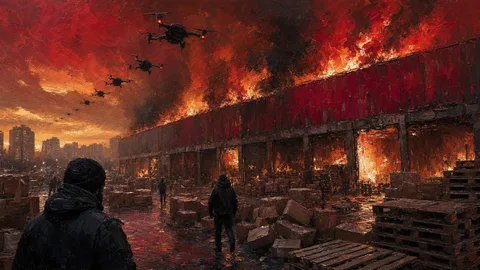
The Victress was a cargo vessel. It was owned by a Turkish businessman named Cengiz Akpınar. It sailed under a Panamanian flag — a flag of convenience that, in the arcane logic of international maritime registration, placed it under Panamanian jurisdiction while it operated thousands of kilometers from Panama, in a sea that was not supposed to be a war zone for civilian ships. On the night of June 22, 2026, a Russian drone struck the Victress in the Black Sea.
Mohamed Abdel, an Egyptian national, 58 years old, was the ship's cook. He was killed. Eight other crew members — Turkish and Indian nationals — were rescued from the water by the Ukrainian navy. Two other cargo vessels were struck the same night: one flying a Palau flag, one flying a Belize flag. Three ships in a single night. One man dead. The man was named Mohamed Abdel, and before he was a statistic in a maritime incident report, he was a person — a cook on a ship, doing the work that the world's food supply depends on.
What we know about who he was
The public record on Mohamed Abdel is thin, as it tends to be for working mariners who do not seek public attention. He was 58. He was Egyptian. He was a cook aboard a commercial cargo vessel operating a legitimate trade route in the Black Sea. These facts are the beginning of a life, not a summary of one. They do not tell us his family's name, his neighborhood in Egypt, whether he had children, whether he had been at sea for decades or had come to maritime work late in life. What they tell us is that a man with a history, a family, and a future was killed by a weapon launched by a military force that had no legal right to kill him.
That absence of detail is itself a statement about how civilian casualties in this war are processed: the Ukrainian soldier who dies is named, mourned, given a ceremony and a news story. The Egyptian cook on a Turkish ship who dies in the same waters is a line in a maritime incident summary. Both deaths are real. Only one receives the gravity it deserves.
The Victress: A Ship Doing What Ships Are Supposed to Do
The cargo vessel and its route
The Victress was not a warship. It was not a military transport. It was a commercial cargo vessel engaged in what is, under international law, protected trade: the movement of goods through international waters on a legitimate commercial route. The details of its specific cargo on June 22, 2026 are not fully public, but the Victress's general trade pattern placed it in the category of vessels moving goods through the Black Sea commercial corridor — the waterway that Ukraine has maintained open since the collapse of the UN grain deal in July 2023, at enormous cost in naval and military resources.
The ship's Turkish owner, Cengiz Akpınar, lost a vessel and a crew member to a weapon launched without warning by Russian forces against a civilian ship in international waters. There are no legal ambiguities in this scenario. The Victress was not approaching a military installation. It was not carrying weapons. It was not supporting a military operation. It was a cargo ship on a trade route that international law — the same international law Russia ratified, the same frameworks Russia cites when it suits its interests — explicitly protects.
The Panamanian flag and what it means
The Panamanian flag on the Victress places this incident directly within the framework of international maritime law and the specific rights and obligations of flag states. Panama, as the flag state, bears formal responsibility for the vessel's legal standing under international law and has a legal interest in the protection of vessels registered under its flag. The attack on the Victress is, in formal legal terms, an attack on a Panamanian-flagged vessel — which means Panama has grounds to raise the issue in international forums, including the International Maritime Organization and, potentially, the International Court of Justice.
Whether Panama will pursue these avenues is a political question that depends on factors well beyond the legal framework. Small states with open ship registries are often reluctant to exercise the legal rights attached to their flags in ways that create diplomatic complications with major powers. That reluctance is understandable. It is also a structural weakness in the international system that Russia has learned to exploit.
The Eight Survivors: What the Rescue Tells Us
The Ukrainian navy in a rescue role
The eight survivors of the Victress strike — Turkish and Indian crew members — were rescued by the Ukrainian navy. This detail is worth dwelling on. Ukraine, a country fighting for its existence against a naval-capable adversary, committed naval resources on the night of June 22 to rescuing civilian mariners whose ship had been struck by the adversary whose navy Ukraine is simultaneously fighting to contain. The rescue was not publicized primarily as a public relations exercise. It was a humanitarian obligation that Ukrainian naval forces fulfilled in a genuinely dangerous operating environment.
The rescued crew members are the living witnesses to what happened on the Victress. Their testimonies — to the Ukrainian navy, to Turkish maritime authorities, to the International Maritime Organization — constitute evidence of the attack that will eventually form part of the legal and historical record of Russian maritime conduct in this war. The rescue preserved not only lives but testimony. That dual significance is worth acknowledging.
India, Turkey, and the nationality politics of the victims
The nationalities of the Victress crew — Egyptian, Turkish, Indian — carry specific diplomatic implications. Turkey is simultaneously a NATO member, a country that has maintained commercial relationships with Russia throughout the war, and now a country that has had nationals rescued from a Russian drone attack on a civilian cargo ship. The Turkish government's response to the Victress incident — or the absence of a forceful response — will be observed carefully by Ukraine's government and by other NATO members watching Turkey's complicated position in this conflict.
India, whose nationals were among the rescued, has similarly maintained a posture of studied neutrality in the Russia-Ukraine conflict, continuing to purchase Russian oil and abstaining from UN resolutions condemning Russian actions. Having Indian nationals rescued from a Russian drone attack on a civilian ship creates a dissonance between that neutrality posture and the lived experience of Indian citizens in the war zone. Whether that dissonance produces any change in India's diplomatic position is uncertain. It deserves to be part of the conversation.
The Timing: A Turkish Delegation in Moscow
The attack that followed a diplomatic visit
Ukraine's Foreign Minister Sybiha made a point of noting, in his statement on the Victress attack, that the strike occurred in the immediate aftermath of a high-level Turkish diplomatic delegation's visit to Russia. The timing is not presented as coincidence. The implication is clear: Russia struck a Turkish-owned vessel, killing an Egyptian crew member, within hours or days of receiving a Turkish diplomatic mission.
Whether this was a deliberate signal from Moscow to Ankara — a demonstration of contempt for Turkish commercial interests even as Turkey's diplomats were meeting with Russian counterparts — or an operational decision made without regard to the diplomatic timing is not definitively established. What is clear is that Sybiha's decision to highlight the timing was itself a deliberate statement: he was drawing Turkey's attention to the juxtaposition, inviting Ankara to consider what it implies about Russia's respect for Turkish interests.
Turkey's impossible position
Turkey occupies one of the most genuinely difficult positions in this conflict. As the power that controls the Turkish Straits under the Montreux Convention, it plays a critical role in the Black Sea's maritime security architecture. As a NATO member, it has alliance obligations that include the defense of the alliance's maritime approaches. As a country with significant commercial interests in Russia, in Ukraine, and in the broader Black Sea region, it has economic incentives that point in multiple directions simultaneously. As a country whose citizens are sometimes on ships that Russia strikes, it has a direct stake in the protection of civilian maritime traffic that its diplomatic balancing act sometimes obscures.
The Victress incident and Sybiha's framing of it put Turkey's government in the position of explaining how a country that just received a Turkish diplomatic delegation can also be a country that strikes Turkish-owned ships. The diplomatic answer may be found. The moral answer is harder to locate.
International Maritime Law: What It Says and What Russia Has Done With It
The legal framework that should have protected the Victress
The legal protections available to civilian cargo vessels in the Black Sea are extensive and unambiguous. The United Nations Convention on the Law of the Sea (UNCLOS) establishes the right of innocent passage and the protection of civilian shipping in international waters. The Montreux Convention governs the specific regime of the Turkish Straits and the Black Sea. The laws of armed conflict, including Additional Protocol I to the Geneva Conventions, explicitly prohibit attacks on civilian vessels not taking part in hostilities. International humanitarian law requires parties to a conflict to distinguish between military and civilian targets and to take all feasible precautions to avoid civilian harm.
Russia has ratified or accepted all of these frameworks. It has also violated all of them, repeatedly, in the Black Sea, since the collapse of the UN grain deal in July 2023. The attack on the Victress, the deaths of Mohamed Abdel and other civilian mariners, the strikes on three ships in a single night — all of these are documented violations of legal frameworks that have universal recognition and that Russia's own signature is attached to.
The International Maritime Organization and its limits
The International Maritime Organization (IMO), the UN body responsible for maritime safety and security, has passed resolutions condemning attacks on civilian shipping in the Black Sea and called for the protection of maritime trade. These resolutions have produced no change in Russian behavior. The IMO has no enforcement capacity — it cannot sanction flag states, dispatch naval forces, or impose consequences on countries that violate its conventions. Its authority is moral and diplomatic, not operational.
The gap between the IMO's condemnations and Russia's continued attacks on civilian shipping is itself a statement about the limits of international institutional authority when a permanent member of the UN Security Council is the violator. The veto Russia holds in the Security Council prevents any Security Council action that would create real consequences for maritime attacks. The IMO cannot fill that gap. The individual decisions of countries with naval capacity — like France, the UK, and Turkey — are the only available substitutes.
The Human Story: Who Was Mohamed Abdel
A working life at sea
We do not have Mohamed Abdel's full biography. We have what public records and maritime incident reports provide: a name, a nationality, an age, a job, a death. From these fragments we can construct a partial picture of a working life that is representative of the hundreds of thousands of people who crew the world's merchant fleet — often from countries like Egypt, India, the Philippines, and Bangladesh, where maritime employment offers wages significantly above domestic alternatives and where the risk premium of operating in contested waters is a calculation that individual mariners and their families make with incomplete information.
A 58-year-old merchant mariner has been at this work for most of his adult life. He has sailed in conditions that landlocked observers rarely imagine: the isolation of weeks at sea, the physical demands of a working vessel, the camaraderie of small international crews who share a confined space and a dangerous trade. He chose this life or was led to it by economic circumstance, and he pursued it to the age of 58 — which means he was good at it, reliable enough to keep getting hired, and experienced enough to have survived whatever the sea and the shipping lanes had previously thrown at him.
His family in Egypt
Mohamed Abdel had a family in Egypt. This is almost certainly true — a 58-year-old merchant mariner who has spent his working life at sea typically has people at home waiting for the end of each voyage. We do not know their names. We do not know how they received the news of his death, or who told them, or what the process of repatriation of his remains involved, or how the Turkish owner's insurance — if there was adequate coverage — handled the compensation claim. These details matter enormously to the people living them and are invisible to the news cycle that moves on to the next incident.
What Mohamed Abdel's family lost on the night of June 22, 2026 is beyond calculation: a husband, a father, a provider, a presence. What the news cycle records is a nationality and an age in a maritime incident report. The gap between those two measures of loss is where the human cost of this war lives, invisibly, accumulated in families across Egypt, Turkey, India, and dozens of other countries whose citizens work the global shipping lanes and do not appear in the statistics of any army's casualties.
The UN Grain Deal: How the Protection Framework Collapsed
July 2023 and its consequences
The UN-brokered Black Sea Grain Initiative, signed in July 2022, provided a limited but functional framework for protecting civilian cargo vessels transiting the Black Sea on grain export routes. Under the deal, a Joint Coordination Center staffed by representatives from Ukraine, Russia, Turkey, and the UN monitored and coordinated shipping movements, providing advance notice of vessel transits and a degree of mutual awareness that reduced the risk of attacks on civilian shipping — at least on the designated routes.
Russia withdrew from the deal in July 2023, citing Western sanctions on its own agricultural and fertilizer exports as justification. The unilateral withdrawal collapsed the only existing institutional framework for protecting civilian maritime traffic in the Black Sea and removed the coordination mechanism that had prevented direct attacks on civilian vessels for a year. In the months following the withdrawal, Russia made clear that it no longer considered civilian cargo ships transiting the western Black Sea as protected — in effect declaring an exclusion zone that has no legal standing under international law but carries real physical consequences for the ships that transit it.
Ukraine's corridor and the ships that use it
Ukraine responded to the collapse of the grain deal by establishing a unilateral humanitarian shipping corridor along the western Black Sea coast — a route that Ukraine's naval forces protect as best they can with the resources available, but that lacks the formal multilateral protection that the grain deal provided. Ships using this corridor do so knowing that Russia considers them fair targets and that the protection they receive is whatever Ukraine can provide operationally, not whatever international law mandates.
The Victress was using a version of this corridor. Mohamed Abdel was working on a ship using this corridor. The corridor exists because Ukraine created it, at operational cost, to maintain its agricultural export lifeline. The people who staff the ships using it face risks that the word "corridor" does not adequately convey.
The Two Other Ships: A Pattern That Is Not Random
Three vessels in one night
The Victress was not the only civilian cargo vessel struck on the night of June 22, 2026. Two other ships — one registered under a Palau flag, one under a Belize flag — were also hit. Three vessels struck in a single night represents a level of operational intensity against civilian shipping that goes beyond opportunistic targeting. It reflects a doctrine: a deliberate decision to attack multiple civilian vessels simultaneously to maximize the disruption to the shipping corridor and to demonstrate to the insurance markets, shipping companies, and flag states that operating in the western Black Sea carries a concrete and immediate risk.
The three-vessel attack is designed to produce a specific behavioral response from commercial shipping: withdrawal from the corridor, or at minimum a significant increase in risk premiums that makes operating it economically unsustainable. If shipping companies calculate that the risk of sending vessels through the corridor exceeds the commercial return, the corridor closes without Russia having to physically occupy the sea lanes. It is economic warfare conducted through the deliberate targeting of civilian infrastructure.
The flag state diversity as a signal
On the same topic

SPECIAL REPORT: Beijing buys 40 cargoes of sanctioned Russian…
On August 28, 2025, a tanker named Arctic Mulan moored at…
ANALYSIS: 800 drones over Russia in one night —…
More than eight hundred drones, in a single night, August 14…

ANALYSIS: Marcos Talks Drilling With Beijing While His Fishermen…
That is what moves through the South China Sea every year.…
Palau and Belize, like Panama, are small states that operate open ship registries as revenue sources. Their flags represent ships owned by operators from dozens of countries, none of whom have any real connection to the Pacific island nation or the Central American state whose name appears on their vessel's stern. Russia striking ships under Palau, Belize, and Panama flags in a single night is, in effect, striking flags that belong to everyone and no one — ensuring that there is no single powerful state whose commercial interests are specifically engaged.
The contrast with striking a ship flying, for example, a French or British flag — which would create immediate diplomatic and potentially military consequences — reveals the calculation behind the flag state targeting. Russia is not randomly striking civilian ships. It is striking ships whose flags provide minimum diplomatic protection while achieving maximum operational disruption. That calculation is strategic. It should be recognized and countered as such.
The Montreux Convention: The Rule Russia Has Turned Into a Weapon
What the convention actually provides
The Montreux Convention of 1936 governs the passage of warships and merchant vessels through the Turkish Straits — the Bosphorus and the Dardanelles — and establishes a specific regime for the Black Sea in the context of armed conflict. Under the convention, Turkey has the right to close the Straits to warships of belligerent states during armed conflict, and it exercised this right in March 2022, closing the Straits to Russian and Ukrainian warships. The convention also provides specific rights of passage for merchant vessels under specified conditions.
The convention does not, however, provide a mechanism for protecting merchant vessels from attack within the Black Sea itself. It regulates passage through the Straits. Once a vessel is in the Black Sea, its protection depends on the general provisions of international maritime law and the law of armed conflict — provisions that Russia is violating systematically without legal consequence from within the Black Sea basin.
The lock that cannot be unlocked
Turkey's closure of the Straits to warships of belligerent states has effectively locked the Russian Black Sea Fleet inside the Black Sea. Russia cannot reinforce its fleet from its other naval commands. The ships that were in the Black Sea in February 2022 are the ships that will be in the Black Sea for the duration of the conflict, supplemented only by vessels that can transit as civilian ships and be converted to military use inside the basin. This constraint is significant and has contributed to the fleet's degradation over four years of attrition.
At the same time, Turkey's closure of the Straits also prevents NATO naval forces from entering the Black Sea in significant numbers to provide direct protection to civilian shipping. The legal mechanism that constrains Russia also constrains the alliance. This is not an argument against Turkey's exercise of its Montreux rights — the closure was the correct application of the convention — but it is a structural feature of the situation that explains why civilian ships like the Victress face attacks without the direct protection of allied naval forces.
Accountability: What Exists and What Is Missing
The documentary record
The attack on the Victress is documented. Ukraine's Foreign Ministry statement, the rescue of eight crew members by the Ukrainian navy, the Turkish owner's loss of a vessel, the Egyptian government's duty to its citizen — these create a documentary record that will survive the news cycle. The International Maritime Organization has received reports. The Ukrainian government has filed diplomatic protests. The maritime insurance market has recorded the incident in its risk assessments for Black Sea coverage.
This documentary record matters for eventual accountability. In the ongoing prosecutorial work of the International Criminal Court, the Special Tribunal for the Crime of Aggression against Ukraine that has been proposed, and the eventual post-conflict accountability processes that Ukraine and its partners are building, each documented incident of attacks on civilian shipping adds to the evidentiary base for legal proceedings. Mohamed Abdel's death will be part of that record. His name will appear in a legal document eventually. That is not adequate accountability. It is the beginning of one.
What accountability would actually require
Real accountability for the death of Mohamed Abdel and the dozens of other civilian mariners killed in Russian strikes on Black Sea shipping would require proceedings in a jurisdiction with authority over the commanders who ordered the strikes, the officers who executed them, and the political leadership that established the policy of treating civilian cargo ships as legitimate targets. Those proceedings do not currently exist in a form with enforceable jurisdiction over Russian officials.
The creation of such jurisdiction — whether through the International Criminal Court, a special tribunal, or other mechanisms — is a political project that Ukraine and its partners have been advancing with limited success. The legal theory is sound. The political obstacles are enormous. In the meantime, the deaths accumulate, the names enter the record, and the accountability gap widens. Mohamed Abdel deserves better than a gap. So does everyone else on the ships that came after his.
The Crew Economy: Who Sails These Ships and Why
The global labor system behind every cargo vessel
The international merchant fleet is crewed by a global labor force drawn disproportionately from countries with large maritime traditions and wage differentials that make seafaring economically attractive despite its hardships and risks. Egypt, India, the Philippines, Bangladesh, Indonesia, Myanmar — these countries supply a majority of the world's merchant mariners. The work is demanding, the separation from family is measured in months, and the wages — while high by domestic standards — do not include the kind of risk premiums that would adequately compensate for operating in an active war zone.
Mohamed Abdel, at 58, was a senior figure in the crew economy — a cook with decades of experience, presumably well-compensated by the standards of Egyptian maritime labor, and presumably well-known to the shipping lines that hired him. He was not a young mariner taking his first risks. He was a professional at the end of a long career, entitled to the protection that international law provides for civilian workers on civilian ships. That protection failed him.
The insurance and compensation void
When civilian mariners are killed in attacks on their vessels, the compensation framework is a patchwork of employer liability, maritime insurance, flag state obligations, and — in cases involving clear violations of international law — potential claims against the attacking state that are virtually impossible to pursue in practice. For Egyptian nationals killed in Russian attacks on civilian shipping, the prospect of meaningful compensation from Russia is essentially zero. Whatever compensation Mohamed Abdel's family receives — if any — will come from the ship's owner, the vessel's insurer (if coverage existed for war risks), or the Egyptian government's consular assistance framework.
This compensation void is not unique to this case. It is a structural feature of the way civilian maritime casualties in armed conflict are handled — inadequately, inconsistently, and largely invisible to the public attention that would be required to demand better. That invisibility is itself a form of abandonment of the people who crew the global trade system that everyone depends on.
What This Death Demands of Us as Witnesses
The responsibility of the informed observer
Writing about the death of someone I never knew, in an incident that occurred in a sea I have never sailed, in a war I follow through screens and documents, requires a specific kind of ethical accountability. I am not a neutral observer. I have a position — I support Ukraine's right to self-defense and condemn Russia's attack on civilian shipping — and that position shapes what I choose to emphasize and what I choose to write about at all. That should be stated openly.
What I owe Mohamed Abdel, as a witness to what happened to him, is precision: the correct use of his name, the accurate statement of the facts of his death, the honest acknowledgment of what I do not know, and the clear articulation of the legal and moral frameworks that were violated when he was killed. I also owe him the refusal to treat his death as an abstraction — as a data point in a statistical argument about Russian maritime conduct — even when the statistical argument is correct and important.
The name as an act of resistance
There is a practice in human rights documentation — traceable through the work of organizations from Amnesty International to the Kharkiv Human Rights Protection Group — of insisting on naming the dead. Not because the name changes the legal analysis or the strategic assessment. But because naming is a form of resistance to the anonymization that makes mass killing administratively manageable for those who order it. The Russian command that ordered strikes on three civilian cargo vessels on the night of June 22, 2026 counted on those strikes producing acceptable military costs: some disruption to the shipping corridor, some increase in insurance premiums, some deterrent signal to future commercial traffic. It did not account for Mohamed Abdel's name.
His name is in this record now. It belongs to the archive of what Russia has done in this war. Whoever eventually sits in a court to answer for Russian maritime policy will encounter it. That is not enough. It is not nothing.
The Diplomatic Dimension and Western Support: State of Play
Allies facing their commitments
Western support for Ukraine has had its share of ups and downs since February 2022, but its underlying trajectory remains upward. The United States, the United Kingdom, Germany, France, and the Baltic states have all increased their contributions in military equipment, financing, and intelligence. Domestic political debates within these nations — particularly in the United States under the Trump administration — have introduced uncertainties, but the deliveries have continued. NATO, whose Ankara summit in June 2026 reaffirmed support for Ukrainian territorial integrity, represents the institutional framework of this collective solidarity.
For Ukraine, diplomacy is a front every bit as important as the military front. Zelensky has transformed the Ukrainian presidency into a remarkably effective international lobbying machine — appearing before dozens of parliaments, multiplying visits to allied capitals, maintaining pressure on leaders to keep their promises. This active diplomacy has directly contributed to unlocking essential support — the American ATACMS, the British Storm Shadow, the French SCALP — all of which have changed the dynamic of the conflict.
Red lines and the escalation question
Managing red lines — how far support for Ukraine can go without provoking escalation with a nuclear power — remains the central question haunting Western decision-makers. So far, every crossing of these lines — the Leopard tanks, the F-16s, the deep strikes on Russian territory — has demonstrated that Russia, contrary to its threats, has not responded with nuclear escalation. Its threats are a tool of psychological deterrence — effective only insofar as Westerners take them at face value.
Analysts at the Institute for the Study of War (ISW) in Washington regularly underscore that the West's non-escalation strategy has cost Ukraine precious time and lives. Every month of deliberation corresponds to thousands of additional Ukrainian casualties. History will judge harshly those decision-makers who chose excessive caution in the face of a manifest aggression.
The Stakes of Reconstruction and Ukraine's Future
Building during war: Ukraine's ambition
Ukraine is not waiting for the war to end before beginning to rebuild. Thousands of reconstruction projects are underway in regions relatively spared by the fighting — new schools replacing those destroyed, drinking water networks repaired, damaged roads resurfaced. This reconstruction happening simultaneously with the war is both an economic necessity and a symbolic act of resistance: proving to Putin that Ukraine exists, builds, grows — despite him.
Discover

INVESTIGATION: Beijing cuts Africa to 2.1 billion in loans…
2.1 billion — the lowest figure in almost twenty years, according…

SPECIAL REPORT: Beijing Promises Stimulus as Its Households Give…
That is the growth rate of Chinese industrial output in July,…

INVESTIGATION: Two Chinese Ex-Soldiers Arrested in Seoul as 18,000…
For five years, a man ran a military-supply shop at the…
The World Bank, the European Union, and the United States have put in place reconstruction financing mechanisms mobilizing hundreds of billions of dollars. The Ukraine Reconstruction Conference, held in Berlin in June 2024, brought together more than 60 countries around concrete commitments. These funds flow through transparent institutions and rigorous oversight mechanisms — Ukraine has made significant progress in governance and anti-corruption to earn access to this international financing.
European Union membership: the generational project
Beyond the war, Ukraine began its European Union accession process in June 2022, obtaining candidate country status. This transformative project — probably the most ambitious reform the country has ever undertaken — involves the progressive alignment of Ukrainian legislation with the acquis communautaire, deep institutional reforms, and a cultural transformation that brings Ukraine closer to the standards of democratic Europe. It is a generational project that will give the post-war reconstruction a clear framework and direction.
European membership is also the best long-term security guarantee for Ukraine. A Ukraine integrated into the European single market, bound by the rules and institutions of the Union, benefiting from community solidarity mechanisms, will be far less vulnerable to Russian pressure than an isolated Ukraine. This is the vision Zelensky has defended with remarkable consistency since the beginning of his mandate — and it is a vision that events from 2022 to 2026 have made inevitable.
Conclusion: A Death That Belongs to the Record
What this profile cannot do
This profile cannot give Mohamed Abdel back to his family. It cannot compensate his heirs for his loss. It cannot bring the people who ordered his killing before a court. It cannot prevent the next attack on civilian shipping in the Black Sea, or the attack after that. These are the limits of journalism in a situation where the institutions that should be acting are not acting effectively, and where the gap between the moral imperative and the political reality is too large to be bridged by any number of well-written articles.
What this profile can do — what it has tried to do — is place Mohamed Abdel's name, his age, his nationality, his profession, and his death into a record that resists the anonymization of civilian casualties. It can connect his individual fate to the legal frameworks that failed him, the institutional structures that were supposed to protect him, and the political decisions that determined the context in which he died. It can insist that his death is not a footnote.
The Black Sea and the people it has taken
Mohamed Abdel is not the first civilian mariner to be killed in Russian attacks on Black Sea shipping since July 2023. He will not be the last, unless the policy that produced his death is reversed — either by Russia, which shows no sign of voluntarily reversing it, or by the international community creating costs sufficient to change Russian calculations. The path from this profile to that outcome is long and uncertain. The path from his death to this record is the only one I can walk. I have tried to walk it honestly.
By Maxime Marquette, columnist
Columnist's transparency note
Sources and limitations
This profile is based on reporting from Ukrainian official sources, Kyiv Independent, and international media covering the June 22, 2026 attack on the Victress. Mohamed Abdel's personal biography — beyond his name, nationality, age, and profession — is not available in public reporting and has not been invented or embellished. The author acknowledges the limitations of writing a profile of a person with limited available biographical information and has tried to use that limitation honestly rather than papering over it with speculation.
Editorial position
The author supports Ukraine's right to self-defense and condemns Russian attacks on civilian maritime traffic as violations of international law. This position is stated openly and is reflected in the editorial framing of this piece. It does not affect the factual accuracy of the claims made, which are drawn from cited sources.
Sources
Primary sources
Secondary sources
Get the geopolitics analyses
Conflicts, powers, alliances: the MadMax thread without the noise.
Cite this article
Maxime Marquette (2026). PROFILE: Mohamed Abdel — The Egyptian Cook Killed by a Russian Drone on a Civilian Cargo Ship in the Black Sea. MadMax. https://mad-max.co/en/article/portrait-mohamed-abdel-le-cuisinier-egyptien-tue-par-un-drone-russe-sur-un-cargo
Read next
INVESTIGATION: Beijing cuts Africa to 2.1 billion in loans…
2.1 billion — the lowest figure in almost twenty years, according…
SPECIAL REPORT: Beijing Promises Stimulus as Its Households Give…
That is the growth rate of Chinese industrial output in July,…
INVESTIGATION: Two Chinese Ex-Soldiers Arrested in Seoul as 18,000…
For five years, a man ran a military-supply shop at the…
Enjoyed this piece? Get the next one.
One chronicle a week, straight to your inbox. No noise.
This article was generated with AI assistance, under human supervision.
Comments
Be the first to weigh in.