

FACT CHECK: Patriot license, Trump’s “final decision” still has no number and no date
Unconfirmed. That is the provisional verdict on one sentence. On September 25, Volodymyr Zelensky tells journalists what Donald Trump reportedly said to him in New York on the 22nd. In the Kyiv Post’s English version: “Yes, I have made the final decision.
- Unconfirmed. That is the provisional verdict on one sentence. On September 25, Volodymyr Zelensky tells journalists what Donald Trump reportedly said to him in New York on the 22nd. In the Kyiv Post’s English version: “Yes, I have made the final decision.
- One sentence, three days later
- That is the provisional verdict on one sentence.
Facts, quotes, and cited links remain in the body. Interpretations are framed as analysis or opinion according to the format.
Unconfirmed
One sentence, three days later
Unconfirmed.
That is the provisional verdict on one sentence. On September 25, Volodymyr Zelensky tells journalists what Donald Trump reportedly said to him in New York on the 22nd. In the Kyiv Post’s English version: “Yes, I have made the final decision. Ukraine will receive the licenses.” Licenses to produce Patriot missiles.
No American statement. No file number. No date.
Just a sentence, reported by only one of the two men, three days after the meeting.
Why three days?
What an interceptor stops
A Patriot is what rises when a ballistic missile is aimed at a city. Between the alert and the impact, a few minutes remain. Sometimes less.
In those minutes, nobody reads a license. People run for the hallway. They count. They listen.
On September 22, Zelensky himself wrote that these interceptors help protect lives from the ballistic terror of winter.
These interceptors are in short supply. Since February, according to Euronews, the U.S.-Israeli war against Iran has diverted part of the deliveries.
The verdict is about a sentence. The stakes are about rooftops.
A reported sentence is not yet a license.
The reported words
Friday, an answer
Context first. On Friday, Zelensky answers a question posted in a group chat with journalists. The Kyiv Post, which is part of it, publishes his answer.
He places Trump’s sentence at their meeting on Tuesday, September 22, on the sidelines of the UN General Assembly.
He quotes it. He does not document it. That is his right, and it is the limit of the exercise.
What the sentence leaves out
The sentence does not say which missile. The Kyiv Post notes that Zelensky did not specify whether it covers the PAC-2 or the PAC-3.
It does not say when. No issuance schedule, no start date for production.
Nor who will build it. No American manufacturer named, no Ukrainian partner.
Nor how many. No volume, no rate.
Even the grammatical number shifts. The Kyiv Post and France 24 write licenses, plural. The CNN version writes a license. One more translation, and the plural turns singular.
The sentence does not say in what form. And under U.S. law, a license is a document.
A sentence, then. Not a piece of paper.
Everything a license spells out, the sentence leaves unsaid.
The evening of the 22nd
Positive, productive
There is a record of what Zelensky said that very day.
The meeting lasted forty minutes, according to the Kyiv Post. They talked about an energy truce, about winter, about air defense. The licenses were one item among others.
On the 22nd, Zelensky writes on his official channel that the meeting was positive and productive. He thanks Trump. He adds that, in parallel, the teams are still working on launching production of Patriot interceptors in Ukraine.
So on the 22nd, Zelensky talks about work in progress. Not a decision.
What Kyiv is asking for
Later that same evening, he reports on his exchanges with the media. He says what Kyiv is asking of Washington. Two things. A winter package of missiles for the Patriots. And licenses to make them.
He adds a third need, which is not a weapon. Security guarantees.
On the 22nd, Zelensky asks. On the 25th, he announces it had already been granted.
More analysis

EXPLAINER: Putin denies any mobilization, then signs his fourth…
Vladimir Putin signed a decree on September 28 that sets the…

ANALYSIS: With decree 686, Putin hides who buys Russian…
Decree 686, signed by Vladimir Putin on September 28, does not…

ANALYSIS: Trump says he offered Iran nothing. His own…
On September 28, Axios reported, citing American officials, that Donald Trump…
Both can be true. A president can sit on good news for three days. He can also harden a word to pin down an ally.
And yet on Tuesday, he was talking about work in progress. On Friday, about a final decision. In between, no American document.
Tuesday, a request. Friday, a decision. Same meeting.
26-90
September 18
An American decision, when it exists, leaves a trace.
On September 18, the State Department publishes a notice of an arms sale to Ukraine. Transmittal 26-90. Estimated value: $2.68 billion. Purpose: air defense upgrades.
The list is precise. Missiles described as S-300 clones. GAM-67 missiles. Laser-guided anti-aircraft rockets. RPS 202 counter-drone radars. Parts, support, software.
The financing is written down too. European contributions, and U.S. military credits approved under the previous administration, counted as the American share of the Ukraine reconstruction investment fund.
The sale has a number
No Patriot on that list.
A sale notice is not yet a delivery. It is still an act. It has a date, an amount, a purpose, a form anyone can read.
My reading is simple. On the Patriots, Trump’s “final decision” is for now a reported sentence, not an act of Washington. And even if it were signed tomorrow, a license would not protect a single city this winter.
The sale has a number. The license does not.
When Washington decides, a number appears.
What the law requires
Section 36(d)
U.S. law spells out how a manufacturing license comes to life.
The Arms Export Control Act, in its Section 36(d), covers a specific case. A manufacturing license agreement that involves the production abroad of significant combat equipment.
Before approving such an agreement, the president must send a certification to Congress.
There is no dollar threshold. Unlike sales, the Congressional Research Service notes, Section 36(d) sets no minimum amount. Small or large, the agreement goes through it.
Thirty days, or an emergency
The law sets the timeline. At least 15 days before approval for a NATO member, Australia, Japan, South Korea, Israel or New Zealand. At least 30 days for any other country.
Ukraine is not on the first list. For Ukraine, it is thirty days.
The law sets the exception. The president can declare an emergency requiring immediate approval, and must then justify it in detail.
Finally, the law says no approval can be given if Congress passes, within that window, a joint resolution prohibiting it.
The emergency route is nothing theoretical. For sales to Ukraine, Secretary of State Antony Blinken invoked it in April 2022, April 2024 and May 2024, the same report recalls. Each time, a document said so.
A manufacturing license starts with paper sent to Congress.
On the 23rd, Washington stalls
Wednesday, to Deutsche Welle
On September 23, the day after the meeting, the State Department answers Deutsche Welle. Discussions are continuing. No final decision has been made, the Kyiv Post reports.
On the 25th, neither France 24 nor CNN reports any American confirmation of the sentence Zelensky relayed.
Two days later
On Wednesday, Washington says nothing is decided. On Friday, Kyiv says everything had been since Tuesday.
The two statements cannot both be accurate under the same meaning of the word decision.
A decision can exist in a president’s head without existing in the administration that has to carry it out. That is the very definition of a gap.
Here is the actual chain. The president wants it. The State Department processes the license request. A certification goes to Congress. Thirty days pass, barring a declared emergency. Approval comes down. An agreement is signed with a manufacturer. Then a production line gets built.
The sentence reported on Friday sits at the first link. Nothing public yet shows the second.
Which of the two counts for a missile?
The one that produces paper. For now, neither.
Wednesday, nothing. Friday, everything. No paper in between.
Ankara, then Camp David
July 8, the promise
This is not the first time.
On July 8, at the NATO summit in Ankara, Trump speaks in front of Zelensky. “We’ll give them the right to make Patriots,” he says, according to the Kyiv Post. “We’ll show them how to do it.”
That day, he also gives his reason, the Kyiv Independent reports. That way, Ukraine can no longer complain about not getting enough.
July 31, the walk-back
On July 31, at Camp David, during a cabinet meeting, Trump backs off. The United States has not agreed to that, he says. It is being discussed, but that technology is hard to hand over.
He adds that one has to be very careful before letting someone build them.
July 8: yes. July 31: not yet. September 22: yes, according to Zelensky.
Three positions in eleven weeks. Two public, one reported.
Two yeses, one no. None on paper.
The July 28 precedent
Kyiv announces
There is a more awkward precedent, and it has to go on the table.
On July 28, Zelensky was already saying that Trump had agreed to grant these licenses, the Kyiv Independent reports.
Three days later, on the 31st, Trump answered that the United States had not agreed.
Who, in Kyiv, had heard what?
Washington corrects
Same announcement. Same subject. Same single source, Kyiv.
This precedent does not prove that the sentence of the 25th is false. It proves that a Ukrainian announcement, on its own, is not enough to establish an American decision.
I write it all the more plainly because I am on Kyiv’s side. An ally contradicted a second time on the same promise would lose credibility it cannot afford to lose.
Twice would already be too many.
July already saw the same announcement, then its denial.
Germany, Japan, and Ankara
Licenses already exist
An honest verdict also weighs what makes the sentence credible. There is some.
It can be done. Patriots are already built outside the United States. The PAC-2 is produced under license in Germany, with part of the output bound for Ukraine starting in 2027. The PAC-3 is produced in the United States and Japan, according to the Kyiv Post.
The Ankara promise was public, made in Zelensky’s presence. The July 31 walk-back did not bury it. It is being discussed, Trump said.
Raytheon is ready, Kyiv says
On the evening of the 22nd, Zelensky was already reporting that Trump was positive about the licenses and that Raytheon was ready, according to the Kyiv Post. The project would take at least a year to a year and a half.
And Washington really is arming Ukraine’s air defense. Sale 26-90 is one week old.
This also needs saying. It is hard to see what Zelensky would gain by inventing a sentence Washington could deny the next day. He has already lived through the July 31 denial.
This body of evidence makes the sentence plausible. It does not make it verifiable.
Plausible is not proven.
A factory is not a winter
More than a year
Suppose the license is signed tomorrow morning.
On the same topic

SPECIAL REPORT: Trump’s 100% tariff on patented drugs spares…
Since 12:01 a.m. this Tuesday, September 29, a 100% duty has…
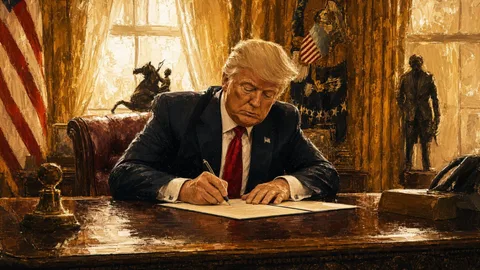
COMMENTARY: Trump’s Iowa steel mill is good news due…
On September 28, in the Oval Office, Donald Trump announced a…

COLUMN: At 54 Volodymyrska Street, Moscow burns the address…
A Russian jet-powered drone struck the presidium building of the National…
It would take more than a year to launch production, according to AFP. Zelensky himself, on the evening of the 22nd, spoke of a year to a year and a half at minimum.
A year is the whole coming winter. It is spring. It is summer. It is the start of the following winter.
No interceptor produced in Ukraine under this license would fly before the end of the winter now beginning.
Kyiv is not betting everything on it, either. On Friday, Zelensky also mentioned Freya, a Ukrainian anti-ballistic system in development, the daily Asharq Al-Awsat reports.
5%, 10%
That same Friday, Zelensky gave another measure. Ukraine would need 5% of American Patriot interceptors to get through the winter, and 10% to shoot down every Russian ballistic missile, according to AFP.
Those numbers are his. Washington does not publish its stockpiles. I can neither confirm nor refute them.
Still, they show where the urgency lies. Not in a factory in 2027. In stockpiles that exist today.
Everyone there knows the cold that rises from the floor when the heat cuts out. The heat depends on a power plant. The plant depends on an interceptor. The interceptor, on a stockpile that is not Ukrainian.
A license is a factory. Winter demands stockpiles.
The Lockheed line
Monday, in Brussels
Europe is looking somewhere other than the license. Toward the waiting line.
According to Evropeiska Pravda, EU defense ministers will discuss another route in Brussels on September 28. Member states would give Ukraine their place in the order queue for PAC-3 interceptors at Lockheed Martin.
A waiting line is very concrete. Interceptors already ordered, already paid for by someone, that would change recipients.
A European official, quoted without a name, says member states understand that Ukraine needs interceptors as fast as possible.
Spain or Greece
A second source describes another arrangement. A member state would hand its existing interceptors to Ukraine. Kyiv would order the same number from the American manufacturer, using money from the €90 billion EU loan. Spain or Greece are mentioned.
Part of the missiles, the first source adds, would come through the American PURL mechanism.
Zelensky had also announced a batch of missiles from a country he did not name, Evropeiska Pravda recalls. Here again, no name, no number.
And yet this is what protects a city in December. Not a license. A place in line.
The short road runs through a queue, not a factory.
Promise, walk-back, promise
The possible good move
Discover
EXPLAINER: Putin denies any mobilization, then signs his fourth…
Vladimir Putin signed a decree on September 28 that sets the…
ANALYSIS: With decree 686, Putin hides who buys Russian…
Decree 686, signed by Vladimir Putin on September 28, does not…
ANALYSIS: Trump says he offered Iran nothing. His own…
On September 28, Axios reported, citing American officials, that Donald Trump…
If the license exists, it is a good move. It arms an invaded country against the Kremlin’s ballistic missiles. Over time, it reduces Ukraine’s reliance on American stockpiles.
If the license exists, it proves Trump’s own argument of July 8 right: let Ukraine build instead of asking.
If the license exists, it has to go through paper sent to Congress. Nothing exempts it, except a declared emergency.
Caution is not the bad move. Protecting cutting-edge technology is a serious national defense argument. Trump made it on July 31, and an ally can hear it.
The cost of the fog
The fog, though, has a cost. The same promise already slipped once, on July 31. Every walk-back costs weeks of waiting for what does not come.
If Trump backs off again…
The cost does not fall on Washington. It falls on the people planning Ukraine’s winter with stockpiles they do not have, and on the Europeans already paying part of the bill.
The judgment fits in two lines. The promise, if kept, is a good move. The administrative silence around it, for now, is not.
A good move if he signs. Until then, one more promise.
A certification to Congress
One piece of paper
The verdict is not frozen. It would move on evidence.
The verdict would change if the White House or the State Department publicly confirmed the decision.
The verdict would change if a Section 36(d) certification reached Congress, or if the president declared an emergency in it.
The verdict would change if a license agreement were signed with a named manufacturer.
So would a detail: someone naming the missile, PAC-2 or PAC-3, and a date.
Or a denial
It would also move the other way. Another not-yet from Trump would move the sentence from unconfirmed to contradicted.
I would like to write the word true. I read the documents. I cannot.
One number would do. It does not exist yet.
The missing number
A sentence, a law, thirty days
Unconfirmed, then.
Not false. Not true. A reported promise, in a file where the same promise has already slipped once.
A sentence from Trump reported by Zelensky. A State Department that, two days earlier, spoke of ongoing discussions. A Zelensky who, on the evening of the meeting itself, was still asking. And a law that requires thirty days of paper.
And yet the sentence is not nothing. If it was spoken, it publicly binds the man who said it.
Winter nights and a number
How many winter nights are we willing to let pass between a promise and a number?
The Lockheed line, meanwhile, is up for discussion on Monday.
The sirens wait for no one.
The final decision is still waiting for its number.
Sources:
Primary Sources:
- Volodymyr Zelensky — requests to Washington after meeting Trump, September 22, 2026
- U.S. State Department — sale notice 26-90 to Ukraine, air defense, September 18, 2026
- U.S. Code, 22 U.S.C. 2776 — congressional certifications, Arms Export Control Act, accessed September 25, 2026
Secondary Sources:
Get the geopolitics analyses
Conflicts, powers, alliances: the MadMax thread without the noise.
Cite this article
Maxime Marquette (2026). FACT CHECK: Patriot license, Trump’s “final decision” still has no number and no date. MadMax. https://mad-max.co/en/article/patriot-license-trumps-final-decision-still-has-no-number-and-no-date
Read next
EXPLAINER: Putin denies any mobilization, then signs his fourth…
Vladimir Putin signed a decree on September 28 that sets the…
ANALYSIS: With decree 686, Putin hides who buys Russian…
Decree 686, signed by Vladimir Putin on September 28, does not…
ANALYSIS: Trump says he offered Iran nothing. His own…
On September 28, Axios reported, citing American officials, that Donald Trump…
Enjoyed this piece? Get the next one.
One chronicle a week, straight to your inbox. No noise.
This article was generated with AI assistance, under human supervision.
Comments
Be the first to weigh in.