

NARRATIVE: Moscow says it targets only the military, and its bomb hits a second floor in Saltivka
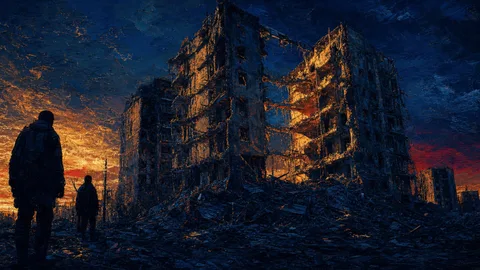
In Kharkiv, rescuers spent the whole morning of September 28 searching the second floor of a building in Saltivka, and Mayor Ihor Terekhov finally wrote that they had found no one under the rubble.
- In Kharkiv, rescuers spent the whole morning of September 28 searching the second floor of a building in Saltivka, and Mayor Ihor Terekhov finally wrote that they had found no one under the rubble.
- Monday, just after ten in the morning
- The word is in his message, posted a little after 10 a.m.
Facts, quotes, and cited links remain in the body. Interpretations are framed as analysis or opinion according to the format.
No one under the rubble
Monday, just after ten in the morning
In Kharkiv, rescuers spent the whole morning of September 28 searching the second floor of a building in Saltivka, and Mayor Ihor Terekhov finally wrote that they had found no one under the rubble.
No one.
The word is in his message, posted a little after 10 a.m. The search is over. City services and state rescuers are still clearing the night’s debris.
Earlier, speaking to reporters, the mayor put it differently, according to Suspilne. The building’s entrance was destroyed. The second floor was being cleared. At first sight, no one underneath. They weren’t sure yet.
Between those two moments, a few hours. Hours when no one could still mean maybe someone.
One word. Two syllables. A whole morning to write it.
The stairwell they search
A building in Saltivka isn’t counted in addresses. It is counted in stairwells.
A door at the bottom. Steps. Landings. On each landing, doors. Behind the doors, people asleep.
That is the unit of this text: the stairwell. The one you run down in the middle of the night. The one searched afterward, step by step.
Every search begins with a name everyone dreads hearing. The one in Saltivka ended on the only word everyone hoped to read.
No one underneath, and a destroyed entrance above.
A little after four in the morning
A nine-story building
The night broke a little after 4 a.m. Suspilne’s correspondents reported an explosion in Kharkiv at 4:02 a.m.
According to the regional prosecutor’s office, Russian forces struck a nine-story residential building in Saltivskyi district around that time.
The mayor first writes that two districts were hit by guided aerial bombs, Kyivskyi and Saltivskyi. Then that one of those bombs hit an apartment building.
Saltivskyi is the Kharkiv district with the most damaged high-rises, according to Glavcom. The neighborhood is used to it. It is not immune.
The second floor, then the third
Governor Oleh Synegubov describes the impact. The strike hit the second floor. The second and third floors are destroyed.
Second floor. Four in the morning.
Who sleeps on that floor, at that hour?
You don’t need the names to know what people do there.
At 4 a.m., you sleep. At 4 a.m., you turn over. At 4 a.m., you pull the blanket up over a shoulder. Nothing else.
In Kyivskyi district, the same night, the munition fell near private houses. Ten houses damaged, no one hurt, according to the mayor.
At 4 a.m., a second floor is only for sleeping.
Eight, eleven, fifteen, twenty-two
The mayor’s count
The count took all morning.
Eight injured, three of them children, the mayor writes first. Then 11, five of them children. Then 15. Then 22, a little after 6 a.m.
At 10 a.m., 29 injured, including 10 children. Shortly before 11 a.m., 35.
In the early afternoon, the regional prosecutor’s office publishes its own total: 43 injured, including 11 children.
The prosecutors count acute stress reactions among the injured. They are right to count them.
Those who come down later
The count does not climb because the bomb is still falling. It climbs because people come downstairs.
In a building like this one, there is the man who finds a cut while pulling off his sweater. The woman who feels the pain only once she is outside, on the sidewalk, not before. The child who is shaking without a scratch, and gets seated in the ambulance anyway.
A count that climbs for six hours is not a count that lies. It is a building emptying out, floor by floor.
Nine floors, two destroyed, 11 children injured.
Moscow says military
The September 28 list
Russia’s Defense Ministry published its own account of the night on Monday. The Associated Press summarizes it.
Two data centers in Kyiv. Gas stations in the capital. A Nova Poshta parcel sorting center in Odesa. A cargo ship in the Black Sea, another in the port of Chornomorsk.
Servers. Pumps. Parcels. Ships.
Moscow claims it targets only military-linked sites, the agency notes.
On Saturday, Sergey Lavrov had warned the UN General Assembly that Moscow would pursue its military campaign to the end, Al Jazeera reports.
Kharkiv, left off the list
In that summary, Kharkiv does not appear. Nor does Saltivka. Nor the second floor.
And yet Kharkiv had its night.
So here is where I stand. With that stairwell in Saltivka. Against the Russian command’s decision to strike Kharkiv’s residential neighborhoods at night. Because on September 28, around 4 a.m., one of those strikes destroyed two floors of a nine-story building and injured 43 people, including 11 children, according to the regional prosecutor’s office.
Not against a people. Against a decision, and against those who sign it all the way to the end.
On the same topic

COLUMN: At 54 Volodymyrska Street, Moscow burns the address…
A Russian jet-powered drone struck the presidium building of the National…

OPINION: Why Warsaw is right to shoot down what…
A Russian military helicopter spent 42 seconds in Polish skies on…

ANALYSIS: Trump says he offered Iran nothing. His own…
On September 28, Axios reported, citing American officials, that Donald Trump…
Moscow publishes its list. Saltivka counts its injured.
Children from three to fifteen
The ages, one by one
At 8:20 a.m., according to Suspilne, the regional prosecutor’s office counted nine children among the injured, aged three to 15.
Governor Oleh Synegubov had given the ages one by one.
There is a girl of three.
There is a girl of seven.
There is a boy of nine.
There are two boys of 10.
There is a teenage girl of 15.
Those children were treated on site, he says. A boy of eight and a 12-year-old child were hospitalized.
The glass, then the concussion
Those two were hurt by shards of glass, the regional administration’s spokeswoman, Anna Hontar, told Suspilne. A 14-year-old girl suffered a concussion. She was hospitalized too.
Glass. In a building hit at night, it finishes the job. It crosses the bedrooms. It gets into the sheets.
None of these children died. We write that down. We can’t quite bring ourselves to rejoice.
The glass makes no distinction between ages.
The night before, a word
Sunday evening, on the president’s channel
On Sunday evening, September 27, Volodymyr Zelensky posts a message on his official channel.
Since the day before, he writes, Russia has launched 277 attack drones, 155 of them jet-powered. In Kyiv alone, two kindergartens and two schools were hit. An apartment building too.
Then this sentence. If Russia were really preparing a de-escalation, as it tells American negotiators among others, there would be no such wave of Shahed terror.
The word I won’t repeat
He adds a harsher one. Anywhere else in the world, he writes, such a choice of targets would carry only one name.
I won’t write it. Everyone has heard it.
The president speaks of terror. The word is heavy. It is his.
Russia knows how to send reassuring signals, the president goes on, to delay the world’s firm responses.
Sunday evening, signals. Monday, 4 a.m., Saltivka.
Less than eight hours separate the message from the bomb. Two floors of a nine-story building then stopped being livable.
The night before, a word. The morning after, two floors.
Three names for one weapon
Guided bomb, Banderol or UMPB-5
Now I have to write what makes my own camp uncomfortable.
No one in Kharkiv names the weapon the same way. The mayor and the governor speak of a guided aerial bomb. Bohdan Hladkykh, director of the city’s emergency situations department, told Suspilne it was a Banderol. The prosecutors mention, preliminarily, a UMPB-5-type munition.
The mayor himself, speaking to reporters, said it was still being checked: guided bomb or Banderol.
Three services. Three names. A single facade.
Who is right about the name?
Numbers that move
The numbers move too. Thirty-five injured for the mayor before 11 a.m. Forty-three for the prosecutors in the early afternoon. These are the numbers of a country at war, published by its own institutions. I report them as theirs.
That same Monday, Ukrainian drones hit an oil depot in Russia’s Krasnodar region, according to local sources cited by Al Jazeera. The argument from symmetry is within easy reach.
That is true. And it does not change this: none of these versions moves the second floor.
A fuel depot has no children’s bedrooms.
Three names for the weapon, one for the floor.
Thirty-two people, one entrance
What the rescuers brought out
According to Bohdan Hladkykh, rescuers from the State Emergency Service brought 32 people out of the entrance that was hit.
Thirty-two. Through a single stairwell.
Every apartment in that entrance is damaged, he says. Around it, 18 buildings were hit, according to the mayor.
This is where the stairwell changes meaning. At night, it leads to beds. That morning, it only leads outside.
Glass and smoke
A resident of that entrance told Suspilne what she heard. Nothing. No explosion. Only this: glass came showering down, and a column of smoke rose.
Her children were asleep in another room. She and her husband made their way to them, grabbed them, and got out.
A neighbor, whose children live in the building that was hit, says he did not hear the alert. Only the impact. The apartment windows flew open all at once. The children weren’t too scared, he says. He was the one who started shaking.
And yet everyone got out of that stairwell alive.
You get out any way you can. A hand on the wall. Glass crunching underfoot. A child held close, in the dark.
Thirty-two. One stairwell. One way out.
Thirty-two people came out through a single door.
A city near the front
Military, according to Moscow
Moscow’s defense deserves to be laid out in full, and in its strongest form.
Kharkiv is a big city close to the front. An army at war is bound to have men, depots and workshops there. The Russian ministry says it strikes only military-linked sites. And no one died in Saltivka: proof, a spokesman would argue, of a precise munition.
That is the strongest argument one can lend it. It takes evidence to answer it.
August 9, Saltivka already
The first piece of evidence is an absence. In the Associated Press summary of its daily list, the Russian ministry does not claim Kharkiv. A precise strike on a military site gets claimed. This one showed nothing.
The second fits in three official phrases. Residential building, for the prosecutors. Second floor, for the governor. Entrance destroyed, for the mayor.
The third is a habit. According to Glavcom, a guided bomb hit a high-rise in the same district on August 9, and people died. On the night of September 26, drones were already targeting Kyivskyi and Saltivskyi: four injured.
At least three nights against the same neighborhood in seven weeks. Everything points away from a targeting error.
What is a precise munition looking for on the second floor of a high-rise, at 4 a.m.?
Near the front, people still sleep on the second floor.
Oleksandr, thirteen years old
Katerynivka, September 21
Someone is missing all the same, in the Kharkiv region, that week.
On September 21, a Russian strike hits the village of Katerynivka, in the Lozova community. A mother dies there. Her son, Oleksandr, is hospitalized.
About 60% of his body is burned, including 20% critical, deep burns, according to the mayor of Lozova, quoted by Suspilne.
One strike. One house. One mother. One son.
The doctors fight. The village waits.
September 27, in Lozova
On September 27, the mayor of Lozova, Serhiy Zelenskyi, announces his death. Oleksandr Tsiatska was 13.
The doctors fought to his last breath, he writes.
According to the city council’s spokeswoman, quoted by Suspilne, he leaves a father and two sisters.
Thirteen.
That is the ghost of this text. He was not under the rubble in Saltivka. He was in a hospital bed, from September 21 on, while Moscow promised to go all the way to the end.
Sixty percent, and a mother who went first.
The morning goes on
Shevchenkivskyi, then Industrialnyi
Kharkiv has no time to dwell on Saltivka.
A little after 7 a.m., the mayor reports a drone hitting Shevchenkivskyi district. In the afternoon, a strike on infrastructure in Industrialnyi district. Later, a drone down in Kyivskyi, with no consequences.
Discover
NARRATIVE: At 11:18 a.m. on a Monday, the Kremlin…
In Dnipro, once the search was over on September 28, the…

SPECIAL REPORT: Brussels sanctions a camp called Peace and…
Romashka, Sputnik, Raduga, Mir, Leto, Vita: the Official Journal of the…
COLUMN: At 54 Volodymyrska Street, Moscow burns the address…
A Russian jet-powered drone struck the presidium building of the National…
The mayor writes. He corrects. He recounts. He writes again.
That is how a city near the front lives. You count in neighborhoods. Saltivka at dawn. Shevchenkivskyi at lunch. Industrialnyi in the afternoon.
The president’s week
Over the week, Zelensky counts more than 2,200 attack drones, 1,630 aerial bombs and 38 missiles launched at Ukraine, according to Al Jazeera.
One thousand six hundred and thirty bombs. Only one hit the second floor in Saltivka.
And yet that is the one to look at. A weekly number lodges in no one’s body. A bomb does.
Kharkiv counts in neighborhoods, never in statements.
Zero dead, one line
Monday’s headline
On Monday, Al Jazeera’s headline was about eight dead and dozens injured across Ukraine. Kharkiv came in the body of the story, with its building and its children.
That is how headlines get made. One death weighs more than one injury. No one decided it. Everyone practices it.
Zero dead is a line in a feed. Zero dead is one photo fewer. Zero dead is a neighborhood forgotten before noon.
A relief to watch
I’ll admit this. Reading that no one was under the rubble, I felt relief. Real relief. Then I asked myself whom it served.
It serves to turn the page. It serves to stop asking why a munition hits a second floor at 4 a.m. It serves Moscow, which will have no death to explain.
In other words, relief has a use. It must not become a ranking.
Zero dead never meant zero strikes.
Two families look for a roof
A request for rehousing
Around 9 a.m., Bohdan Hladkykh told Suspilne that two families had already asked for help with rehousing.
Two families, before the search was even over.
One of the residents of that entrance had been evacuated from Kramatorsk to Kharkiv with her family a year and a half ago, according to Suspilne.
Kramatorsk, then Saltivka
Evacuated once. Woken by glass afterward.
A door. A landing. A key that no longer opens anything livable.
The front has a way of catching up with those who were moved away from it. It doesn’t walk. It flies.
Everyone knows the ordinary sequel to a night like that. Papers in a bag. Cardboard over the window. Cold air through the frame the next night, because autumn has begun.
Two families before noon. And when the cold settles into the apartments with no glass…
Two fewer families in the entrance, and winter ahead.
A second floor is not military
What the bomb found
The Russian ministry says it targets the military. Its list for the day, as the Associated Press summarizes it, says nothing about Kharkiv.
The bomb that fell at 4 a.m. found a second floor.
It found 43 injured. It found 11 children. It found 32 people to bring out through a single stairwell. It found two families to rehouse.
No military site claimed. Beds.
There is no other version of that second floor.
The Lindsey Graham law, Zelensky writes, can change a great deal if Washington applies it in full: signing it was a good move, applying it would be a second one.
A stairwell to hold
What does that stairwell in Saltivka need from us so that it doesn’t become a target again next month?
On Monday, city services and rescuers were still clearing debris, according to the mayor.
Among Suspilne’s photos is the cat of one family from that entrance, after the strike.
The stairwell is no longer counted in doors. It is counted in families gone.
Military, says Moscow. Nine floors, 11 children, answers Saltivka.
Sources:
Primary Sources:
- Ihor Terekhov, Mayor of Kharkiv — search ends in Saltivka, 29 injured including 10 children, September 28, 2026
- Kharkiv Regional Prosecutor’s Office — nine-story building hit around 4 a.m., 43 injured including 11 children, September 28, 2026
- Volodymyr Zelensky — 277 drones and a wave of Shahed terror, September 27, 2026
Secondary Sources:
Get the geopolitics analyses
Conflicts, powers, alliances: the MadMax thread without the noise.
Cite this article
Maxime Marquette (2026). NARRATIVE: Moscow says it targets only the military, and its bomb hits a second floor in Saltivka. MadMax. https://mad-max.co/en/article/moscow-says-it-targets-only-the-military-and-its-bomb-hits-a-second-floor
Read next
NARRATIVE: At 11:18 a.m. on a Monday, the Kremlin…
In Dnipro, once the search was over on September 28, the…
SPECIAL REPORT: Brussels sanctions a camp called Peace and…
Romashka, Sputnik, Raduga, Mir, Leto, Vita: the Official Journal of the…
COLUMN: At 54 Volodymyrska Street, Moscow burns the address…
A Russian jet-powered drone struck the presidium building of the National…
Enjoyed this piece? Get the next one.
One chronicle a week, straight to your inbox. No noise.
This article was generated with AI assistance, under human supervision.
Comments
Be the first to weigh in.