

EDITORIAL: Iran Sanctions Relief — Tehran Expects Far More Than 60 Days for the MoU
On June 17, 2026, in Versailles, Donald Trump and Iranian Supreme Leader Ali Khamenei signed a memorandum of understanding that opens a 60-day negotiating window on Iran's nuclear program and the gradual lifting of American sanctions. The scene is spectacular in its symbolism. Ve
- On June 17, 2026, in Versailles, Donald Trump and Iranian Supreme Leader Ali Khamenei signed a memorandum of understanding that opens a 60-day negotiating window on Iran's nuclear program and the gradual lifting of American sanctions. The scene is spectacular in its symbolism. Ve
- Introduction: A memorandum signed on fragile hope
- June 17 at Versailles: the scene and what it conceals
Facts, quotes, and cited links remain in the body. Interpretations are framed as analysis or opinion according to the format.
Introduction: A memorandum signed on fragile hope
June 17 at Versailles: the scene and what it conceals
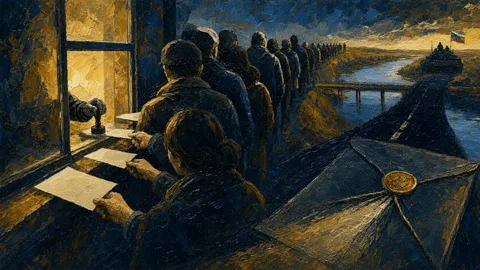
On June 17, 2026, in Versailles, Donald Trump and Iranian Supreme Leader Ali Khamenei signed a memorandum of understanding that opens a 60-day negotiating window on Iran's nuclear program and the gradual lifting of American sanctions. The scene is spectacular in its symbolism. Versailles — the home of great treaties — as the backdrop for an agreement between two countries that have regarded each other as existential adversaries since 1979. The photographer captures the handshake. Markets react. Chancelleries look on with calculated caution.
But behind the diplomatic staging, the reality of this memorandum is infinitely more complex. This MoU — Memorandum of Understanding — is not a peace deal, not a treaty, not even a binding commitment on the precise terms of sanctions relief. It is a negotiating framework. A declaration of shared intent. A document that says, in substance: we agree to talk. What comes next — the American conditions, the Iranian demands, the legal obstacles in Congress, the internal dynamics of both countries — that is the real subject. And that is why 60 days will not be enough.
The sanctions provisions of the MoU: what is actually on the table
Gradual relief, not a total lift
The June 17 memorandum calls for a gradual easing of certain American sanctions against Iran, contingent on measurable nuclear concessions from Tehran. The word "gradual" is central and revealing. This is not a wholesale lifting of sanctions — what Iran has demanded since 2018 when Trump withdrew from the JCPOA. It is an architecture of sequential mutual concessions: Iran does X, the United States lifts Y, Iran does Z, the United States lifts W. A complex technical dance where each step depends on the one before.
The first gestures already made
According to available information, the United States has already granted limited sanctions exemptions — waivers — allowing certain Iranian financial transactions frozen for years to proceed. The Federal Reserve has authorized limited transfers from Iranian accounts blocked in third countries, notably in Qatar. These initial measures — highly technical, barely visible publicly — signal that American goodwill is not purely rhetorical. But their scope remains modest compared to Iranian expectations, which include notably the unfreezing of several billion dollars in assets held in foreign banks.
The American conditions: the minimum floor
What Washington actually demands
The American position on preconditions for any substantial sanctions relief is firm and documented. Washington demands: first, a halt to uranium enrichment at levels approaching weapons grade (60% and above); second, acceptance of expanded inspections by the International Atomic Energy Agency across all Iranian nuclear sites, including suspect military sites; third, the destruction or transfer out of Iran of stocks of highly enriched uranium; fourth, independent verification mechanisms to confirm compliance with these commitments.
The IAEA and the dispute over inspections
On the inspections front, the situation is tense. Iran's IAEA governor, Mohammad Gharibabadi, and U.S. Vice President JD Vance have had contradictory public exchanges over the level of access Tehran is prepared to grant inspectors. Iran accepts inspections under the Nuclear Non-Proliferation Treaty framework, but resists inspections under the Additional Protocol that would allow broader access to undeclared sites. This Iranian red line is precisely what Washington is seeking to cross in the MoU negotiations.
Iranian expectations: far more than money
The unfreezing of assets as an immediate priority
For Tehran, the immediate, non-negotiable priority is the release of frozen Iranian assets held in foreign banks. These assets — estimated by various sources at between 7 and 10 billion dollars across different jurisdictions, including several billion in Qatar according to consistent sources — represent oil export revenues blocked for years by American secondary sanctions. The governor of the Central Bank of Iran, Hemmati, who took part in the Bürgenstock conference discussions, was clear: Iran needs immediate access to this liquidity to address a severe domestic economic crisis.
Commercial normalization as a strategic objective
Beyond immediate cash, Iran wants something structurally more important: the normalization of its international commercial relations. This entails the reintegration of the Central Bank of Iran into the SWIFT system, the lifting of secondary sanctions that threaten foreign companies doing business with Iran, and the ability to sell its oil on international markets without being subjected to American extraterritorial sanctions. These demands are economically legitimate — they correspond to what a sovereign country is entitled to expect in a normalization agreement. But for Washington, they represent the surrender of the bulk of its leverage over Tehran.
The obstacles in Congress: the American legal wall
The Senate vote as a warning signal
Regardless of the Trump administration's goodwill, the lifting of Iran sanctions runs into a major legal obstacle: the United States Congress. On June 25, 2026, the Senate passed by a vote of 50 to 48 a resolution based on the War Powers Act requiring that any military action or major agreement with Iran receive prior congressional approval. This vote — admittedly narrow — is a strong political signal: a majority of the Senate intends to oversee the executive branch's commitments with Tehran.
Sanctions codified by Congress
More fundamentally, many of the most significant sanctions against Iran are not presidential executive orders but laws passed by Congress. The Comprehensive Iran Sanctions, Accountability, and Divestment Act, the Iran Freedom and Counter-Proliferation Act, the National Defense Authorization Act with its sanctions provisions — these legislative texts cannot be lifted by executive order. They require a congressional vote. And in the current American political climate, securing a majority in the Senate and the House of Representatives to lift legislative sanctions against Iran is a mission that far exceeds the 60-day framework of the MoU negotiations.
The 60-day timeline: a useful fiction
What can realistically be accomplished in 60 days
Let's be precise about what 60 days can actually accomplish in this context. In 60 days, American and Iranian technical teams can agree on the general sequencing of sanctions relief and nuclear concessions. They can produce a working document defining the categories of sanctions most likely to be lifted first. They can establish provisional verification mechanisms. They can perhaps unfreeze an additional tranche of frozen assets as a confidence-building measure. That is not nothing — and it justifies the Versailles MoU as a necessary step.
What will take far longer
But the substantial lifting of economic sanctions — those that would allow Iran to rejoin the international financial system, sell its oil freely, do business normally with foreign companies — will take years, not months. It will require congressional votes. It will require sustained, verified Iranian compliance with its nuclear commitments. It will require a baseline of trust between the two parties that does not yet exist. And it will require political stability in both countries — Tehran and Washington — to honor multi-year commitments. These conditions are not in place in June 2026. They may never be completely.
On the same topic
DOSSIER: 60,000 Russian passports in Transnistria — the annexation…
More than sixty thousand applications for Russian citizenship in three months,…

ANALYSIS : Taiwan Puts NT$1,122.5 Billion Into Defence, Over…
Hold that number for a moment, because it marks the crossing…

SPECIAL REPORT: Beijing buys 40 cargoes of sanctioned Russian…
On August 28, 2025, a tanker named Arctic Mulan moored at…
Iran's internal fractures: the guardians of the hard line
The Revolutionary Guards facing the MoU
Within Iran, the Versailles MoU is not met with unanimous enthusiasm. The Islamic Revolutionary Guard Corps — the country's most powerful military and economic force — has direct interests in the sanctions economy: the smuggling and sanctions-evasion networks they control generate considerable revenue. A full economic normalization that would reintegrate Iran into the legal global economy would reduce their relative economic power. They are therefore structurally suspicious of any agreement that would weaken their role as gatekeepers of the Iranian shadow economy.
Khamenei's power and its limits
Khamenei himself, despite his signature at Versailles, must navigate between internal factions with conflicting interests. The pragmatists — economists, technocrats, business figures — see the MoU as a genuine economic opportunity for a country strangled for years. The ideological hawks see any nuclear concession as a betrayal of the founding principles of the Islamic Republic. The supreme leader must maintain balance between these factions. Every concession he makes to Washington weakens his standing with the guardians of revolutionary ideology. This is a political constraint that will inevitably slow the implementation of any agreement.
The JCPOA precedent: the wound that will not heal
2015: an agreement that worked, then was destroyed
To understand Iranian mistrust, one must recall the history of the Joint Comprehensive Plan of Action — the JCPOA of 2015. That agreement, negotiated under the Obama administration with the participation of China, Russia, the European Union, the United Kingdom, France, and Germany, had effectively limited Iran's nuclear program in exchange for a partial lifting of sanctions. IAEA inspectors confirmed that Iran was honoring its commitments. International trade and investment with Iran had begun to resume.
The American withdrawal of 2018 and its consequences
Then Trump — during his first term, in May 2018 — unilaterally withdrew the United States from the JCPOA, reinstated all American sanctions, and imposed secondary sanctions punishing foreign companies doing business with Iran. That decision not only destroyed the nuclear agreement — it also convinced Tehran that any American signature can be invalidated by the next administration. For Iran's 2026 negotiators, the question is not only whether Trump will keep his promises — it is whether the agreement will survive the end of his term in 2028. And historically, the answer to that question is not reassuring.
The role of Oman as a stabilizing intermediary
Oman, a diplomatic channel for decades
In the mechanics of American-Iranian negotiations, Oman has for decades played the role of a discreet and reliable intermediary. Its geographic position — bordering both the Gulf of Oman and the Strait of Hormuz, sharing a maritime frontier with Iran — makes it a natural point of contact. Its history of benign neutrality — Muscat simultaneously maintains cordial relations with Washington, Tehran, Riyadh, and Tel Aviv — gives it unique credibility in this facilitator role. According to consistent sources, it was in Oman that the preliminary discussions leading up to the Versailles MoU took place.
The limits of the intermediary role
Oman can facilitate communications, carry messages, and host discreet meetings. But it cannot substitute for direct negotiations between the principals, nor guarantee the implementation of commitments made. Its influence is real but limited: it depends on the goodwill of both main parties to use the channel it represents. If direct negotiations stall — as they so often have historically — Oman's role cannot compensate for the trust deficit between Washington and Tehran. It is a necessary diplomatic lubricant, but not a solution.
Regional implications: Israel, Saudi Arabia, and nervous neighbors
Israel and the Iranian nuclear red line
Israel watches the American-Iranian negotiations with barely concealed anxiety. For Jerusalem, any agreement that leaves Iran with a significant nuclear enrichment capacity — even under supervision — is insufficient. Prime Minister Netanyahu has been clear: a nuclear Iran represents an existential threat to Israel. And historically, when Israel determines that its vital security interests are threatened by a diplomatic agreement, it acts — as demonstrated by the strikes on nuclear facilities in Iraq in 1981 and in Syria in 2007.
Saudi Arabia and the Sunni-Shia balance
Saudi Arabia, for its part, watches the negotiations from a different but equally alarmed perspective. An Iran reintegrated into the global economy, with unfrozen financial resources, would be an Iran more capable of funding its allies in Yemen, Lebanon, Iraq, and Syria. Tehran's economic reintegration risks fueling the Shia regional expansionism that Riyadh has been fighting for years. Even if Saudi-Iranian relations have improved following the Chinese mediation of 2023, the structural mistrust remains. And the Versailles negotiations have not resolved it.
Oil prices as a strategic variable
Energy markets and the lifting of oil sanctions
The most economically tangible component of a lifting of sanctions against Iran would be the reintegration of Iranian oil exports onto international markets. Iran holds some of the largest proven reserves in the world — approximately 155 billion barrels of proven oil reserves. Before sanctions, it exported more than 2 million barrels per day. If those exports were to return freely to the market, the effect on the global oil price would be significant — a potential drop that would benefit oil-importing economies and weigh on exporting economies such as Saudi Arabia and Russia.
The paradox of American oil interests
For the United States, the return of Iranian oil to markets presents a paradox: it would lower pump prices — politically welcome for Trump, who has promised cheaper energy — but it would also compete with American oil producers, notably shale oil producers who need high prices to remain profitable. This internal contradiction within American economic policy is an additional variable that complicates the management of Iranian oil sanctions relief. Even a satisfactory nuclear agreement would not automatically resolve the question of Iranian oil exports.
What the West must demand as minimum guarantees
The non-negotiable red lines
As a columnist, I have an obligation to take a clear position: any substantial lifting of sanctions against Iran must be contingent on non-negotiable minimum guarantees. First, a verifiable and irreversible halt to uranium enrichment at military-grade levels. Second, full access by IAEA inspectors to all nuclear sites, including suspect military sites identified by Western intelligence. Third, verification mechanisms that do not depend on Iranian goodwill but on independent technical means. These conditions are not unreasonable — they are the bare minimum for an international community that has already been deceived about the Iranian nuclear program in the past.
What Europe must bring to the negotiations
The European Union — which maintained its engagement in negotiations even after the American withdrawal of 2018 — must ensure that its experience and credibility with Tehran are fully leveraged in the framework of the June 2026 MoU. France, Germany, and the United Kingdom have diplomatic relations with Iran that Washington does not. They can serve as guarantors of a bilateral American-Iranian agreement — offering Tehran the assurance that even if a future American administration once again withdraws from its commitments, the European partners will uphold their part of the framework. This European guarantee may be the only way to persuade Iran to make significant nuclear concessions to an administration it has no reason to take at its word.
The most likely scenario for the next 60 days
What will happen — and what will not
Looking at the situation coldly, here is what is probable for the 60 days following the signing of the Versailles MoU: intensive technical meetings between American and Iranian teams on the sequencing of concessions; a partial unfreezing of additional Iranian assets to maintain positive momentum; optimistic public statements from both sides to preserve political traction; and very likely a request to extend the deadline beyond the initial 60 days, presented as a sign of progress rather than failure.
What will not change in 60 days
What will not change in 60 days: the Iranian nuclear program, its enrichment capabilities, its stocks of highly enriched uranium — these elements will require lengthy inspections and complex dismantlement. The legislative sanctions in the U.S. Congress — they will require votes that take months in the best of cases. The fundamental mistrust between the two countries — built over decades of conflict and mutual betrayal. And the regional dynamics — Israeli fears, Saudi calculations, the role of the Revolutionary Guards — they will remain active variables that complicate any bilateral solution.
The military dimension: what the MoU does not say about missiles and weapons
The Iranian ballistic program outside the negotiating framework
One of the most troubling gaps in the Versailles memorandum is the complete absence of any mention of Iran's ballistic missile program. Iran possesses one of the most developed ballistic arsenals in the Middle East — missiles capable of reaching Israel, Saudi Arabia, American bases in the region, and potentially certain European capitals with the longest-range variants. This ballistic program, which could serve as a delivery vehicle for nuclear warheads when the time comes, is structurally linked to the nuclear program but is not included in the sanctions negotiations.
Arms deliveries to Russia as a tacit obstacle
Another file absent from official negotiations but present as a backdrop is that of Iranian arms deliveries to Russia for the war in Ukraine. Iran has supplied Russia with Shahed drones that have struck Ukrainian cities, civilian infrastructure, and power plants. These deliveries have cost Ukrainian lives and prolonged a war that the West is seeking to end. Any economic normalization of Iran that frees up billions of dollars in resources could directly fund these arms deliveries — strengthening the Russian war machine that Western democracies are fighting by supporting Ukraine. This paradox must be explicitly addressed in any final agreement.
Conclusion: Hope without illusion, vigilance without cynicism
What the MoU can and cannot be
The Versailles memorandum of June 17, 2026 is a real and significant step in de-escalating the Iranian nuclear crisis. It should be neither over-interpreted as a definitive solution nor dismissed as pure staging. It is a dialogue framework that opens a window — narrow, fragile, conditional — toward a gradual normalization. The gradual lifting of sanctions is possible. It is not guaranteed. It will take far more than 60 days. It will demand Iranian nuclear concessions that Tehran is not yet ready to formalize. It will require votes in the U.S. Congress that no one can guarantee.
Discover

INVESTIGATION: Beijing cuts Africa to 2.1 billion in loans…
2.1 billion — the lowest figure in almost twenty years, according…

SPECIAL REPORT: Beijing Promises Stimulus as Its Households Give…
That is the growth rate of Chinese industrial output in July,…

INVESTIGATION: Two Chinese Ex-Soldiers Arrested in Seoul as 18,000…
For five years, a man ran a military-supply shop at the…
Vigilance as the only reasonable policy
The only reasonable position for Western democracies is one of active vigilance: support the negotiations, demand verifiable guarantees, refuse any substantial sanctions relief without independent confirmation of Iranian nuclear concessions, and maintain calibrated pressure that preserves negotiating leverage without making dialogue impossible. Neither the naïve optimism that takes Versailles photos for peace treaties, nor the paralyzing cynicism that refuses to see real opportunities within an imperfect framework. Sound foreign policy always lives in that uncomfortable space between the two. That is where democracies must remain — eyes open, demands firm, hope intact but clear-eyed.
Signed Maxime Marquette, columnist
Columnist's transparency box
My convictions and biases on Iran
I believe that Iran is one of the greatest destabilizing threats to regional and global security — in its support for Hezbollah, in its arms deliveries to Russia for the war in Ukraine, in its ballistic program, and in its nuclear ambitions. This fundamental bias informs my analysis. I also acknowledge that sanctions alone have not stopped the Iranian nuclear program — they have at times accelerated it, as Iran enriched more uranium during the years of maximum pressure. That is not a reason to lift sanctions without conditions — it is a reason to negotiate intelligently.
What I do not know and what I acknowledge not knowing
I do not have access to the precise content of the memorandum signed on June 17 — it has not been published in full. The figures I cite — the Senate's 50-48 vote, the estimates of frozen assets, Iranian enrichment capabilities — are drawn from verifiable public sources. But the details of closed-door negotiations, the real compromise positions, the informal concessions exchanged between technical teams — I do not know them. My analysis is that of an outside observer with public sources, not a participant or insider. I state this explicitly so that readers can calibrate the scope of my conclusions accordingly.
Sources
Primary sources
Secondary sources
Get the geopolitics analyses
Conflicts, powers, alliances: the MadMax thread without the noise.
Cite this article
Maxime Marquette (2026). EDITORIAL: Iran Sanctions Relief — Tehran Expects Far More Than 60 Days for the MoU. MadMax. https://mad-max.co/en/article/levee-des-sanctions-iran-teheran-attend-bien-plus-que-60-jours-pour-le-mou
Read next
INVESTIGATION: Beijing cuts Africa to 2.1 billion in loans…
2.1 billion — the lowest figure in almost twenty years, according…
SPECIAL REPORT: Beijing Promises Stimulus as Its Households Give…
That is the growth rate of Chinese industrial output in July,…
INVESTIGATION: Two Chinese Ex-Soldiers Arrested in Seoul as 18,000…
For five years, a man ran a military-supply shop at the…
Enjoyed this piece? Get the next one.
One chronicle a week, straight to your inbox. No noise.
This article was generated with AI assistance, under human supervision.
Comments
Be the first to weigh in.