

The Sahel slams the door on international justice
On June 24, 2026, three Sahel countries formally notified the Secretary-General of the United Nations of their withdrawal from the founding treaty
- On June 24, 2026, three Sahel countries formally notified the Secretary-General of the United Nations of their withdrawal from the founding treaty
- Introduction: three countries, one shared break
- A notification that changes everything
Facts, quotes, and cited links remain in the body. Interpretations are framed as analysis or opinion according to the format.
Introduction: three countries, one shared break
A notification that changes everything
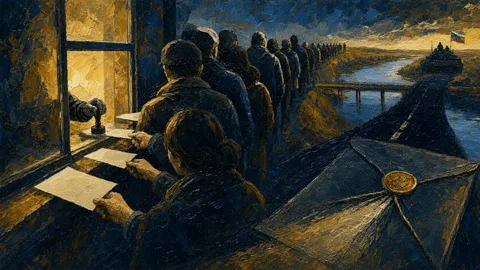
On June 24, 2026, three Sahel countries formally notified the Secretary-General of the United Nations of their withdrawal from the founding treaty of the International Criminal Court. Mali, Burkina Faso and Niger denounce, in their own words, a "selective and politicized instrument," a serious accusation leveled at the institution supposedly embodying universal justice against the gravest crimes.
The ICC confirmed the move in a statement dated July 1, 2026, specifying that the withdrawal won't take effect for a full year, in line with the provisions of the Rome Statute. During this transition period, all three countries remain bound to cooperate with the Court.
A rare collective act in the ICC's history
This simultaneous withdrawal by three member states from the same region marks a significant precedent in the history of the International Criminal Court, created in 2002 to try mass atrocities, crimes against humanity and war crimes when national jurisdictions cannot or will not act.
The political context behind the break
Military juntas at odds with the West
Mali, Burkina Faso and Niger are all led by military juntas that seized power through successive coups between 2020 and 2023. These regimes have gradually distanced themselves from their traditional Western partners, notably France, in favor of a strategic pivot toward Russia.
This geopolitical realignment comes with a sovereigntist narrative that frames international institutions, including the ICC, as instruments of a Western world order these new leaders consider illegitimate.
The Alliance of Sahel States as a shared framework
The three countries formed the Alliance of Sahel States, a political and security coalition that now coordinates their common diplomatic positions, including their joint rejection of the International Criminal Court's jurisdiction.
What the ICC's statement actually says
An unambiguous confirmation
In its statement dated July 1, 2026, relayed notably by Reuters and The Straits Times, the International Criminal Court confirms it has received withdrawal notifications from the three countries and notes that, under Article 127 of the Rome Statute, the withdrawal will only take effect one year after the notification's receipt date.
The Court also specifies that this withdrawal does not affect the three countries' obligations to cooperate with any investigation or proceeding already underway at the time of notification, an essential legal nuance too often overlooked in public commentary on this matter.
The fate of already-open cases
Among the cases affected is the arrest warrant targeting Malian jihadist leader Iyad Ag Ghali, whose legal validity remains unchanged despite the announced withdrawal, according to clarifications provided by the Court itself.
Reactions from human rights organizations
Human Rights Watch calls it a betrayal of victims
Human Rights Watch published a scathing statement on July 2, 2026, saying this collective withdrawal "betrays the victims" of violence committed across the Sahel region, an area marked for years by abuses attributed to both jihadist groups and certain national security forces and allied paramilitary groups.
The organization notes that the ICC often served as the last resort for civilian populations lacking access to functional, independent national justice free of political pressure in their own countries.
Amnesty International calls for vigilance
Amnesty International also reacted, highlighting the increased risk of impunity for perpetrators of serious human rights violations in a region already weakened by years of armed conflict and chronic political instability.
The arguments put forward by the three countries
An accusation of geographic selectivity
The three Sahelian governments justify their withdrawal by pointing to what they call disproportionate treatment of African countries by the ICC since its founding, while other world powers largely escape its jurisdiction by never having ratified the Rome Statute.
This argument isn't new: it has fueled a broader debate for more than a decade over the real legitimacy and universality of international criminal justice, a debate that extends well beyond the Sahel case alone.
A national sovereignty argument
Malian, Burkinabe and Nigerien authorities also invoke the principle of national sovereignty, arguing that their own judicial systems are now sufficiently equipped to try serious crimes committed on their territory, without outside intervention.
The broader context of Western pushback against the ICC
Washington also disputes the Court's jurisdiction
This Sahelian withdrawal comes amid a broader international climate in which the International Criminal Court faces multiple challenges. The United States has also rejected the Court's jurisdiction over its nationals, according to information reported by the Anadolu news agency, illustrating a wider erosion of the institution's authority on the world stage.
This convergence, though driven by very different motives in Washington and in Sahelian capitals, feeds a general climate of distrust toward multilateral international justice mechanisms.
An institution under constant pressure
The ICC has had to contend for years with withdrawals, threats of sanctions, and refusals to cooperate from several states, raising questions about its future ability to fully carry out its original mandate of universal justice.
What this means for victims on the ground
Access to justice that was already fragile
For civilian populations in the Sahel, often caught between abuses by jihadist groups and those attributed to certain security forces, access to independent justice was already precarious even before this withdrawal. Closing this additional door deepens a sense of impunity already widely documented by several humanitarian organizations.
Human rights defenders fear this withdrawal will send a discouraging signal to victims who hoped, one day, to see their tormentors brought before an independent international court.
No credible short-term alternative
No credible institutional alternative has been proposed by the three countries to offset this withdrawal, leaving genuine uncertainty hanging over the future of accountability for serious crimes committed in the Sahelian region.
The geopolitical dimension of the pivot toward Moscow
An openly embraced strategic shift
This withdrawal from the ICC fits into a broader geopolitical trajectory: the openly embraced rapprochement between the Sahelian juntas and Russia, which has notably provided military support through paramilitary groups in the region, replacing historic Western backing.
Russia, itself the target of an ICC arrest warrant against President Vladimir Putin over the invasion of Ukraine, obviously has no interest in seeing this institution strengthen its authority among its new African partners.
A convergence of interests between Moscow and the Sahelian juntas
This convergence of interests between Moscow and the Sahelian military governments illustrates a broader dynamic of pushback against the Western-led international order, driven simultaneously by Russia, certain African regimes, and other authoritarian powers around the world.
Historical precedents for leaving the ICC
Burundi, the first African precedent
Burundi had been, in 2017, the first country to actually withdraw from the International Criminal Court, paving the way for later withdrawals that had never before reached the coordinated scale of this triple Sahelian withdrawal in 2026.
That Burundian precedent had already drawn similar criticism at the time from human rights organizations, who feared a regional domino effect that now appears to be confirmed by the Sahelian case.
A risk of domino effect in West Africa
Some observers fear this coordinated withdrawal by Mali, Burkina Faso and Niger could encourage other countries in the region, also governed by military or authoritarian regimes, to consider a similar exit from the Court's jurisdiction.
The position of France and the European Union
On the same topic

COLUMN : Europe Moved 8.5 Billion Euros in a…
That is what the European Commission says it has disbursed for…

ANALYSIS: 313 Votes, a 20th Extension — Ukraine Keeps…
313 votes to approve the presidential decree extending martial law by…
DOSSIER: 60,000 Russian passports in Transnistria — the annexation…
More than sixty thousand applications for Russian citizenship in three months,…
A cautious but concerned silence
France, the region's former colonial power and now at diplomatic odds with the three Sahelian juntas, reacted with notable diplomatic caution, avoiding any comment that could be interpreted as further interference in these countries' sovereign affairs.
The European Union, for its part, expressed concern through diplomatic officials, while acknowledging the limits of its current influence over governments that have explicitly rejected Western oversight.
A marked decline in Western influence in the region
This withdrawal from the ICC symbolizes, once again, the broader decline of traditional Western influence in a Sahel region now turning toward other strategic partners, notably Russia and, to a lesser extent, certain Gulf states.
What transparency still requires
Questions still awaiting an official answer
Several questions remain unclear at this stage: what national judicial mechanism will actually replace the ICC's jurisdiction for the most serious crimes? What guarantees of independence will be offered to victims who might want to file complaints against members of the national security forces themselves?
No detailed public answer has been provided by the three Sahelian governments to these questions, even though they're essential to assessing the real consequences of this withdrawal on the ground.
No independent report to date
As of now, no complete independent report has documented the concrete impact of this withdrawal on ongoing judicial proceedings, and it would be dishonest to anticipate definitive conclusions before more thorough legal and humanitarian analyses are published in the coming months.
The role of Sahelian civil society
Local voices rarely heard
In a debate largely dominated by government positions and reactions from major international organizations, the voices of Sahelian civil society itself remain often marginalized in international media coverage, despite their direct knowledge of realities on the ground.
Several local human rights organizations, operating under difficult security conditions, had nonetheless documented for years the limits of the national judicial system in these three countries, a finding that now feeds the concerns voiced by international organizations.
An increasingly shrinking civic space
The room for maneuver of these local organizations has shrunk considerably since the military juntas took power, making any future independent documentation of violations that might occur after the ICC's effective withdrawal that much harder.
The stakes for the future of international justice
An institution at a turning point in its history
This coordinated withdrawal could mark a turning point in the history of the International Criminal Court, forcing the institution to rethink its engagement strategy with African states and to respond more directly to the selectivity criticisms that have long fueled distrust of its mandate.
Some international legal scholars are calling for a structural reform of the Court to restore its legitimacy, notably by expanding its focus beyond the African continent alone, where it has historically concentrated the majority of its active investigations.
A test for the credibility of the international order
Beyond the Sahelian case, this affair raises a broader question about the international community's ability to maintain credible accountability mechanisms amid a growing number of armed conflicts and serious human rights violations around the world.
The precedent of the Philippines and the question of universality
Another emblematic withdrawal in Asia
The Philippines had also left the International Criminal Court in 2019, under President Rodrigo Duterte, amid an investigation into extrajudicial killings tied to his war on drugs. This Asian precedent is a reminder that pushback against the ICC isn't confined to the African continent, even if withdrawals remain more frequent there.
This geographic parallel fuels the debate over the real universality of international criminal justice, an institution meant to apply equally to all signatory states, regardless of their power or geopolitical standing.
Discover

INVESTIGATION: Beijing cuts Africa to 2.1 billion in loans…
2.1 billion — the lowest figure in almost twenty years, according…

SPECIAL REPORT: Beijing Promises Stimulus as Its Households Give…
That is the growth rate of Chinese industrial output in July,…

INVESTIGATION: Two Chinese Ex-Soldiers Arrested in Seoul as 18,000…
For five years, a man ran a military-supply shop at the…
A legitimacy that must be rebuilt piece by piece
Facing these successive withdrawals, the ICC will need to demonstrate, in the coming years, its ability to handle all cases before it fairly, including those involving Western powers or their allies, to regain a legitimacy now being challenged on multiple continents at once.
Conclusion: a door closing, a vigilance that must open
A year to watch for real consequences
The one-year delay before this withdrawal formally takes effect offers a crucial observation window for the international community, human rights organizations, and independent media, to precisely document how the judicial situation evolves in the three countries concerned.
This transition period must not be treated as a mere administrative delay, but as an opportunity for continued international diplomatic and civic pressure demanding minimum guarantees of justice for Sahelian populations.
A vigilance that must never fade
I'll keep following this story with the rigor it demands, yielding neither to complacent silence nor to sensationalist exaggeration. The facts will speak for themselves in the months ahead, and it's precisely our collective role to document them with precision.
By Maxime Marquette, columnist
Columnist's transparency note
Who I am and my acknowledged biases
I'm a columnist, not an international lawyer or an academic specialist in international criminal law. My acknowledged bias is that of an advocate for international justice and institutional transparency, with no leniency toward any government, Western or African, seeking to escape accountability.
What I don't know, and my method
I can't predict the precise legal consequences of this withdrawal beyond what's confirmed by the official texts of the Rome Statute and the Court's own statements. My method is to cross-reference institutional primary sources and recognized human rights organizations, explicitly flagging the absence of a complete independent report to date.
Sources
Primary sources
Le Monde, Le Niger, le Mali et le Burkina Faso se retirent de la Cour pénale internationale — July 2, 2026
The Straits Times, ICC confirms Burkina Faso, Mali and Niger move to leave court — 2026
Reuters, ICC confirms Burkina Faso, Mali and Niger move to leave court — July 2, 2026
Secondary sources
Human Rights Watch, Sahel countries' withdrawal from ICC betrays victims — July 2, 2026
Amnesty International, Central Sahel countries' withdrawal from the ICC — July 3, 2026
Anadolu Ajansı, US rejects International Criminal Court jurisdiction over Americans — 2026
Get the geopolitics analyses
Conflicts, powers, alliances: the MadMax thread without the noise.
Cite this article
Maxime Marquette (2026). The Sahel slams the door on international justice. MadMax. https://mad-max.co/en/article/le-sahel-claque-la-porte-de-la-justice-internationale
Read next
INVESTIGATION: Beijing cuts Africa to 2.1 billion in loans…
2.1 billion — the lowest figure in almost twenty years, according…
SPECIAL REPORT: Beijing Promises Stimulus as Its Households Give…
That is the growth rate of Chinese industrial output in July,…
INVESTIGATION: Two Chinese Ex-Soldiers Arrested in Seoul as 18,000…
For five years, a man ran a military-supply shop at the…
Enjoyed this piece? Get the next one.
One chronicle a week, straight to your inbox. No noise.
This article was generated with AI assistance, under human supervision.
Comments
Be the first to weigh in.