

The EU extends its Russia sanctions by a year, a firm signal that must continue
On June 18, 2026, at a summit in Brussels, European Union leaders made a decision that, on paper, looks like a technical
- On June 18, 2026, at a summit in Brussels, European Union leaders made a decision that, on paper, looks like a technical
- Introduction: twelve months instead of six, a change that matters
- A decision taken unanimously by the Twenty-Seven
Facts, quotes, and cited links remain in the body. Interpretations are framed as analysis or opinion according to the format.
Introduction: twelve months instead of six, a change that matters
A decision taken unanimously by the Twenty-Seven
On June 18, 2026, at a summit in Brussels, European Union leaders made a decision that, on paper, looks like a technical detail, but that in practice sends a political message of considerable weight: extending the economic sanctions regime against Russia for twelve months rather than the usual six months. This is the first time since these measures were imposed that the renewal spans a full year, a decision formally confirmed by the Council of the European Union on June 25, 2026, extending the restrictive measures until July 31, 2027.
This change of pace is not trivial. For over a decade, each six-month renewal triggered internal wrangling, veto threats from certain member states more conciliatory toward Moscow, and permanent uncertainty over the solidity of the Western front. By opting for a one-year horizon, the Twenty-Seven reduce this window of political vulnerability and send a clear signal: European determination is not weakening, even after more than four years of war in Ukraine.
A wartime context that leaves no room for complacency
This extension comes as Russia continues its offensive against Ukraine without the slightest sign of strategic retreat. The June 18-19, 2026 summit opened with the participation of Ukrainian President Volodymyr Zelensky, reminding European leaders of the human and military urgency underlying every sanctions package adopted in Brussels.
The spokesperson for the President of the European Council, Maria Tomasik, confirmed that leaders had approved conclusions on Ukraine while also formalizing this unprecedented extension. In a world where fatigue with prolonged conflicts sometimes threatens the cohesion of Western democracies, this gesture deserves to be praised as a rare example of strategic constancy.
A twenty-first sanctions package targeting the sinews of war
The Russian banking and oil sectors in the crosshairs
Alongside this extension, European Commission President Ursula von der Leyen presented, as early as June 9, 2026, a 21st sanctions package designed to hit Russia's war economy even harder. This package targets roughly 90 Russian banks facing an asset freeze, 31 additional financial institutions subject to a transaction ban, as well as about ten cryptocurrency platforms used to circumvent Western control mechanisms.
The energy sector also remains a priority target, with the Russian oil price cap frozen at $44.10 a barrel until January 2027, a measure designed to keep depriving the Kremlin of the revenue needed to finance its war effort against Ukraine.
The shadow fleet and new unprecedented measures
The package also adds 30 new vessels to the blacklist of the Russian shadow fleet, bringing the total to roughly 662 sanctioned ships, these aging and often uninsured tankers that Moscow uses to keep exporting its oil while skirting Western restrictions. A visa ban targeting Russian military personnel rounds out this package, as does an unprecedented measure affecting the fishing sector, banning certain products such as Russian cod.
The stated goal in Brussels is clear: get this twenty-first package adopted before mid-July 2026, an ambitious timeline that will require, as always, unanimity among the Twenty-Seven member states, a diplomatic exercise never guaranteed in advance given the persistent reluctance of certain governments closer to Russian economic interests.
The internal resistance threatening European cohesion
Hungary and Slovakia, the weak links in the consensus
While unanimity was reached on extending the existing sanctions, adoption of the 21st package remains hostage to the usual reluctance of certain member states, particularly Hungary under Prime Minister Viktor Orban, known for its more conciliatory positions toward Moscow and its repeated use of the veto within European institutions.
This dynamic illustrates a structural fragility of the European Union vis-à-vis Russia: every decision requiring unanimity gives a single recalcitrant member state disproportionate blocking power, a mechanism that could, over time, compromise Europe's ability to maintain coherent economic pressure over the long run.
The debate over reforming the voting mechanism
Several voices, notably within the European Parliament, have argued for months in favor of relaxing the unanimity rule in foreign and security policy, particularly on matters related to sanctions against Russia. Moving to qualified majority voting would, according to its proponents, prevent the EU's sanctions policy from becoming hostage to the domestic electoral calculations of a single government.
This reform, however, runs into resistance from states who see it as an infringement on their national sovereignty, making a rapid evolution of the institutional framework unlikely, even in the face of the urgency of the war in Ukraine, which is now entering its fifth year.
The real impact on Russia's war economy
A measurable but insufficient slowdown
More than four years after massive sanctions against Russia began, economic analysts agree that the cumulative impact of these measures has been real, without triggering the collapse some Western observers expected back in 2022. Russia's GDP has slowed, inflation remains high, and access to critical Western technologies has become considerably harder for the Kremlin's defense industry.
But the resilience of the Russian economy, bolstered by its energy exports to India and China, as well as systematic sanctions evasion via the shadow fleet and financial intermediaries, shows the limits of a system that, despite its scale, has not been enough to bend Vladimir Putin.
Why duration matters more than one-off intensity
This is precisely why the shift to a twelve-month cycle represents a sound strategic adjustment. Effective economic pressure against an adversary as determined as the Russian regime cannot work in fits and starts: it must be sustained over time, without interruption or uncertainty about its renewal, to prevent Moscow from planning its workarounds based on a predictable six-month renewal calendar.
Economic sanctions experts regularly stress that the predictability of the system, combined with its gradual extension, ultimately produces more significant cumulative effects than a succession of one-off, uncertain measures, a reasoning that seems to have finally convinced the most hesitant European capitals.
Ukraine's role in shaping sanctions priorities
Zelensky, present at the summit to influence decisions
President Volodymyr Zelensky's presence at the opening of the June 18, 2026 European summit was not symbolic. Since the start of the conflict, Kyiv has consistently pushed for a strengthening and broadening of the Western sanctions regime, identifying loopholes to close and sectors still insufficiently affected by existing measures.
This direct influence of Ukraine on the European sanctions agenda illustrates the concrete solidarity built between Kyiv and Brussels over the years of war, a relationship that goes beyond simple military support to extend to increasingly close economic and diplomatic coordination.
Ukrainian demands still unmet
Despite the advances in the 21st package, several Ukrainian officials continue to demand more ambitious measures, notably on using frozen Russian assets in Europe to directly fund Ukraine's reconstruction and defense effort, an issue that remains one of the most sensitive and hotly debated files within European institutions.
German Chancellor Friedrich Merz himself has argued for the EU to use these frozen assets, believing such a decision would send an additional signal of strength to Moscow, while easing the financial burden that continued support for Ukraine represents for already-strained European national budgets.
Criticism from circles favoring easing sanctions
Voices calling for economic de-escalation
On the same topic
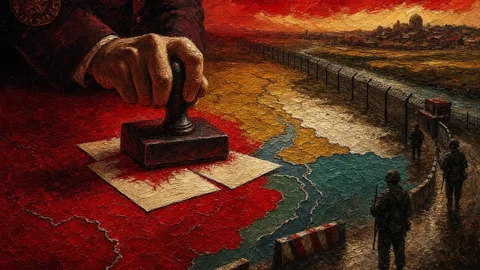
INVESTIGATION : Russia's FSB Erases 4 Ukrainian Regions' Border…
Not an assault, not an ultimatum, not a televised proclamation from…

COLUMN : Europe Moved 8.5 Billion Euros in a…
That is what the European Commission says it has disbursed for…

INVESTIGATION: 36 States Sign in Chișinău — and the…
Thirty-four members of the Council of Europe, plus Australia, plus Costa…
Not all European voices welcome this extension. Some business circles, particularly in the energy and agri-food sectors, continue to denounce the economic consequences of sanctions on their own activities, pointing to rising energy costs and the loss of historic commercial outlets with Russia.
These criticisms, though a minority within European public debate, find an echo in certain nationalist or populist political parties advocating for a gradual normalization of relations with Moscow, a discourse that sometimes gains ground amid domestic economic difficulties specific to several European Union countries.
Why this discourse remains marginal and dangerous
This kind of discourse, however, ignores the fundamental reality of the conflict: as long as Russia continues waging a war of aggression against a sovereign European state, any economic normalization would amount to indirectly financing the Kremlin's war effort, a shortsighted calculation that the majority of European leaders rightly continue to firmly reject.
The firmness maintained by the Twenty-Seven, despite this internal pressure, demonstrates that Western solidarity remains, for now, sturdier than some pessimistic analysts predicted at the start of the conflict in 2022.
Concrete repercussions for Russian companies and their foreign subsidiaries
A domino effect on financial intermediaries
Beyond the major banks directly targeted, this new round of sanctions produces a domino effect across the entire financial ecosystem orbiting Russia. Many institutions in third countries, particularly in Central Asia and certain Gulf states, find themselves forced to strengthen their own compliance controls to avoid being targeted themselves by American or European secondary sanctions.
This indirect pressure considerably complicates life for Russian companies that had until now tried to circumvent restrictions via complex financial structures registered in third-country jurisdictions, a phenomenon that European investigators specializing in sanctions evasion have been closely monitoring for several months.
The growing weight of cryptocurrency surveillance
The inclusion of about ten cryptocurrency platforms in this new sanctions package reflects a belated but welcome realization: Russian actors have massively used digital currencies to bypass the traditional Western financial system since the start of the conflict, a blind spot that European regulators are now actively working to close.
This technical evolution of the sanctions apparatus shows that the European Union has learned from its own past shortcomings, gradually adapting to the new evasion methods developed by Moscow and its financial intermediaries over the years of war.
The wider geopolitical dimension of this European firmness
A signal sent to China and other partners of Moscow
This one-year extension is not addressed solely to Moscow. It also constitutes a message to the powers that continue maintaining close economic ties with Russia, first and foremost China, whose massive purchases of Russian oil and gas allow Vladimir Putin to partly offset the losses caused by Western sanctions.
By maintaining constant, predictable pressure over the long term, the European Union also seeks to deter other international actors, notably Iran and North Korea, from further strengthening their military and economic cooperation with the Russian regime, cooperation that has already resulted in deliveries of drones and munitions to the Ukrainian front.
Transatlantic coherence put to the test
This European firmness takes on particular resonance in the context of the sometimes ambiguous relationship the Trump administration has maintained on the Russian file. While Washington has in the past alternated between pressure and gestures of openness toward Moscow, the constancy displayed by Brussels with this one-year extension helps maintain a coherent Western line, independent of the fluctuations in American foreign policy.
This European strategic autonomy, acquired out of necessity in the face of the unpredictability of certain allies, could well become one of the lasting achievements of this crisis, strengthening Europe's ability to act independently on major international security issues.
Discover

EDITORIAL: Trump approves H200 chips for Beijing and takes…
On December 8, 2025, two announcements landed in Washington, the same…

INVESTIGATION: Beijing cuts Africa to 2.1 billion in loans…
2.1 billion — the lowest figure in almost twenty years, according…

SPECIAL REPORT: Beijing Promises Stimulus as Its Households Give…
That is the growth rate of Chinese industrial output in July,…
Conclusion: a firmness to be consolidated, not celebrated prematurely
A step in the right direction that must be followed by others
The decision to extend sanctions against Russia for twelve months rather than six undeniably constitutes a step in the right direction for the cohesion and credibility of European foreign policy. It reduces uncertainty, complicates the Kremlin's strategic calculations, and sends a signal of constancy that the West desperately needs after more than four years of war in Ukraine.
But this progress must in no way be seen as a sufficient victory. Actually adopting the 21st sanctions package, resolving the issue of frozen Russian assets, and reforming the unanimity mechanism that lets a single state block the entire system remain open, urgent, and decisive tasks for the outcome of the conflict.
Ukraine cannot wait for European bureaucratic slowness
Every month of delay in adopting tougher measures translates, on the ground, into additional lives lost in the trenches and under Russian bombardment. The European Union has shown, with this one-year extension, that it is capable of strategic constancy. It must now prove it is also capable of speed of execution, a quality that has too often been lacking since the start of this war.
By Maxime Marquette, columnist
Columnist's transparency note
Who I am and my acknowledged biases
I am a columnist, not a diplomat or an academically trained economist. My analysis of European sanctions mechanisms relies on close reading of official statements and specialized reporting, not on privileged access to internal European Council negotiations. My bias is clearly acknowledged: I support Western firmness against Russia and I consider Vladimir Putin the aggressor in this conflict.
What I don't know and my method
I cannot predict whether the 21st sanctions package will be adopted within the announced timeline, nor whether Hungary will eventually lift its usual opposition. My method consists of cross-referencing official European Union statements with analyses from several independent news agencies before formulating my editorial opinion on each development.
Sources
Primary sources
European External Action Service, sanctions extended by one year — June 26, 2026
Official confirmation of the extension until July 31, 2027 — June 29, 2026
Secondary sources
Reuters, European leaders agree to renew sanctions for 12 months — June 18, 2026
Global Banking and Finance Review, analysis of the historic decision — June 18, 2026
RBC-Ukraine, summit context and Zelensky's presence — June 19, 2026
RBC-Ukraine, details of the 21st sanctions package — June 18, 2026
Get the geopolitics analyses
Conflicts, powers, alliances: the MadMax thread without the noise.
Cite this article
Maxime Marquette (2026). The EU extends its Russia sanctions by a year, a firm signal that must continue. MadMax. https://mad-max.co/en/article/l-ue-prolonge-d-un-an-ses-sanctions-contre-la-russie-un-signal-de-fermete-qui-do
Read next
EDITORIAL: Trump approves H200 chips for Beijing and takes…
On December 8, 2025, two announcements landed in Washington, the same…
INVESTIGATION: Beijing cuts Africa to 2.1 billion in loans…
2.1 billion — the lowest figure in almost twenty years, according…
SPECIAL REPORT: Beijing Promises Stimulus as Its Households Give…
That is the growth rate of Chinese industrial output in July,…
Enjoyed this piece? Get the next one.
One chronicle a week, straight to your inbox. No noise.
This article was generated with AI assistance, under human supervision.
Comments
Be the first to weigh in.