

Kyiv buries its dead after the deadliest night of the year
On the night of July 1 to 2, 2026, Russia unleashed a barrage of 570 aerial weapons on Kyiv: 74 missiles and
- On the night of July 1 to 2, 2026, Russia unleashed a barrage of 570 aerial weapons on Kyiv: 74 missiles and
- Introduction: a capital brought to its knees but still standing
- A night of 570 weapons launched at civilians
Facts, quotes, and cited links remain in the body. Interpretations are framed as analysis or opinion according to the format.
Introduction: a capital brought to its knees but still standing
A night of 570 weapons launched at civilians
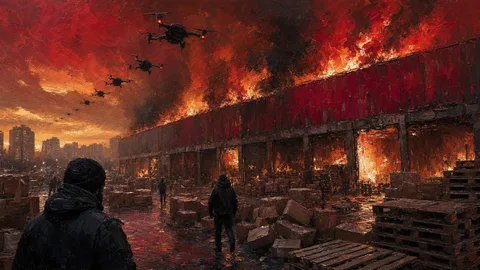
On the night of July 1 to 2, 2026, Russia unleashed a barrage of 570 aerial weapons on Kyiv: 74 missiles and 496 drones of various types, according to figures released by Interfax-Ukraine. Ukrainian air defense neutralized 524 targets, namely 48 missiles and 476 drones, but the sheer scale of the salvo was enough to turn several districts of the capital into fields of rubble.
Mayor Vitali Klitschko called this strike the most devastating Kyiv has suffered since the Russian invasion began in 2022, a chilling admission from a man who has watched his city absorb dozens of massive attacks over more than four years of war.
A death toll that kept climbing for two days
The human toll rose hour by hour: 13 dead announced early on the morning of July 2, then 17, 21, 27, 30, until the final count released on July 4 by Ukraine's State Emergency Service (DSNS): 31 dead and 102 wounded, according to the Kyiv Independent. Search and rescue operations officially concluded that day, after the last body was pulled from the rubble of a partially collapsed residential building in the Darnytskyi district.
A city declares mourning
Klitschko declares July 3 a local day of mourning
Vitali Klitschko announced on social media that July 3 would be declared a day of mourning in Kyiv, "in memory of the victims of the enemy's most massive attack on the capital." Flags were lowered, public celebrations suspended, and the city fell into a collective silence rarely seen since the war began.
This symbolic gesture, small as it may seem, carries real political weight: it reminds the international community that the war waged by Vladimir Putin against Ukraine takes no summer break and continues to strike civilians asleep in their beds.
More than 130 residential buildings hit
According to municipal authorities, more than 130 residential buildings were damaged across seven districts of the capital. A historic building dating back to 1901, located in the heart of Kyiv, was also struck, showing that neither heritage sites nor purely civilian areas were spared by this combined missile-and-drone strike.
Lives suspended under the rubble
A ten-year-old boy and a teenage girl reported missing
Among the most heartbreaking stories reported by Reuters were those of the parents of a ten-year-old boy, hospitalized after the attack, and a fifteen-year-old girl, both unreachable for hours while rescuers combed through the ruins of a building in the Darnytskyi district. These individual stories, multiplied dozens of times across the city, put a human face on otherwise cold statistics.
Forensic experts had to work on identifying body fragments, a grim task that partly explains why the final toll was not confirmed until two days after the initial attack.
A metro that saved tens of thousands of lives
The Kyiv metro sheltered a record 52,500 people, including nearly 4,500 children, during the Russian attack, according to data published by the network's operator on Telegram. That figure alone says everything about the panic and fear that swept through the Ukrainian capital that night.
A Ukrainian response that limited the worst
Air defense that intercepted the overwhelming majority of threats
On the same topic
ANALYSIS: 800 drones over Russia in one night —…
More than eight hundred drones, in a single night, August 14…

SPECIAL REPORT: Beijing Promises Stimulus as Its Households Give…
That is the growth rate of Chinese industrial output in July,…

ANALYSIS: Marcos Talks Drilling With Beijing While His Fishermen…
That is what moves through the South China Sea every year.…
Of the 570 weapons launched by Russia, Ukrainian forces neutralized 524, an impressive interception rate that shows the growing sophistication of Kyiv's air defense, heavily bolstered by Western deliveries of systems like American Patriots and European interceptors.
Without this defense capacity, patiently built since 2022 thanks to Western military aid, the human and material toll of that night could have been far heavier, a fact that commentators quick to declare Western military aid "useless" should reflect on.
President Zelensky promises a response
President Volodymyr Zelensky stated that Russia would face retaliation after this massive combined strike, while praising the work of first responders who, in his words, "are clearing rubble, searching for people, and delivering help" across the capital.
The context of a war with no truce in sight
The worst attack of the year on the capital
According to Reuters, this strike is the deadliest attackKyiv has suffered since the start of 2026, surpassing in intensity the previous massive waves the capital has already absorbed since the invasion began. It comes at a moment when diplomatic discussions over a possible ceasefire appear stalled.
This persistence of Russian violence, despite more than four years of war and considerable losses within the Russian army itself, shows just how determined Vladimir Putin's regime remains to break the morale of the Ukrainian civilian population rather than seek a sincere negotiated outcome.
A capital that refuses to bend
Despite the scale of the destruction, life resumed in unaffected districts the very next day after the attack, a resilience reflex that has become an almost tragic routine for Kyiv's residents after more than four years of open war on Ukrainian soil.
International reactions and the silence that weighs
A condemnation that must translate into action
Ukraine's Western partners, as after every massive attack, firmly condemned this strike. But the question now, after more than four years of war, is whether these verbal condemnations will keep translating into concrete deliveries of additional air defense systems, even as some allies show signs of budget fatigue over the war effort.
Ukrainian Foreign Minister Andrii Sybiha issued a direct appeal to international partners after "the night of horror" endured by Kyiv, warning that the toll could still rise as searches continued.
The ongoing test of Western solidarity
Every massive attack of this kind is a real-world test of Western solidarity: will funding continue for interceptors, radars and reconstruction, or will fatigue eventually overtake the outrage expressed after each deadly strike.
What this night reveals about fatigue and resilience
The risk of dangerous normalization in the West
After more than four years of war, there is a real risk of media normalization of these massive attacks. Every new strike, however terrible, sometimes seems to occupy a shorter and shorter place in the Western news cycle, drowned out by other international crises and domestic economic concerns.
This informational fatigue may be the most insidious outcome the Kremlin seeks: not military victory on the ground, but the psychological exhaustion of Western willingness to keep funding and arming Ukraine over the long haul.
Reconstruction, a challenge that begins even before the war ends
Beyond the human toll, Kyiv's municipal authorities must already plan the reconstruction of the 130 damaged residential buildings, a colossal project on top of dozens of others undertaken since 2022 in Ukrainian cities hit by Russian bombing. This cycle of destruction and endless reconstruction illustrates the sheer economic burden the war is placing on the Ukrainian state, on top of the already immense human cost.
International donors, including several Western countries, will once again be called on to help fund this partial reconstruction, an effort that cannot substitute for the more immediate priority: ending the bombing itself.
Western air defense put to the test
American Patriot systems at the heart of the shield
Patriot missile batteries supplied by the United States, supplemented by European interceptors and locally developed electronic warfare systems, form the backbone of the air defense that intercepted 524 of the 570 weapons launched on the night of July 1 to 2. Without this Western support, patiently built since 2022, the human toll could have been several times higher.
Every additional delivery of interceptor munitions, often negotiated through painful budget fights in Western parliaments, translates directly into civilian lives spared in Kyiv and in other major Ukrainian cities regularly targeted by Russia.
The debate over the durability of military support
This attack inevitably revives a debate that has recurred for more than four years, over the durability of Western military support for Ukraine. Some lawmakers, particularly in the United States, argue for reducing aid, while others in Europe call instead for accelerating deliveries given the clear intensification of Russian strikes.
Conclusion: a day of mourning that must remain a cry of alarm
Thirty-one lives that will not return
The final toll of 31 dead and 102 wounded will stand as the tangible trace of the deadliest night Kyiv has endured since the start of 2026. Behind every number lies an individual story, a broken family, a building that will never be rebuilt exactly as it was.
The day of mourning declared by Vitali Klitschko erases nothing, but it forces the city, and the world beyond it, to pause for a moment on the human price paid daily by Ukrainian civilians in this war of aggression.
What the West must take from this
This attack is a reminder, once again, that the war waged by Russia against Ukraine is neither frozen nor easing. It demands from the West a steadiness in military and humanitarian support that cannot afford any letup, lest nights like that of July 1 to 2, 2026, keep repeating themselves.
Discover

INVESTIGATION: Beijing cuts Africa to 2.1 billion in loans…
2.1 billion — the lowest figure in almost twenty years, according…
SPECIAL REPORT: Beijing Promises Stimulus as Its Households Give…
That is the growth rate of Chinese industrial output in July,…

INVESTIGATION: Two Chinese Ex-Soldiers Arrested in Seoul as 18,000…
For five years, a man ran a military-supply shop at the…
By Maxime Marquette, columnist
Columnist's transparency note
Who I am and my declared biases
I write this piece as an openly pro-Ukraine and pro-Western columnist, convinced that defending Kyiv against Russian aggression is a just cause deserving unwavering Western support. This conviction colors my reading of events, but every figure cited here comes from verifiable journalistic and institutional sources, cited in full below.
I have no personal connection to the victims of this attack and I claim no firsthand testimony from the ground: my role is to analyze and contextualize information reported by journalists and official services present on site.
What I don't know, and my method
I cannot guarantee that the toll of 31 dead is definitively final, as tolls of this kind are sometimes revised in the weeks following a massive attack. My analysis relies exclusively on the sources cited at the end of the article, and I will remain attentive to any official update that might change the figures presented here.
Sources
Primary sources
Rescuers scour rubble as Kyiv mourns deadliest Russian attack in 2026 — The Straits Times
Ukrainian rescuers clear rubble as Kyiv mourns 30 killed in Russian attack — Reuters, July 3, 2026
Massive Russian missile, drone attack on Kyiv kills at least 31, injures over 100 — The Kyiv Independent
Secondary sources
Video of the Russian Federation's massive strikes on Kyiv on 2 July — Censor.NET
Ukraine, Kyiv deadliest attack 2026 — ABC News Australia, July 3, 2026
Day of mourning declared in Kyiv on July 3 – mayor — Interfax-Ukraine, July 2, 2026
Death toll from Russian attack on Kyiv on 2 July rises to 31 — Ukrainska Pravda, July 4, 2026
Get the geopolitics analyses
Conflicts, powers, alliances: the MadMax thread without the noise.
Cite this article
Maxime Marquette (2026). Kyiv buries its dead after the deadliest night of the year. MadMax. https://mad-max.co/en/article/kyiv-enterre-ses-morts-apres-la-nuit-la-plus-meurtriere-de-l-annee
Read next
INVESTIGATION: Beijing cuts Africa to 2.1 billion in loans…
2.1 billion — the lowest figure in almost twenty years, according…
SPECIAL REPORT: Beijing Promises Stimulus as Its Households Give…
That is the growth rate of Chinese industrial output in July,…
INVESTIGATION: Two Chinese Ex-Soldiers Arrested in Seoul as 18,000…
For five years, a man ran a military-supply shop at the…
Enjoyed this piece? Get the next one.
One chronicle a week, straight to your inbox. No noise.
This article was generated with AI assistance, under human supervision.
Comments
Be the first to weigh in.