

ESSAY: Why Canada owes Trump no “Sir, we are sorry”
On Monday, September 28, in the Oval Office, Donald Trump predicted that Canada would soon come to him and say, “Sir, we are sorry.”
- On Monday, September 28, in the Oval Office, Donald Trump predicted that Canada would soon come to him and say, “Sir, we are sorry.”
- On Monday, September 28 , in the Oval Office, Donald Trump predicted that Canada would soon come to him and say, “Sir, we are sorry.”
- It is an order, with a deadline.
Facts, quotes, and cited links remain in the body. Interpretations are framed as analysis or opinion according to the format.
A word said at the door
A national reflex
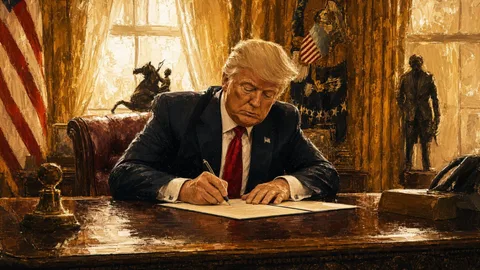
On Monday, September 28, in the Oval Office, Donald Trump predicted that Canada would soon come to him and say, “Sir, we are sorry.”
That is not a forecast. It is an order, with a deadline.
Sorry. Up here, it is the word you say to the person who just stepped on your foot.
We say it on the subway, when a shoulder bumps ours. We say it at the door, holding it a second too late. We say it to the cashier, for a coin that rolls under the counter. We say it on the phone, before we even understand the complaint. Above all, we say it when the fault is someone else’s.
It is a national courtesy. Not a confession.
The word costs nothing. It softens. It defuses. It commits no one.
Tuesday, one minute past midnight
A few hours after those words, at 12:01 a.m. this Tuesday, September 29, a U.S. ban took effect on imports of certain alcohol products, dairy by-products, molasses and motorcycles from Canada.
This time, nobody holds the door. It swings shut.
Up here, sorry is what you say while holding the door.
Three or four weeks
The Oval Office, September 28
Trump was taking questions from reporters on the sidelines of an announcement, hours before the ban, Radio-Canada reports.
He said three or four weeks. He said Canada would then come and promise to get rid of all its tariffs.
He said: “We’re going to win everything.”
He also said, according to The Canadian Press, that Canada had treated the United States very, very badly.
He said Lake Ontario was now America’s lake, smiling as he said it, according to Radio-Canada. And he said, finally, that Canadians call him all the time.
Five lines in a few minutes.
Not one describes a negotiation. Every one describes a surrender.
The same line he uses on Iran
They call all the time, he says. Radio-Canada notes that Trump is serving up the same argument he uses about Iran, seven months into the Israeli-American offensive.
A lifelong ally, a regime at war. The same sentence.
And then the deadline. Three or four weeks is a stopwatch set on the table. You don’t set a stopwatch in front of a partner. You set it in front of someone who is expected to cave.
A stopwatch is not a negotiation.
The title of Sir
Who says Sir
The detail that matters is not “sorry.” It is the first word.
Sir.
It is what the employee says to the boss who holds his contract. It is what the driver says to the trooper who holds his licence. It is what the traveller says to the officer who holds the gate.
A word from the service window. A word from the roadside. The word of someone waiting for others to decide for him.
Between two sovereign states
Between two states, courtesy travels both ways. It does not only climb.
Trump is not asking for courtesy returned. What he describes looks like rank.
The same day, he said of Canada: “they’re not a state.” This from a man who has said again and again, Radio-Canada recalls, that Canada should become the 51st.
Not a state when it comes to rights. A future state when it comes to territory.
The word he chose is no accident of language. It draws a hierarchy. It makes it audible.
Sir is the word of someone waiting to hear his fate.
The September 8 proclamation
A withdrawal, in writing
There is one text in which Washington spells out, in black and white, what it holds against Canada. Trump signed it on September 8.
The proclamation finds, according to the White House, that Canada bans the purchase, distribution and retail sale of American alcohol while sparing that of other countries.
It recalls a three-day suspension granted on August 18, because Canada had committed to withdrawing the measure. It asserts that on August 21, Canada reneged on that commitment.
It bars imports of certain Canadian alcohol products as of September 29, 12:01 a.m.
The missing word
I read it in full. It speaks of discrimination, of withdrawal, of suspension, of revocation. It never speaks of an apology.
His proclamation asks for a withdrawal, not forgiveness.
Discover

SPECIAL REPORT: Brussels sanctions a camp called Peace and…
Romashka, Sputnik, Raduga, Mir, Leto, Vita: the Official Journal of the…

COLUMN: At 54 Volodymyrska Street, Moscow burns the address…
A Russian jet-powered drone struck the presidium building of the National…

OPEN LETTER: Leo XIV, you quote Benedict XV, so…
Holy Father, on September 28 in Metz, you asked Europe to…
So I stand with those who have been paying since 12:01 a.m. Tuesday, against the apology demanded Monday in the Oval Office, because the proclamation signed September 8 asks only for a measure to be withdrawn.
What the president demands at the microphone, his own document does not.
Paper commits. The microphone belittles. They are different tools.
A withdrawal can be negotiated. An apology cannot be ordered.
What an apology requires
A fault and an author
An apology requires a fault. An apology requires an author who owns it, in his own words. An apology requires a wrong that can still be put right. An apology requires, finally, that whoever receives it agrees to turn the page.
Remove any one of the four. What remains is something else.
An apology is not a tariff. It is not collected at the border.
On Monday, the fault had several faces. Military aid, icebreakers, energy, softwood lumber, Radio-Canada lists. Agricultural duties, too, on which Trump repeated false claims, according to The Canadian Press.
Which one, exactly?
The apology under duress
An apology demanded by the man who has just closed the border changes its nature. It repairs nothing. It shows, before witnesses, who bent.
And yet the idea has its logic. If Canada apologizes, Washington no longer has to prove the fault. The admission stands in for the evidence.
A child who says sorry because someone is twisting his arm has understood nothing about his fault. He has only learned who holds the arm.
That is the whole point.
Extracted, an apology becomes a signature.
Ninety-five percent
Monday’s number
That same Monday, Trump offered a number. Canada, he said, does 95% of its business with the United States, according to Global News.
Then this: “There’s nothing they have that we need.”
The number is the foundation. Everything else rests on it.
Statistics Canada, February 19
On February 19, Statistics Canada published its review of 2025. The share of Canadian merchandise exports bound for the United States fell from 75.9% in 2024 to 71.7% in 2025.
Exports to other countries jumped 17.2% in a single year.
Monday’s number is false. February’s is heavy.
Heavy, but not 95. Between the two, more than twenty points. Twenty points of customers somewhere else.
An apology demanded on the strength of a false number…
We know how this goes. We pay for it anyway.
False number, false debt.
Who feels entitled
The charge from the Oval Office
“They feel entitled,” Trump said. He added, in Radio-Canada’s account, that Canada was one of the worst countries in the whole world.
The verb matters. Feel. He is not faulting a dated act. He is faulting an attitude.
The charge deserves to be taken seriously. Let’s turn it around and look.
In this story, who expects something while offering nothing?
Who expects to be paid
It is the one who sets a date to receive an apology. It is the one who announces, conceding nothing, that he will win everything. It is the one who says he needs nothing, then blocks at customs the very things he supposedly doesn’t need.
The United States imported about US$967 million of those products in 2025, according to the Congressional Research Service.
You don’t do without what you buy. You deprive yourself.
Entitled is the word for someone who believes the world owes him something. It describes the demand better than the country it targets.
Whoever sets the date for the apology is the entitled one.
August 21, according to Washington
The August 18 promise
Washington’s strongest argument is not in the Oval Office. It is in the proclamation, and it has to be read as written.
On August 18, the White House writes, Canada committed to withdrawing its measure against American alcohol. On the 21st, it allegedly stopped negotiating in good faith.
And our shelves really are empty of American alcohol. All provinces and territories except Alberta and Saskatchewan maintain their ban on the sale of U.S. alcohol, Global News reports. Saskatchewan added a 50% levy on September 8, according to the proclamation.
Ottawa, for its part, hit back. Counter-tariffs on $27.6 billion of American goods since September 8, according to the Congressional Research Service.
The Congressional Research Service confirms the sequence: a suspension on August 18 on the strength of progress in the talks, then duties in force on the 22nd, with no deal.
A country that promises and then fails to deliver owes something. The argument is not weak.
The shelves of March 2025
It does have a starting point, though. Most provincial premiers pulled American bottles in March 2025, in response to tariffs Washington had just imposed, CBC News recalls.
And August 21 has two versions. Mark Carney cited three reasons for leaving the table, Global News reports: last-minute tariff changes, an American wish to weigh on our other partnerships, and demands that, in his view, undermined the French language and culture.
Even taken whole, Washington’s version would call for a negotiated withdrawal. Not a bended knee.
The fault has a date. It also has a beginning.
On the same topic
COMMENTARY: Trump’s Iowa steel mill is good news due…
On September 28, in the Oval Office, Donald Trump announced a…

ANALYSIS: Trump says he offered Iran nothing. His own…
On September 28, Axios reported, citing American officials, that Donald Trump…

SPECIAL REPORT: Trump’s 100% tariff on patented drugs spares…
Since 12:01 a.m. this Tuesday, September 29, a 100% duty has…
Seventy-one point seven
Nearly three dollars in four
I have to set down here what bothers me.
Trump is wrong about 95%. He is not wrong about the balance of power.
Nearly three of every four dollars of our merchandise exports went to his country in 2025, according to Statistics Canada. The rest of the world together took a little more than one in four.
When he says we need him more than he needs us, he exaggerates. He does not make it up.
We sell elsewhere more than we used to. We do not yet sell elsewhere as much as we sell south.
A real imbalance of power
On September 9, Candace Laing, president of the Canadian Chamber of Commerce, called the bans “a tornado of changes at once, intended to overwhelm,” Global News reports. You only overwhelm someone smaller than you.
That is true. And it does not change this: the imbalance forces us to negotiate. It forces no one to say Sir.
And yet I understand the opposite temptation. Say the subway word, once, in passing. Buy peace. Reopen the border.
Sorry would then become a signature at the bottom of a deal.
I understand. I refuse.
Dependence forces us to talk. Not to bow.
LeBlanc’s written statement
The minister’s spokesperson
On Monday, Ottawa’s answer came as a written statement from the office of Dominic LeBlanc, the minister responsible for Canada–U.S. trade.
His spokesperson, Gabriel Brunet, writes that the priority remains, as it has been for 18 months, to protect workers, farmers, families and businesses from measures he considers unjustified, according to The Canadian Press.
The office takes note of the ban’s entry into force. It says it is focusing on what Ottawa can control.
Taking note
Takes note. A clerk’s phrase.
A short sentence against a long one. That is a choice.
You could read it as an absence. I read something else: a refusal to step onto the stage that was being offered.
Answering the Oval Office in the same tone would already mean accepting the room, the schedule and the role.
The statement does not say when the table will reopen. It answers neither the 95%, nor the lake, nor the Sir. Nor does it say sorry.
Restraint is not absence.
One minute past midnight, Tuesday
A billion in small pieces
The Bank of Montreal puts the value of the newly banned products at about US$1 billion, according to The Canadian Press.
On a national scale, that is small. Several experts cited by Radio-Canada expect the overall economic effect to be negligible.
On the scale of a distillery, a dairy, a motorcycle shop, it is not an average. It is a customer who vanishes at 12:01.
Years to build
Wine Growers Canada puts it bluntly, as Global News reports: “Even a temporary loss of access can have lasting consequences,” because relationships with importers and retailers take years to build.
Years to build. One night to shut.
A distillery does not empty its barrels in a week. A dairy does not find another buyer from one month to the next.
The carton stays on the pallet. The tape is down, smooth under the thumb. Nobody will cut it for a long while.
These people negotiated nothing. They reneged on nothing on August 21. Yet they are made to pay for the apology before it has even been said.
They pay.
One minute past midnight apologizes to no one.
Fair, and winning everything
A “fair” deal
That leaves the most convenient argument: this is negotiation. Trump pushes, then he signs.
He said so himself on Monday. A deal will be made, he said, and “it’s going to be a fair deal.”
In the same exchange, he announced he would win everything.
A deal in which one side wins everything is not fair. It is a receipt.
In the remarks reported Monday by The Canadian Press and Radio-Canada, Canada is offered nothing in return. Not one thing.
A pause with no urgency
His trade representative, Jamieson Greer, said Friday on CNBC that there was no urgency on the American side, according to The Canadian Press.
The talks have been mostly on pause since August, Global News writes.
A negotiation with no urgency, yet with a date set for the apology…
A negotiation runs on two calendars. This one has only one.
And yet we are asked to see strategy in it. I see a one-way calendar.
Fair and winning everything cannot stand together.
The bottle and the word
What can be withdrawn
Here is my proposal. Separate the bottle from the word.
The American law Trump invoked provides for it, according to his own proclamation. A proclamation can be suspended. A proclamation can be revoked. A proclamation can be supplemented or amended.
A provincial measure can be discussed the same way. A levy can be revised. A shelf can be restocked.
The provinces pulled those bottles. They can put them back. That is their calculation, and their price.
These are trade moves. They are paid for with moves in return, dated and written down.
What cannot be said
The word, on the other hand, is not up for negotiation. An apology cannot be revoked. A country that says Sir once will say it again at the next proclamation.
This is not pride. It is arithmetic: an apology won under a ban would teach whoever won it that bans work.
Sorry will stay our subway word. It will not become our customs word.
We can give back a bottle. Not a word.
The only sorry we have left
Between October 19 and 26
Three or four weeks, Trump said Monday. The calendar lands somewhere between October 19 and 26.
The September 8 proclamation sets no end date. Our shelves will stay as they are.
I will admit some unease. I am one of those people who apologize when someone bumps into them. I do it without thinking. On Monday, I understood that the reflex also reads, elsewhere, as a weakness to exploit.
The reflex is not a weakness. It assumes a world where the person across from you apologizes too.
The word we keep
Can we give the shelves back an American bottle without giving Washington the word it demands?
The only sorry we have left belongs to those who have been paying since 12:01.
To them, we can say it. And we owe them more.
Shelves, perhaps. Never “Sir, we are sorry.”
Sources:
Primary Sources:
- The Canadian Press via L’actualité — Trump expects an apology, LeBlanc’s office responds, September 28, 2026
- White House — proclamation barring certain Canadian alcohol imports from September 29, September 8, 2026
- Statistics Canada — The Daily, merchandise trade and the U.S. share in 2025, February 19, 2026
Secondary Sources:
Get the geopolitics analyses
Conflicts, powers, alliances: the MadMax thread without the noise.
Cite this article
Maxime Marquette (2026). ESSAY: Why Canada owes Trump no “Sir, we are sorry”. MadMax. https://mad-max.co/en/article/why-canada-owes-trump-no-sir-we-are-sorry
Read next
SPECIAL REPORT: Brussels sanctions a camp called Peace and…
Romashka, Sputnik, Raduga, Mir, Leto, Vita: the Official Journal of the…
COLUMN: At 54 Volodymyrska Street, Moscow burns the address…
A Russian jet-powered drone struck the presidium building of the National…
OPEN LETTER: Leo XIV, you quote Benedict XV, so…
Holy Father, on September 28 in Metz, you asked Europe to…
Enjoyed this piece? Get the next one.
One chronicle a week, straight to your inbox. No noise.
This article was generated with AI assistance, under human supervision.
Comments
Be the first to weigh in.