

REVIEW: Navarro faults Ottawa for siding with Beijing as his own list lets U.S. lobster in
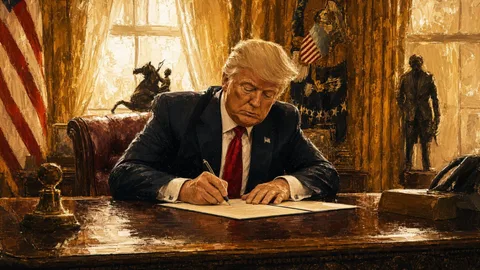
Peter Navarro, Donald Trump’s trade adviser, accused Canadians on Monday, September 28, in the Oval Office, of getting into bed with China to turn it against the United States, Radio-Canada reports.
- Peter Navarro, Donald Trump’s trade adviser, accused Canadians on Monday, September 28, in the Oval Office, of getting into bed with China to turn it against the United States, Radio-Canada reports.
- September 28, in the Oval Office
- Peter Navarro, Donald Trump’s trade adviser, accused Canadians on Monday, September 28 , in the Oval Office, of getting into bed with China to turn it against the United States, Radio-Canada reports.
Facts, quotes, and cited links remain in the body. Interpretations are framed as analysis or opinion according to the format.
A lobster on ice
September 28, in the Oval Office
Peter Navarro, Donald Trump’s trade adviser, accused Canadians on Monday, September 28, in the Oval Office, of getting into bed with China to turn it against the United States, Radio-Canada reports.
The day before, the White House had published a list of American products that Beijing will be able to import at reduced duties.
On that list, there is a lobster.
A crate, some ice
A live lobster travels badly, and at great cost. Claws banded with rubber. Ice melting in a foam crate. An overnight flight to Asia.
The fisher who hauled it up does not know the buyer in Shanghai. He knows the price at the wharf. He knows the cold in his hands at dawn. He knows the weight of a full trap.
That lobster can come from Nova Scotia or from Maine. The same animal. Two flags.
It does not vote. It does not negotiate. It sells.
Two flags, one animal.
What Navarro said
The Oval Office, Monday
Standing behind Trump, Navarro first talked about Canada’s negotiators. In Trump’s first term, he said, they were the toughest and the most arrogant, Radio-Canada reports.
Then he drew up a list. In his telling, Canada takes advantage of the United States in almost every area: softwood lumber, aluminum, steel, dairy.
Then this sentence, about Canadians. They are giving away their country, he added.
They like to go after Trump because it pays politically, he also said, but it is Canadians who pay the price.
Four products. Four grievances. One accusation.
In what Radio-Canada and The Canadian Press report, Navarro says not one word about the list published the day before.
Softwood first
According to The Canadian Press, he also claimed that Ottawa is allying itself with Beijing, even though Trump himself had hosted Xi Jinping in Washington the week before.
Radio-Canada chose an adverb to describe the scene. Ironically.
I will be more precise than the adverb. I will read the list. Line by line. No adverb.
An accusation can be checked. So can a list.
1,619 lines
China’s list
On September 27, the White House posted the documents of the new U.S.–China trade council.
One of them is titled, in Chinese, list of products imported by China. It runs to 1,619 tariff lines. These are American products.
In return, Washington would cut its duties on 77 categories of Chinese goods: toys, Christmas decorations, fireworks, tableware, the Associated Press reports.
There are working procedures. There are terms of reference. There are two lists.
Each list is worth about US$30 billion, according to the terms of reference published the same day. The values were calculated on 2024 bilateral trade.
And yet neither the list nor the terms of reference mention Canada.
Seventy-seven in return
More than 90% of the products would get the most-favoured-nation rate, China’s Commerce Ministry said, according to the AP. Country-specific duties would in practice disappear.
Here are my three tests, before any judgment. Does the list hold the line against Beijing? Is it consistent with what Washington demands of its allies? And who pays for what it opens?
The first looks at Beijing. The second looks at Washington. The third looks at the wharf.
Three questions, and one list to answer them.
Our products, their list
Line 219
I read all 1,619 lines. I find no country named. I find products. Often, they are ours.
The list includes live, fresh or chilled lobster, line 219. The list includes crab, northern shrimp, scallops, sea cucumber. The list includes canola seed, its oil and its meal. It includes dried peas, lentils, wheat, barley, pork, beef. It includes coking coal, spruce and fir logs, and spruce and fir lumber.
Even maple syrup. Line 977. Even American ginseng. Even whisky.
Same lobster, same Beijing
Same lobster, same Beijing, different flag.
I am not saying these lines target Canada. Nothing in the document says so.
I am saying what they do. They offer our competitors to the south, in the Chinese market, the same doors we negotiated this winter.
So this piece says the September 27 list is, first of all, this: Washington does with Beijing what it blames Ottawa for, and it does it with our products.
Two producers of lobster, canola, lumber, pork. One customer both are courting. The list changes the order of the line.
The same inventory, signed by a different neighbour.
Seven percent, seventeen percent
The USDA report
On April 1, 2026, the U.S. Department of Agriculture’s Foreign Agricultural Service published a report from its Beijing office.
On March 1, 2026, it writes, China lifted the additional 25% duty on Canadian lobster and snow crab. Canadian lobster went back to the most-favoured-nation rate, 7%.
American lobster remained subject to an effective duty of 17%.
Seven. Seventeen. A 10-point gap. The lobster does not know the difference. The price does.
Lifting the 25% duty gave Canadian lobster back its price competitiveness, the USDA writes.
Five hundred fifty million
In 2025, China imported about US$550 million of live Homarus lobster, according to the same report.
Canada remained the top supplier, with US$348 million, down 43% under the retaliatory duty. The United States came next, with more than US$200 million, up 26%.
Five hundred fifty million is the size of the market. We had nearly two-thirds of it.
How much would we have left?
If Beijing applies to American lobster the rate promised for most of the list, the 10-point gap would melt away. Seven against seven.
Ten points. That was our lead since March 1.
Seven percent was our edge. It would be their catch-up.
Navarro’s lumber
A complaint at the microphone
Navarro named softwood lumber first in his list of grievances on Monday.
The list signed with Beijing asks China to cut its duties on spruce and fir logs, on Douglas fir, on lumber of those same species.
The same wood. The same customer. Two countries. One complaint.
Spruce, fir, Douglas fir. Several lines, the same species as ours.
The customer across the Pacific
Canada sells its lumber south, and Washington holds it against us. Washington wants to sell its own west, and Beijing would welcome it at reduced duties.
There is nothing illegal in that. A country defends its sawmills. That is its right.
A country can want both markets, its neighbour’s and China’s. It cannot blame its neighbour for wanting the second.
And yet the government whose adviser denounces our lumber publishes a list that ships its own to China.
Lumber or betrayal, depending on who sells it.
Canola and peas
The January arrangement
In January 2026, Ottawa and Beijing reached a preliminary arrangement, according to Global Affairs Canada.
China undertook to bring its duties on Canadian canola seed down to about 15% by March 1. It undertook to spare canola meal, lobster, peas and crab from its retaliatory duties until the end of 2026. It also undertook to speed up the resumption of Canadian beef exports.
These are exactly the lines the American list now claims for its own producers.
Canola, peas, lobster, crab. The same words. Two lists.
Six billion in seed
In 2024, Canada exported about $6 billion of canola seed, according to RBC Economics. Saskatchewan, Alberta and Manitoba together supplied about 4 billion of it. In September 2024, China took just under 80%.
China was also, in 2024, the top market for British Columbia’s seafood, $257 million, and the second for Nova Scotia’s, $610 million, according to the same analysis.
The truce is only guaranteed until the end of 2026, and a 15% duty on canola could still slow sales, RBC warns.
Entire provinces have a customer in China. That customer has just received another offer.
Our fishers negotiated the door. Others are walking through it.
Forty-nine thousand cars
On the same topic

SPECIAL REPORT: Trump’s 100% tariff on patented drugs spares…
Since 12:01 a.m. this Tuesday, September 29, a 100% duty has…
COMMENTARY: Trump’s Iowa steel mill is good news due…
On September 28, in the Oval Office, Donald Trump announced a…

ANALYSIS: Trump says he offered Iran nothing. His own…
On September 28, Axios reported, citing American officials, that Donald Trump…
The awkward fact
Now we have to look at what Navarro is aiming at, and grant him what is true.
In the January arrangement, Ottawa undertook to give Chinese electric vehicles an initial quota of 49,000 units a year, at a 6.1% rate, according to Global Affairs Canada.
The rapprochement exists. It has a number, a rate, a date.
I consider Beijing the foremost threat facing the West. This quota bothers me. I am putting it in writing.
What the quota does not change
So Navarro has a fact. He does not have the whole story.
He is not inventing a rapprochement. He inflates what it means, and he forgets another one.
In February, Trump wrote that a deal with China would slowly destroy Canada, Radio-Canada recalls. Seven months later, his administration publishes 1,619 lines of opening with Beijing.
True, our quota exists. It does not change this: a country cannot blame its ally for the road it is taking itself, with a longer list.
Forty-nine thousand cars against 1,619 lines.
What Washington kept
Chips, cars, batteries
We also have to name what this list gets right. My first test requires it.
Semiconductors, electric vehicles and batteries are excluded, the AP reports.
On the list, no chips. On the list, no batteries. On the list, no electric cars.
The strategic sectors stay closed.
The average U.S. duty on Chinese goods would go from about 22% to 20.5%, according to the same dispatch. It stays far above the roughly 11% before Trump’s return.
Thirty billion, a window
U.S. Trade Representative Jamieson Greer speaks of non-sensitive goods in each direction, according to the AP.
China exported about $270 billion to the United States through August, the AP adds. Thirty billion is a window, not a door. Less than a tenth of that trade.
On my first test, the list passes. Without reservation.
On the strategic line, Trump gives up almost nothing. It is a good move, and I call it one.
There is a flip side, though. What Washington calls non-strategic is our livelihood. Lobster, canola and lumber are only sensitive for the people who live off them.
Closed on chips, open on lobster.
The same Beijing
Double standard
So here is the full map.
Washington protects its chips from Beijing. Washington opens its lobster, its canola, its lumber to Beijing. Washington accuses Ottawa of allying with Beijing.
All three sentences are true at once.
Who pays the gap
Discover

SPECIAL REPORT: Brussels sanctions a camp called Peace and…
Romashka, Sputnik, Raduga, Mir, Leto, Vita: the Official Journal of the…

COLUMN: At 54 Volodymyrska Street, Moscow burns the address…
A Russian jet-powered drone struck the presidium building of the National…

OPEN LETTER: Leo XIV, you quote Benedict XV, so…
Holy Father, on September 28 in Metz, you asked Europe to…
The first protects the West. The second competes with an ally. The third blames that ally for going after the same customer first.
The person who pays the difference was not in the Oval Office. That person fishes in Nova Scotia. Sows canola in Saskatchewan. Saws spruce in British Columbia.
His lobster sales to China fell 43% in 2025, under a retaliatory duty. He was barely recovering.
Competition, he knows. The accusation of betrayal, less so.
Competition is a rule. The accusation is a choice.
Shared customer, shared door, only one accused.
What the list leaves out
Under each country’s procedures
We also have to measure the limits of this document. They are real.
The terms of reference state that future cuts will be set and applied under each country’s domestic legal procedures. Nothing is in force yet.
More than 90% of the lines, Beijing says, according to the AP. Not all. The exact rate for American lobster is not written in the list.
One review a year
The two capitals do not plan to adjust the lists more than once a year, according to the terms of reference.
More meetings between Trump and Xi are planned for November and December, the AP reports.
The document sets no implementation timetable. Each capital keeps control of its own.
A list is not a tariff. Not yet.
So the door is not open yet. It has been pointed out…
A list points. A tariff opens.
The Qingdao expo
The Beijing agricultural office
The USDA report ends with a section on trade promotion. It hides nothing.
The U.S. agricultural office in Beijing keeps accompanying American exporters to seafood shows in China, it writes.
It cites the annual Qingdao fisheries expo, one of the largest in the world.
Qingdao is a trade show. People shake hands there. They sell lobster there.
China is looking to diversify its seafood suppliers, the report also notes, which sharpens competition among exporting countries.
Against competing suppliers
The goal, according to the report: to better position American lobster against competing suppliers.
The top competing supplier, in the same report, is called Canada.
And yet nowhere does the report speak of getting into bed with Beijing. It speaks of exporters.
The USDA is doing its job. It defends its exporters. That is exactly what Ottawa did in January.
That is the right word. It should apply to everyone.
At home, selling to Beijing is called exporting.
Arrogant, he said
Giving away a country
Back to Navarro’s sentence. They are giving away their country, he said of Canadians.
To give away is to grant something you are not obliged to grant. The September 27 list grants Beijing 77 categories at reduced duties. In exchange, it asks for access for 1,619 lines.
That is a trade. I will not call it betrayal. I only ask for the same word for us.
The word is heavy. It needs proof. The list provides none.
Giving away, in Navarro’s mouth, targets a government. In fact, the word lands on fishers.
The right word
I admit to a certain weariness. Every week, an adviser in Washington describes us as an adversary, and every week we have to answer with tariff lines.
It is tedious. It is also the only answer that holds.
Arrogant is a word about character. I prefer lines: they can be checked.
Arrogant, Navarro said. The word sits badly on a country that negotiated for its fishers while its neighbour was accusing it.
Negotiating for your fishers is not giving away your country.
The same Beijing for everyone
The wharf, next winter
Since March, Canadian lobster has entered China at 7%, and American lobster at 17%, according to the USDA. Next winter, if the list is applied, they could meet at the same rate.
The Nova Scotia fisher will not read the terms of reference. He will see the price at the wharf.
In between, an adviser will have talked about arrogance. The price at the wharf does not talk.
The fisher’s question
Who will Ottawa have to answer to, the fishers who got their Chinese customer back or the advisers who accuse it of allying with Beijing?
The American list does not ask the question. It answers it for its own people.
Ottawa has to answer for ours. With lines, rates, dates.
The same Beijing for everyone. The blame, for us alone.
Sources:
Primary Sources:
- White House — list of 1,619 American products China will import at reduced duties, September 27, 2026
- U.S. Department of Agriculture — Canadian lobster at 7%, American lobster at 17% in China, April 1, 2026
- Global Affairs Canada — preliminary Canada-China arrangement on canola and electric vehicles, January 16, 2026
Secondary Sources:
Get the geopolitics analyses
Conflicts, powers, alliances: the MadMax thread without the noise.
Cite this article
Maxime Marquette (2026). REVIEW: Navarro faults Ottawa for siding with Beijing as his own list lets U.S. lobster in. MadMax. https://mad-max.co/en/article/navarro-faults-ottawa-for-siding-with-beijing-as-his-own-list-lets-us-lobster-in
Read next
SPECIAL REPORT: Brussels sanctions a camp called Peace and…
Romashka, Sputnik, Raduga, Mir, Leto, Vita: the Official Journal of the…
COLUMN: At 54 Volodymyrska Street, Moscow burns the address…
A Russian jet-powered drone struck the presidium building of the National…
OPEN LETTER: Leo XIV, you quote Benedict XV, so…
Holy Father, on September 28 in Metz, you asked Europe to…
Enjoyed this piece? Get the next one.
One chronicle a week, straight to your inbox. No noise.
This article was generated with AI assistance, under human supervision.
Comments
Be the first to weigh in.