

INVESTIGATION: Russia's Economy Under Bombs and Sanctions — The Cracks Are Widening
On June 20, 2026, the Bank of Russia cut its key rate from 14.5% to 14.25% — a reduction of only 25
- On June 20, 2026, the Bank of Russia cut its key rate from 14.5% to 14.25% — a reduction of only 25
- Introduction: The Bank of Russia Caught in a Vise
- A revealing monetary decision
Facts, quotes, and cited links remain in the body. Interpretations are framed as analysis or opinion according to the format.
Introduction: The Bank of Russia Caught in a Vise
A revealing monetary decision
On June 20, 2026, the Bank of Russia cut its key rate from 14.5% to 14.25% — a reduction of only 25 basis points, below market expectations. According to Euronews, analysts had expected a more significant cut, signaling sufficient economic confidence to normalize monetary policy. The timidity of this decision is itself a signal: the Bank of Russia is caught between two contradictory imperatives, unable to move decisively in either direction.
On one side, persistent inflation fueled by massive military spending, labor shortages (millions of men mobilized or fled abroad), and supply disruptions linked to sanctions. On the other, an economy under strain that would need lower rates to support non-military sectors. The Bank of Russia, by choosing a minimal cut, implicitly admits it has no good solution — only bad options managed to the minimum.
What this monetary signal says about the war economy
Monetary policy is an economic thermometer. When the Bank of Russia hesitates to cut rates despite deflationary pressures in some sectors, it is because inflation remains a real threat in others. In May 2026, Russian inflation was fed by a combination of explosive military spending, fuel shortages in 53 regions, and logistics disruptions that drive up the price of all consumer goods. The Bank of Russia is swimming in the contradictions of an economy distorted by war.
It is this structural distortion — and not simply the short-term effects of sanctions — that constitutes the most serious threat to the Russian economy. Sanctions cause damage, but the Russian economy has demonstrated resilience against them. It is the internal distortion caused by colossal military spending, worker migration, and disruptions to the production apparatus that degrades Russia's medium-term economic potential more deeply and in ways harder to correct.
The Fuel Shortage: 53 Regions, an Unprecedented Rationing
A historically bad May
In May 2026, Russia experienced an unprecedented combination: oil production at its lowest in a year and fuel shortages in 53 of 85 regions. This simultaneity is not coincidence — it is the direct product of the Ukrainian campaign against refineries, combined with the cumulative effects of sanctions on maintenance and production equipment.
The documented rationing measures are unprecedented in Russia since the end of the Soviet era: Rosneft suspends bulk gasoline sales to individuals. Tatneft imposes a cap of 20 to 30 liters per customer at gas stations. These restriction measures reveal a real strain on stocks that goes well beyond governmental rhetoric about the "special operation" and its continuing successes. When a company as large as Rosneft must ration sales, the shortage is physically real.
The 600,000 lost barrels: the arithmetic of shortage
The refining capacity loss calculated for Moscow and Taneco amounts to 600,000 barrels per day, according to United24 Media. To put that figure in context: Russia's consumption of refined petroleum products is estimated at roughly 3.5 to 4 million barrels per day. The loss of 600,000 barrels thus represents between 15 and 17% of national consumption. This is not a marginal shortage — it is a significant disruption that explains the documented rationing.
Moreover, the Moscow refinery — taken offline and not expected to return to service before 2027 — alone represents capacity of more than 12 million tonnes per year. An installation of this size takes years to build or rebuild, and months to repair after serious damage. Every additional month offline is a month of pressure on Russian civilian and military supply chains.
The Structural Inflation of a Totally Militarized Economy
What military spending does to an economy
Russia is devoting an estimated 8–10% of its GDP to military spending in 2026 — a level without equivalent in peacetime among developed economies. This level of militarization creates well-documented structural economic effects: displacement of civilian production (resources — machinery, raw materials, labor — flow to defense and are no longer available for civilian goods), price pressure (massive military demand pushes prices up), and distortion of economic structure (the economy becomes dependent on the military sector for growth, creating long-term vulnerabilities).
This is not abstract theory — it is what Soviet economic history demonstrated. The USSR maintained a comparable share of military GDP for decades, with progressively devastating effects on its civilian economy. Russia in 2026 is reproducing that pattern, but at an accelerated pace because the war is active, spending is urgent, and feedback delays are compressed.
The labor shortage as a silent destabilizer
A factor often underestimated in analyses of the Russian economy is the labor shortage. Since 2022, several million Russian men of working age have been mobilized, fled the country to avoid mobilization, or have been killed or wounded at the front. This qualified demographic hemorrhage creates bottlenecks in numerous sectors: construction, agriculture, manufacturing, services.
Inflationary wage pressure — companies competing for increasingly scarce labor — fuels overall inflation. Less qualified or less experienced replacements filling vacant positions reduce productivity. And the training that workers would normally have undertaken is interrupted or deferred. These long-term effects on Russia's human capital may be the most lasting economic consequence of this war.
Sanctions: Effective but Partial
What sanctions have actually accomplished
Western sanctions against Russia — now extended for a full year for the first time, according to UA.News — have had real but more limited effects than initially hoped. Economic analyses converge: sanctions have significantly increased Russian production costs (imported components are more expensive or unavailable), reduced export revenues (oil sold to non-Western countries at significant discounts), and destabilized certain industrial sectors that depended on Western technologies.
But they have not triggered the economic collapse that some analysts predicted in 2022. Russia has redirected part of its trade toward China, India, Turkey, and other countries that continue to trade with it despite Western pressures. These alternatives do not fully compensate for the losses — the most advanced technologies remain hard to obtain — but they are sufficient to prevent total collapse.
The limits of sanctions against Russian resilience
Russia's economic resilience against sanctions rests on several factors. The first is the mountain of foreign exchange reserves accumulated before 2022, a portion of which remains accessible despite asset freezes. The second is the ability to sell crude oil to India and China — at prices below the world market but sufficient to finance the war budget. The third is Russia's adaptability to scarcity, inherited from the Soviet era: Russians know how to make do with less.
Discover

INVESTIGATION: Beijing cuts Africa to 2.1 billion in loans…
2.1 billion — the lowest figure in almost twenty years, according…

SPECIAL REPORT: Beijing Promises Stimulus as Its Households Give…
That is the growth rate of Chinese industrial output in July,…

INVESTIGATION: Two Chinese Ex-Soldiers Arrested in Seoul as 18,000…
For five years, a man ran a military-supply shop at the…
These limits do not mean sanctions are ineffective — they mean sanctions alone are not sufficient to force a change in Russian policy. Sanctions are one element of a package of pressures — not a magic solution. Their maximum effectiveness requires rigorous application, continuous broadening, and international coordination to limit circumvention.
India, China, and Russian Oil Outside Sanctions
Russian oil trade continuing regardless
One of the greatest frustrations of Western sanctions strategy is the persistence of Russian-Indian oil trade. Russian maritime oil exports to India reached record levels even after the American waiver expired on June 17, 2026, according to The National News. India buys Russian oil at a discount, refines it, and sometimes exports the finished products to markets that cannot directly buy Russian. This indirect circumvention mechanism erodes the effectiveness of the Russian oil price cap.
China plays a similar role: an importer of Russian crude oil, it also supplies Russia with dual-use technologies (civilian and military), electronic equipment, and other products that Russia needs for its war economy. While China formally maintains a position of neutrality on the Ukrainian conflict, its economic support for Russia is in practice a form of indirect support for the war.
China as enabler of the Russian war economy
China is the missing piece of the economic pressure strategy on Russia. As long as Beijing maintains its oil purchases from Russia and its sales of dual-use technologies, Western sanctions are partially neutralized. Putting pressure on China to reduce its support for Russia is the most important diplomatic issue of 2026 — and the one on which the West has made the least progress.
The United States and EU have levers — access to Western markets, technology transfers, cross-investments — but using them against China carries considerable economic risks for Western economies themselves. This is the fundamental dilemma of the partial decoupling strategy with China: China is too embedded in the global economy to be sanctioned without high cost for everyone. And Beijing knows it — and exploits it.
The Impact of Ukrainian Strikes on the Russian Economy: What Is Measurable
The Moscow refinery: a case study
The Moscow refinery — whose return to service is not expected before 2027, according to Militarnyi and Kyiv Independent — represents a concrete case study of the economic impact of Ukrainian strikes. This installation processed more than 12 million tonnes of crude per year — a significant share of the refined fuel needs of the Moscow region and surrounding factories.
Its prolonged shutdown creates a cascade disruption: the refinery's suppliers (crude transport, maintenance) see their contracts cancelled. Regular customers (distributors, industrial users, gas stations) must find other supply sources, farther away and more expensive. Refinery workers are laid off or reassigned. Cumulated over 12 to 18 months, these effects represent a considerable local economic impact.
The helium supply disruption
The strike on the Orenburg helium plant — Russia's only major installation of this type — has economic implications that go beyond the missile industry. Helium is used in numerous industrial applications: MRI medical imaging, electron microscopy, specialized welding, semiconductor industry. A disruption to its production affects civilian sectors with no connection to defense.
Russia is one of the world's largest helium producers — with a single main installation, disruptions cannot easily be compensated by other domestic sources. The short-term impact on the industrial sectors that depend on it is real. This is a further example of how Ukrainian strikes on industrial infrastructure create cascade effects well beyond their immediate target.
The Lowest Key Rate Since October 2023: Significance
The trajectory of Russian rates
The Bank of Russia's rate of 14.25% as of June 20, 2026 would be, according to data compiled by The Claw Street Journal on June 21, the lowest level since October 2023. This trajectory — high rates during the period of maximum inflationary pressure, then a gradual reduction — suggests an economy trying to normalize its monetary policy without fully succeeding.
For context: a key rate of 14.25% is extremely high by developed economy standards. In comparison, the US Fed operates in a 4–5% range in 2026, and the ECB around 3–4%. A Russian rate at 14.25% reflects a considerable risk premium — the market compensates with high yields for geopolitical risk, partial default risk, and macroeconomic instability.
What Russian investors are actually doing
High Russian rates create a perverse phenomenon: they incentivize companies and individuals with the means to do so to place their money in government bonds or high-yield bank deposits rather than investing in production. This is a defensive financialization of Russian savings — not productive investment, but parking liquidity while waiting for conditions to improve.
This phenomenon degrades long-term productive capital formation. Companies that should have invested in new equipment, new capacity, and new technologies prefer to park their cash in 14% bonds. The Russian economy, already distorted by militarization, is accumulating a productive investment deficit that will weigh heavily on its long-term competitiveness.
Oil Budget Dependence: A Structural Vulnerability
Oil as the backbone of the Russian budget
The Russian federal budget depends on oil and gas revenues for roughly 30 to 40% of its total income, according to available estimates. This dependence is a structural vulnerability that Russia has failed to correct despite decades of rhetoric about economic diversification. When oil prices fall or refining capacity is reduced, budget revenues fall, and with them the capacity to finance the war.
The combination of Ukrainian strikes on refineries and sanctions pressure on exports — even if the latter is partially circumvented via India and China — creates real budget pressure. Russia's 2026 defense budget, estimated at a record level, must be financed by revenues under growing pressure. Recourse to the printing press — monetary financing of the deficit — fuels the inflation that the Bank of Russia is trying to contain. This is a classic vicious cycle of inflationary war financing.
Russia's sovereign wealth fund as a temporary cushion
Russia has the National Wealth Fund (NWF) — a sovereign wealth fund fed by excess oil revenues from good years. This fund has served as a cushion since 2022, allowing the government to partially offset revenue losses linked to sanctions. But it is dwindling: billions of rubles have been drawn on to finance wartime budget deficits.
In the long run, if the war continues and revenues remain under pressure, this cushion will disappear. A Russia without a sovereign wealth fund, with constrained oil revenues and record military spending, would be in an extremely difficult economic situation. This scenario is not imminent — but it is part of the Ukrainian and Western strategic calculation.
The Russian Population Facing the War Economy
What ordinary Russians feel
Russian propaganda presents an economy that "faces the war's challenges and overcomes them." The reality that ordinary Russians live is more complicated. Queues at gas stations in shortage regions. Food prices rising faster than wages in non-military sectors. The scarcity of certain imported products. An unstable ruble exchange rate that drives up foreign goods prices.
These daily realities filter through despite censorship. Informal discussions, online discussion groups, informal markets — all reveal an economic pressure that the population is absorbing, but with a patience that has its limits. The question is when this accumulated pressure will eventually produce a political reaction. Putin is betting it never will. But no autocratic regime is right forever about its own population's patience.
Russia's middle classes, the first economic victims
Russia's middle classes — those who had the most to lose economically and who had managed to build a lifestyle comparable to European standards — are the first victims of the war economy. They consume imported products that have become inaccessible or very costly. They work in sectors (finance, services, technology) that have suffered from the departure of Western companies. They watch their savings eroded by inflation.
This population segment is also the one that massively left Russia since 2022 — several hundred thousand according to estimates. This brain drain deprives the Russian economy of the skilled workers it most needs to maintain its technological competitiveness. Russia's best minds are now working for companies in Europe, America, Armenia — not for Russia's economic reconstruction.
What the Bank of Russia Is Really Saying in Its Communications
Central bank language as a source of analysis
The Bank of Russia's communiqués are, under their technical and institutional language, a precious source of information on the real state of the economy. Euronews reports that the bank explicitly "flagged risks of faster inflation" in its June 20 communication. This public warning — unusual in the official communication of a central bank under an autocratic regime — reveals a real tension that even official bodies can no longer fully mask.
Central banks, even under political pressure, maintain an obligation of institutional credibility toward financial markets. If the Bank of Russia says inflation risks accelerating, it is because it has internal data confirming it — and that it judges it necessary to prepare markets for that reality. This warning signal is one of the most honest admissions that the Russian war economy is under pressure.
The communication of a central bank under political pressure
The Bank of Russia navigates a complex political environment. It is formally independent — but in practice, it operates in the context of a regime that does not tolerate overly negative diagnoses about the national economy. Governor Elvira Nabiullina has maintained a degree of technical independence while remaining within the political limits acceptable to the Kremlin.
This tension between technical independence imperatives and political constraints is readable in the bank's communication. Warnings about inflation are formulated cautiously. Data on the effects of Ukrainian strikes on production capacities is not published. But the signals that filter through — rates maintained at high levels, inflation warnings, smaller-than-expected cut — paint a worrying economic picture. The truth emerges through the gaps in official communiqués.
Foreign Investors and Russia: A Consummated Divorce
The mass withdrawal of Western companies
Since 2022, hundreds of large Western companies have left Russia — BP, Shell, McDonald's, IKEA, Apple, SAP, Siemens, and hundreds of others. This withdrawal has had considerable economic effects: job losses, interrupted technology transfers, disrupted supply chains. Russia has attempted to compensate through nationalization of assets left behind and replacement with less capable local equivalents.
This substitution is partially successful in the least technologically intensive sectors — fast food can be replaced by local equivalents, supermarkets too. But in technologically advanced sectors — software, industrial equipment, automated control systems — local substitutes are often absent or significantly less capable. This progressive technological degradation is a drag on Russian economic competitiveness that will worsen over the long term.
What the economic divorce means for the coming decade
The withdrawal of Western companies and Russia's commercial reorientation toward China and India creates a structural economic rupture that is hard to reverse. Commercial relationships, industrial partnerships, supply chains — all of this takes years to build and can unravel quickly. Russia in 2026 is structurally less integrated into the Western world economy than in 2021, and this rupture will not easily reverse even if a ceasefire were signed tomorrow.
The economic cost of the war for Russia is measured not only in military spending and sanctions effects — it is also measured in this structural rupture with the world's most dynamic economies. Russia is being Sinicized economically despite itself — increasingly dependent on a China that sets the prices and terms of their exchanges. That is not a comfortable dependence for a country presenting itself as a great power.
Sanctions Extended for a Year: Sustained Pressure
What a one-year extension changes
On the same topic

COLUMN : Europe Moved 8.5 Billion Euros in a…
That is what the European Commission says it has disbursed for…

ANALYSIS: 313 Votes, a 20th Extension — Ukraine Keeps…
313 votes to approve the presidential decree extending martial law by…
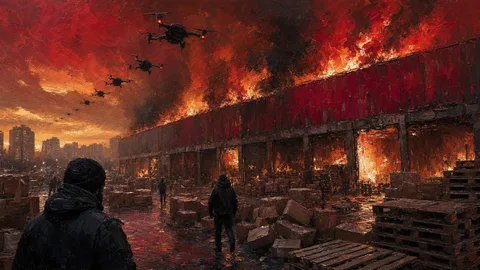
ANALYSIS: 800 drones over Russia in one night —…
More than eight hundred drones, in a single night, August 14…
The extension of economic sanctions against Russia for a full year — for the first time in the history of this mechanism, according to UA.News of June 24 — changes Russian economic planning logic. Previously, sanctions were renewed every six months, creating uncertainty that theoretically allowed tactical adaptations between renewals. A one-year cycle creates longer certainty about the constrained environment that Russia must anticipate.
For companies seeking to profit from possible exceptions or easings, the signal is clear: sanctions hold for a full year. This reduces circumvention opportunities and forces longer-term planning of substitutions. It is more consistent, more difficult pressure for the Russian economy to manage.
The veto threat and the fragility of consensus
However, this extension almost did not pass. The threat of a veto by a pro-Russian member state — Bulgaria, according to Euromaidan Press — hung over the process until the last minute. This fragility of European consensus is a vulnerability that Moscow understands and exploits. Russia's diplomatic investment in destabilizing the political systems of EU member states is inseparable from its economic strategy of resistance to sanctions.
If sanctions are lifted or reduced before Russia has been subjected to sufficient pressure to change its policy, they will have been a half-deployed weapon. The effectiveness of sanctions depends on their sustained maintenance — and that maintenance depends on the political cohesion of a European Union that Russia actively seeks to divide. That is the vicious circle of sanctions policy in a Europe that remains partially vulnerable to Russian influence.
Russian Companies Continuing Despite Sanctions
Russia Inc. in survival mode
Despite sanctions, some sectors of the Russian economy continue to function in adapted mode. State-owned enterprises in strategic sectors — defense, energy, agriculture — benefit from supply priorities and regulatory protections that keep them operational. Russian private companies in unsanctioned sectors — food, local services, construction — continue to serve the domestic market with reduced but existing margins.
This surface economic resilience masks a deeper structural degradation. Foreign direct investment has evaporated. Technology transfers are blocked. Industrial partnerships with the West are severed. Intellectual property is inaccessible or illegal to import. These deficits do not appear immediately in GDP — they will manifest in the competitiveness of the Russian economy in five to ten years.
The informal sector as a pressure valve
Russia has a developed informal economic sector — an inheritance from the Soviet era — that serves as a pressure valve in times of shortage. Parallel markets, barter, non-monetary service exchanges: these mechanisms allow part of the population to access goods no longer available in official channels. This informal resilience is real and documented.
But the informal sector is not a complete substitute for a functioning formal economy. It cannot produce advanced technologies, train engineers, maintain critical infrastructure, or finance a state budget. Russia can survive economically in the medium term thanks to the informal sector and its oil revenues. It cannot prosper or maintain its technological and industrial power in the long term with these pillars alone.
Russian Debt and Bond Markets: A Silent Crisis
Russian government bonds and isolation from international markets
While the Bank of Russia juggles its key rate, the question of Russian sovereign debt remains the blind spot of mainstream economic analysis. Since the technical default of 2022, Russia has been excluded from international bond markets. It now finances its war almost entirely domestically, by placing OFZ (ruble-denominated government bonds) with captive investors — essentially state banks.
This internal financing mechanism creates structural inflationary pressure that the key rate alone cannot contain. When a central bank buys its own government's debt in wartime, it is monetizing military spending. The result is a progressive ruble depreciation that capital controls allow to be masked temporarily but not eliminated.
Russian banks' exposure to the war economy
Russia's major banks — Sberbank, VTB, Gazprombank — are massively exposed to sovereign debt and defense-linked state enterprise bonds. This exposure creates a systemic risk that independent financial analysts have been flagging since 2023: if oil revenues fall further, if Ukrainian strikes continue to erode industrial production, Russia's ability to service its domestic debt will be tested.
The cut to 14.25% in June 2026 — the lowest level since October 2023 — suggests the Bank of Russia is seeking to ease the servicing of this domestic debt while stimulating an economy that is slowing despite massive injection of military spending. This is a precarious balance, and Ukraine understands it: every struck refinery, every delayed military contract, brings this system closer to the breaking point.
Conclusion: The Cracks Widen, but Slowly
The real state of the Russian economy in June 2026
The Russian economy in June 2026 is not collapsing — but it is in progressive, multidimensional, hard-to-stop degradation. The Bank of Russia caught between inflation and recession. 53 regions under fuel shortage. The Moscow refinery offline until 2027. The sovereign wealth fund dwindling. The massive brain drain. The structural rupture with the Western economy. These are the symptoms of an economy that the war and sanctions are progressively degrading.
These degradations are not yet sufficient to force a policy change from Putin — who still benefits from a façade of popular support, residual oil revenues, and backing from China and Iran. But the cracks are widening, and each additional month of pressure widens them further. This is the logic of strategic patience that the West must maintain.
More investigation
INVESTIGATION: Beijing cuts Africa to 2.1 billion in loans…
2.1 billion — the lowest figure in almost twenty years, according…
SPECIAL REPORT: Beijing Promises Stimulus as Its Households Give…
That is the growth rate of Chinese industrial output in July,…
INVESTIGATION: Two Chinese Ex-Soldiers Arrested in Seoul as 18,000…
For five years, a man ran a military-supply shop at the…
Patience as strategy
The investigation into the Russian war economy arrives at a paradoxical conclusion: the strategy is working, but slowly. Ukrainian strikes are degrading refineries. Sanctions are constraining imports. Military pressure is depleting human and material resources. The distortion of the economy by militarization is eroding long-term competitiveness.
The problem is that "slowly" is a luxury Ukraine cannot always afford — it endures daily bombing, it bleeds in human and economic terms. That is why massive and rapid Western support remains indispensable: to accelerate the effects of Russian degradation while allowing Ukraine to hold on until those effects become decisive. The West's strategic patience must be supported by sufficient resources to enable Ukraine's tactical patience.
Signed Maxime Marquette, columnist
Columnist's transparency box
Editorial positioning
This investigation analyzes the Russian war economy with a critical perspective, consistent with Maxime Marquette's conviction that economic pressure on Russia is a legitimate and necessary tool for ending its aggression. The analysis does not seek to exaggerate Russian difficulties — it seeks to document them honestly, with their limitations.
Method and sources
All cited figures — 14.25% Bank of Russia, 53 regions under shortage, 600,000 barrels lost, Tatneft cap, Rosneft suspension — come from the identified sources. Estimates on Russia's budget oil dependence and military spending levels are analyst estimates, presented as such.
Limits of the analysis
The real state of Russian public finances, the exact figures of the sovereign wealth fund, and the precise numbers of the impact of strikes on industrial production are not available in open sources. Russia does not publish complete and reliable economic statistics in wartime. The analysis rests on indirect sources and reasonable inferences.
Sources
Primary sources
Euronews: Fuel crisis and war costs — Bank of Russia flags risks of faster inflation — June 20, 2026
Secondary sources
Get the geopolitics analyses
Conflicts, powers, alliances: the MadMax thread without the noise.
Cite this article
Maxime Marquette (2026). INVESTIGATION: Russia's Economy Under Bombs and Sanctions — The Cracks Are Widening. MadMax. https://mad-max.co/en/article/enquete-l-economie-russe-sous-les-bombes-et-les-sanctions-les-fissures-qui-s-ela
Read next
INVESTIGATION: Beijing cuts Africa to 2.1 billion in loans…
2.1 billion — the lowest figure in almost twenty years, according…
SPECIAL REPORT: Beijing Promises Stimulus as Its Households Give…
That is the growth rate of Chinese industrial output in July,…
INVESTIGATION: Two Chinese Ex-Soldiers Arrested in Seoul as 18,000…
For five years, a man ran a military-supply shop at the…
Enjoyed this piece? Get the next one.
One chronicle a week, straight to your inbox. No noise.
This article was generated with AI assistance, under human supervision.
Comments
Be the first to weigh in.