

EDITORIAL: Ankara July 7–8 — The NATO Summit That Must Turn Promises Into Concrete
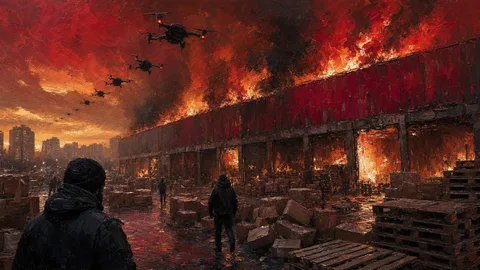
On July 7 and 8, 2026, Ankara will become the temporary capital of Western security. 40,000 security agents deployed, anti-missile defense systems activated, a fleet of Turkish F-16s on maximum alert, anti-drone drones covering the capital's skies. Turkey is building a fortress around its NATO summit. And that architectural metaphor says something important about the state of t
- On July 7 and 8, 2026, Ankara will become the temporary capital of Western security. 40,000 security agents deployed, anti-missile defense systems activated, a fleet of Turkish F-16s on maximum alert, anti-drone drones covering the capital's skies. Turkey is building a fortress around its NATO summit. And that architectural metaphor says something important about the state of t
- EDITORIAL: Ankara July 7–8 — The NATO Summit That Must Turn Promises Into Concrete
- Introduction: A Fortress for a Summit That Cannot Afford to Fail
Facts, quotes, and cited links remain in the body. Interpretations are framed as analysis or opinion according to the format.
EDITORIAL: Ankara July 7–8 — The NATO Summit That Must Turn Promises Into Concrete
Introduction: A Fortress for a Summit That Cannot Afford to Fail
Ankara Transforms Itself, the World Watches
On July 7 and 8, 2026, Ankara will become the temporary capital of Western security. 40,000 security agents deployed, anti-missile defense systems activated, a fleet of Turkish F-16s on maximum alert, anti-drone drones covering the capital's skies. Turkey is building a fortress around its NATO summit. And that architectural metaphor says something important about the state of the world.
This is not merely about protocol. The context in which this summit is being held is one of an active European war, a world where Alliance capitals can be targets and where a show of force — even symbolic — is part of the geopolitical message. Ankara, NATO's fortress for 48 hours, sends a clear signal: the Alliance is serious, united, and ready.
What the Summit Must Accomplish to Avoid Disappointment
NATO summits are often presented as successes before they have even taken place. Carefully drafted communiqués, impressive investment figures, handshake photos. But Ankara 2026 is taking place in a context that demands more than form. Ukraine is still fighting. The front line has not stabilized. And the questions left open by previous summits — security guarantees, long-term weapons deliveries, future membership — are still awaiting a concrete answer.
Secretary General Mark Rutte said he wants to "turbocharge transatlantic defense" at the summit. He told defense ministers gathered on June 18, 2026 that "money is crucial, but you can't stop a missile or a tank with a dollar or a euro." What is needed is to transform money into combat-ready capabilities. Ankara must show that this transformation is real.
The Preparatory Meeting of June 18: What the Defense Ministers Accomplished
A Final Briefing Before the Main Stage
On June 18, 2026, allied defense ministers gathered for their final meeting before the Ankara summit. It was the last opportunity to settle details, align positions, and prepare announcements. Rutte described the meeting as a moment of "good progress" on NATO's priorities. Diplomatic vocabulary that deserves to be decoded.
The "good progress" covered several key files: defense spending commitments, support for Ukraine via the Ukraine Defense Contact Group, positions from the Nuclear Planning Group, and the PURL initiative — whose technical acronym conceals concrete commitments to supply armaments to Kyiv. Zelensky was present at this meeting. His presence was not symbolic.
Rutte's Demand: Every Ally Must Account for Itself
What stood out in Rutte's statements after June 18 was the direct tone. He said he had heard "ally after ally after ally" explain how they are increasing their defense investment. This is subtle rhetorical pressure — not an accusation, but a public reminder that each ally is being observed, that the commitments made have names, and that the Ankara summit will be a showcase of who is doing what.
He also said explicitly that European allies and Canada must take "more responsibility" for their own defense, with American support as a backstop. This positioning — Europeans owning more of their security, Americans maintaining strategic depth — is the new NATO doctrine in the Trump era. Ankara must give it concrete form.
Turkey as Host: A Complex Ally in a Central Role
Erdoğan at the Alliance's Table — the Host Playing Multiple Boards
It would be dishonest to speak of the Ankara summit without speaking of the host country. Turkey is a founding member of NATO, a first-rate military power — the Alliance's second-largest army — and a geopolitical actor that regularly plays multiple boards simultaneously. Erdoğan maintained economic relations with Russia despite the war. He long blocked the accession of Sweden and Finland. He sold drones to Ukraine while maintaining dialogue channels with Moscow.
This complexity does not invalidate Turkey's role in the Alliance. It complicates it. By hosting the NATO summit in its capital, Ankara demonstrates its formal commitment to the Alliance. The 40,000 security agents, the missile defense systems, the F-16s on alert — this is also a message to Moscow about Turkey's military capacity and will.
A Unique Opportunity for Erdoğan
Hosting a NATO summit is a colossal political opportunity for any head of state. For Erdoğan, after years of tensions with allies over issues ranging from the purchase of Russian S-400s to migration management, it is also a diplomatic rehabilitation operation. Being the host is being at the center. And being at the center of NATO in 2026, during an active European war, means being indispensable.
This restored centrality of Turkey is not without ambivalences. But it should incite allies to invest in the relationship with Ankara — to engage it, anchor it, prevent it from drifting further toward a relationship of commercial dependence with Moscow. The summit is an opportunity for that as well.
Ukraine at Ankara: What Zelensky Will Ask For — and What He Hopes to Obtain
Ukraine's Demands: Long and Precise
Volodymyr Zelensky will arrive in Ankara with a precise list. Long-term security guarantees — not general declarations, but concrete commitments with timelines and verification mechanisms. Arms delivery plans spanning 10 years, with quantified objectives. Industrial co-production licenses that would allow Ukraine to manufacture Western weapons systems on its own territory. And a reaffirmation of the NATO membership promise made at Vilnius in 2023.
On the last point, the Alliance's position remains complicated. Ukraine's membership during the war is rejected by most allies — including the United States — for reasons of potential activation of Article 5. But alternative security guarantees — solid bilateral commitments, enhanced consultation mechanisms, a physical NATO presence in the relationship — are what Kyiv seeks to obtain in the meantime.
The Symbolism of Kyiv on June 3 — and Its Logical Follow-Through in Ankara
The context created by the historic NUC meeting in Kyiv on June 3, 2026 — the first NATO-Ukraine Council meeting on Ukrainian soil — casts the Ankara summit in a particular light. Rutte and the 32 ambassadors were in Kyiv. They walked through the rubble. They paid tribute to the dead. That symbolism creates a moral debt that the Ankara summit must honor with substance.
The logic is simple: if you went to Kyiv to lay wreaths at the Wall of Remembrance, you cannot return to Ankara three weeks later and offer Ukraine vague declarations. The bar is high. And that bar was set in Kyiv itself, by the allies themselves.
The Spending File: Who Pays, How Much, and for What
The 2% Threshold and What It Conceals
The debate on defense spending at 2% of GDP — the threshold set by NATO since the Wales Summit of 2014 — has returned like a refrain for years. In 2026, the situation has changed. Most European allies have reached or exceeded this threshold under the combined pressure of the war in Ukraine and the demands of the Trump administration. But Rutte wants to go further.
On the same topic
ANALYSIS: 800 drones over Russia in one night —…
More than eight hundred drones, in a single night, August 14…

SPECIAL REPORT: Beijing Promises Stimulus as Its Households Give…
That is the growth rate of Chinese industrial output in July,…

COLUMN : Europe Moved 8.5 Billion Euros in a…
That is what the European Commission says it has disbursed for…
At the June 18 meeting, he spoke not only of spending more, but of "spending better." He mentioned the need to "turn money into combat-ready capabilities, fast." This nuance is fundamental: it is not enough to increase defense budgets if that money goes into slow bureaucratic systems, poorly planned acquisitions, or duplication among allies. The real question is the effectiveness of the spending.
Nuclear Deterrence: A Topic Ankara Cannot Avoid
The Nuclear Planning Group meeting of June 18 produced a statement on allied commitment to NATO's nuclear deterrence. Rutte was clear: "We will modernize our nuclear capabilities, improve planning, and adapt our deterrence to keep it fit for purpose."
In the context of the Russia-North Korea pact of June 2024, which includes provisions on cooperation in nuclear energy and space technology, and in the context of Putin's repeated threats about the use of nuclear weapons, this modernization is not an abstraction. It is a strategic necessity that the Ankara summit must confirm.
The Axis of Disruptors: Russia, North Korea, China, Iran
Moscow Does Not Fight Alone — Rutte's Reminder
At the press conference on June 17, 2026 in Brussels, Rutte stated it clearly: "Moscow does not fight alone. It receives crucial assistance from North Korea, China, and Iran." This statement is central to understanding the strategic stakes of the Ankara summit. NATO is not facing a bilateral conflict between Russia and Ukraine. It is facing a network of revisionist actors who coordinate their support for Moscow.
North Korea has sent more than 20,000 soldiers to Russia and more than 6.5 million artillery shells. Iran supplies Shahed drones. China exports dual-use goods that feed the Russian war machine — despite its official denials. This support network is why the war persists. It must be one of the central subjects at Ankara.
What Ankara Must Say to Beijing — and How
The question of China is delicate for NATO. The Alliance is historically a collective defense organization in the Euro-Atlantic zone — not an anti-Chinese alliance. But Beijing's growing involvement in supporting the Russian war — via dual-use goods, military technologies, diplomatic cover at the UN Security Council — compels NATO to speak about China more directly.
The Ankara summit must find the right balance: send a firm message about the cost of Beijing's complicity with Moscow, without turning the Alliance into a confrontation alliance with China — which is neither desirable nor feasible with Turkey, among others, at the table.
The Legacy of Vilnius 2023 and Washington 2024: Promises Not Yet Kept
What Was Promised — and What Is Still Missing
The Vilnius 2023 summit had promised Ukraine a path to membership without a Membership Action Plan — a historic decision, but without a timeline. The Washington 2024 summit had reaffirmed this path, launched commissions, signed declarations. The images were beautiful. The substance, thinner.
Ankara 2026 is the third NATO summit since the full-scale invasion. It cannot be the third summit of fine declarations. Ukraine needs concrete measures: multi-year arms delivery commitments, co-production agreements, a strengthened strategic consultation mechanism. Ukrainians know the difference between a promise and a commitment. And they have paid for it in blood.
The Burden of Repetition
There is a real risk in repeating the same gestures without making them concrete: the erosion of credibility. If the Ankara summit produces a communiqué similar to those of Vilnius and Washington — with the same formulas about Ukraine's path to NATO, the same "unwavering support," the same contribution figures — the disappointment will match the hopes.
And that disappointment will not only affect Ukrainian public opinion. It will be weaponized by Moscow, which watches for every sign of division or fatigue in the Alliance. The credibility of NATO is also at stake in Ankara.
The Rutte Doctrine: "Well-Spent Money, Combat-Ready Capabilities"
The Secretary General's Formula and Its Implications
Mark Rutte has developed since taking office a doctrine for the Alliance built on two pillars: increasing defense spending AND transforming it into real military capabilities. He repeated it at the June 18 meeting: "Cash is crucial, but you can't stop a missile or a tank with a dollar or a euro. We need to turn the cash into combat-ready capabilities, and fast."
This doctrine has direct implications for the Ankara summit. It means the summit's announcements will only be credible if accompanied by operational details: what capabilities will be developed, on what timeline, with what interoperability. NATO's transformation must be visible, measurable, and rapid. "Fast" is the key word. The urgency is real.
NATO "Rebooted for the Modern Era"
Rutte also spoke of an "Alliance rebooted for the modern era." This is an ambitious formulation. NATO was founded in 1949 to contain the Soviet Union. It has traversed the Cold War, the fall of the wall, the Balkan wars, Afghanistan, Crimea. Each era reshaped it. The current era — war on European soil, hybrid threats, cyberattacks, military AI — demands a new adaptation.
This "reboot" of NATO is one of the structuring projects of the Ankara summit. It implies not only more spending, but a revision of command structures, integration of new technologies, and a clarification of the division of responsibilities among allies. A long-term undertaking — but one whose first visible foundations Ankara must lay.
The Question of Nuclear Guarantees: The Elephant in the Room
Article 5 Does Not Apply to Ukraine — and Everyone Knows It
The fundamental reason Ukraine is not a NATO member — and will not be during the war — is Article 5 of the Alliance's Charter, the collective defense clause. If Ukraine were a member tomorrow, NATO would technically be at war with Russia. No ally wants that scenario. This is understandable. But this reality creates a guarantees gap that must be filled another way.
Bilateral security agreements have been signed between Ukraine and dozens of countries — notably the United States, France, the United Kingdom, and Germany. These agreements provide for commitments on military support, intelligence sharing, and training. They are not Article 5, but they constitute a growing safety net. Ankara must strengthen and coordinate these agreements.
The PURL Initiative and New Forms of Support
The PURL initiative — whose details remain largely confidential but which concerns the long-term supply of armaments to Ukraine — represents a concrete mechanism of NATO-coordinated support. It was reaffirmed at the June 18 meeting. It must be strengthened and expanded at Ankara.
This type of initiative — discreet, technical, but operationally crucial — is often more useful than grand symbolic declarations. Ukraine needs both: symbols that maintain morale and legitimacy, and concrete mechanisms that feed the war effort. Ankara must be strong on both counts.
Anti-Missile Defense: A Critical File for Kyiv
Ukraine Asks for Systems, Not Declarations
One of Ukraine's most urgent requests for the Ankara summit concerns anti-missile defense. Massive Russian strikes against Ukrainian civilian infrastructure — power plants, water networks, hospitals — continue with growing intensity. Ukraine intercepts a high proportion of these missiles and drones, but its stocks of interception munitions are running low. It needs additional systems and, above all, a continuous flow of munitions.
The G7 in Évian in June 2026 made commitments on Ukrainian air defense. These commitments must be translated into concrete deliveries with precise timelines at Ankara. The difference between a promise and a delivery can be counted in missiles shot down — or not — over Kyiv.
Co-Production: The Long-Term Solution
Industrial co-production — allowing Ukraine to manufacture components or weapons systems on its own territory — is a long-term strategic priority that Zelensky has championed since 2023. Ukraine already manufactures its own drones at a rate of 180,000 targets monthly and is developing a domestic defense industry valued at $45–50 billion per year. Co-production with allies would accelerate this build-up.
Production licenses granted at Ankara would be a strong signal: NATO is not just delivering weapons — it is transferring technology and autonomy. That is the real long-term security guarantee for Ukraine: a strong indigenous defense industry, anchored in Alliance standards and technologies.
What the Entire World Will Be Watching at Ankara
Adversaries, Partners, the Undecided
The Ankara summit will be observed far beyond the Alliance's borders. Russia will look for every sign of division or weakness. China will assess the solidity of Western commitment to calibrate its own decisions on support for Moscow. Iran and North Korea will watch whether their strategic bets — aligning their fate with Putin's — seem to be paying off or turning risky.
And then there are the countries of the Global South — India, Brazil, South Africa — which have maintained an uncomfortable neutrality since the start of the war. Their position evolves based on the signals they receive about the determination and coherence of the West. A strong Ankara summit sends a signal to these countries as well: the West is serious, it will not back down, and it is better to be on this side of history.
The Summit as an Act of Deterrence
In classical strategic thinking, a NATO summit is also an act of deterrence. It tells adversaries: look at our cohesion, look at our commitments, look at our capabilities. If the message from Ankara is convincing — real commitments, precise figures, a Ukraine supported with unequivocal clarity — it has a deterrent effect that a thousand rhetorical declarations cannot achieve.
Deterrence works. But only if it is credible. And credibility is built in the details — in deliveries made, in commitments honored, in consistency between yesterday's declarations and today's actions. Ankara is the test of that credibility.
After Ankara: The Decisive 12 Months
Discover

EDITORIAL: Trump approves H200 chips for Beijing and takes…
On December 8, 2025, two announcements landed in Washington, the same…

INVESTIGATION: Beijing cuts Africa to 2.1 billion in loans…
2.1 billion — the lowest figure in almost twenty years, according…
SPECIAL REPORT: Beijing Promises Stimulus as Its Households Give…
That is the growth rate of Chinese industrial output in July,…
Implementation: The Real Test of Every Summit
Every NATO summit produces commitments. The real question is always: what happens in the 12 months that follow? Are promised weapons deliveries made? Do promised defense spending increases materialize in national budgets? Are co-production mechanisms put in place? It is against this scorecard that the Ankara summit will ultimately be judged.
Creating a mechanism of rigorous tracking of commitments made at Ankara would in itself be a valuable innovation. A public dashboard, updated quarterly, showing the status of each commitment. That is transparent. That is accountable. And that is exactly the kind of tool that transforms good intentions into real accountability.
Zelensky and Ukraine: Holding On Until the Next Steps
For Ukraine, the Ankara summit must be fuel. Not a destination. The Ukrainian soldiers holding the lines near Bakhmut, at Lyman, in the plains of the Donbas, are not fighting for diplomatic communiqués. They are fighting for their country, their families, their freedom. But the political signals the West sends them are part of the fuel that sustains the resistance.
A strong Ankara summit tells those soldiers: we are here. We are delivering what we promised. We are not giving up. That message has no price. And it can weigh in the balance of this war as much as any weapons system.
Turkey, NATO and the Lesson in Practical Geopolitics
Ankara as a Symbol of Managed Enlargement
Choosing Ankara as the location of the NATO summit is not without meaning. Turkey is a geographical and geopolitical bridge between Europe and the Middle East, between NATO and its complex neighbors. By holding its summit in Ankara, the Alliance implicitly says that Turkey is central — not marginal — to its collective security project.
This centrality has a cost and a benefit. The cost: Turkish ambiguities must be managed internally, without public airing. The benefit: Erdoğan is inside the tent rather than outside. And in alliance diplomacy, keeping complex actors inside the tent is often preferable to excluding them.
The Lesson for the Future of Enlargement
The Ankara summit can also send a signal about the future of NATO enlargement. Georgia, Armenia, certain Western Balkan countries — several states are looking toward the Alliance and assessing whether its commitments are serious. The decisions made in Ankara regarding Ukraine — the most acute example — will influence those calculations. A NATO that is credible with Ukraine is a NATO that inspires confidence everywhere.
And a NATO that fails to deliver its promises to Ukraine sends the opposite: that the Alliance's guarantees are conditional, negotiable, subject to short-term calculations. That signal would be devastating — not only for Ukraine, but for the global credibility of the Atlantic project.
Conclusion: July 7 and 8 Will Be the Test of Atlantic Coherence
What Success Looks Like — and What Failure Costs
A successful summit in Ankara is not the one that produces the longest communiqué or the most beautiful photos. It is the one where Ukraine leaves with measurable commitments: delivery timelines, co-production licenses, strengthened guarantee mechanisms. It is the one where every ally emerges from Ankara with clear, public, and verifiable obligations.
Failure at Ankara would have real consequences: it would feed the Russian narrative of Western fatigue, discourage Ukrainian soldiers on the ground, and send a signal of weakness to the Alliance's adversaries everywhere in the world. The cost of failure is infinitely greater than the cost of the effort needed to succeed.
The Weight of History on July 7–8
In twenty years, people will speak of the Ankara summit as a turning point — one way or the other. Either as the moment NATO kept its promises and gave Ukraine the means to defend itself durably. Or as the moment the Alliance once again preferred words to action, formulas to substance, comfortable diplomacy to difficult responsibility. On July 7 and 8, 2026, that choice will be made. And history will not be kind to those who chose the easy path.
Conclusion: Ankara Must Be the Summit That Says — Enough Words, Here Are the Acts
From Kyiv to Ankara: The Logic of a Promise Honored
The historic NUC visit to Kyiv on June 3, the progress of the defense ministers' meeting on June 18, the opening of the first EU accession cluster on June 15 — all of this converges toward Ankara as toward a focal point. Ukraine is advancing. The West is committing. But commitments must be honored for this dynamic to continue.
What Zelensky Deserves to Find at Ankara
Zelensky deserves to find in Ankara what his soldiers deserve on the ground: concrete commitments, promised and delivered weapons, lasting guarantees. Not a standing ovation and a 50-page communiqué. Acts. The fortress of Ankara — with its 40,000 security agents, its anti-missile missiles, its F-16s on alert — is a symbol of power. That symbol must be inhabited by equivalent substance. And that is the choice the Alliance's leaders will make on July 7 and 8.
By Maxime Marquette, columnist
Columnist's transparency note
Sources and Method
This editorial is based on NATO's official communiqué of June 18, 2026 on the defense ministers' meeting, the Bloomberg article of June 3, 2026 on Ankara's summit security, and statements by Mark Rutte at various June 2026 press conferences. Data on Ankara's military presence (40,000 agents, F-16s, missile systems) comes from the Bloomberg article. Ukrainian defense industry data is declared by Zelensky himself during the Kyiv NUC meeting.
What I Do Not Know and What I Think
The exact content of the commitments to be made at Ankara is not known at the time of writing (June 29, 2026). This editorial is an analysis of the stakes and expectations — not a prediction of the outcome. My position is clearly pro-Ukrainian and pro-Alliance, and this editorial reflects that openly assumed personal perspective.
Sources
Primary sources
Secondary sources
Get the geopolitics analyses
Conflicts, powers, alliances: the MadMax thread without the noise.
Cite this article
Maxime Marquette (2026). EDITORIAL: Ankara July 7–8 — The NATO Summit That Must Turn Promises Into Concrete. MadMax. https://mad-max.co/en/article/editorial-ankara-7-8-juillet-le-sommet-otan-qui-doit-transformer-les-promesses-e
Read next
EDITORIAL: Trump approves H200 chips for Beijing and takes…
On December 8, 2025, two announcements landed in Washington, the same…
INVESTIGATION: Beijing cuts Africa to 2.1 billion in loans…
2.1 billion — the lowest figure in almost twenty years, according…
SPECIAL REPORT: Beijing Promises Stimulus as Its Households Give…
That is the growth rate of Chinese industrial output in July,…
Enjoyed this piece? Get the next one.
One chronicle a week, straight to your inbox. No noise.
This article was generated with AI assistance, under human supervision.
Comments
Be the first to weigh in.