

DECODING: Anefis, the northern Mali lock Moscow and Bamako can no longer hold
Some towns pass, in the space of days, from total obscurity to strategic emergency. Anefis now belongs to that list. This dusty locality in northern Mali, roughly a hundred kilometers from Kidal, has become since July…
- Some towns pass, in the space of days, from total obscurity to strategic emergency. Anefis now belongs to that list. This dusty locality in northern Mali, roughly a hundred kilometers from Kidal, has become since July…
- Introduction: a sand-blown town now deciding the Sahel's fate
- A name nobody knew before July
Facts, quotes, and cited links remain in the body. Interpretations are framed as analysis or opinion according to the format.
Introduction: a sand-blown town now deciding the Sahel's fate
A name nobody knew before July
Some towns pass, in the space of days, from total obscurity to strategic emergency. Anefis now belongs to that list. This dusty locality in northern Mali, roughly a hundred kilometers from Kidal, has become since July 4, 2026 the tipping point of a war the Malian junta believed it had stabilized after losing Kidal in April. According to Reuters, a coalition made up of JNIM, the Al-Qaeda affiliate, and the Azawad Liberation Front, the leading Tuareg separatist force, launched a coordinated offensive that immediately exposed the fragility of Mali's military posture in the region.
This is not an isolated setback. It is documented, dated confirmation that northern Mali is methodically slipping from Bamako's control, despite the presence of Russian mercenaries from the Africa Corps supposedly backing Malian forces. The military camp at Anefis, holding entrenched Malian soldiers and Russian fighters, found itself encircled, cut off from resupply lines, while relief convoys were cut to pieces on the road.
Why this battle reaches far beyond Mali
Anefis is not only a Malian problem. It is a test of the credibility of the Russian model in Africa — the practice of selling turnkey security to fragile juntas in exchange for resource access and geopolitical leverage. When Russian mercenaries end up encircled and unable to break a siege in a secondary town, the entire promise of stability Moscow sells to Sahelian regimes cracks in public.
This battle also fits into a broader pattern of territorial retreat for Sahel military juntas, confronted by jihadist and separatist groups now coordinating offensives with unprecedented efficiency. The fall of Kidal in April, followed by the crisis at Anefis in July, traces a troubling trajectory for the Malian state's authority over its own territory.
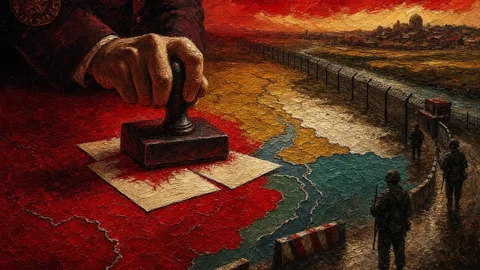
I look at this map of northern Mali redrawing itself week after week, and I cannot help thinking of every security promise Moscow has sold these African juntas. The Kremlin loves projecting an image of protective power; Anefis shows, once again, that this power has very concrete limits on the ground.
The coordinated offensive of July 4, a shock for the junta
Five towns hit on the same day
According to information reported by Africanews and relayed by several agencies, the July 4, 2026 offensive did not target Anefis alone. Joint JNIM and FLA forces simultaneously struck Gao, Aguelhok, the central town of Sévaré, and even the Kenieroba prison, a stone's throw from Bamako. This geographic spread reveals a planning and coordination capacity far beyond what had previously been attributed to these armed groups.
The Malian army first claimed to have "vigorously repelled" these attacks, classic crisis-communication language that masked a far more critical situation on the ground. A regional official told Reuters that rebels effectively controlled Anefis, that Russian fighters remained holed up in the military camp, and that many Malian soldiers had been taken prisoner.
A clear objective: securing Kidal
Taking Anefis is not incidental. This locality controls access to Kidal, the town symbolizing the Tuareg independence cause that fell in April 2026 to the FLA. By consolidating its grip on Anefis, the FLA locks down a strategic corridor that protects its stronghold and complicates any reconquest attempt by government forces and their Russian allies.
This methodical, rather than improvised, territorial logic reflects a significant evolution in separatist and jihadist strategy in northern Mali. Far from a simple punitive raid, the July offensive looks like a durable consolidation of territory that Bamako now controls only on paper.
Five towns hit in a single day does not happen by improvisation. Call it what it is: this is no longer harassment, it is a structured military campaign aimed at redrawing the map of power in northern Mali, and the junta is visibly struggling to respond with anything beyond reassuring statements.
The Russian convoy ambushed, a documented setback
More than 200 Russian fighters targeted
On July 9, 2026, according to Reuters, a convoy carrying more than 200 Russian fighters from the Africa Corps and over a hundred Malian soldiers was attacked while heading toward Anefis to relieve the besieged camp. Three separate security sources and a spokesman for the armed group confirmed the attack, which came on top of a similar assault on another military convoy earlier in the week.
The FLA spokesman claimed responsibility for this ambush, while JNIM's involvement remained, according to Reuters, unconfirmed. This level of precision in the claims, combined with the scale of Russian personnel involved, flatly contradicts the idea of a minor policing operation: this is a large-scale military engagement, with potentially heavy losses on both sides.
A symbol that tarnishes the Africa Corps' image
The Africa Corps, the structure that officially replaced the Wagner Group under the Russian defense ministry, had presented itself as a more disciplined and effective force than its predecessor. Watching more than two hundred of its fighters trapped in a Sahelian ambush, unable to quickly clear their positions, sends a signal of weakness that extends well beyond the Malian theater.
This documented setback adds to a series of tactical failures that Russian propaganda has systematically tried to minimize. But the accumulation of attacked convoys, captured soldiers and encircled camps is starting to tell a story that even the channels most favorable to Moscow struggle to fully paper over.
Two hundred Russian fighters stuck in a Sahelian ambush should give pause to anyone presenting the Africa Corps as a fearsome strike force. The Kremlin renamed Wagner to erase a tarnished image; the new name changes nothing about the reality of hostile terrain that keeps resisting.
Mali's counter-offensive and its gray zones
A recapture claimed but contested
According to information relayed in early and mid-July, the Malian army claimed to have retaken control of Anefis after reinforcements arrived, including Africa Corps paramilitaries, in the days following the convoy attack. This reconquest announcement, if confirmed, would mark a clear reversal after several days in which the locality appeared firmly under rebel control. But the very nature of this communications war, where each side claims more than it actually holds, demands rigorous methodological caution.
Residents and local sources cited by several outlets continued, during the same period, to dispute this version, with some claiming the Malian army had never truly lost total control of the town, and others maintaining the opposite. This persistent contradiction illustrates, once again, the difficulty of independently verifying each side's claims in a region where journalist access remains extremely limited.
What independent sources confirm
The Council on Foreign Relations, which tracks this conflict in its regular monitoring of Sahel violence, confirmed that intense fighting continued around Anefis for several consecutive days, with repeated resupply attempts toward the encircled positions, often repelled before even reaching their destination. This persistence of fighting, independently documented, contradicts the notion of a quickly stabilized situation.
What can be stated with certainty is that the battle for Anefis saw no simple or swift resolution. Whether or not the town has reverted to government control as of publication, the human and strategic cost of this week of fighting remains, itself, indisputable and documented by multiple converging sources.
I refuse to rule one way or the other while the evidence stays contradictory, but I refuse just as firmly to swallow whole the most reassuring narrative for the Malian junta. This war of narratives, on its own, says a great deal about the fragility of Bamako's authority over its own territory.
The strategic weight of Kidal in this equation
A symbolic capital that fell in April
To fully grasp what is at stake at Anefis, one must revisit the fall of Kidal in April 2026, when a coordinated FLA and JNIM offensive had already seized this town regarded as the symbolic capital of the Tuareg independence cause, while also assassinating Mali's defense minister in a raid on Bamako's airport. That episode had already demonstrated these groups' ability to strike far from their bases, with precision that surprised even the most seasoned regional analysts.
Since then, Kidal has remained under FLA control, and Anefis is precisely the geographic lock securing access to that town from government positions further south. Retaking Anefis, for Bamako, would not simply mean recovering an isolated locality: it would reopen a strategic path toward eventually reconquering Kidal itself.
A tactical continuity that worries analysts
The fact that the FLA and JNIM managed to replicate, two months after Kidal's fall, a coordinated operation of comparable scale, reveals an operational continuity that goes beyond simple tactical opportunism. This improbable alliance between Tuareg separatists and Al-Qaeda-affiliated jihadists appears to have found common ground solid enough to plan synchronized multi-front offensives.
This continuity worries Sahel observers all the more because every success reinforces this alliance's legitimacy among local populations, who see in the Malian state's chronic inability to protect its territory further confirmation of its structural failure.
Kidal, then Anefis: this is no longer coincidence, it is a method. And that method tells an uncomfortable truth about the Malian junta — a state losing, foot by foot, its capacity to protect even the localities it still claims to control.
The Africa Corps, Wagner's fragile heir
A name change that hasn't changed the balance of power
The presence of Africa Corps fighters at Anefis illustrates the continuity of Russian engagement in the Sahel, despite the official disappearance of the Wagner Group following its founder's death. This structure, now directly attached to Russia's defense ministry, continues the same mission of backing African juntas in exchange for privileged access to mineral resources and greater geopolitical leverage in the region.
But the label change has not resolved the structural weaknesses already identified under the Wagner banner: limited manpower against the vastness of Sahelian territory, insufficient knowledge of local terrain, and excessive reliance on firepower that is not enough to durably secure areas as vast as northern Mali.
A partnership whose cost keeps rising for Bamako
This Russian-Malian partnership, initially presented as the miracle solution to French and then UN forces' inability to durably stabilize the region, reveals its own limits year after year. The documented losses at Anefis, combined with the tactical failures already recorded during Kidal's fall, paint the picture of a security alliance that costs the Malian junta dearly without guaranteeing the promised stability.
This reality raises a major strategic question for Mali's future: how long can a military regime keep relying on a partner whose operational effectiveness remains, empirically, as questionable as the Africa Corps' record in the Sahel?
I do not claim to know precisely how many Russian soldiers died or were captured at Anefis — the exact figures remain murky and disputed. But I know how to recognize a security partnership that disappoints its clients, and that is exactly the picture taking shape for the Malian junta in recent months.
Lavrov's African tour, between showcase and reality
Bujumbura, the final stop on a packed diplomatic schedule
At the very moment his paramilitaries were trapped in northern Mali, Russian foreign minister Sergei Lavrov was wrapping up, on July 10, 2026, an African tour in Bujumbura, Burundi, according to several agencies including China's Xinhua news agency. This visit, presented by Russian diplomacy as consolidating strategic partnerships, unfolded in near-total silence on the ongoing Malian crisis.
This contrast is telling: Moscow keeps projecting, through official visits and diplomatic statements, an image of rising continental power, while thousands of kilometers away from Bujumbura, its own fighters are struggling not to be overrun by a coalition of Malian rebels.
A diplomacy that prefers to ignore its own failures
This dissonance between diplomatic rhetoric and operational reality is not new to the Kremlin's African strategy. For years, Moscow has multiplied security cooperation agreements and ministerial visits to cement its influence, while systematically downplaying setbacks suffered by its forces on the ground, whether in the Central African Republic, in Mali, or elsewhere.
This two-speed communications strategy has its limits. The more tactical failures pile up and get documented, the harder it becomes to mask the gap between the official narrative of a protective Russia and the reality of a costly, uncertain engagement — including in the eyes of the African juntas themselves, who are beginning to question the real reliability of this partnership.
Lavrov shaking hands in Bujumbura while his men are encircled at Anefis is exactly the kind of contrast that should worry every African government betting on Moscow as guarantor of their security. A diplomatic smile never replaces a convoy that never arrives.
What this crisis reveals about the Malian state
A sovereignty retreating territory by territory
Beyond Anefis's specific fate, this crisis illustrates a broader and more troubling phenomenon: the continued retreat of the Malian state's effective sovereignty over its own territory since the 2020 coup and the subsequent ousting of French and then UN forces. Every town lost, even temporarily, feeds a narrative of institutional fragility that goes beyond a purely security issue.
This territorial erosion comes with an erosion of public trust in a junta that had initially justified its power grab with the promise of more effective security than previous civilian governments provided. Five years on, that promise runs into facts that are hard to dispute: the country's north escapes, intermittently but recurrently, Bamako's effective control.
A precedent that worries regional neighbors
This chronic instability in Mali does not stay confined within its borders. It feeds fears in neighboring countries, from Burkina Faso to Niger, facing similar dynamics of alliances between jihadist groups and local separatist movements. The method observed at Anefis — multi-front coordination and targeting of resupply convoys — could inspire copycat operations elsewhere in the Sahelian region.
Discover

ANALYSIS: Marcos Talks Drilling With Beijing While His Fishermen…
That is what moves through the South China Sea every year.…

ANALYSIS : Taiwan Puts NT$1,122.5 Billion Into Defence, Over…
Hold that number for a moment, because it marks the crossing…

ANALYSIS: 313 Votes, a 20th Extension — Ukraine Keeps…
313 votes to approve the presidential decree extending martial law by…
This potential regional contagion explains the heightened attention international organizations and specialized think tanks, such as the Council on Foreign Relations, now pay to the precise evolution of the Malian situation, with every twist now documented at a level of detail unusual for a conflict that had long stayed on the margins of international media attention.
We often talk about the Sahel as a distant region, almost abstract in Western priorities. But what is unfolding at Anefis is not a regional footnote: it is a test of whether African military juntas, with or without Russian backing, can keep their own security promises.
The lessons the West should draw from this file
The void left by Western withdrawal keeps costing dearly
The withdrawal of French forces from Mali, followed by that of the UN's MINUSMA mission, was justified at the time by these arrangements' inability to durably contain the jihadist threat. But the situation's evolution at Anefis, several years later, confirms nothing about the Russian partnership that replaced Western forces offering a more effective alternative. On the contrary, the same armed groups keep gaining ground, with tactical coordination that seems to have only strengthened since the Westerners' departure.
This factual reality deserves to be stated without triumphalism or misplaced colonial nostalgia: it simply questions the comparative effectiveness of two security-cooperation models — one Western and multilateral, the other Russian and transactional — facing the same jihadist and separatist threat, which itself keeps thriving regardless of the partner chosen by Bamako.
A strategic opportunity the West should not ignore
This documented fragility of the Russian security model in the Sahel gives Western powers a concrete argument to make to public opinion and to African governments still torn between several strategic partnerships. The West will not regain influence in the Sahel by repeating moralizing lectures on human rights, but by showing, with verifiable facts like those from Anefis, that the Russian alternative fails to deliver on its promises of stability.
This battle for geopolitical influence in the Sahel, however discreet compared to the media spotlight on Ukraine or the Middle East, deserves far more sustained strategic attention from Western capitals, given how far the resulting stakes in regional security, migration flows and natural resources extend beyond the strictly Malian frame.
I am not saying the West always had the right answers in the Sahel — far from it, the French and UN failures are real and documented. But I reject the idea that current Western silence is an acceptable strategy in the face of a void Moscow is visibly struggling to fill as effectively as advertised.
China's ambiguous role in this African theater
An economic presence thriving despite the instability
While Russia bogs down militarily in the Sahel, China continues, more quietly but with remarkable consistency, its investments in infrastructure and mineral resources across the region, including in Mali. This two-speed approach — security for Moscow, economics for Beijing — illustrates an implicit division of roles between the two authoritarian powers, each seeking, in its own way, to compete with historic Western influence in West Africa.
This strategic complementarity between Moscow and Beijing, if it holds durably, would pose a far more serious structural challenge to Western interests than Mali's security instability alone, by combining Russian security dependence with Chinese economic dependence in the same part of the world.
A vigilance needed against this dual influence
This dynamic deserves the same analytical rigor applied to Russia's military troubles at Anefis. A Malian junta economically dependent on China and security-dependent on a Russia whose military effectiveness remains questionable would create a structural vulnerability that goes far beyond the immediate stakes of the Anefis battle.
It is precisely this combination of factors — chronic security instability and growing dependence on authoritarian powers — that should alert Western analysts to medium-term risks for the stability of the entire Sahelian region, well beyond the fate of a single town like Anefis.
China doesn't need to send mercenaries to expand its influence in the Sahel — it simply lets Russia exhaust itself militarily while patiently consolidating its own economic interests. It is a devastatingly effective strategy, and the West has underestimated this complementarity between the two authoritarian capitals for far too long.
The human consequences of an invisible war
Captured soldiers whose fate remains unknown
Behind the strategic maps and geopolitical analyses, the battle for Anefis carries an immediate and largely undocumented human cost. Several sources mention Malian soldiers taken prisoner by FLA forces, without their exact number or current situation being precisely established by verifiable independent sources. This opacity around the prisoners' fate is, in itself, a humanitarian concern worth naming clearly.
The same opacity applies to Africa Corps losses, as Russian authorities almost never release precise casualty figures for their African operations — a practice of systematic concealment already observed on the Ukrainian battlefield and now repeated, almost identically, on the African continent.
Civilians caught between multiple fires
Civilian populations in northern Mali have for years borne the direct consequences of this chronic instability: forced displacement, limited access to healthcare and education, and food insecurity worsened by the impossibility of farming or trading normally in zones of permanent conflict. This human reality, too often reduced to a footnote in geopolitical analyses, deserves to be recalled with the same rigor as troop movements and territorial claims.
Documenting this war solely through the lens of power balances between states would amount to erasing the people who concretely pay its price every day, in a media silence that contrasts sharply with the attention given to other contemporary conflict zones.
More analysis
ANALYSIS: Marcos Talks Drilling With Beijing While His Fishermen…
That is what moves through the South China Sea every year.…
ANALYSIS : Taiwan Puts NT$1,122.5 Billion Into Defence, Over…
Hold that number for a moment, because it marks the crossing…
ANALYSIS: 313 Votes, a 20th Extension — Ukraine Keeps…
313 votes to approve the presidential decree extending martial law by…
We count fighters, convoys, kilometers of territory gained or lost, but we too often forget the Malian families who have lived, for years, under the permanent threat of a violence they never chose. This invisible war deserves attention that goes beyond the purely geostrategic lens.
The Central African precedent that illuminates this Malian file
A Russian method already tested, and already criticized
The pattern observed in Mali is nothing new. In the Central African Republic, Russian paramilitaries deployed for years to prop up the ruling power have already been accused, by human rights organizations, of committing abuses against civilian populations while struggling to durably contain local armed groups. This continuity between two distinct African theaters confirms that the Russian security model rests less on genuine tactical superiority than on a political promise sold to juntas in exchange for privileged access to resources.
This comparison is not anecdotal. It allows the Anefis crisis to be placed within a broader structural trend — a Russian influence model that systematically favors diplomatic showmanship and opaque bilateral deals over building durable, verifiable security for the populations concerned.
African juntas increasingly making the same bet
Despite these documented precedents, several West African military juntas, from Burkina Faso to Niger, have made the same strategic choice as Mali by turning to Moscow after breaking off their Western security partnerships. This regional convergence deserves close monitoring, as it could reproduce, in other Sahel countries, the same structural weaknesses now exposed by the battle for Anefis.
This regional dynamic, if it holds, would draw a picture of a Sahel increasingly dependent on a partner whose operational effectiveness remains, empirically and repeatedly, below the initial promises made to local populations and governments.
Case after case, I see that Russia's African bet rests on a security promise rarely kept in practice. Central Africa, Mali, and probably other countries tomorrow: the method repeats itself, and the results, stubbornly, remain mixed for the populations bearing the direct consequences.
Regional markets and the economic cost of instability
Trans-Saharan trade choked by insecurity
Beyond military and diplomatic considerations, the Anefis crisis has a direct economic cost for northern Mali's populations, heavily dependent on trans-Saharan trade and transhumant herding for their livelihoods. Every closed road, every attacked convoy, every encircled camp disrupts economic circuits already weakened by years of chronic conflict, worsening a food insecurity that several humanitarian organizations have long documented in the region.
This economic dimension of the conflict, too often neglected in analyses centered solely on military balances of power, nonetheless deserves comparable attention, because it is what, over time, shapes local populations' capacity to resist or, conversely, to shift toward the armed groups that sometimes offer the only economic opportunities available amid the collapse of state structures.
A war economy that benefits certain actors
This chronic instability, while impoverishing most of the population, nonetheless benefits certain armed actors who now control smuggling routes, informal taxation points, and sometimes artisanal mining sites in the areas they dominate. This war economy, documented by several researchers specializing in the Sahel, helps perpetuate the conflict by offering concrete financial incentives for its continuation rather than its resolution.
Understanding this economic dimension of the Malian conflict helps clarify why a purely military solution — whether led by Bamako, its Russian partners, or hypothetically a Western return — would remain insufficient without a complementary approach tackling the economic roots of regional instability.
We talk a great deal about troops and territory, far too little about the economic circuits financing, year after year, the continuation of this war. It must be said plainly: certain armed actors in the Sahel have no real interest in seeing this instability end, and that economic reality complicates any strictly military solution.
What the immediate future might hold for Anefis
A prolonged battle scenario remains most likely
Based on the information available as of publication, the most likely scenario for Anefis remains a prolonged battle, made of partial recaptures, local disputes and contradictory statements, rather than a clean, definitive outcome either way. This dynamic matches the pattern already observed during Kidal's fall, when several weeks were needed before even an imperfect factual consensus emerged about the real situation on the ground.
This uncertain timeline complicates the task of analysts and journalists seeking to rigorously document this conflict, but it should not prevent faithfully reporting what is established at each stage, rather than waiting for a hypothetical definitive resolution that may never arrive in as clear-cut a form as observers would like.
A test to watch for the entire western Sahel
Whatever the precise outcome of this specific battle, the Anefis crisis will remain, in coming months, a reference point for assessing the relative solidity of the Russian-Malian security partnership against increasingly coordinated armed groups. This assessment goes beyond the Malian frame alone and concerns the entire set of regional Sahelian dynamics, where several military juntas are closely watching how Bamako and Moscow handle, or fail to handle, this crisis.
It is this regional dimension that justifies continuing to follow this file with the same factual rigor applied to conflict zones benefiting from far wider media coverage, since the structural stakes it reveals extend well beyond Mali's borders.
On the same topic

REPORT: One Year Past the August 18 Ultimatum, Ukraine's…
At midnight on August 18, 2025, the deadline expired that the…

SPECIAL REPORT: Beijing Promises Stimulus as Its Households Give…
That is the growth rate of Chinese industrial output in July,…
INVESTIGATION : Russia's FSB Erases 4 Ukrainian Regions' Border…
Not an assault, not an ultimatum, not a televised proclamation from…
I would rather admit uncertainty about what will happen at Anefis in coming weeks than predict an outcome I cannot guarantee. But I can state, without reservation, that this file deserves far more sustained coverage than it currently receives in Western media.
Conclusion: Anefis, a warning for every actor in the Sahel
A battle that is not over
At the end of this factual reconstruction, one conclusion stands: the battle for Anefis, whatever its precise outcome as of publication, has already demonstrated the structural fragility of Mali's security apparatus and its partnership with Russia. Whether the town has reverted to government control, as some sources claim, or remains contested, as other conflicting accounts suggest, the human and strategic cost of this week of fighting remains, itself, undeniable.
This persistent uncertainty over exact ground control, documented honestly rather than masked by an artificially reassuring narrative, is the only factual answer possible at this stage regarding the real state of affairs at Anefis and across the wider Kidal region.
An alarm bell for the entire Sahel
This crisis reaches far beyond the Malian frame. It sends an alarm to all Sahelian regimes that chose the Russian partnership believing it would provide security that Western forces, in their view, no longer guaranteed. Anefis shows that this choice carries serious structural limits of its own, now documented by verifiable facts rather than mere speculation.
What is at stake in northern Mali, ultimately, goes beyond a purely regional security question. It is a credibility test for two competing models of geopolitical influence in Africa, and the coming weeks will show whether the Malian junta, caught between coordinated armed groups and a Russian partner with a mixed record, finally manages to reverse a trend that, for now, keeps slipping away from it.
I end this decoding without definitive certainty over Anefis's final control, and it is precisely this honesty that must take precedence over any temptation toward a spectacular conclusion. What I know, with documented certainty, is that neither Bamako nor Moscow can today claim an uncontested victory in this battle.
Signed Maxime Marquette, columnist
Columnist's transparency note
What I know and what I don't
I know that, according to Reuters, a coordinated JNIM and FLA offensive was launched on July 4, 2026 against several localities in northern and central Mali, including Anefis, and that a convoy carrying more than 200 Russian Africa Corps fighters and about a hundred Malian soldiers was attacked on July 9 while heading toward that town. I also know, according to the same sources and to Africanews, that Malian soldiers were taken prisoner and that Russian fighters remained holed up in the Anefis military camp for several days. I know that Sergei Lavrov completed an African tour in Bujumbura on July 10, 2026, amid relative silence on the Malian crisis.
I do not know, with absolute and independently verified certainty, whether Anefis has durably reverted to government control as of this article's publication, since official Malian accounts and local testimonies continue to contradict each other. I would rather live with this uncertainty than artificially settle a file that remains, factually, disputed.
Method
This decoding relies on Reuters dispatches from July 9 and 10, 2026, on Africanews's July 7, 2026 report, and on the Council on Foreign Relations' documentary tracking of extremist violence in the Sahel. No scene was invented, no direct testimony is claimed, and every statement attributed to a source is faithfully reproduced from publicly available information as of the writing date.
My editorial angle on this file is deliberate: I believe the Russian-Malian security partnership deserves as critical and rigorous an examination as any other regional security arrangement, with no leniency toward either Bamako or Moscow, and with particular attention to the human consequences too often relegated to the background in this kind of geopolitical coverage.
Sources
Primary sources
Secondary sources
Get the geopolitics analyses
Conflicts, powers, alliances: the MadMax thread without the noise.
Cite this article
Maxime Marquette (2026). DECODING: Anefis, the northern Mali lock Moscow and Bamako can no longer hold. MadMax. https://mad-max.co/en/article/decoding-anefis-the-northern-mali-lock-moscow-and-bamako-can-no-longer-hold
Read next
ANALYSIS: Marcos Talks Drilling With Beijing While His Fishermen…
That is what moves through the South China Sea every year.…
ANALYSIS : Taiwan Puts NT$1,122.5 Billion Into Defence, Over…
Hold that number for a moment, because it marks the crossing…
ANALYSIS: 313 Votes, a 20th Extension — Ukraine Keeps…
313 votes to approve the presidential decree extending martial law by…
Enjoyed this piece? Get the next one.
One chronicle a week, straight to your inbox. No noise.
This article was generated with AI assistance, under human supervision.
Comments
Be the first to weigh in.