

TESTIMONY: Mali’s Fuel Road Is a Target—And 300 Tankers Are Gone
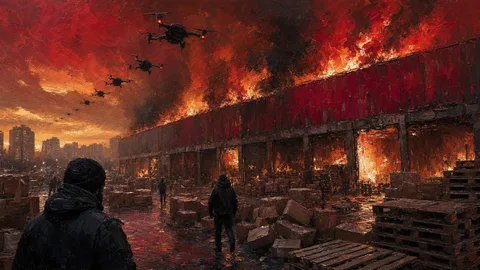
Since September 3, 2025, more than 300 fuel tankers have reportedly been destroyed in a blockade affecting Mali’s road fuel supply, according to an open-source monitoring account cited by Ops Con. For a landlocked country importing about 95% of its fuel by road, the number describes a national vulnerability, not a marginal disruption. A blockade does not need to seize a capital when it can make the road to it uncertain.
- Since September 3, 2025, more than 300 fuel tankers have reportedly been destroyed in a blockade affecting Mali’s road fuel supply, according to an open-source monitoring account cited by Ops Con. For a landlocked country importing about 95% of its fuel by road, the number describes a national vulnerability, not a marginal disruption. A blockade does not need to seize a capital when it can make the road to it uncertain.
- Since September 3, 2025 , more than 300 fuel tankers have reportedly been destroyed in a blockade affecting Mali’s road fuel supply, according to an open-source monitoring account cited by Ops Con .
- For a landlocked country importing about 95% of its fuel by road, the number describes a national vulnerability, not a marginal disruption.
Facts, quotes, and cited links remain in the body. Interpretations are framed as analysis or opinion according to the format.
Introduction
Since September 3, 2025, more than 300 fuel tankers have reportedly been destroyed in a blockade affecting Mali’s road fuel supply, according to an open-source monitoring account cited by Ops Con. For a landlocked country importing about 95% of its fuel by road, the number describes a national vulnerability, not a marginal disruption. A blockade does not need to seize a capital when it can make the road to it uncertain.
JNIM, an al-Qaeda-affiliated group, claims the blockade. More than 1,000 tankers have nevertheless reached Bamako under military escort since late October 2025. The route still functions; that is not the same as saying the siege has been lifted.
The testimony in this article is a testimony of logistics: tanker, escort, fuel road, border route, blocked port of authority. It stays inside the record’s limits because military claims and the blockade’s latest scope have not been independently updated beyond the July 19 report.
A landlocked country depends on the road
Ninety-five percent arrives by road
The assigned record says about 95% of Mali’s fuel is imported by road from Senegal and Côte d’Ivoire. That reported detail anchors the opening account in a specific reported event. Fuel dependence turns every vulnerable road into a national question.
That dependence makes road access a strategic necessity rather than a routine commercial detail. The concrete consequence is a procedural impact, and the stated limit controls how far that impact can be described. The distinction matters because a public announcement does not settle every question that follows it.
The supply chain has named neighbours
Senegal and Côte d’Ivoire are identified as the routes supplying fuel into landlocked Mali. That reported detail gives the account a concrete institutional location.
A long overland chain creates many points where fuel delivery can be delayed, attacked or protected. The concrete consequence is a custodial impact, and the stated limit controls how far that impact can be described. The next institutional step, not the first dramatic headline, determines the practical meaning of the event.
More than 300 tankers are the reported toll
The count starts in September 2025
Ops Con’s July 19 open-source monitoring, cited in the dossier, says more than 300 tanker trucks have been destroyed since September 3, 2025. That reported detail identifies the operation without filling its undisclosed parts. A tanker count is most useful when its limits remain attached.
The figure is a monitoring estimate, and the record does not provide a newer independent tally for early August. The concrete consequence is a strategic impact, and the stated limit controls how far that impact can be described. That sequence gives the episode a concrete consequence without granting any side facts it has not proved.
A large number still has a source boundary
The tanker figure is not presented as a final audited balance; it comes through an open-source account cited by Ops Con. That reported detail provides chronology rather than a conclusive explanation.
Its value lies in showing documented pressure, while its limitation is the absence of a fresh independent update. The concrete consequence is a chronological impact, and the stated limit controls how far that impact can be described. A precise chronology is the only protection against turning a reported event into a finished conclusion.
JNIM claims the blockade
The group is affiliated with al-Qaeda
The blockade is claimed by Jama’at Nusrat al-Islam wal-Muslimin, or JNIM, described in the dossier as al-Qaeda affiliated. That reported detail requires its source to stay attached to the number. A blockade is a strategy when its author claims it as one.
A claim by an armed group must remain a claimed action, even when it corresponds to reported disruptions. The concrete consequence is a human impact, and the stated limit controls how far that impact can be described. The consequence is immediate, but the evidence remains bounded by the accounts available at publication.
The blockade became a stated strategy
JNIM’s public claims and messages are cited as the source of its responsibility for the blockade. That reported detail places the dispute inside a formal legal setting.
That makes the fuel road a declared pressure strategy, not an anonymous accident. The concrete consequence is a judicial impact, and the stated limit controls how far that impact can be described. This detail changes the scale of the story while leaving the unresolved legal and factual questions intact.
Escorted convoys still reached Bamako
More than a thousand trucks got through
Since late October 2025, more than 1,000 tankers have reached Bamako under military escort. That reported detail has legal weight only through the process that tests it. An escorted convoy proves movement, not security.
The number shows that escorts can preserve some supply movement through a threatened corridor. The concrete consequence is a legal impact, and the stated limit controls how far that impact can be described. It is a measurable pressure point, not a shortcut to a broader verdict.
Arrival does not equal relief
The same fact block says the escort system has not succeeded in lifting the fuel blockade. That reported detail records who claimed temporary authority in Caracas.
A convoy can arrive and a blockade can still impose a wider cost on every convoy that follows. The concrete consequence is a constitutional impact, and the stated limit controls how far that impact can be described. The source material supports that much; it does not support a larger certainty by implication.
Military support has not reopened the route
Africa Corps is part of the response
Mali’s junta relies on the Russian Africa Corps alongside Turkish drones in its response. That reported detail records an announced objective rather than its achievement. Hardware cannot dissolve every logistical weakness.
Those assets are part of the reported security posture, but the dossier says they have not ended the blockade. The concrete consequence is a political impact, and the stated limit controls how far that impact can be described. A claim made in the middle of a conflict keeps its attribution even when it serves a persuasive purpose.
Capability met a logistical limit
The continued blockade despite escorts, Africa Corps support and drones points to a logistical constraint, not a simple absence of military hardware. That reported detail maps a diplomatic position rather than international consensus.
A road network can remain vulnerable even when a government fields visible force. The concrete consequence is a diplomatic impact, and the stated limit controls how far that impact can be described. That is where reporting ends and analysis begins: at the edge of what the documents actually establish.
Discover

INVESTIGATION: Beijing cuts Africa to 2.1 billion in loans…
2.1 billion — the lowest figure in almost twenty years, according…

SPECIAL REPORT: Beijing Promises Stimulus as Its Households Give…
That is the growth rate of Chinese industrial output in July,…

INVESTIGATION: Two Chinese Ex-Soldiers Arrested in Seoul as 18,000…
For five years, a man ran a military-supply shop at the…
April 28 brought a total-blockade announcement
JNIM named Bamako as the target
JNIM announced a total blockade of Bamako on April 28, 2026. That reported detail shows how one government separated ruler from method. A declared blockade turns a capital’s supply into a battlefield issue.
The announcement gave the campaign a clear capital-city objective. The concrete consequence is a interpretive impact, and the stated limit controls how far that impact can be described. The people affected by the decision do not need inflated language for the consequence to be serious.
The group cited the April 25 offensive
The group said the move retaliated for residents’ cooperation with the Malian army during an April 25 offensive. That reported detail exposes two different ways of judging the same event.
That is JNIM’s stated rationale, not an independently verified explanation of every attack. The concrete consequence is a international impact, and the stated limit controls how far that impact can be described. No responsible account should replace an open question with a convenient answer.
Kati shows the conflict’s human cost
A hospital source gave a toll of twenty-three
A hospital source said the April 25 attack at Kati killed 23 people, soldiers and civilians, and wounded 16. That reported detail locates the event in a wider regional debate. A hospital-source toll needs humanity before it needs rhetoric.
The source attribution matters because the figure is not presented as an independently verified final casualty count. The concrete consequence is a regional impact, and the stated limit controls how far that impact can be described. The result is a new constraint on the actors involved, not proof that the wider crisis has been resolved.
The wounded number belongs with the dead
The same report cited 16 injured at Kati. That reported detail establishes a public launch, not support beyond its delegates.
Casualty figures describe human harm, not a scorecard for competing armed actors. The concrete consequence is a organizational impact, and the stated limit controls how far that impact can be described. It forces a choice about what to watch next, rather than offering a clean ending.
An analyst describes the mechanism
Commercial operators are a pressure point
A Control Risks analyst said JNIM exploits the blockade to pressure commercial operators and citizens to distance themselves from military authorities. That reported detail defines the ticket on which Lula will campaign. Pressure on commerce is pressure on daily life.
That interpretation names commercial pressure as part of the blockade’s intended political effect. The concrete consequence is a coalition impact, and the stated limit controls how far that impact can be described. The record is strongest when it says exactly what happened and leaves the rest in view as uncertainty.
Legitimacy is the claimed target
The analyst said the strategy erodes the government’s legitimacy and authority. That reported detail turns the candidacy into a timed contest.
It is an expert assessment of the mechanism, not a measurement proving how every resident views the junta. The concrete consequence is a electoral impact, and the stated limit controls how far that impact can be described. That limit is not evasive; it is the difference between an account and a slogan.
ECOWAS drew a regional line
Twelve states received a directive
On August 4, 2026, ECOWAS directed its remaining 12 member states not to make secret bilateral deals with the Alliance of Sahel States. That reported detail separates political intent from a completed candidacy. Regional diplomacy cannot replace fuel on a road.
The directive inserts a regional diplomatic constraint into a crisis already shaped by roads and armed attacks. The concrete consequence is a administrative impact, and the stated limit controls how far that impact can be described. A number has weight only when its source and its boundary travel with it.
The AES has three members
The Alliance of Sahel States comprises Mali, Niger and Burkina Faso in the assigned record. That reported detail records one pollster’s estimated runoff balance.
The instruction requires future negotiation to be handled through the bloc, rather than in separate arrangements. The concrete consequence is a statistical impact, and the stated limit controls how far that impact can be described. The point is not to dilute the event, but to prevent its meaning from being claimed in advance.
The directive followed a Lungi meeting
The origin was the 69th ordinary session
The ECOWAS decision followed resolutions from the 69th ordinary session of its heads of state and government in Lungi, Sierra Leone, on July 19. That reported detail supplies a separate point of comparison. A ban on secret deals reveals fear of fractured policy.
That chronology gives the August 4 order an institutional origin, rather than treating it as an improvised response. The concrete consequence is a comparative impact, and the stated limit controls how far that impact can be described. This is a test of institutions as much as a test of rhetoric.
Secret deals were the stated concern
ECOWAS specifically barred bilateral ‘secret’ agreements with the AES states. That reported detail shows the contest before any runoff transfer.
The language shows concern about fragmented diplomacy, even as Mali’s fuel problem remains a separate security emergency. The concrete consequence is a first-round impact, and the stated limit controls how far that impact can be described. The available material names the pressure. It does not yet prove who will absorb it or how long it will last.
On the same topic
ANALYSIS: 800 drones over Russia in one night —…
More than eight hundred drones, in a single night, August 14…

ANALYSIS : Taiwan Puts NT$1,122.5 Billion Into Defence, Over…
Hold that number for a moment, because it marks the crossing…

DOSSIER: 60,000 Russian passports in Transnistria — the annexation…
More than sixty thousand applications for Russian citizenship in three months,…
Burkina Faso faced coordinated attacks too
At least twenty-two died in early July
The Defense Post reported that at least 22 soldiers and civilian militia members were killed in coordinated jihadist attacks in northern Burkina Faso in early July. That reported detail keeps the smaller candidates in the first-round calculation. Violence across borders is not a single statistic.
The figure broadens the picture from Mali’s fuel corridor to a regional pattern of armed pressure. The concrete consequence is a competitive impact, and the stated limit controls how far that impact can be described. The dispute therefore belongs in the open, with its claims separated instead of blended together.
Dédougou carried most of the named toll
About 14 soldiers and seven civilian volunteers were reported killed at a base near Dédougou, with additional deaths at Solhan and an attack at Séguénéga. That reported detail marks a separate published estimate, not a correction of Nexus.
The components do not turn the broader Sahel crisis into a single event; each location has its own loss. The concrete consequence is a methodological impact, and the stated limit controls how far that impact can be described. A serious response begins by refusing to let uncertainty become an excuse for indifference.
Military retaliation claims need their own label
The army claimed dozens neutralized
Burkina Faso’s army said it had ‘neutralized several dozen terrorists’ after the attacks. That reported detail extends the difference between polling methods. An army’s claim is not independent confirmation.
That is a government military claim, not an independently verified casualty figure. The concrete consequence is a uncertainty-driven impact, and the stated limit controls how far that impact can be described. The fact is concrete. Its final consequences remain contingent.
The larger four-hundred claim is also unverified
The army had said the previous week that it killed more than 400 people it called terrorists in Sirba and Sebba operations. That reported detail identifies the challenger without predicting his appeal.
The dossier explicitly flags that larger figure as unconfirmed by an independent source. The concrete consequence is a representational impact, and the stated limit controls how far that impact can be described. No one gains from a story that makes a provisional account sound settled.
The tanker remains the measure
Fuel, diplomacy and attacks converge
Mali’s fuel blockade, ECOWAS’s August directive and the Burkina Faso attacks show three simultaneous pressures: supply, diplomacy and violence. That reported detail keeps a past sentence distinct from today’s electorate. The route is still under contest.
Each pressure has its own source record and should not be inflated into a single claimed victory. The concrete consequence is a historical impact, and the stated limit controls how far that impact can be described. This is the point at which precision becomes a public duty.
Resupply is the continuing test
The decisive recurring fact is that tankers still need escorts to reach Bamako while the blockade remains reported in force. That reported detail describes a defined diplomatic action in the reported dispute.
A route under escort is a route under contest. The concrete consequence is a bilateral impact, and the stated limit controls how far that impact can be described. What happens next will test the claim more severely than any first statement can.
Conclusion
More than 300 destroyed tankers is a stark reported figure because Mali imports about 95% of its fuel by road. Yet the same record says more than 1,000 tankers have reached Bamako under escort. Both facts are necessary; neither cancels the other.
The exact current scope of the blockade remains limited by the last cited July report, and Burkina Faso’s military tolls remain unverified claims. What is clear is the vulnerability. When fuel arrives only under escort, the road itself has become a verdict on state power.
Sources
Primary sources
- ECOWAS directive report — August 4, 2026
- Ops Con — Mali fuel siege and convoys — July 19, 2026
- Wikipedia — Mali fuel blockade background
Secondary sources
Get the tech columns
AI, platforms, digital power: the next analyses straight to your inbox.
Cite this article
Maxime Marquette (2026). TESTIMONY: Mali’s Fuel Road Is a Target—And 300 Tankers Are Gone. MadMax. https://mad-max.co/en/article/mali-s-fuel-road-is-a-target-and-300-tankers-are-gone
Read next
INVESTIGATION: Beijing cuts Africa to 2.1 billion in loans…
2.1 billion — the lowest figure in almost twenty years, according…
SPECIAL REPORT: Beijing Promises Stimulus as Its Households Give…
That is the growth rate of Chinese industrial output in July,…
INVESTIGATION: Two Chinese Ex-Soldiers Arrested in Seoul as 18,000…
For five years, a man ran a military-supply shop at the…
Enjoyed this piece? Get the next one.
One chronicle a week, straight to your inbox. No noise.
This article was generated with AI assistance, under human supervision.
Comments
Be the first to weigh in.