

EDITORIAL: Ukraine Stops Most Drones Over Zaporizhzhia—Yet Ten Can Still Break a City’s Day
A defence that stops almost everything cannot erase what reaches the city.
- A defence that stops almost everything cannot erase what reaches the city.
- On 6 August 2026 , Reuters documented a Russian campaign of FPV drone and heavier glide-bomb attacks that residents and officials said deliberately targeted civilians in Zaporizhzhia .
- Regional governor Ivan Fedorov told Reuters that less than 5% of Russian FPV drones broke through Ukrainian air defences, yet up to 10 drones on the worst days caused injury or property damage.
Facts, quotes, and cited links remain in the body. Interpretations are framed as analysis or opinion according to the format.
Introduction
A defence that stops almost everything cannot erase what reaches the city.
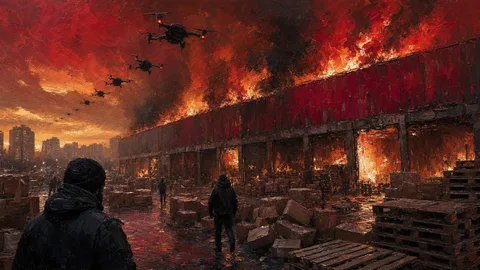
On 6 August 2026, Reuters documented a Russian campaign of FPV drone and heavier glide-bomb attacks that residents and officials said deliberately targeted civilians in Zaporizhzhia.
Regional governor Ivan Fedorov told Reuters that less than 5% of Russian FPV drones broke through Ukrainian air defences, yet up to 10 drones on the worst days caused injury or property damage.
Those are oral estimates from a Ukrainian official, reported by an independent news agency rather than audited air-defence statistics. The paradox still has a civilian consequence: a small residual can be enough.
Less than 5% is not zero
Fedorov’s estimate
Ivan Fedorov’s statement to Reuters that less than 5% of Russian FPV drones penetrate Ukrainian air defences.
The record starts with A low rate does not make the danger zero.
The number reports a defined activity, so its location and source must not be widened. The distinction is operational: activity can be high while control remains unproven. The figures measure pressure, not possession.
A front-wide total must remain a front-wide total. It cannot identify a particular street, assign a local outcome, or replace a dated territorial assessment. In this front-wide count, source attribution and verification remain inseparable.
The statistical limit
That account names no independent technical series in the dossier that can test the figure drone by drone.
The proportion is Fedorov’s operational estimate, not an absolute measurement. That is the limit of the available evidence; the document records pressure, not a finished outcome. The file does not close the question.
The sequence distinguishes an operational report from a territorial finding. That difference prevents the number of incidents from becoming an invented measure of control. In this local battlefield report, source attribution and verification remain inseparable.
The worst days can still involve ten drones
Damage or injury
Fedorov’s statement that up to 10 drones can cause injuries or property damage in Zaporizhzhia on the worst days.
Its documented sequence includes Ten drones can break a day.
Its relevance lies in the documented sequence, not in a conclusion pasted onto it. A daily claim has a defined timeframe; it cannot settle the next day by itself. The record is narrower than the slogan.
The source provides a reported action, not its final strategic value. Readers can take the fact seriously without granting it a broader meaning the record does not document. In this dated operational claim, source attribution and verification remain inseparable.
What the number does not provide
The available reporting places no confirmed civilian casualty total for 4 to 7 August.
A declared daily maximum cannot be turned into a total of victims. The word choice matters because presence and possession are different military conditions. A filmed moment is not a durable line.
This is a test of scale: an observed moment can be real while its wider consequence remains unknown. The distinction protects the public record. In this visual record, source attribution and verification remain inseparable.
The city has a human scale
Reuters’ population reference
Reuters’ description of Zaporizhzhia as a city of about 700,000 people before the war.
At this point, the material records A city is not a statistic.
The material gives a duration or pattern, not permission to declare the contest complete. The record supports a measured finding, not a map drawn from assertion alone. The claim needs independent proof.
The relevant question is not whether the event matters. It is whether the material establishes a specific result, a durable change, or only a reported episode. In this prolonged contest, source attribution and verification remain inseparable.
What cannot be calculated
What is established here is how many people were exposed now or a victim density.
Those data are not in the assigned material. No calculation can replace the missing independent confirmation of the relevant ground truth. The map is still incomplete.
A limited assessment can still be decisive because it states what is confirmed. Its silence about an additional claim is not proof of the opposite; it is a boundary on knowledge. In this movement assessment, source attribution and verification remain inseparable.
Discover

EDITORIAL: Trump approves H200 chips for Beijing and takes…
On December 8, 2025, two announcements landed in Washington, the same…

INVESTIGATION: Beijing cuts Africa to 2.1 billion in loans…
2.1 billion — the lowest figure in almost twenty years, according…

SPECIAL REPORT: Beijing Promises Stimulus as Its Households Give…
That is the growth rate of Chinese industrial output in July,…
“Safari” is an attributed description
Who uses the word
residents and local officials cited by Reuters describing the attacks as “safari” strikes.
The account also specifies The accusation requires attribution.
The reported pressure has consequences, but its territorial reach still requires proof. This makes the source chain part of the story: who reported it affects what it proves. The wording carries the burden.
The difference between an official assertion and an independent assessment is not cosmetic. It tells readers what kind of verification has actually occurred. In this logistics finding, source attribution and verification remain inseparable.
The targets alleged
The dated item concerns isolated people in cars or on foot rather than military infrastructure.
The term reports their description; it does not let this column add an undocumented scene. The available material establishes a risk without supplying a complete tally. The source sets the boundary.
The record can establish an immediate impact while leaving a larger toll open. That is a consequence of the available evidence, not an invitation to supply missing figures. In this map limitation, source attribution and verification remain inseparable.
Two means are reported
FPV drones and glide bombs
Reuters’ description of a campaign combining FPV drones and heavier glide bombs around Zaporizhzhia.
A separate part of the record shows Two means can burden the same city.
The title is strongest when it preserves its own defined limit. The information has force precisely because its scope is kept visible. The danger is real. The verdict is limited.
An account becomes misleading when its scale disappears. Keeping the defined area and the stated period visible is part of accuracy. In this headline judgment, source attribution and verification remain inseparable.
The absent breakdown
The file distinguishes no count by weapon type or day in the fact block.
The campaign is documented without a fabricated frequency calculation. A report of combat is not yet a report of territorial change. No number replaces a verified map.
The material supports a clear distinction: combat activity may be documented while a change in possession is not. Both propositions can be true at once. In this source comparison, source attribution and verification remain inseparable.
Fedorov says the aim is panic
The governor’s analysis
Fedorov’s statement to Reuters that Russia was trying to “sow panic” among civilians through repeated, unpredictable strikes.
The reported evidence covers Fedorov attributes an intention.
The terms must remain separate because the consequences of each are different. The missing element is not drama but corroboration. The line remains contested in the record.
Corroboration requires another source or another form of evidence. Restating one assertion in stronger language does not create a second confirmation. In this terminology test, source attribution and verification remain inseparable.
The legal and evidentiary limit
This is the point at which no Russian document or judicial finding establishing that intention in this dossier.
His analysis explains the reported civilian logic but remains his statement. The documents can be read together without being made to say the same thing. A claim is not a conclusion.
The documents have different methods and different purposes. Their overlap is useful; their differences must not be erased for a neater story. In this current reporting window, source attribution and verification remain inseparable.
The ground attack did not advance
Reuters’ field finding
Reuters’ report that Russian ground troops had not advanced south of Zaporizhzhia during the period.
The source material identifies The ground can stall while the sky remains dangerous.
This is the limited conclusion that the record can actually carry. That boundary is substantive: it separates a recorded event from a larger inference. The evidence stops here.
The assigned evidence permits a specific finding and identifies a separate unknown. This article keeps both visible because neither is optional. In this limited verdict, source attribution and verification remain inseparable.
The crucial separation
The confirmed part of the account is the juxtaposition of stalled ground movement and pressure from drones and bombs.
On the same topic

COLUMN : Europe Moved 8.5 Billion Euros in a…
That is what the European Commission says it has disbursed for…
ANALYSIS: 800 drones over Russia in one night —…
More than eight hundred drones, in a single night, August 14…

ANALYSIS: Marcos Talks Drilling With Beijing While His Fishermen…
That is what moves through the South China Sea every year.…
A stable land line is not safety for civilians. The consequence is clear. The next reliable answer must come from new evidence, not louder language. The next proof must show the ground.
The next defensible conclusion must depend on a new map, fresh geolocation, or an assessment with a wider evidentiary base. In this future test, source attribution and verification remain inseparable.
Huliaipole is a different part of the oblast
The 6 August front report
the Ukrainian General Staff’s identification of Huliaipole as one of the country’s active sectors, reported by Ukrainska Pravda.
The documents preserve Huliaipole and the city are not one tally.
The report’s reach is clear once its practical limits are stated. A precise limit does not minimize the danger; it prevents an unverified conclusion from replacing it. The limit is part of the fact.
A defined limitation is not hesitation. It is the condition that makes a strong judgment defensible when the larger outcome remains unsettled. In this defined evidentiary limit, source attribution and verification remain inseparable.
The geographic distinction
The record starts with Huliaipole farther south in the oblast than Zaporizhzhia city.
Regional pressure should not be mechanically added to urban strike accounts. The source describes one layer of the situation, not every layer at once. The source cannot supply what it lacks.
One report can illuminate the immediate mechanism without proving the complete pattern. The article does not turn its usefulness into false completeness. In this reported mechanism, source attribution and verification remain inseparable.
Interception leaves a residual risk
The basic mechanism
a majority of drones reportedly intercepted according to Fedorov’s estimate.
That account names Interception does not erase the residual.
This contrast is the central mechanism in the available evidence. This leaves a hard fact and an honest unknown side by side. The conclusion must remain earned.
The evidence therefore produces two duties: report the documented fact plainly and name the unresolved question plainly. In this unresolved question, source attribution and verification remain inseparable.
The reported consequence
Its documented sequence includes injury or damage on the worst days from the drones that get through.
The dossier offers no total for the period, but it makes the risk concrete. The date fixes the claim; it does not freeze the battlefield. The record is not a prophecy.
A date is a boundary, not a promise. The battlefield may change after it, but later events cannot be smuggled back into the report’s stated window. In this date-bounded account, source attribution and verification remain inseparable.
No precise civilian total is confirmed
The strict window
no independently confirmed numerical civilian casualty total for 4 to 7 August 2026.
The available reporting places An absent toll forbids easy numbers.
The claim’s status changes what can responsibly be inferred from it. The public record therefore carries both a finding and a warning about its reach. Pressure does not equal capture.
The record has moral force precisely because it leaves no room to disguise a claim as a confirmation. In this public record, source attribution and verification remain inseparable.
What must not follow
At this point, the material records a number of deaths, injuries, or day-by-day comparison not provided by the sources.
The facts are grave without padding the silence with invented arithmetic. The account is strongest where it refuses to turn a partial view into total knowledge. The known facts still matter.
The strongest reading is neither complacent nor absolute. It gives the documented danger its due without creating a fictitious verdict. In this hard reading, source attribution and verification remain inseparable.
Reuters and Fedorov have different roles
The report and the estimate
Reuters documenting the campaign while Fedorov supplied the penetration and frequency figures.
What is established here is Reuters reports; Fedorov estimates.
The vocabulary is factual infrastructure, not rhetorical decoration. Military language can compress several realities into one word. This article will not. The language must stay exact.
Terms such as attack, presence, and control carry different evidentiary burdens. Mixing them would alter the factual story. In this military distinction, source attribution and verification remain inseparable.
Why the distinction stays visible
The account also specifies the agency’s reporting adds relative reliability without turning the governor’s oral figures into an independent audit.
The chain is clearer when both names remain attached to their roles. The stated result has consequences, but it does not authorize a result the sources have not documented. The documents do not authorize more.
The stated evidence has a practical consequence: it should guide attention toward the next verification, not toward a premature forecast. In this practical consequence, source attribution and verification remain inseparable.
The title’s paradox is factual but bounded
The two numbers
less than 5% reportedly getting through and up to 10 drones causing damage or injury on the worst days.
The dated item concerns The residual is enough to strike.
The public deserves the established fact without a substitute certainty. That restraint protects the people living with the consequences as well as the integrity of the account. The uncertainty is not empty space.
That discipline avoids making civilians and soldiers bear the cost of an unfounded certainty. The available record deserves better. In this civilian-facing account, source attribution and verification remain inseparable.
What cannot be inferred
A separate part of the record shows a mathematical formula, because the dossier gives no daily denominator.
The paradox is real: high interception can coexist with tangible civilian harm. Evidence should travel with its limitation. Here, both are material. A verdict without proof is propaganda.
A limitation is not a blank page. It is a documented part of the case and a guard against a false narrative. In this documented limitation, source attribution and verification remain inseparable.
Civilians remain at the centre
The reported targets
cars and pedestrians described by residents and officials cited by Reuters as targets rather than military infrastructure.
The file distinguishes The testimony keeps civilians at the centre.
The evidence is firm where it is firm and silent where it is silent. The next assessment may change the picture. It cannot rewrite what this record contains. The date remains decisive.
Further reporting may alter the assessment, but the present article remains tied to its assigned evidence and stated date. In this assigned time window, source attribution and verification remain inseparable.
The status of the allegation
The reported evidence covers a grave accusation in reporting, not a judicial conclusion or an exhaustive proof of every strike.
The account must neither banalize it nor inflate it beyond the evidence. A sharp conclusion begins with an exact premise. The facts carry their own weight.
The conclusion must be proportional to the proof. That is what keeps a hard fact from being used as a soft excuse for exaggeration. In this final judgment, source attribution and verification remain inseparable.
Conclusion
Reuters’ report and Fedorov’s statements describe a reality that no percentage can make reassuring. Less than 5% penetration is an estimate, not an absolute shield; up to 10 drones on the worst days is not a victim total because the assigned sources confirm no precise civilian toll for the window. Between those boundaries is the documented pressure on civilians, cars, and pedestrians, alongside Reuters’ report that Russian ground troops did not advance south of the city. These facts are enough to identify the moral stakes without inventing a scene, a number, or a final legal conclusion. People do not live inside an interception rate. They live with what gets through.
Ten drones can be enough. Civilians should not have to live in the remainder.
Sources
Primary sources
- Reuters — Zaporizhzhia and reported attacks on civilians — 6 August 2026
- Ukrainska Pravda — Front report including Huliaipole — 6 August 2026
- Critical Threats / ISW — Russian Offensive Campaign Assessment — 6 August 2026
Secondary sources
Get the geopolitics analyses
Conflicts, powers, alliances: the MadMax thread without the noise.
Cite this article
Maxime Marquette (2026). EDITORIAL: Ukraine Stops Most Drones Over Zaporizhzhia—Yet Ten Can Still Break a City’s Day. MadMax. https://mad-max.co/en/article/ukraine-stops-most-drones-over-zaporizhzhia-yet-ten-can-still-break-a-city-s-day
Read next
EDITORIAL: Trump approves H200 chips for Beijing and takes…
On December 8, 2025, two announcements landed in Washington, the same…
INVESTIGATION: Beijing cuts Africa to 2.1 billion in loans…
2.1 billion — the lowest figure in almost twenty years, according…
SPECIAL REPORT: Beijing Promises Stimulus as Its Households Give…
That is the growth rate of Chinese industrial output in July,…
Enjoyed this piece? Get the next one.
One chronicle a week, straight to your inbox. No noise.
This article was generated with AI assistance, under human supervision.
Comments
Be the first to weigh in.