

ANALYSIS: Trump says he offered Iran nothing. His own officials describe relief after nuclear steps
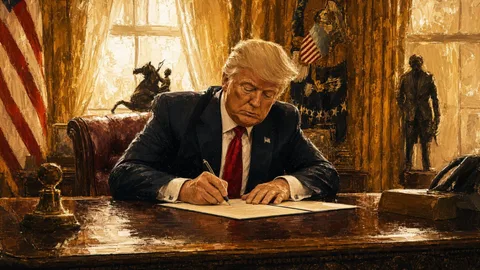
On September 28, Axios reported, citing American officials, that Donald Trump was willing to lift sanctions and unfreeze Iranian funds in return for concrete nuclear steps. The same day, Trump wrote that he had offered them “NOTHING!”
- On September 28, Axios reported, citing American officials, that Donald Trump was willing to lift sanctions and unfreeze Iranian funds in return for concrete nuclear steps. The same day, Trump wrote that he had offered them “NOTHING!”
- On September 28 , Axios reported, citing American officials, that Donald Trump was willing to lift sanctions and unfreeze Iranian funds in return for concrete nuclear steps.
- The same day, Trump wrote that he had offered them “NOTHING!”
Facts, quotes, and cited links remain in the body. Interpretations are framed as analysis or opinion according to the format.
One Monday, two messages
Two sentences, one day
On September 28, Axios reported, citing American officials, that Donald Trump was willing to lift sanctions and unfreeze Iranian funds in return for concrete nuclear steps. The same day, Trump wrote that he had offered them “NOTHING!”
Two sentences. The same Monday. The same president.
Between them sits a question nobody settles: who moves first?
That first move is the whole file. The rest is noise.
One step. Two capitals. No signature.
At the pump
Meanwhile, oil is trading above US$100 a barrel, according to Al Jazeera. In the United States, gas and other goods have climbed sharply since the war began, according to AFP.
We know this gesture without needing a figure. The nozzle hung up a little sooner. The click of the meter running too fast. The eye on the dollars rather than the litres.
The first move, in Washington or in Tehran, gets paid for there as well. Here at home too.
The strait is far away. The price of a fill-up is not.
A denial doesn’t bring down the price of a barrel.
What Axios wrote
Relief in return for steps
The Axios piece, by Barak Ravid, is short. It relies on American officials. It does not name them.
Trump is reportedly willing to grant sanctions relief and release frozen Iranian funds. In return: concrete nuclear steps from Tehran.
The message lands as mediators from Qatar and Pakistan try once more to broker a deal between the two countries at war.
An offer. Conditions. No published text.
The mediators meet Abbas Araghchi, Iran’s foreign minister, in New York that same day. They are due to see American officials on Monday or Tuesday.
Indirect talks, “positive and constructive”
An American official calls the indirect talks “positive and constructive.” Iran, the official says, “has indicated they are flexible on the nuclear issues.”
But the official adds a warning. No deal until the nuclear issues are settled.
Then comes the sentence that matters. The two sides remain apart on the timing of the commitments, and on “who takes which steps first.”
The timing. The order. The first move.
The whole offer comes down to the order of steps.
The same-day denial
“NOTHING,” in capitals
The same day, Trump answers on his own network, Truth Social.
According to The Hill and AFP, he writes that the Axios story is “untrue.” That he offered them “NOTHING!” in capital letters. That the piece is a “HOAX.” He demands that Axios withdraw “this fake story, IMMEDIATELY!”
AFP points out that Axios was citing unnamed American officials.
What the denial targets
Let us read the denial word for word. Trump denies offering sanctions relief and frozen funds.
He does not deny the talks. Nor the mediators. Nor the nuclear condition. Not the dispute over timing, not the blockade that goes on.
He denies one thing only: having given. The rest stands.
This piece argues for a simple reading. The denial is about paying up front, not about the offer.
Nothing up front, everything at the end: that is the offer.
Denying the down payment is not denying the price.
Who moves first
“Everything up front”
The day before, the American ambassador to the UN, Mike Waltz, had supplied the key on CNN, according to The Hill.
Trump rejected the latest Iranian proposal, he said, because Tehran was asking for “everything up front.” Relief from “billions and billions” in sanctions. And from UN sanctions that have been back in place for years.
Everything up front. Nothing up front. The negotiation lives between those two phrases.
Two clocks that never meet
According to Axios, Iran wants the talks to focus on the Strait of Hormuz and the American naval blockade. The Trump administration is demanding nuclear concessions.
One side wants to start with the sea. The other wants to start with the uranium.
More analysis

EXPLAINER: Putin denies any mobilization, then signs his fourth…
Vladimir Putin signed a decree on September 28 that sets the…

ANALYSIS: With decree 686, Putin hides who buys Russian…
Decree 686, signed by Vladimir Putin on September 28, does not…

FACT CHECK: Hegseth’s Pentagon didn’t hide its eight wounded…
On September 18, Pete Hegseth branded a report on undisclosed deaths…
Two entrances. One room.
The first move is not a detail of protocol. It is the deal itself, dressed up as a schedule.
Whoever moves first pays for the rest.
The June memorandum
A deal already broken
There is a precedent. A recent one.
According to Al Jazeera, Washington and Tehran had signed a memorandum of understanding in June.
According to the official cited by Axios, Iran broke it by firing on commercial ships in the strait in July.
Tehran rejects the accusation, according to Al Jazeera. It blames Washington for failing to halt Israel’s attacks on Lebanon. And for seeking alternative shipping routes.
What July teaches
A memorandum signed. A month later, each side accuses the other.
That is why the order of steps matters so much. Whoever pays first fears paying for nothing.
Washington wants assurances this time, according to Axios. It does not want an Iran that is merely trying to get out of a tight spot.
Mistrust is not a detail. It is the price of the last deal.
Broken in July, a deal makes every step cost more.
The same message, a day later
An official to Al Jazeera
Trump’s denial could have closed the matter. It didn’t.
The next day, the same offer comes back. Through another door. Same sentence. Different outlet.
On September 29, Al Jazeera publishes the words of an American official. The talks are “positive and constructive.” And Trump, the official says, is willing to ease sanctions and release Iran’s frozen funds in exchange for progress on the nuclear file.
The same official repeats the line on timing and on “who takes which steps first.”
Two voices, one government
One voice says: nothing. Another says: relief, after the nuclear steps.
Both can be true at once. Nothing is offered today. Everything is promised for later.
But an adversary reading both voices won’t necessarily hear the same thing.
Does Tehran read a president who lies, or a president who bargains?
Two voices in Washington, one ear in Tehran.
Blunt, and possibly accurate
What is true in the denial
It has to be said plainly. Trump’s denial is not necessarily a lie.
If nothing is granted before nuclear steps, then he has offered nothing in the sense Tehran means. His phrasing is blunt. It may be accurate.
Blunt, yes. False, not necessarily.
And the Axios sources are anonymous. Nobody has published the text of a written offer.
What the denial costs
True, and it doesn’t change this. A president who calls an accurate description of his own position a “HOAX” scrambles the only message the adversary can use.
His officials keep repeating that message. The relief exists. It comes after the nuclear steps.
The denial tells American voters something else. It says: I give up nothing.
Two audiences. Two messages. One file.
Talking to your voters can mean scrambling the adversary.
Tehran denies too
Completely untrue, says Araghchi
The mirror exists in Tehran. Same gesture. Different capital.
The American official says Iran has shown flexibility on the nuclear file. Abbas Araghchi denies it.
It is completely untrue, he says, according to IRNA as carried by SBS News. There is no flexibility whatsoever at this point, he adds. No discussion has even taken place on the matter.
Conditions set by the Supreme Leader
Araghchi presents Tehran’s conditions as ones stressed by the Supreme Leader. They “must be implemented” for the strait to reopen, according to the same report.
Two denials. The same silence on timing.
Washington denies offering. Tehran denies bending. The mediators, meanwhile, keep carrying ideas from one delegation to the other.
And yet the two denials do the same work. Each shields its capital from the charge of giving in first.
Each capital denies the step the other assigns it.
Doha and Islamabad in between
Ideas carried from New York
On September 28, Araghchi meets the Qatari mediators in New York.
According to the Mehr agency, he says the contacts and messages passed through the Qatari and Pakistani mediators have always existed. In recent days, they have taken on more weight.
He is waiting for an official American reply through the mediators. He hopes to have it by Tuesday. He is flying back to Tehran within hours, he says.
According to Al Jazeera, he adds that the Qataris “know how to get it to us.”
No more direct meetings
According to AFP, American and Iranian officials had met the week before in New York, on the sidelines of the UN General Assembly.
On September 28, Iran’s state agency IRNA reports that Tehran has no further direct talks scheduled with Washington, according to AFP.
The direct table closes. The mediators’ corridor stays open.
Last week, they spoke face to face. This week, it goes through Doha. That retreat can be read as well.
Doha carries. Islamabad carries. Nobody signs.
When nobody talks directly, sentences get carried.
The week in five phrases
Five dated phrases
Let us reread the week in five phrases. Each one has a date.
One word for Axios, on the 28th: “HOAX.” One word for the offer, the same day: “NOTHING.” For the talks, from an American official: “positive and constructive.” For the Iranian proposal, on the 27th, from Mike Waltz: “everything up front.” For Iranian flexibility, on the 29th, from Araghchi: completely untrue.
Five phrases. Three denials.
What the words leave blank
None of these phrases gives an amount. None gives a date for the exchange. None says who does what on day one.
Discover
EXPLAINER: Putin denies any mobilization, then signs his fourth…
Vladimir Putin signed a decree on September 28 that sets the…
ANALYSIS: With decree 686, Putin hides who buys Russian…
Decree 686, signed by Vladimir Putin on September 28, does not…
FACT CHECK: Hegseth’s Pentagon didn’t hide its eight wounded…
On September 18, Pete Hegseth branded a report on undisclosed deaths…
That is all they have in common.
Strong words. Empty calendars.
A reader looking for the deal finds it in outline. In what nobody says.
The stronger the word, the emptier the calendar.
The strait in numbers
A fifth of the world’s oil
Here is what is being negotiated, in barrels.
The Strait of Hormuz normally carries about 20% of the world’s oil and liquefied gas, according to AFP. Tehran has kept it effectively blockaded since the war began on February 28.
According to Al Jazeera, citing Reuters and the firm Kpler, the major Middle East producers exported 12.8 million barrels a day in September. Their highest level since the war began.
In February, it was 18.8 million.
What still gets through
And yet oil gets through. According to Al Jazeera, ships hug the coast of Oman along a route supervised by the American military, at night, with tracking systems off.
The head of Central Command, Admiral Brad Cooper, speaks of 2,000 assisted transits and more than 1 billion barrels in a few months.
Washington is also enforcing a blockade of Iranian ports. It threatens secondary sanctions against airports and companies that do business with Iranian airlines. The United Arab Emirates, Iraq and Oman have cancelled flights, according to Al Jazeera.
Six million barrels a day are still missing. Every day. The strait is short of breath.
Six million barrels are waiting for the first move.
What Washington demands
Never a nuclear weapon
The American position, according to the official cited by Axios, fits on one line. Trump remains committed to his goal: that Iran never have a nuclear weapon.
The same official says traffic in the strait is picking up. That the blockade and the sanctions are weakening Iran’s position. The official is skeptical of Tehran’s promises.
The blockade as leverage. Sanctions as leverage. Time as leverage. Three levers, one goal.
A smart move, and its limit
Demanding the nuclear file first is a smart move for the West. An Iran with the bomb would be a lasting threat to its neighbours and to us. Refusing to hand over everything up front protects that leverage.
That leverage only works if it can be read. Tehran has to know what it gets, and when.
That is the limit. Leverage that is never stated clearly reads as a bluff.
Nuclear first is a line. Denying the offer is fog.
What Tehran demands
Conditions on the record
On September 29, according to IRNA as carried by SBS News, Araghchi repeats his seven conditions for reopening the strait. Among them: lifting the blockade, returning frozen funds, a ceasefire on every front and a sanctions exemption for Iranian oil.
On the same topic
COMMENTARY: Trump’s Iowa steel mill is good news due…
On September 28, in the Oval Office, Donald Trump announced a…

SPECIAL REPORT: Brussels sanctions a camp called Peace and…
Romashka, Sputnik, Raduga, Mir, Leto, Vita: the Official Journal of the…

SPECIAL REPORT: Trump’s 100% tariff on patented drugs spares…
Since 12:01 a.m. this Tuesday, September 29, a 100% duty has…
According to The Hill, citing the Associated Press, Tehran is also asking that any ceasefire extend to Lebanon.
The Supreme Leader’s tone
The Supreme Leader, Mojtaba Khamenei, issued a message saying enemy forces dare not venture beyond the Arabian Sea, Al Jazeera reports.
The armed forces chief of staff, Major General Ali Abdollahi, promises a “decisive” and crushing response to any threat. Rear Admiral Habibollah Sayyari says the strait remains closed.
Araghchi, for his part, says Iran is as ready for war as for diplomacy, according to Mehr.
These are a belligerent’s statements. They show a posture. Not the balance of power. Posture against posture.
The Supreme Leader speaks to the troops, the minister to the mediators.
Two denials, one purpose
Two readings
First reading: Trump is lying, and the offer exists as Axios described it. Second reading: Axios got it wrong, and nothing is on the table.
The published facts fit neither. Two readings. A narrower reality.
An official repeated the offer to Al Jazeera after the denial. And that offer is conditional, placed after nuclear steps, as Axios itself says.
Where the evidence lands
It fits in one sentence. Both capitals are negotiating, and each denies whatever would make it look weak at home.
According to AFP, Trump’s popularity is slipping in national polls, and his party fears losing its majority in Congress. November is coming.
Trump denies the offer in front of voters who go to the polls in November. Araghchi denies flexibility in front of a Supreme Leader who set the conditions.
Each protects his first move. Neither makes it.
And yet there is movement. The mediators are already carrying ideas from one camp to the other. It simply has no public signature.
No signature. No date. Not yet.
They negotiate backstage and deny it onstage.
Trump weighs new strikes
“Not the deal that I want”
On September 27, Trump told Axios that the regime wanted a deal, but that it was “not the deal that I want to make,” according to The Hill.
He added that he is “always thinking” about resuming strikes on Iran. The war reached seven months on Monday.
According to AFP, he had also told Axios that Sunday that he expected talks to resume in the coming days. Talks. Strikes. The same Sunday.
“We’re going to win”
On September 28, speaking to reporters, he said American officials had also talked to the mediators. “We’re going to win,” he added, according to Al Jazeera. He promised that gas prices would fall once the war was won.
I admit it: I don’t know which of these two Trumps is speaking to Tehran. The one negotiating through Doha, or the one thinking about strikes. Maybe both, and that is what worries me.
An adversary who can’t read an offer may choose not to take it…
An offer. A threat. The same week.
The threat and the offer travel in the same suitcase.
The first move
What the offer really says
Nothing up front. Relief at the end. The nuclear file first.
It is a defensible position for the West. It would be stronger if the president who holds it stopped calling it a hoax.
Tehran, for its part, denies the flexibility Washington attributes to it. The two capitals stand at the edge of the first move.
Nobody wants to move first. Everybody wants the strait.
What the barrel is waiting for
What will cost the West more: a first American move toward relief, or one more winter with the strait half shut?
The barrel reads neither Axios nor Truth Social.
Nothing offered up front, everything promised once the nuclear file moves.
Sources:
Primary Sources:
- Axios — sanctions relief offered for concrete nuclear steps, September 28, 2026
- Agence France-Presse (via The Manila Times) — Trump’s denial, September 29, 2026
- Mehr News Agency — Araghchi awaits the US reply through the mediators, September 29, 2026
Secondary Sources:
Get the geopolitics analyses
Conflicts, powers, alliances: the MadMax thread without the noise.
Cite this article
Maxime Marquette (2026). ANALYSIS: Trump says he offered Iran nothing. His own officials describe relief after nuclear steps. MadMax. https://mad-max.co/en/article/trump-says-he-offered-iran-nothing-his-own-officials-describe-relief
Read next
EXPLAINER: Putin denies any mobilization, then signs his fourth…
Vladimir Putin signed a decree on September 28 that sets the…
ANALYSIS: With decree 686, Putin hides who buys Russian…
Decree 686, signed by Vladimir Putin on September 28, does not…
FACT CHECK: Hegseth’s Pentagon didn’t hide its eight wounded…
On September 18, Pete Hegseth branded a report on undisclosed deaths…
Enjoyed this piece? Get the next one.
One chronicle a week, straight to your inbox. No noise.
This article was generated with AI assistance, under human supervision.
Comments
Be the first to weigh in.