

ANALYSIS: In the Sahel, Russia's strategy bogs down in Azawad's sand
There is something obscene about the synchronicity of these images. While Sergei Lavrov shook hands with Burundi's president on July 10, 2026, wrapping up an African tour that had taken him from Congo-Brazzaville to…
- There is something obscene about the synchronicity of these images. While Sergei Lavrov shook hands with Burundi's president on July 10, 2026, wrapping up an African tour that had taken him from Congo-Brazzaville to…
- Introduction: an African tour that barely masks a military disaster
- Lavrov smiles in Bujumbura, Moscow bleeds in Anefis
Facts, quotes, and cited links remain in the body. Interpretations are framed as analysis or opinion according to the format.
Introduction: an African tour that barely masks a military disaster
Lavrov smiles in Bujumbura, Moscow bleeds in Anefis
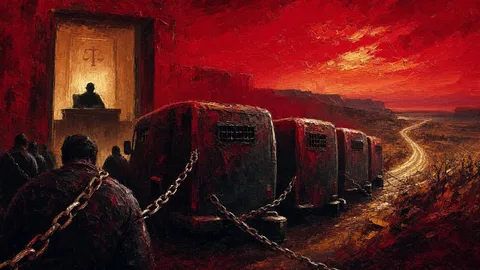
There is something obscene about the synchronicity of these images. While Sergei Lavrov shook hands with Burundi's president on July 10, 2026, wrapping up an African tour that had taken him from Congo-Brazzaville to Bujumbura, fighters from Russia's Africa Corps were dying in a besieged camp in northern Mali, unable to receive reinforcements without losing men in the next ambush. This split screen between smiling diplomacy and battlefield reality sums up, better than any Kremlin statement could, the real state of Russian influence in West Africa in 2026.
Lavrov's tour, presented by Russian state media as proof that Moscow is putting down roots on the continent, wrapped up just as its armed proxies were being methodically harassed thousands of kilometers away, in a region where the Kremlin had bet heavily after the French withdrawal. This contradiction is not a footnote. It is the key to reading everything that follows.
Mali, the showcase turned crack in Russia's African model
Since 2022, Mali has been presented by Russian propaganda as proof that Moscow can replace Western powers in Africa without paying the political price. Yet in early July 2026, that showcase revealed deep cracks. On July 4, a coordinated offensive by Jama'at Nusrat al-Islam wal-Muslimin (JNIM), Al-Qaeda's Sahel affiliate, and the Azawad Liberation Front (FLA), a Tuareg separatist movement, struck five Malian localities simultaneously: Gao, Anefis, Aguelhok, Sévaré and the Kéniéroba prison near Bamako.
The insurgents' priority target was Anefis, a strategic chokepoint roughly a hundred kilometers from Kidal, the city Tuareg rebels had already wrested from the Malian junta and its Russian allies back in April. According to field reports relayed by Reuters and Al Jazeera, Malian soldiers and more than two hundred Africa Corps fighters found themselves dug in at the military camp of Anefis, besieged for nearly a week.
What strikes me here isn't just that Russian mercenaries got trapped in a desert camp. It's that this scene keeps repeating, almost identically, since the Tinzaouaten ambush of 2024. Moscow keeps selling a military expertise it still can't demonstrate on the ground, and it is Malian soldiers who, once again, pay part of the price for this failed bet.
A jihadist-separatist offensive that exposes the Malian junta's cracks
An alliance of convenience between Tuareg independence fighters and jihadists
The alliance between the FLA and JNIM has nothing ideological about it: the two groups share neither the same political project nor the same vision for northern Mali's future. The FLA wants independence for a secular Tuareg territory, the Azawad; JNIM wants sharia law imposed across the entire country. But for roughly a year, as Le Monde reported quoting FLA spokesman Mohamed Elmaouloud Ramadane, the two movements have maintained a "contact mechanism" allowing them to coordinate offensives against a common enemy: the junta of General Assimi Goïta and its Russian partners.
That coordination produced two major waves of attacks in 2026: the April 25 assault, which led to the fall of Kidal and the death of Mali's defense minister, General Sadio Camara; then the July 4 offensive, aimed at pushing that victory southward by seizing Anefis. Between the two offensives, the junta failed to rebuild a credible defensive line around Kidal, settling for reassuring statements that contrasted sharply with the reality of territorial retreat.
The price paid by civilians, made invisible by official statements
Behind the military maps, there are residents caught in the crossfire. Anefis residents quoted by the AFP described continuous gunfire and explosions, sheltering under their beds as fighting dragged on day after day. The Council on Foreign Relations, in its conflict tracking, documented that the July escalation also plunged several Malian towns into a water and electricity access crisis, draining the last resources of an already exhausted state.
The Malian junta claimed to have "neutralized" several hundred attackers through airstrikes carried out with the Africa Corps between July 6 and 8. These figures, impossible to verify independently, must be handled with caution: it is precisely this kind of triumphant, unverifiable, one-sided announcement that has, for years, fed the gap between Bamako's propaganda and the reality lived by populations in the north.
We can, and should, distrust the casualty figures announced by a military regime that has turned war communication into a tool of political survival. But one thing remains beyond dispute: it is Sahelian civilians, not Moscow's mercenaries, who absorb the shock of this proxy war.
Africa Corps, Wagner's heir, caught by the same vulnerabilities
A convoy of more than 200 fighters targeted
On July 9, a relief convoy made up of Malian soldiers and more than 200 Africa Corps fighters was attacked while attempting to reach Anefis to relieve the besieged camp, according to information relayed by Reuters. Neighboring Niger, an ally of the Malian junta within the Alliance of Sahel States, provided air support in an attempt to extract the trapped troops.
This latest episode echoes the July 2024 Tinzaouaten ambush, where 70 to 80 Wagner mercenaries were killed in a joint attack by Tuareg rebels of the Coordination of Azawad Movements and JNIM, in what remains one of the worst defeats in Wagner's history. Africa Corps, the structure that officially replaced Wagner after the death of its founder Yevgeny Prigozhin, has clearly not resolved its predecessor's tactical vulnerabilities: limited desert mobility, dependence on exposed ground convoys, and insufficient air cover.
A downed helicopter, symbol of contested air superiority
According to field reports cited by several conflict analysts, a Mi-24 helicopter was reportedly shot down during the July 5 fighting around Anefis, while an Africa Corps relief convoy was reportedly routed. For a force that claims to bring military superiority the Malian army could not achieve alone, losing an air asset to insurgents armed with drones and light weapons is a troubling signal about the gap between the rhetoric and operational reality.
The think tank Critical Threats noted that Malian-Russian resistance was better organized during this July offensive than during April's, with air counterattacks claiming the recapture of Anefis on July 8 after several days of siege. But that recapture, if confirmed, came at the price of yet another encirclement episode that once again exposed the logistical fragility of the Russian-Malian setup against a mobile, determined enemy.
Changing a militia's name doesn't change its doctrine. Africa Corps is repeating, almost scene for scene, the mistakes that cost Wagner its worst defeat on the continent. That should worry every African government still considering Moscow a reliable security partner.
What Lavrov's tour reveals about the Kremlin's real priorities
Bujumbura, the last stop of a largely symbolic trip
Lavrov's African tour, which wrapped up in Bujumbura on July 10 with a meeting with Burundi's president and a stated agreement to mutually support "African peace initiatives," was primarily meant to demonstrate that Russia remains an active diplomatic partner on the continent, despite its military quagmire in Ukraine and now in the Sahel. Russian state news agencies widely publicized every stop on this trip, in stark contrast to Moscow's near-total silence on the fighting in Anefis.
This communication asymmetry is no accident. The Kremlin has every incentive to highlight protocol handshakes rather than its armed proxy's losses, which serve as a reminder that Russia's presence in Africa relies heavily on a paramilitary force whose operational reliability is increasingly questioned, including by the very African partners who welcomed it.
A power narrative that doesn't survive contact with the battlefield
Official Russian rhetoric presents Africa as a continent where Moscow is methodically gaining ground against a supposedly retreating West. The reality of the Malian file says otherwise: a weakened junta, a Russian partner unable to durably secure its positions, and armed groups that are learning and adapting their tactics far faster than expected. The narrative of rising Russian power in West Africa owes more to diplomatic storytelling than to serious military analysis.
It must be said with due caution: Russia retains real influence with several Sahelian juntas, and that influence will not collapse overnight. But the gap between the image projected by diplomatic visits and the reality of the fighting documented on the ground should push observers toward a far more critical reading of the African successes Moscow claims in its propaganda.
There is a simple lesson in the contrast between Bujumbura and Anefis: smiling diplomacy never replaces the truth of the military map. And right now, the maps say Russia's presence in the Sahel is costing dearly, for increasingly uncertain results.
The Alliance of Sahel States, a fragile bloc facing an adapting insurgency
Niger and Burkina Faso, allies also under pressure
The Nigerien air support provided to besieged Malian forces at Anefis illustrates the solidarity claimed among the three military regimes of Mali, Burkina Faso and Niger, united since 2023 within the Alliance of Sahel States, after their break with the Economic Community of West African States. But this surface solidarity masks similar difficulties in each of these countries: Burkina Faso faces town sieges by JNIM, despite economic indicators that some analysts present as better than those tied to former Western oversight.
This Alliance, meant to embody a rediscovered sovereignty against the former French colonial power, finds itself dependent in reality on a Russian partner whose military effectiveness is increasingly questionable. The paradox is cruel: the juntas that expelled French forces in the name of national sovereignty now find themselves hostage to a security dependence on an actor that struggles to secure even its own convoys.
A jihadist-separatist doctrine growing more professional offensive after offensive
What worries observers of the Sahelian file most is not just the repetition of attacks, but their growing sophistication. Between April's offensive and July's, JNIM and the FLA refined their logistical coordination, used captured armored vehicles, including a Russian BTR-80 according to Critical Threats, and deployed drones to target supply convoys. This tactical improvement contrasts with the rigidity of the Malian-Russian setup, which seems unable to break the cycle of costly sieges and counteroffensives.
Reports referencing the use of very young fighters within jihadist-separatist ranks add a particularly dark dimension to this conflict, a reminder that the Sahel's war continues to grind down the most vulnerable on both sides of the front lines, with no credible political resolution in sight.
An insurgency that improves in competence, facing a military coalition that improves mostly in communication: that, in one sentence, is the real record of two and a half years of Russian paramilitary presence in the Sahel.
The lessons of Kidal, ignored at Anefis
The fall of Kidal in April, a warning left unanswered
The loss of Kidal by the Malian junta and its Russian allies in April 2026 should have sounded an alarm about the structural flaws of Mali's security setup. The city, seen as the symbolic "capital" of the Tuareg independence cause, had been under Malian-Russian control since November 2023, following a reconquest led at the time by the Wagner group. Its loss just a few months later, to the FLA, marked a major psychological turning point in the conflict.
Three months later, the battle for Anefis showed that the lessons of Kidal had not been learned. The defensive setup still relied on isolated garrisons, difficult to resupply, vulnerable to ambushes along the roads connecting Gao to Kidal. Anefis was only defensible on the condition of securing that road durably, something neither the Malian army nor Africa Corps managed to guarantee.
A siege doctrine that echoes other theaters, elsewhere in the world
There is bitter irony in watching the same Russia that, in Ukraine, applies a methodical siege doctrine against cities like Kostiantynivka or Pokrovsk find itself trapped in a reversed siege in the Sahel, this time from a position of weakness. The tactics of encirclement, supply-line severing and gradual attrition that Moscow employs with some success on the Ukrainian front turn against its own proxies when the adversary has mobility and knowledge of the terrain.
This role reversal is not incidental. It shows that Russian military power, already tested hard by Ukrainian resistance since 2022, does not automatically transfer to asymmetric theaters like the Sahel, where the balance of power rests less on raw firepower than on terrain knowledge, mobility, and the local roots of armed groups.
An army that excels at methodical siege warfare in Eastern Europe can very well find itself trapped by the same tactic once it switches continents. The Sahel is not the Donbas, and Moscow seems to still be learning that the hard way.
France's absence, a void Russia has failed to fill
The 2022 French withdrawal, a bet that paid off for no one
The departure of French forces from Mali in 2022, then from Burkina Faso and Niger in the following years, was presented by Sahelian juntas as the end of a harmful colonial guardianship. Four years later, the security record of that rupture is unambiguous: JNIM now controls or influences growing swaths of Malian territory, the Coordination and the FLA have retaken Kidal, and insecurity has spread to zones that were previously relatively stable, like the outskirts of Bamako, where the Kénieroba prison was directly targeted in July.
Russia, presented as the replacement partner capable of guaranteeing the security France supposedly failed to provide, has not filled that void. On the contrary, available statistics suggest a continued deterioration of the security situation since the arrival of Wagner and then Africa Corps, with territorial expansion by jihadist groups never as pronounced as in 2026.
An anti-Western narrative that masks a documented security failure
The rhetoric of Sahelian juntas continues to pit a rediscovered African sovereignty against a reviled Western interference. But this narrative becomes increasingly hard to sustain against the numbers: more territory lost, more civilians displaced, more Malian and Russian soldiers killed in repeated ambushes. Anti-French rhetoric doesn't feed the people of Anefis, Gao or Timbuktu, nor does it make the Malian army more effective on the ground.
This does not mean the French model of military presence in the Sahel was flawless; it had its own limits and its own failures. But it forbids presenting the Russian partnership as a superior alternative, when field evidence demonstrates the opposite, offensive after offensive, ambush after ambush.
Neither yesterday's France nor today's Russia managed to offer the Sahel lasting security. But at least France never claimed its model was infallible. The Kremlin, on the other hand, sells a myth of power that collapses every time a convoy gets trapped in the Malian desert.
The West, a spectator to a war that could nonetheless concern it directly
The Sahel, a laboratory for Russian ambitions outside Ukraine
On the same topic

SPECIAL REPORT: Beijing Promises Stimulus as Its Households Give…
That is the growth rate of Chinese industrial output in July,…

INVESTIGATION : Russia's FSB Erases 4 Ukrainian Regions' Border…
Not an assault, not an ultimatum, not a televised proclamation from…
INVESTIGATION: 316 political cases in Crimea — the occupation…
Three hundred and sixteen people are being prosecuted on political grounds…
For Western chancelleries, what is happening in the Sahel goes well beyond Mali's borders. It is a real-world test of Russia's ability to project lasting military influence far from its bases, even as most of its resources are absorbed by the war in Ukraine. Every setback suffered by Africa Corps in the Sahel should be read as one more indicator of the structural limits of Russian military power outside its main theater.
This reading should not lead to any form of Western complacency. The security void left by the French withdrawal, and Russia's inability to fill it effectively, mostly benefits jihadist groups, which are extending their influence in a region that bridges North Africa, the Sahel and the Gulf of Guinea. Ignoring this dynamic would mean letting a pocket of instability take root at Europe's doorstep, with migratory and security consequences that will eventually be felt well beyond the African continent.
A more discreet but equally opportunistic China
While Russia bogs down militarily, China pursues a more discreet but equally concerning influence strategy in West Africa, betting on infrastructure, strategic minerals and bilateral loans rather than direct paramilitary engagement. This informal complementarity between Russian and Chinese interests on the African continent shows how constant Western vigilance must remain against two powers that, each in its own way, seek to fill the voids left by Western retreat.
It would be naive to believe that Russia's military failure in the Sahel alone will be enough to restore a positive Western influence in the region. That requires a long-term strategy built on more than mere military presence: investment in local governance, targeted economic support, and a genuine ear to the aspirations of Sahelian populations, who so far have seen neither France nor Russia deliver the stability promised.
The real danger isn't just that Russia is failing in the Sahel. It's that this failure leaves a void that neither the West nor anyone else has a credible plan to fill, while jihadist groups keep advancing methodically.
What Bamako's triumphalist messaging hides
Unverifiable tallies serving political survival
General Goïta's junta has built much of its legitimacy on the promise of restored security through the Russian partnership. Publicly acknowledging the scale of losses suffered at Anefis, or the persistent inability to durably secure the north, would mean admitting the failure of that strategic bet. Hence the temptation, documented for months by conflict-monitoring organizations, to inflate insurgent "neutralization" tallies while minimizing its own losses.
This informational asymmetry considerably complicates independent assessment of the real situation on the ground. The only reliable sources remain cross-checked testimony from local residents, reports from international news agencies like Reuters and AFP, and analyses from specialized centers like Critical Threats, which methodically cross-reference available information before publishing.
A transparency both sides of the Malian-Russian partnership sorely lack
Neither Bamako nor Moscow has any political interest in full transparency about the real losses suffered in the Sahel. This shared opacity feeds a climate where rumors and contradictory accounts proliferate, making the independent verification work carried out by field journalists and specialized analysts all the more essential, often at the risk of their own safety in a region increasingly dangerous for the press.
This situation echoes, with appropriate caveats, the difficulty of verifying military tallies on the Ukrainian front, where each side has an incentive to manipulate figures to its advantage. The difference in the Sahel is that civilian populations, caught between multiple fires, don't even get the benefit of international media attention comparable to what Ukraine receives.
There is a silent hierarchy to global media attention, and the Sahel sits at the very bottom of it. Yet the civilians of Anefis deserve the same factual rigor rightly given to besieged Ukrainian cities.
Russia's political calendar, added pressure on Africa Corps
A Kremlin that needs wins to show, in Africa as elsewhere
The Kremlin is going through a period where every military setback, whether in Ukraine or Africa, weighs on the domestic credibility of Vladimir Putin's power. In this context, African successes, however modest or contestable, take on a communication value disproportionate to their real strategic reach. Lavrov's tour fits this logic: demonstrating, to Russian public opinion as much as to foreign partners, that Russia remains an active diplomatic power, despite the difficulties encountered on the military front.
This internal political pressure could push Moscow to maintain its Sahel engagement beyond what its strategic return would justify, purely out of a desire not to display a withdrawal that would be seen as one more admission of failure, after Ukraine's setbacks. Such stubbornness would risk prolonging, without resolving, the suffering of Sahelian populations caught in this proxy war.
A credibility test that goes beyond the Malian file alone
How Moscow handles what comes next in Anefis and the rest of northern Mali will be closely watched by all of Russia's African partners, from Burkina Faso to the Central African Republic. A stinging new failure could weaken Russia's position in other African theaters where Africa Corps is deployed, feeding growing doubt about the reliability of this security partner presented as a credible alternative to Western powers.
Conversely, even a partial stabilization at Anefis would let the Kremlin limit the damage to its credibility, without resolving the structural problems that led to this repeated siege situation. The Malian file will remain, whatever happens, an essential case study for understanding the real limits of Russian military power outside its European theater.
Putin needs victories to show, in Ukraine as in Africa. But you don't manufacture a victory out of trapped convoys and besieged camps, no matter how many diplomatic tours are organized as a diversion.
Discover

ANALYSIS: Marcos Talks Drilling With Beijing While His Fishermen…
That is what moves through the South China Sea every year.…

ANALYSIS : Taiwan Puts NT$1,122.5 Billion Into Defence, Over…
Hold that number for a moment, because it marks the crossing…

ANALYSIS: 313 Votes, a 20th Extension — Ukraine Keeps…
313 votes to approve the presidential decree extending martial law by…
What this crisis reveals about the fragility of Sahelian military juntas
A legitimacy built on unfulfilled promises
The military juntas that seized power in Mali, Burkina Faso and Niger in recent years largely justified their coups by pointing to the supposed inability of previous civilian governments to contain the jihadist threat even with Western help. Yet four years after Mali's 2021 coup, the security situation has objectively deteriorated on several fronts, despite, or perhaps partly because of, the replacement of the French partnership with a Russian one.
This contradiction durably weakens the legitimacy of these military regimes, which increasingly struggle to show concrete results to populations exhausted by years of war, forced displacement, and unfulfilled promises. The gap between triumphant sovereigntist rhetoric and the reality of a territory that keeps fragmenting becomes ever harder to mask, even for regimes that tightly control domestic information.
A risk of regional contagion worrying continental organizations
The African Union, through its Commission chairman Mahmoud Ali Youssouf, firmly condemned the coordinated July attacks, recalling that "terrorism and violent extremism continue to represent a serious threat to Mali, the Sahel and the African continent as a whole." This statement, though largely symbolic, reflects real concern over the risk of Sahelian instability spreading to coastal West African regions such as Benin, Togo or Ivory Coast, already facing sporadic jihadist incursions.
This regional dynamic extends well beyond the Russian-Malian partnership alone. It calls into question the ability of all regional security architectures, whether under Russian, Western or purely African influence, to contain an insurgency that has demonstrated, offensive after offensive, its capacity for adaptation and tactical coordination.
The real Sahelian danger isn't only military, it's political. Every unfulfilled promise of security by a junta chips away a little more at regional stability, and no one, not Moscow, not Western capitals, seems to have a lasting answer to this problem.
A precedent for other theaters where Africa Corps operates
From the Central African Republic to Sudan, an exported model with mixed results
The Sahel is not the only African theater where Russia's Africa Corps operates. In the Central African Republic, in Libya and in the context of the Sudanese conflict, units linked to this paramilitary structure operate with equally mixed results, oscillating between occasional support for allied regimes and incidents that regularly tarnish Moscow's reputation for military reliability on the continent. A Critical Threats report on regional dynamics also notes parallel developments involving Russia, Burundi and the Democratic Republic of Congo, in a context where the M23 movement continues to destabilize eastern Congo.
This dispersion of Russian paramilitary resources across several African theaters at once could, over time, further dilute Africa Corps's operational effectiveness, already tested by the war of attrition that JNIM and the FLA impose on it in Mali. A military partner that must manage simultaneous crises in Bangui, Tripoli, Khartoum and Gao necessarily has fewer resources to devote to each front.
The risk of a domino effect on Russian credibility in Africa
If Mali, presented for years as the showcase of Russian success in Africa, keeps bogging down in a repetition of sieges and ambushes, it becomes harder and harder for Moscow to convince other potential partners on the continent of the reliability of its privatized security model. This potential domino effect may be the most important strategic stake of the battle for Anefis, well beyond its immediate tactical significance.
For Western chancelleries watching this dynamic with a mix of concern and, it must be honestly acknowledged, a certain strategic relief, the central question is not whether Russia will fail entirely in the Sahel, but how long it will keep investing human and political resources for an increasingly uncertain strategic return.
An empire that scatters its mercenaries across four African theaters at once, while bogging down in Ukraine, is not an empire gaining ground. It is an empire managing, as best it can, its own overextension.
The battle for independent verification, indispensable in this fog of war
Why cross-checking sources systematically still matters
The Malian file illustrates, like so many contemporary conflicts, the crucial importance of cross-checking sources before accepting a narrative as given. Malian army statements, posts from Africa Corps's Telegram channel, FLA spokesman declarations and reports from agencies like Reuters or AFP often tell partially contradictory versions of the same events, each serving the narrative interests of the party spreading it.
Faced with this profusion of competing accounts, only a methodical verification process, relying on multiple testimonies and specialized analyses like those from Critical Threats or the Council on Foreign Relations, allows for reconstructing a reasonably reliable picture of the situation on the ground. This methodological rigor is not an academic luxury: it is the only protection against the informational manipulation that systematically accompanies this type of conflict.
What methodical doubt teaches us about this specific conflict
Applied to the Anefis file, this rigor requires acknowledging certain persistent uncertainties: the exact number of casualties on each side, the precise status of territorial control at any given moment, or the reality of the alleged injury of FLA leader Iyad Ag Ghaly, mentioned by some sources but not independently confirmed. This uncertainty does not invalidate the overall analysis; it simply outlines its boundaries with the honesty the subject demands.
What can be stated with a high level of confidence, however, is the reality of the prolonged siege, the repetition of ambushes against Africa Corps convoys, and the glaring contrast between the diplomatic staging of Lavrov's tour and the documented military situation on Malian ground.
In a conflict where every side lies a little, a lot, or constantly, cross-verification is not one journalistic option among others. It is the only compass that still holds true.
This methodical doubt is not analytical softness. It is the only honest way to handle a file where the truth often hides behind inflated numbers, on both sides.
More analysis
ANALYSIS: Marcos Talks Drilling With Beijing While His Fishermen…
That is what moves through the South China Sea every year.…
ANALYSIS : Taiwan Puts NT$1,122.5 Billion Into Defence, Over…
Hold that number for a moment, because it marks the crossing…
ANALYSIS: 313 Votes, a 20th Extension — Ukraine Keeps…
313 votes to approve the presidential decree extending martial law by…
The urgency of a more structured Western response to the Sahelian void
Rethinking Western engagement without repeating past mistakes
Facing the relative failure of the Russian military model and the already-demonstrated limits of the old French model, Western powers should learn the lessons of these two successive failures rather than simply watching Moscow's Sahelian struggles with satisfaction. A more effective approach would require targeted investment in strengthening local capacities, economic support conditioned on governance progress, and security cooperation that avoids the pitfall of a massive military presence perceived as a new form of tutelage.
This reflection should not be limited to Western capitals alone. It also concerns African regional organizations, the Economic Community of West African States and the African Union, which must find ways to put more pressure on military juntas that have, so far, preferred rupture with their traditional partners over building genuinely effective security alternatives.
The Sahel as a test of Western will to remain relevant in Africa
The battle for Anefis, however distant and little-known to the Western public, constitutes a revealing test of the West's ability to remain a relevant actor on the African continent, at a moment when China and Russia deploy competing influence strategies there, with results that are certainly debatable but a presence that is, nonetheless, quite real. Western absence from this file, by contrast, leaves the field open to narratives that, lacking credible counterargument, continue to circulate without being sufficiently challenged.
Ignoring this file would mean ceding, by default, a strategic space that neither Russia nor the Sahelian juntas manage to stabilize effectively anyway. It is precisely in this void that jihadist groups thrive, offensive after offensive, while civilian populations keep paying the price of a conflict whose political outcome remains, to this day, entirely undetermined.
The West cannot afford to simply watch Moscow bog down in the Sahel with a satisfied smile. The void opening up in this region will not stay empty for long, and it won't be jihadist insurgents who pay the heaviest price for that, but Sahelian civilians.
Conclusion: an empire crumbling far from the spotlight
What can be stated with certainty today
The battle for Anefis, the repetition of ambushes against Africa Corps convoys, and the striking contrast with Lavrov's diplomatic tour paint a coherent picture: Russia's Sahelian strategy, presented as a success of the Kremlin's multipolar diplomacy, runs up against an increasingly coordinated jihadist-separatist insurgency and logistical vulnerabilities Moscow has still not resolved, two years after the Tinzaouaten debacle.
This documented military reality does not match the rising-power narrative the Kremlin seeks to impose, both on its own domestic public opinion and on the African partners it still tries to convince. Between Bamako's triumphalist statements and Moscow's cautious silence about its own losses, the truth on the ground continues, patiently, methodically, to cut a path through the fog of propaganda.
A battle that will keep defining Russian credibility in West Africa
What is at stake in Anefis goes beyond the mere tactical question of controlling a military camp in the Malian desert. It is the credibility of an entire model of Russian power projection outside Ukraine that is on the line, at a time when the Kremlin needs, more than ever, to demonstrate, absent victories in Eastern Europe, its ability to remain an influential power on other continents. The Sahel, long presented as proof of that success, increasingly looks like the opposite demonstration.
For Sahelian populations, this geopolitical debate remains largely abstract against the daily urgency of surviving in a region where war knows neither pause nor a clear line between fighters and civilians. It is this human reality, more than diplomatic tours or victory statements, that should remain at the center of any serious analysis of this conflict.
Signed Maxime Marquette, columnist
Columnist's transparency note
What I know and what I don't
This article is a geopolitical analysis column, based on facts sourced from international news agencies, specialized analysis centers, and recognized African and Western media. The passages introduced by an editorial comment reflect my personal opinion as a columnist and do not claim to constitute additional factual truth; they are clearly identified as such in the text.
Some information, notably the casualty figures announced by the Malian junta or by channels affiliated with Africa Corps, could not be independently verified and are presented with the caution their partisan origin requires. Similarly, certain allegations regarding the injury status of FLA officials remain unconfirmed to date.
Method
This article draws on cross-referencing of several primary and secondary sources, published between July 4 and 12, 2026, as well as verifiable general geopolitical knowledge about the history of the Sahelian conflict since 2021. No fact reported here has been invented; the uncertainties documented in the sources have been flagged as such.
Sources
Primary sources
Secondary sources
Get the geopolitics analyses
Conflicts, powers, alliances: the MadMax thread without the noise.
Cite this article
Maxime Marquette (2026). ANALYSIS: In the Sahel, Russia's strategy bogs down in Azawad's sand. MadMax. https://mad-max.co/en/article/analysis-in-the-sahel-russia-s-strategy-bogs-down-in-azawad-s-sand
Read next
ANALYSIS: Marcos Talks Drilling With Beijing While His Fishermen…
That is what moves through the South China Sea every year.…
ANALYSIS : Taiwan Puts NT$1,122.5 Billion Into Defence, Over…
Hold that number for a moment, because it marks the crossing…
ANALYSIS: 313 Votes, a 20th Extension — Ukraine Keeps…
313 votes to approve the presidential decree extending martial law by…
Enjoyed this piece? Get the next one.
One chronicle a week, straight to your inbox. No noise.
This article was generated with AI assistance, under human supervision.
Comments
Be the first to weigh in.