

ANALYSIS: 450 Seats, 11 Occupied Districts, and a Duma Election Already Distorted
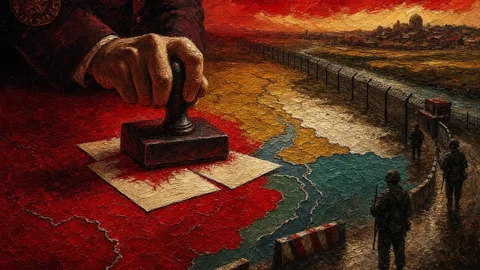
Russia’s September 18–20, 2026 Duma election will choose 450 deputies, including 11 constituencies created in occupied Ukrainian territories. The map creates a legitimacy problem before the first ballot is cast. Dates decide what the record can prove.
- Russia’s September 18–20, 2026 Duma election will choose 450 deputies, including 11 constituencies created in occupied Ukrainian territories. The map creates a legitimacy problem before the first ballot is cast. Dates decide what the record can prove.
- Russia’s September 18–20, 2026 Duma election will choose 450 deputies , including 11 constituencies created in occupied Ukrainian territories.
- The map creates a legitimacy problem before the first ballot is cast.
Facts, quotes, and cited links remain in the body. Interpretations are framed as analysis or opinion according to the format.
Introduction
Russia’s September 18–20, 2026 Duma election will choose 450 deputies, including 11 constituencies created in occupied Ukrainian territories. The map creates a legitimacy problem before the first ballot is cast. Dates decide what the record can prove.
The system combines 225 party-list seats with 225 single-member districts, while United Russia already holds 314 seats. VTsIOM polling offers a snapshot, not a result, and its limits are part of the story.
A September election with an occupied map
The formal timetable
Russia’s State Duma vote is scheduled for September 18–20, 2026, the first parliamentary election since the full-scale war began. The election’s dates are set by a presidential decree of June 16. Eleven occupied districts alter the map before a single vote is counted.
An official timetable settles the date, not the legitimacy of every electoral boundary or the freedom of every choice. Those questions need their own evidence.
Four hundred and fifty seats
The election will fill 450 seats. That number gives the chamber’s size, but a large chamber is not proof that the contest inside it is broad or fair.
No final distribution of seats is known before voting. The seat total is a structure, not a forecast.
The mixed system divides power
Party-list seats
225 seats will come from party lists subject to a 5% threshold. That route measures support through a national list mechanism. Two electoral routes still lead through one political system.
The source supplies the threshold but not a final vote share for any party. It must not be confused with a result.
Single-member districts
The other 225 seats will be filled in single-member constituencies. The second route makes the drawing and inclusion of districts consequential.
The fact block does not provide a final constituency-by-constituency candidate list. No local outcome can be assumed.
Eleven constituencies are in occupied territory
The new districts
For the first time, the system includes 11 constituencies created in occupied Ukrainian territories. This is a central feature of the 2026 map, not a peripheral footnote. Occupation becomes part of the electoral design.
The source does not furnish an international validation of those boundaries. The article therefore states the inclusion and its location rather than inventing a legal ruling.
Why the number changes the analysis
Eleven districts affect the single-member half of a 450-seat chamber. They place territory occupied during Russia’s war against Ukraine inside the electoral architecture.
This observation does not claim to know every voter’s circumstances or every local result. It identifies a documented change to the composition of the map.
United Russia begins with 314 seats
The existing majority
United Russia currently holds 314 seats, or 70% of the chamber. That existing dominance is the baseline from which the next contest begins. The chamber already has a dominant center.
On the same topic
INVESTIGATION : Russia's FSB Erases 4 Ukrainian Regions' Border…
Not an assault, not an ultimatum, not a televised proclamation from…

REPORT: One Year Past the August 18 Ultimatum, Ukraine's…
At midnight on August 18, 2025, the deadline expired that the…

COLUMN : Europe Moved 8.5 Billion Euros in a…
That is what the European Commission says it has disbursed for…
A current majority is not a certified September result. The source says the party is expected to retain a constitutional majority, but expectation is not election evidence.
The constitutional threshold
A party holding 314 of 450 seats has more than a simple majority in the current Duma. The figure explains why shifts at the margins may not change control.
The file does not establish an exact post-election projection. Arithmetic describes present power; it does not announce the future.
Twelve parties are prequalified
The authorized field
Twelve parties out of nearly two dozen registered parties can participate without additional registration procedures. The list includes United Russia, KPRF, LDPR, New People, A Just Russia, Yabloko, and others named in the source. Twelve labels do not erase the conditions around them.
Prequalification establishes formal access for organizations. It does not establish equal campaign capacity, equal media access, or equal candidate treatment.
A list is not a guarantee
The presence of multiple party labels is a verifiable feature of the ballot framework. It must not be used as a shortcut to a conclusion about the quality of competition.
The assigned evidence separately warns about political repression. That warning has to remain in view when reading any figure about party support.
New People leads the cited poll
The reported 12%
Discover

ANALYSIS: Marcos Talks Drilling With Beijing While His Fishermen…
That is what moves through the South China Sea every year.…

ANALYSIS : Taiwan Puts NT$1,122.5 Billion Into Defence, Over…
Hold that number for a moment, because it marks the crossing…

ANALYSIS: 313 Votes, a 20th Extension — Ukraine Keeps…
313 votes to approve the presidential decree extending martial law by…
A VTsIOM poll cited in early July 2026 put New People at about 12%, ahead of the KPRF at 10.7%. The pollster and publication date are known. A poll is a reading, not a seat allocation.
The field dates and margin of error are not supplied. The result therefore remains a reported indication, not a precise measurement of future voting.
A party founded in 2020
New People was founded in 2020, according to the assigned report. Its cited position as second-most popular is part of the reported polling narrative.
A ranking in one reported poll cannot demonstrate a lasting reordering of Russian politics. No trend series appears in the fact block.
KPRF, LDPR, and A Just Russia
The next figures
The same VTsIOM figures list the KPRF at 10.7%, LDPR at 9.4%, and A Just Russia at 5.7%. Each is an attributed support estimate, not a count of elected deputies. The percentages belong to VTsIOM, not to September’s result.
The 5% party-list threshold creates a structural context for the 5.7% reading, but without field dates or a margin of error it cannot safely be turned into a prediction.
What polling cannot settle
The numbers show a ranked snapshot reported in early July. They do not reveal whether respondents could answer freely in the political climate the dossier describes.
The limits are not minor. The fact block instructs readers to treat Russian polling with caution because repression can affect candor and freedom of choice.
Yabloko’s anti-war message
The slogan
Yabloko campaigns under the slogan “For Peace and Freedom! For a Life Without Fear!” The phrasing identifies a permitted party’s publicly stated message. A message of peace is not the same thing as an equal chance to compete.
A slogan does not measure public backing. The record offers no vote estimate for Yabloko in this section.
Administrative pressure
The source says Yabloko faces growing administrative pressure. It provides a political context rather than a quantification of every consequence.
No conclusion should be drawn about every individual candidate without individual records. The fact supports caution about the environment, not invented case files.
Rassvet has tried to enter
Two registration refusals
Rassvet, led by former presidential candidate Ekaterina Duntsova, announced plans to participate after two prior registration refusals by the Justice Ministry. Its intention is documented; admission is not. Trying to enter is not the same as being allowed in.
The report names potential candidates including Denis Malyshev, Angelika Zueva, and Anton Isakov. Their presence in an announcement does not establish final registration.
A different kind of uncertainty
More analysis
ANALYSIS: Marcos Talks Drilling With Beijing While His Fishermen…
That is what moves through the South China Sea every year.…
ANALYSIS : Taiwan Puts NT$1,122.5 Billion Into Defence, Over…
Hold that number for a moment, because it marks the crossing…
ANALYSIS: 313 Votes, a 20th Extension — Ukraine Keeps…
313 votes to approve the presidential decree extending martial law by…
The party’s stated effort shows that the authorized field may still be contested at its edges. That is different from an established place on the ballot.
The fact block provides no final ruling resolving Rassvet’s prior registration problems. A future-tense plan must remain a future-tense plan.
Campaign-image restrictions
What is barred
Authorities also banned campaign use of images of deceased people and of fictional or AI-generated characters. This is a stated campaign rule, not a digital-forensics claim. A campaign rule can be real before its effect is measurable.
The report says the measure is perceived as particularly aimed at KPRF and LDPR. Perceived intent is not an official motive and must be described that way.
A rule with political context
The ban shapes what campaign material may contain. It does not allow the article to say every message from the parties was removed or that the rule determined a result.
The evidence distinguishes an enacted restriction from an assessed impact. That line protects reporting from turning regulation into speculation.
Why the climate changes polling
The warning in the record
The dossier explicitly warns that opinion polls in the current Russian electoral setting require caution because documented political repression may affect candor and voters’ freedom of choice. A poll under constraint cannot carry more certainty than it contains.
This is not a claim that every respondent lies. It is a methodological limit on treating percentages as an uncomplicated popular verdict.
Missing polling details
The supplied account identifies VTsIOM and early July publication but gives no field dates or margin of error. Those absences matter for ordinary polling analysis as well.
formulation The responsible formulation names the pollster, the publication timing, and the missing details. It does not give the numbers a false scientific precision.
The territory question cannot be separated
A Ukrainian dimension
constituencies during links territorial The 11 occupied constituencies are part of a Russian election held during the war against Ukraine. That fact links the electoral map to an ongoing territorial conflict. The map carries the war into the chamber.
final existence documented districts The material does not quantify how those districts will alter the final balance of seats. Their existence is still a substantial documented feature.
The legitimacy question
raises assessment location individual A map that incorporates occupied territory raises a legitimacy question for any assessment of the vote. That is analysis rooted in the location of the districts, not a claim about individual voters.
electoral enough neutral judicial The report does not offer a judicial verdict on every electoral act. It supplies enough to reject the idea that the map is politically neutral.
What the figures do and do not say
A structured contest
12 dominant holding parts The record establishes a 450-seat mixed system, a 5% threshold, 12 prequalified parties, and a dominant incumbent party holding 314 seats. These are the parts of the mechanism. The Duma can be counted. The competition still has to be proved.
stated political settle beside Mechanism does not settle legitimacy on its own. It has to be read beside the occupied districts and the stated pressure around political competition.
No forecast is honest here
limited unsettled remains supplied None of the supplied figures authorizes a precise September projection. Polling is limited, candidate access is unsettled in parts of the field, and the vote remains ahead.
prophetic constraints without documented The conclusion can be firm without being prophetic: the structure is documented, and its constraints are documented too.
Conclusion
314 occupied September describe The numbers describe a mechanism: 450 seats, a mixed system, a 5% threshold, a current 314-seat majority, and 11 occupied districts. They do not turn a July poll into a September outcome.
field error explicitly already The occupied constituencies put Ukraine’s war inside the Duma’s electoral map. Poll figures must remain attributed to VTsIOM, with no field dates or margin of error supplied and with repression explicitly limiting their interpretation. The map is already changed. Precision is the only durable conclusion.
Sources
Primary sources
- Russian election framework and VTsIOM figures — July 2, 2026
- Presidential decree setting election calendar — June 16, 2026
- Russian election system and party field — July 2, 2026
Secondary sources
- New Eurasian Strategies Centre — Duma-election preparation — February 1, 2026
- Meduza — Electoral map and pressure on candidates — June 2, 2026
- The Moscow Times — Nationwide election guide — July 2, 2026
attached distinguish analysis chain The sources preserve the chain of evidence: the reported date, the identified institution, the specific claim, and the limitation attached to it. They are included so the reader can distinguish the original record from the article’s analysis.
stated claim entry evidentiary Where the same document appears more than once, each entry identifies a separate evidentiary use—such as a dated official position, a numerical estimate, or a stated limitation. Repetition of a link is not a new source claim.
later unnamed documented stated The material in this list supports the facts stated above; it does not supply the unverified elements the article expressly leaves open. No later outcome, reaction, or unnamed account is treated as documented here.
Get the geopolitics analyses
Conflicts, powers, alliances: the MadMax thread without the noise.
Cite this article
Maxime Marquette (2026). ANALYSIS: 450 Seats, 11 Occupied Districts, and a Duma Election Already Distorted. MadMax. https://mad-max.co/en/article/450-seats-11-occupied-districts-and-a-duma-election-already-distorted
Read next
ANALYSIS: Marcos Talks Drilling With Beijing While His Fishermen…
That is what moves through the South China Sea every year.…
ANALYSIS : Taiwan Puts NT$1,122.5 Billion Into Defence, Over…
Hold that number for a moment, because it marks the crossing…
ANALYSIS: 313 Votes, a 20th Extension — Ukraine Keeps…
313 votes to approve the presidential decree extending martial law by…
Enjoyed this piece? Get the next one.
One chronicle a week, straight to your inbox. No noise.
This article was generated with AI assistance, under human supervision.
Comments
Be the first to weigh in.